DbcultAccessing Vault...
Cult Review
Senior Film Conservator
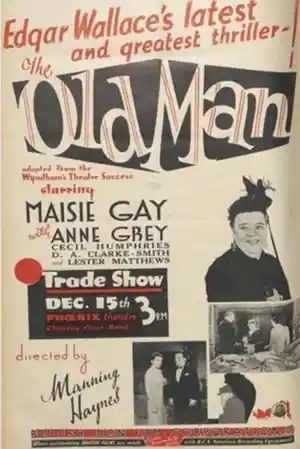
Alright, let’s talk about The Old Man. Is it worth tracking down today? Well, that really depends on what you’re looking for. If you’re hoping for sleek visuals, quick cuts, or a story that spells everything out for you, you’re probably going to bounce off this one. Hard. But if you’re a film history buff, or just genuinely curious about how stories were told on screen almost a century ago, then yes, absolutely. It's a trip. Those who appreciate the slower rhythm of early cinema, or the specific kind of dramatic acting popular in the 20s and 30s, might find a quiet joy here. Everyone else? Probably best to skip it.
There's something about the title itself, 'The Old Man', that just sets a mood, doesn't it? You expect something reflective, maybe a bit sad, or a story about wisdom. And it largely delivers on that, but in a way that's uniquely, well, *old*. You get this sense of a world that’s passed, even when the film was new, maybe even then.
The pacing, for one thing, is a whole different beast. Scenes tend to linger. Not always in a bad way, mind you. Sometimes it lets you really soak in a shot, or the expressions on the actors' faces. But sometimes, yeah, it feels like it just goes on about 10 seconds too long, and you're just waiting for the next thing to happen. It's a rhythm you have to adjust to, kinda like an old clock ticking.
And the acting! It’s a mix. You see Finlay Currie, and even in these early roles, there’s a certain gravity to him. He doesn't need to do much; just his presence fills the screen. You can almost feel the weight of whatever troubles his character is carrying. Then you have others, like Cecil Humphreys, who sometimes lean into the more theatrical gestures common for the period. It’s less subtle, more… *big*.
There’s this one particular scene, I think it's with Gerald Rawlinson, where his reaction shot lingers. It's meant to be serious, I guess, but it just hangs there for such a long time that you can’t help but chuckle a little. It’s not a criticism, just an observation on how different acting styles hit you decades later. You see the effort, definitely. 😂
What I found most interesting wasn't just the story itself, which can be a bit opaque at times – honestly, trying to piece together the exact why of some scenes felt like a puzzle with a few missing pieces. No, it was more about the *experience* of it all. The sets, for example, they feel so… *of the time*. You see the details, the furniture, the clothes, and it's like peeking into a forgotten room. The street scenes, even if they're not huge crowd shots, have this raw, almost documentary feel to them. You sense the era.
Edgar Wallace wrote this, and you can sense his touch for dramatic situations, even if the execution feels dated now. It’s less about shocking twists and more about the slow burn of human choices. The film gets noticeably better once you stop trying to impose modern narrative expectations on it and just let it wash over you. It's not trying to be a blockbuster, it's just trying to tell *a* story.
One small thing that stuck with me: the way they used shadows. A lot of these older films really understood how to play with light and dark, and The Old Man has some genuinely striking moments where a face is half-obscured, or a figure is just a silhouette against a doorway. It adds this quiet, almost spooky atmosphere that modern films, with all their perfect lighting, sometimes miss.
It’s not a masterpiece, no. But it’s certainly not a bad way to spend an hour or so, especially if you have an appreciation for the roots of cinematic storytelling. It reminds you that even back then, they were grappling with big feelings and trying to make you *feel* something. And sometimes, they succeeded in unexpected ways. It's a snapshot, really, of a time and a particular style of filmmaking. Worth a look for the curious. 🎬
IMDb —
1917
Community
Log in to comment.