DbcultAccessing Vault...
Cult Review
Senior Film Conservator
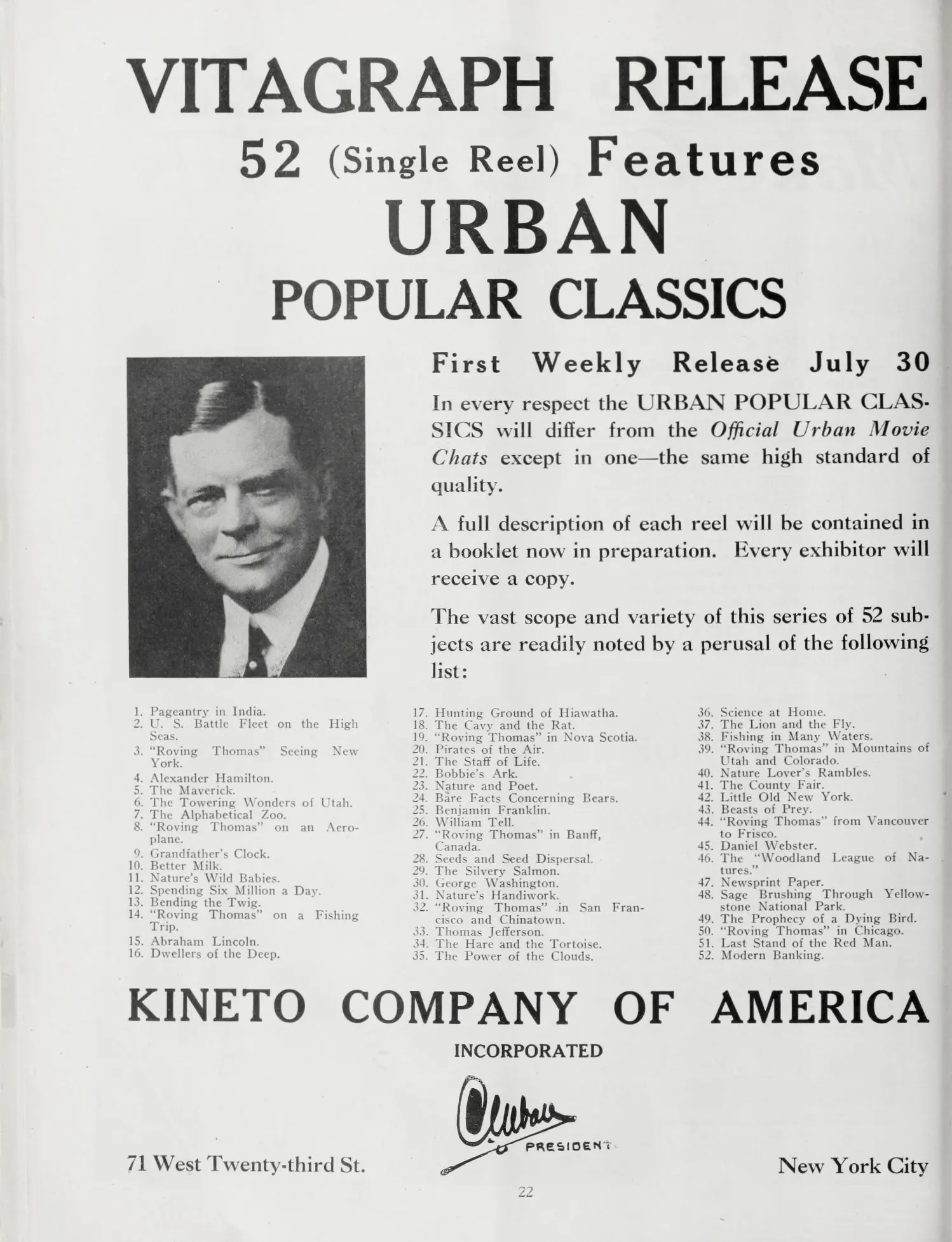
To witness Roving Thomas in Chicago is to step into a temporal rift, a flickering window into a metropolis mid-metamorphosis. This isn't merely a film; it is an architectural excavation. The protagonist, Thomas, acts as our surrogate through a landscape that feels both impossibly distant and hauntingly familiar. Unlike the slapstick simplicity of The Weak-End Party, where the humor is derived from domestic friction, Roving Thomas finds its comedy and its pathos in the sheer scale of the city. The film demands a sophisticated eye to appreciate how it captures the transition from the agrarian past to the industrial future.
The cinematography is remarkably advanced for its era, eschewing the static proscenium arch style for a more fluid, observational approach. As Thomas wanders through the Loop, the camera lingers on the textures of the city—the soot on the brickwork, the steam rising from the manholes, and the frantic, staccato movements of the pedestrians. There is a sense of verisimilitude here that rivals the gritty realism found in The Pen Vulture, though Thomas maintains a whimsical veneer that masks a deeper social critique. The city is not just a backdrop; it is the primary antagonist, a sprawling beast that Thomas must tame through wit and wanderlust.
One cannot discuss this work without acknowledging the visceral impact of its location shooting. While contemporary films like The Frozen North utilized the isolation of the wilderness to heighten dramatic tension, Roving Thomas in Chicago uses the claustrophobic density of the urban environment. The frame is often crowded, teeming with life that seems indifferent to the camera's presence. This creates a documentary-like atmosphere that elevates the scripted moments into something more profound. When Thomas attempts to navigate a busy intersection, the chaos is unsimulated; it is the genuine pulse of 1910s Chicago.
The editing rhythm mirrors the mechanical heartbeat of the city. We see quick cuts between the gears of industry and the faces of the workers, a technique that predates the more famous Soviet montage theories but achieves a similar emotional resonance. There is a sequence involving a high-rise construction site that is particularly breathtaking. As Thomas ascends the unfinished skeleton of a skyscraper, the film captures the vertigo of progress. It reminds the viewer of the precarious nature of the American Dream, a theme explored with more tragic overtones in The Clutch of Circumstance.
Thomas himself is an enigmatic figure. He lacks the traditional backstory often found in works like The Unconventional Maida Greenwood, appearing instead as a fully formed archetype of the 'everyman.' His roving nature suggests a rejection of the domestic stability seen in Divorced. He is a ghost in the machine, a spectator who occasionally intervenes in the lives of others, only to vanish back into the throng. This lack of permanent attachment makes his observations of Chicago society all the more biting.
In one pivotal scene, Thomas finds himself in a high-society gala, a fish out of water among the elite. The contrast between his dusty garments and the opulence of the ballroom is a visual metaphor for the widening class divide. Here, the film touches upon the themes of social masquerade found in Le carnaval des vérités, where truth is hidden behind a veneer of etiquette. Thomas’s presence disrupts this artifice, bringing a much-needed dose of grounded reality to the gilded cage of the upper class. His refusal to conform is his greatest strength, a trait he shares with the protagonist of The Prodigal Liar, though Thomas’s deceptions are far more innocent.
The lighting in Roving Thomas in Chicago deserves significant scholarly attention. Eschewing the flat, even lighting common in many early shorts, the filmmakers utilized the natural shadows cast by the city’s canyons. The use of chiaroscuro in the nighttime sequences evokes a proto-noir sensibility, casting the streets in a light of moral ambiguity. This aesthetic choice aligns the film with the darker, more conspiratorial tones of The Masked Motive. The city after dark becomes a different character entirely—menacing, seductive, and unpredictable.
Furthermore, the film’s use of intertitles is sparse and poetic. Rather than relying on them to explain every plot point, the director trusts the visual language of the performers. The nuanced facial expressions of the supporting cast convey a wealth of narrative information that words would only diminish. This visual confidence is something often missing in more dialogue-heavy silent dramas like School for Skirts. In Roving Thomas, a single look between two strangers in a crowded café tells a story of longing and shared solitude that resonates more deeply than any written line.
When placed alongside '49-'17, the contrast in American identity is striking. While the latter looks backward at the myth of the frontier, Roving Thomas in Chicago looks squarely at the reality of the urban present. It rejects the nostalgia for the old West in favor of the grit of the new East. Yet, it doesn't entirely abandon the spirit of adventure. There is a sense of pioneering in Thomas’s exploration of the city—he is a scout in the wilderness of the modern age, charting the unknown territories of the human condition in an increasingly crowded world.
The film also shares a DNA with the European avant-garde, specifically the German expressionist movement. The distorted perspectives of the skyscrapers and the frantic pace of the editing suggest an affinity with films like Die blaue Laterne. Both films explore the seductive yet destructive nature of the city, though Roving Thomas maintains a uniquely American optimism. Even in its darkest moments, there is a sense that the city is a place of infinite possibility, where a chance encounter can change the course of a life, much like the serendipitous meetings in Greek Meets Greek.
As we analyze this film nearly a century later, its value as a historical document cannot be overstated. It captures a Chicago that no longer exists—a city of horse-drawn carriages sharing the road with early automobiles, of newsboys shouting on street corners, and of a skyline that was still reaching for the clouds. But beyond its historical value, Roving Thomas in Chicago remains a compelling piece of art. It speaks to the universal experience of being a stranger in a strange land, of trying to find one's footing in a world that never stops moving.
The film’s influence can be seen in the later travelogues and city symphonies that would define the 1920s. It laid the groundwork for a more sophisticated understanding of how the camera can interact with the environment. It moved the medium away from the staged theatricality of the past and toward a more dynamic, observational future. While films like Luring Lips focused on the intimate dramas of the individual, Roving Thomas reminded us that the individual is always part of a larger, more complex tapestry.
In conclusion, Roving Thomas in Chicago is a triumph of early independent filmmaking. It is a work of immense curiosity and technical bravery. Thomas, with his tattered coat and wandering eye, remains one of the most relatable figures of the silent era. He is the eternal traveler, the observer of truths, and the soul of the city. To watch his journey is to rediscover the magic of the movies—the ability to be transported to a different time and place, and to see the world through a lens that is both sharp and infinitely kind. It is a essential viewing for anyone who wishes to understand the roots of the urban cinematic experience and the enduring power of the roving spirit.
Critically analyzed by the Modern Film Review Collective. For more explorations into the silent era and beyond, visit our archives.
IMDb 6.2
1931
Community
Log in to comment.