DbcultAccessing Vault...
Cult Review
Senior Film Conservator
Imagine, if you will, a world where windows refuse light until the precise instant the soul learns clemency. That is the cosmos The Opened Shutters conjures in flickering, nitrate whispers. Directed by the trail-blazing Lois Weber from a serialized Clara Louise Burnham novel, the 1914 feature is less a film than a séance: grief, pigment, and stubborn New England pride swirl together until the screen itself seems to breathe.
The curtain rises on Sylvia Lacey—no ingénue in lace but a charcoal-streaked waif clutching a portfolio of brown-paper sketches—standing alone in the cavernous Boston train depot. Her father’s watercolor landscapes, once brash with cobalt seas, failed to sell; creditors snapped up the easel, the pigments, even the copper kettle. The letter she posts to her only kin is a flare gun fired into fog.
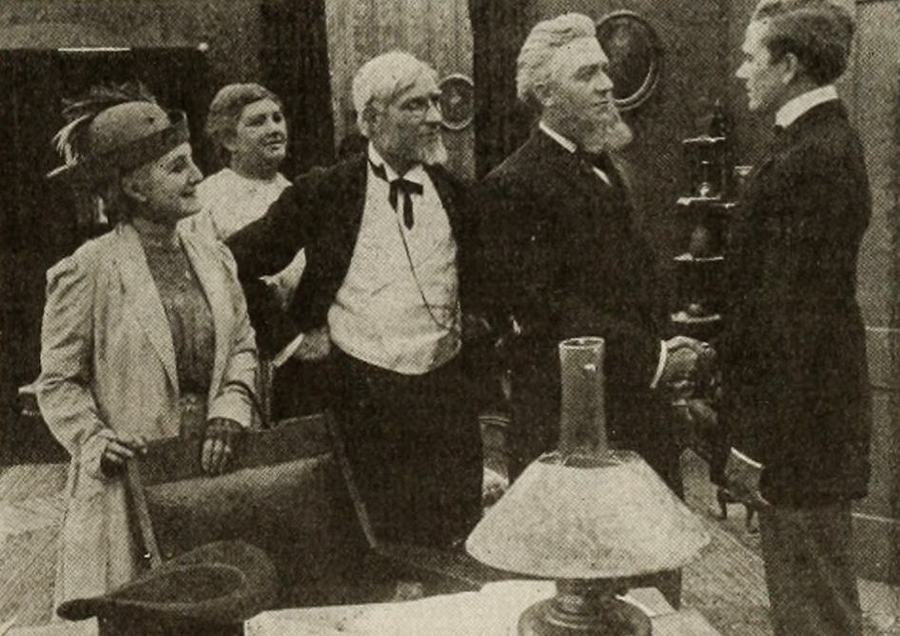
Miss Martha Lacey, austere as a church pew, and Judge Calvin Trent, whose gavel once cracked against love itself, volley responsibility until young John Dunham—equal-quill attorney and reluctant Cupid—ferries the bad news in person. Their parlor collision, laced with barbed regrets, is staged in one unbroken medium shot: two overstuffed chairs, a ticking mantel clock, and a mirror that cruelly doubles every scowl. Sylvia, unbeknownst to them, occupies the corner settee, absorbing every syllable. The moment she steps forward, the frame subtly dollies—an early, elegant use of camera movement to underscore emotional vertigo.
Exiled to the granite coast, Sylvia meets Cousin Thinkright—yes, that is his Christian name, bestowed by a father who believed nomen est omen. With mane like surf spray and eyes that have watched forty years of tides, Thinkright manages the Judge’s farm yet quotes Emerson while mending lobster traps. The Tide Mill—a gaunt, weather-shingled hulk whose shutters have been bolted since a long-ago lover drowned—becomes the film’s central metaphor. Sylvia’s declaration, “Only love will open those shutters,” sounds trite on paper, but actress Cora Drew delivers it with the hush of someone discovering a relic inside her own ribcage.
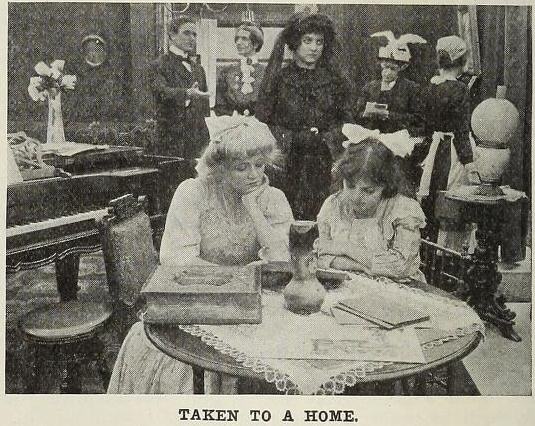
Edna Derwent arrives by sloop: golden curls, tennis whites, a laugh that scatters gulls. Betty Schade plays her not as vamp but as sunlight incarnate—so blameless that Sylvia’s envy feels sacrilegious. Their rivalry crests during a clambake on Hawk Island, staged at magic hour with actual torches. Weber overlays a double exposure: Edna laughing in the foreground, Sylvia’s sketched self-portrait crumpling in the embers—an audacious visual for 1914 and still goosebump-inducing.
Cue the winter interlude: Sylvia in a drafty Back-Street garret, fingertips stained ultramarine, sketching North-End urchins for ten cents a likeness. Weber splices in actuality shots of the 1914 snowstorm—trolley cars marooned in drifts—then dissolves to Sylvia’s oil studies glowing like cathedral glass. The montage predates Bespridannitsa’s artisanal training sequences by a full decade, yet feels fresher because every brushstroke is motivated by hunger, not montage cliché.
Spring. Sylvia returns to find the Tide Mill’s shutters yawning wide, Atlantic light pouring through like molten topaz. Inside, Dunham—who has purchased the structure with the Judge’s quietly repaid loan—has converted the upper floor into an atelier worthy of Paris: skylights, a north window, a Turkish rug, a taboret arrayed with sable brushes. The proposal is whispered, not declaimed; the kiss happens off-camera, because Weber trusts the viewer to supply the electricity. The final shot cranes upward through the mill’s loft as the camera tilts toward the sky, shutters flapping like gulls. Cue iris-out.
Cora Drew’s Sylvia is a masterclass in calibrated vulnerability: watch her pupils dilate when she first spots the opened shutters—wonder, not triumph. Herbert Rawlinson’s Dunham sidesteps bland savior clichés; his smile always arrives a half-second late, as if conscience were tugging the corners. Frank Lloyd, later the Oscar-winning director of Mutiny on the Bounty, here plays the Judge with granite-jawed repression—observe how he fingers a cameo miniature of Martha whenever guilt pricks. Ann Little’s Martha, meanwhile, could slice bread with the angle of her bonnet brim.
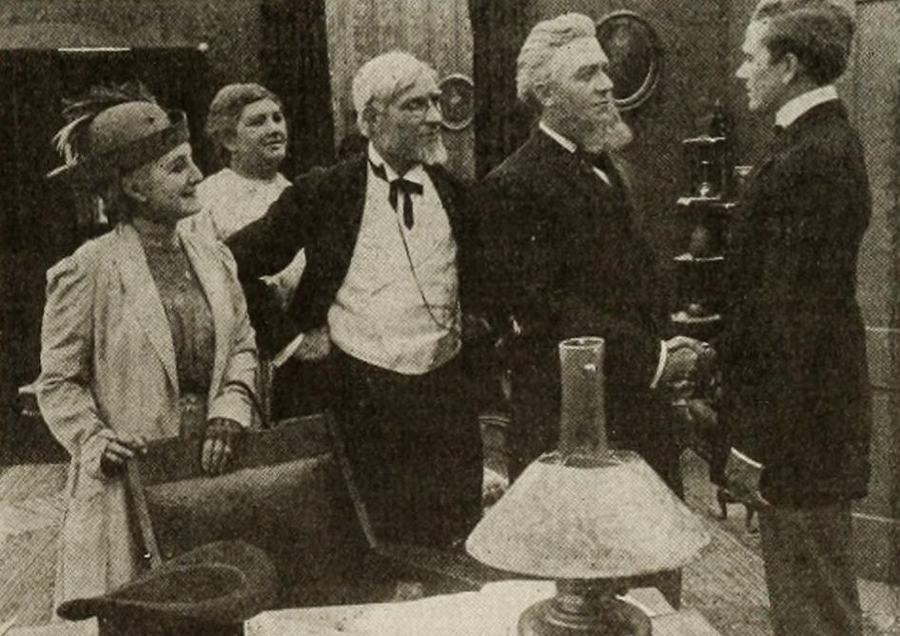
Lois Weber, America’s first auteur, employs tinting like emotional chords: amber for interior warmth, viridian for jealousy, cobalt for the mill’s night scenes. She layers dissolves within the same frame—Sylvia’s sketched self-portrait superimposed over the real girl walking into surf—creating a palimpsest of identity. Compare this to the relatively static tableaux of The Mystery of Edwin Drood from the same year, and Weber feels centuries ahead.
The only surviving 35 mm print resides at the Library of Congress, battered but complete, missing Dutch titles that have been reconstructed from Burnham’s novel. A 2K scan circulates among private archivists; rumors swirl of an upcoming Blu-ray from Kino Lorber paired with Weber’s Hypocrites. Streamers beware: the YouTube rips are nth-generation VHS dubs that turn the sea-green tint into mushy gray.
In an era when algorithmic feeds monetize envy, The Opened Shutters preaches that creativity and mercy are the only currencies that don’t inflate. Sylvia’s arc—orphan to artist to beloved—argues that self-worth is forged, not bestowed. The film also interrogates reparations: every relative who once rebuffed her becomes architect of her ascent. Viewers emerging from post-pandemic isolation will recognize the mill’s sealed windows as their own pandemic blinds, the final aperture as a metaphor for cautious re-entry.
Where Love Everlasting wallows in masochistic sacrifice and Brother Against Brother weds melodrama to Civil War carnage, The Opened Shutters opts for restorative justice. Its nearest kin is Ungdomssynd, yet the Swedish film punishes its heroine for erotic transgression whereas Weber rewards Sylvia for shedding resentment.
Nitrate may be flammable, yet this particular reel refuses to combust. Its plea—for clemency, for pigment, for the courage to unbolt our own shutters—remains combustive in the best sense. Watch it, then go paint something, forgive someone, open a window. Love, like light, is only useful once it moves outward.

IMDb —
1920
Community
Log in to comment.