DbcultAccessing Vault...
Cult Review
Senior Film Conservator
It begins with the hiss of a projector lamp and the scent of cut grass: an age when health resorts doubled as fashion runways and ministers still wore white while throwing jabs. Augustus Thomas’s screenplay—adapted from his own Broadway hit—treats Prohibition panic like a passing sneeze, preferring to ogle the social contortions of class climbing, ring lore and churchly decorum. The result feels like a bridge between The Firefly’s operetta sparkle and The Dare-Devil Detective’s slam-bang pacing, yet lighter on its feet than both.
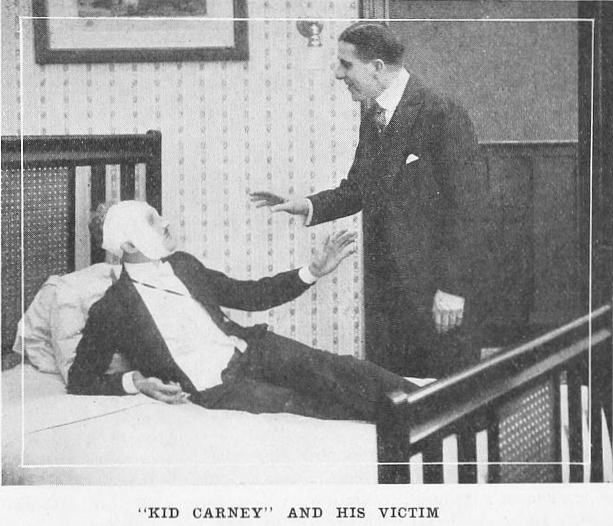
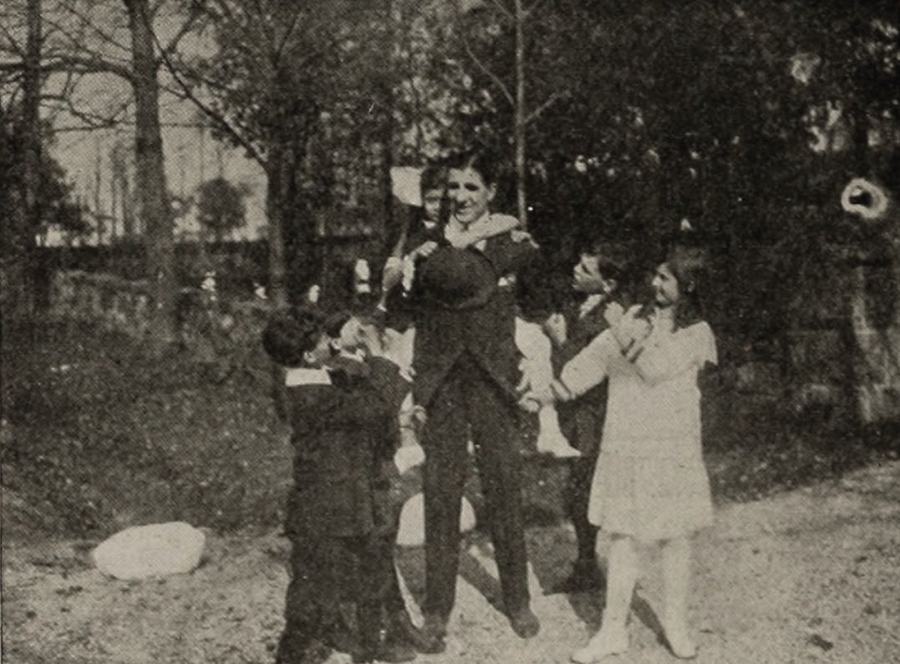
Rev. Bradford—equal parts Elmer Gantry and glass menagerie—trundles into William Muldoon’s Saratoga-style sanatorium convinced that divine muscles can be kettle-belled into shape. He mistakes “Kid” Garvey, a palooka with champagne aspirations, for one of Muldoon’s sanctioned trainers. The gag lands because the film never winks: the Kid’s ratty gym shirt passes clerical scrutiny, and the minister’s starched collar looks regulation in a boxing ring. Their pastoral sparring session, framed by privet hedges and peering urchins, is cinema’s first recorded instance of a sermon delivered via left-cross.
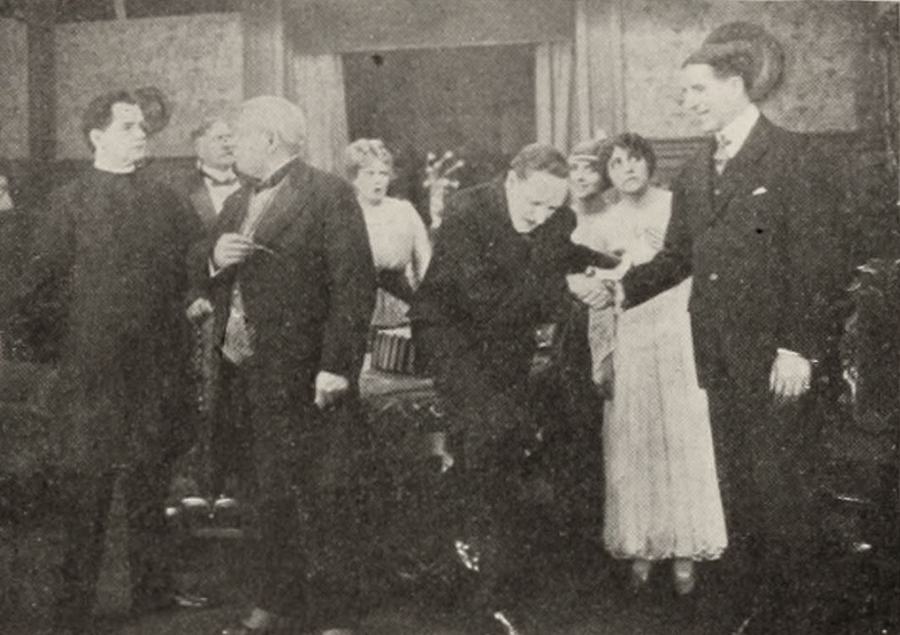
Enter Catherine Fulton—a débutante whose moral compass spins like a weather vane in a cyclone—and her watchful chum Estelle. Catherine’s curiosity is less about pugilism than about the musky whiff of forbidden pavement beneath Garvey’s borrowed civility. Their meet-cute unfurls on a manicured croquet lawn where mallets stand like idle sentinels. One croquet ball, nudged by off-screen mischief, clacks against a post—an audible cue that decorum is about to fracture.
Reginald Lumley, a tailcoat peacock, already brags of engagement to Catherine, though his slinky past with vaudeville firebrand Myrtle Morrison threatens to detonate the match. Myrtle—billed as “the human Catherine wheel” in dime-museum parlance—was once nudged toward virtue by Judge Bates, who now pals around with the resort’s clientele. When Garvey reconnects with Myrtle, the film slips into a fugue of mirrored identities: everyone wears a stage name like borrowed plumage. The minister dines with “Miss McCarthy,” blissfully unaware that Broadway columnists sharpen knives over her real moniker.
Said dinner becomes tabloid chum; a muckraking scribbler spots the odd trinity—cleric, boxer, chorus queen—slurping bouillabaisse at a beachfront café, and next morning’s headline yanks the narrative into the public domain. The scandal isn’t sin per se but misalliance: the wrong sort of people sharing oxygen. The film’s satirical fang shows here, anticipating 1920s café-society exposés and, decades later, the paparazzi circuses that would devour the likes of The Lady Outlaw.
Garvey, desperate to ascend the social ziggurat, insists on using his birth-crust name, Frank Sheldon, but Catherine fears parental reprisal. Their compromise? Midnight elopement—an Edwardian equivalent of a Vegas chapel dash. Estelle, smelling subterfuge, volunteers to play sick, then swaps places with her bestie at ignition time. The visual gag—Garvey roaring off with the wrong veiled woman while Catherine kicks a stained-glass panel into glitter—belongs to the same prankish cosmos as A Princess of Bagdad’s flying-carpet mishaps, yet Thomas times it like a Swiss watch.
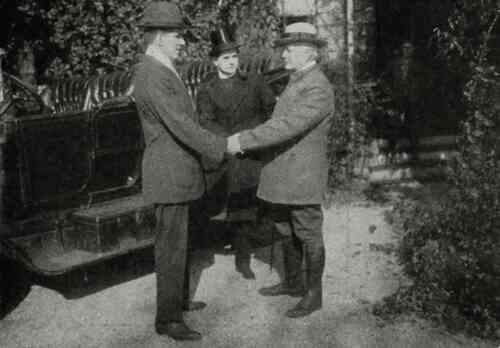
Meanwhile, back in orchestra seats, Judge Bates discovers Myrtle’s name on the playbill just as Lumley storms out and into the path of the runaway roadster. The pile-up lands everyone in night-court limbo, handbags and reputations scattered like confetti. A single monogrammed valise—those initials “C.F.”—gives the gossip hound the breadcrumb he needs, and the third act becomes a race to stitch truth before rumor bakes into folklore.
James J. Corbett—world heavyweight champ turned thespian—brings pugilistic authenticity but also a dancer’s lightness. Watch him shadowbox with a parasol: he jabs, feints, then twirls the flimsy thing like a matador’s cape. His comic timing is elastic; he stretches pauses until the audience leans forward, then snaps the punchline like a towel. Opposite him, Mona Ryan’s Catherine is no flapper cliché. She measures desire in micromovements: a gloved finger drumming on a porch rail, a sideways glance that lingers a half-second too long. Together they generate the kind of friction that needs no title-cards to translate.
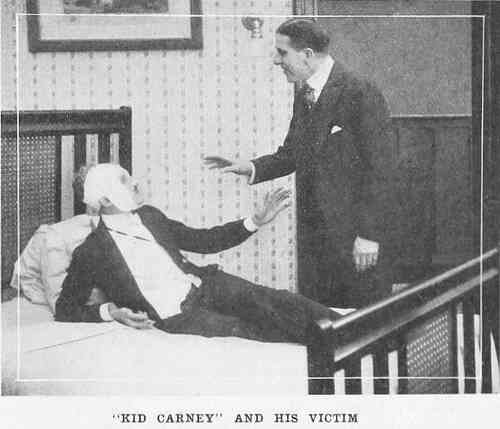
Paul Gilmore’s Rev. Bradford oscillates between priggish and puppyish, never calcifying into caricature. Edith Luckett’s Estelle, meanwhile, steals frames with a single raised eyebrow—an instrument sharper than any boxing glove. Note how she pockets Catherine’s discarded ring, cradling it like contraband, the gesture foreshadowing her own romantic coup.
Cinematographer Rawland Ratcliffe favors wide establishing shots that turn the resort into a dollhouse of foibles. Inside, he deploys venetian-blind lattice work: bars of light stripe across faces, suggesting prison or confessional—pick your metaphor. During the elopement sequence, moonlight pools on polished parquet, turning hallways into skating rinks of anxiety. Exterior scenes glow with a butter-yellow patina, the tinting reminiscent of hand-painted The Nightingale frames, though here it underscores pastoral innocence soon to be bruised.
Released only months before the 19th Amendment’s final ratification, the film brandishes proto-feminist spunk: women engineer escapades, swap suitors, and dictate marital terms. Yet it also lampoons moral crusaders who equate pugilism with perdition—a jab at Anthony Comstock-style censorship. The cook’s disapproving glower, played for laughs, carries real-world residue: Progressive Era clergy often condemned prize-fighting as “human cock-fighting.” Thomas flips the script, suggesting that a man who earns his living in the ring might live a life less sullied than the gossip-addled gentry.
If The Napoleonic Epics glorified historical sweep, and Bar Kochba mythic valor, The Other Girl shrinks history to drawing-room scale, preferring the politics of petticoats and parlor games. Its DNA resurfaces in 1930s screwball—think The Awful Truth—yet its DNA is also traceable to A Militant Suffragette’s social-barrier breaching and Der Eid des Stephan Huller’s moral cul-de-sacs.
Because it pirouettes on contradictions: reverence vs. rambunctiousness, silk vs. sweat, hymnal vs. haymaker. Because its sexual politics remain spry a century on. Because, at a brisk five reels, it never overstays its welcome—unlike certain white-slavery melodramas that belabor every social ill. And because, in an age when every digital artifact risks pixel-blur anonymity, stumbling on a 35-mm print of The Other Girl feels like unearthing a Fabergé egg in a thrift-store bin.
Catch it at a silent-film festival, on a boutique Blu, or via the Library of Congress streaming portal—then spend the evening arguing whether Corbett could have floored Chaplin in a comedic bout. Either way, let the final bell ring knowing you’ve witnessed a breezy, breezy ode to love’s uppercut: swift, stinging, and capable of knocking even the most righteous among us clean off our moral high horse.
IMDb 6.4
1936
Community
Log in to comment.