DbcultAccessing Vault...
Cult Review
Senior Film Conservator
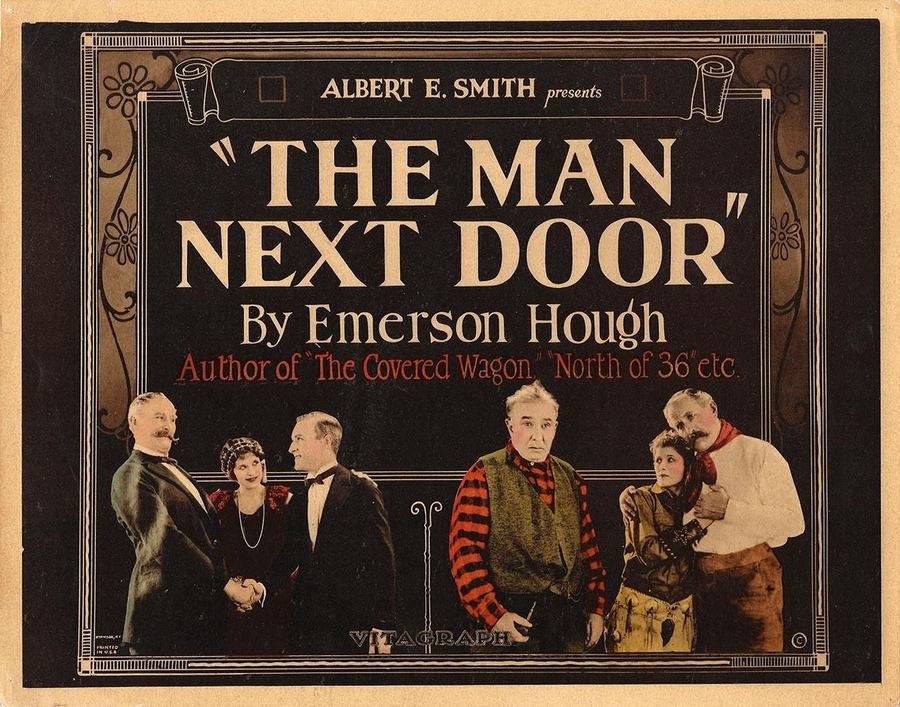
In the annals of silent cinema, few themes resonate with as much persistent vitality as the friction between the self-made man of the soil and the inherited dignity of the urban elite. The Man Next Door, directed with a keen eye for spatial irony, serves as a quintessential artifact of this cultural dissonance. The film does not merely present a story; it constructs a laboratory where the rugged individualism of the cattle ranch is forcibly injected into the hyper-stratified atmosphere of Eastern high society. Colonel Wright, portrayed with a gruff but vulnerable gravitas by David Torrence, is the catalyst for this experiment. His decision to move his daughter, Bonnie Bell, to the East is a sacrificial act—a surrender of his own comfort for her perceived advancement. It is a narrative beat we often see in films like The Jay Bird, where the pastoral innocence is tested by the complexities of modernity.
The aesthetic of the film relies heavily on the juxtaposition of environments. The sprawling, dusty vistas of the West are replaced by the claustrophobic elegance of brick walls and wrought-iron fences. These fences are not merely property markers; they are the physical manifestations of the psychological barriers between the Wrights and the Wisners. When the Colonel moves next door to the Wisners, he isn't just changing his zip code; he is declaring war on a caste system he neither understands nor respects. This sets the stage for a domestic cold war that feels surprisingly contemporary in its depiction of neighborly hostility.
At the heart of the film lies the romantic entanglement between Bonnie Bell (Alice Calhoun) and Jimmy Wisner (James Morrison). The genius of the plot—penned by the prolific Emerson Hough—is the central deception. Jimmy, in a moment of serendipitous humility or perhaps a subconscious desire to escape his own gilded cage, allows Bonnie Bell to believe he is the gardener. This inversion of status is a masterstroke of dramatic irony. It allows their love to germinate in a vacuum, free from the toxic influence of their fathers' rivalry. Unlike the heavy-handed moralizing found in Moral Suicide, The Man Next Door treats this deception with a light, almost ethereal touch.
Alice Calhoun delivers a performance of luminous sincerity. Her Bonnie Bell is not a damsel in distress but a woman of the plains—capable, observant, and fiercely independent. When she falls for the "gardener," it is an endorsement of labor over lineage. James Morrison, conversely, plays Jimmy with a subtle wink to the audience, capturing the thrill of being loved for who one is rather than what one owns. Their chemistry is the engine that prevents the film from descending into mere caricature. They represent a bridge across a chasm that their fathers, played with delightful stubbornness by Frank Sheridan and David Torrence, seem intent on widening.
The enmity between Colonel Wright and Mr. Wisner is the film's source of comedic and dramatic tension. It is a clash of two different types of American power: the power of the land versus the power of the bank. This rivalry is reminiscent of the thematic core in A Broadway Cowboy, though here the stakes feel more intimately tied to the domestic sphere. The Colonel's foreman, Curley, provides a grounding presence, acting as a surrogate for the audience's bewilderment at the absurdities of city etiquette. The film uses Curley to highlight the artifice of the Wisners' world, often to hilarious effect.
The direction by Victor Schertzinger (though uncredited in some records, the style is unmistakable) utilizes medium shots to emphasize the physical proximity of these two warring households. We see the characters peering over hedges and through windows, creating a sense of panoptic surveillance. This visual language underscores the lack of privacy in "society," a sharp contrast to the infinite horizons the Colonel left behind. The inclusion of Pal the Dog is more than just a novelty; the canine becomes a silent witness to the absurdity of human conflict, often showing more wisdom than the feuding patriarchs. For those who appreciate the canine presence in cinema, Pal’s role here is as pivotal as any seen in The Stage Hand.
When placing The Man Next Door within the broader tapestry of 1920s cinema, it stands out for its refusal to completely villainize either side. While the Wisners are snobbish, they are not inherently evil; while the Colonel is hot-headed, he is motivated by love. This nuance is often missing in contemporary works like The Other Half, which tends to paint class struggles in broader, more binary strokes. The film shares a certain DNA with Caprice of the Mountains, particularly in its exploration of the "uncivilized" spirit trying to find its footing in a structured environment.
Furthermore, the writing by C. Graham Baker ensures that the pacing remains brisk. The transition from the Colonel’s initial opposition to the final, warm reception of the eloped couple is handled with a narrative dexterity that avoids the saccharine traps of less sophisticated melodramas like The Love Cheat. The film understands that for the resolution to feel earned, the conflict must feel insurmountable. By the time Jimmy reveals his true identity, the audience is primed for a release of tension that is both satisfying and thematically resonant.
Technically, the film is a testament to the sophistication of early 20th-century lighting. The interior scenes in the Wisner mansion are bathed in a soft, diffused light that suggests a world of muffled sounds and polite conversations. In contrast, the scenes involving the Colonel often feature higher contrast, perhaps reflecting his black-and-white view of morality and justice. This visual storytelling is far more effective than any title card could ever be. It reminds us of the power of the image in films like The Veiled Mystery, where the atmosphere does the heavy lifting of the plot.
The editing, too, deserves mention. The cross-cutting between the two households during the height of the feud creates a rhythmic tension that builds toward the elopement. It is a precursor to the screwball comedies of the 1930s, possessing a proto-Lubitsch touch in its handling of domestic space and secret desires. While it may not have the gothic intensity of Obsession or the grim social commentary of More to Be Pitied Than Scorned, it occupies a vital middle ground of sophisticated entertainment.
Ultimately, The Man Next Door is a celebration of the American character's capacity for evolution. It suggests that while we may be defined by our origins, we are not imprisoned by them. The reconciliation of the two fathers is not just a happy ending for a romance; it is a symbolic unification of a divided nation, merging the vitality of the West with the refinement of the East. It is a film that rewards the viewer with its warmth, its wit, and its unwavering belief in the possibility of understanding across the garden fence. For those looking to explore the roots of the romantic comedy, this 1923 gem is an essential stop, standing tall alongside other character-driven pieces like The Fortunate Youth or the whimsical Las brujas.
IMDb 6
1925
Community
Log in to comment.