DbcultAccessing Vault...
Cult Review
Senior Film Conservator
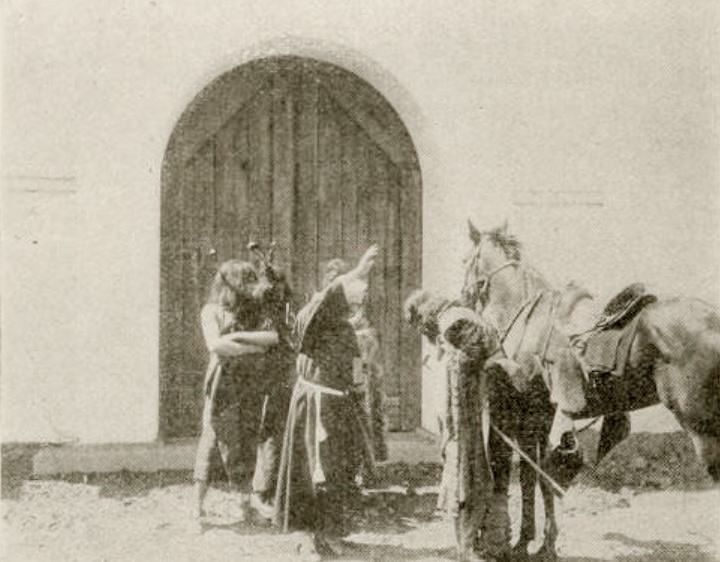
In the annals of early cinema, certain films transcend mere entertainment to become vital historical documents, capturing the zeitgeist of an era and the foundational myths of a place. A. Mackay Sutherland's "The Pageant of San Francisco" stands as a remarkable exemplar of this phenomenon. It is not merely a motion picture; it is a meticulously crafted, sweeping epic, a cinematic ode to a city forged in discovery, ambition, catastrophe, and an unyielding spirit of renewal. This film embarks on an ambitious chronological expedition, beginning with the primordial wilderness and culminating in the vibrant, modern metropolis that hosted the Panama-Pacific Exposition. It is a testament to the power of narrative to distill centuries of human endeavor into a compelling visual chronicle, inviting its audience to witness the very soul of a city in genesis and triumph.
The film's opening acts are steeped in the romance of exploration, depicting the arduous northward trek of Portola and his intrepid band from the Spanish outpost of San Diego. The moment of their discovery, the panoramic unveiling of the "beautiful expanse of water which is now known as the San Francisco Bay," must have been rendered with a sense of profound awe, a visual representation of destiny unfolding. This sequence is crucial, establishing the foundational myth of the city – its very existence born from a moment of breathtaking revelation. Portola's hurried return to report his findings to the Royal Viceroy sets the stage for the subsequent wave of Spanish colonization. The arrival of Juan Batista Anza's column of settlers, accompanied by the revered Padre Junipero Serra, marks the formal implantation of European civilization. The imagery of the pious monk raising the banners of both church and Spain, invoking divine blessing upon the settlement christened in honor of St. Francis, carries immense symbolic weight. It’s a visual encapsulation of the spiritual and imperial ambitions that first shaped the Californian landscape. The film, through its narrative structure, implicitly celebrates this foundational era, presenting it as a destined precursor to the grander narratives that would follow. It emphasizes the arduous nature of this initial settlement, the courage required to venture into unexplored territories, and the deep-seated belief systems that underpinned such expansionist endeavors. This segment, while perhaps visually straightforward by today's standards, would have resonated deeply with contemporary audiences, connecting them to the very roots of their regional identity. The meticulous attention to these historical details, even in a broad-stroke pageant format, speaks to the film's intent to educate and inspire, rooting the city's identity in a rich, multi-layered past.
The narrative then leaps forward a century, introducing a pivotal turning point with the arrival of the first "Yankee" from the distant United States. This lone figure, almost certainly portrayed by Earle Emlay, embodies the spirit of California's future greatness. His presence signifies a profound cultural and economic shift, marking the transition from a Spanish colonial outpost to an American frontier. This segment, though perhaps brief, is freighted with the symbolism of Manifest Destiny, depicting the inexorable westward expansion that would redefine the continent. The film deftly illustrates how, from this moment, California embarks upon an era of unparalleled expansion and prosperity, rapidly transforming into one of the Union's most significant states. The Mexican War, presented as a catalyst rather than a protracted conflict, succinctly explains California's annexation as a United States territory. The true narrative accelerant, however, arrives with the accidental discovery of gold near San Francisco in 1849. This event triggers a global migration, a veritable flood of adventurers from every corner of the world. The film would have likely depicted this with a sense of frenetic energy, perhaps through montage or rapid scene changes, conveying the sheer scale of humanity converging on the burgeoning city. The impact of the Gold Rush is portrayed as nothing short of miraculous, driving such rapid development that California is admitted as a full-fledged member into the Sisterhood of States within a mere year. This sequence underscores the incredible dynamism and transformative power of economic opportunity, portraying San Francisco as a magnet for ambition and a crucible of American ingenuity. The film, in its grand scale, manages to convey the almost mythical speed of this transformation, a narrative feat for its time. Unlike the more introspective dramas of the era, such as Den sorte drøm or The Road to the Dawn, which focused on individual struggles, "The Pageant of San Francisco" maintains a sweeping, societal perspective, much like the broader historical narratives found in epic literature.
The narrative does not shy away from the darker chapters of the city's history. The decade following statehood saw San Francisco fall into the clutches of a "ring of lawless politicians." This segment, while likely depicted with a certain dramatic gravitas, serves as a crucial counterpoint to the preceding prosperity, illustrating the challenges inherent in rapid growth and the ever-present struggle against corruption. How A. Mackay Sutherland chose to visually represent this era of civic decay would be fascinating; perhaps through stark contrasts between the city's grand facades and the shadowy dealings within. It provides a necessary human element to the otherwise heroic tale of expansion, reminding viewers that progress is often fraught with internal conflicts. However, the true test of San Francisco's spirit arrives with the devastating 1906 earthquake. This calamitous event, which almost leveled the "fair city of St. Francis to the ground," forms the emotional zenith of the film. The visual depiction of "vast stretches that had been reduced to charred ruins" must have been profoundly impactful for contemporary audiences, many of whom would have lived through or remembered the actual disaster. The film's ability to recreate this widespread destruction, even with the limitations of early cinema, would have been a powerful, visceral experience. This is where the film transcends mere historical recounting and ventures into the realm of shared trauma and collective memory. It's a stark reminder of nature's formidable power, a humbling pause in the narrative of human achievement. The inclusion of this catastrophic event is not merely for spectacle; it is integral to understanding the city's identity, a defining moment that forged its resilience.
From the ashes of destruction, the film pivots to a powerful testament to human will and collective endeavor. The rebuilding of the almost-destroyed city showcases "the indomitable American spirit that has made the United States one of the leaders among nations assert itself." This is where the film delivers its most potent message of hope and perseverance. The sequences depicting reconstruction would have been inspiring, highlighting the tireless efforts of countless individuals, the communal spirit, and the sheer determination to resurrect their beloved city. It's a narrative of triumph over adversity, a cinematic celebration of resilience. The phrase "undaunted by disaster, faithful to its ideals the newer and greater city of St. Francis arises from the smoldering ashes of her former self" perfectly encapsulates this spirit, imbuing the reconstruction with almost mythic proportions. The film culminates in a truly breathtaking spectacle: "A beautiful panoramic view showing the entire great Panama-Pacific Exposition, with the hills of the Golden Gate sloping to the sea." This grand finale is not merely an aesthetic flourish; it is a powerful symbol of complete recovery, renewed prosperity, and a triumphant gaze towards the future. The Exposition itself was a declaration to the world that San Francisco was not only back but grander than ever, a beacon of progress and innovation. The film, in capturing this magnificent event, provides a fitting and emotionally resonant conclusion to its epic narrative. It ties together all the threads of discovery, growth, struggle, and rebirth, culminating in a vision of a city fully realized and eternally vibrant. The visual grandeur of the Exposition, juxtaposed against the earlier scenes of devastation, would have offered a profound sense of closure and optimism, leaving audiences with an enduring impression of San Francisco's enduring spirit.
"The Pageant of San Francisco" is more than a historical reenactment; it is a cultural artifact that speaks volumes about the early 20th century's fascination with civic identity and national narratives. A. Mackay Sutherland, as the writer, crafted a story that resonated with the collective memory and aspirations of a rapidly modernizing America. While specific details about Earle Emlay's performance are sparse, his presumed role in embodying the 'Yankee' spirit or other key historical figures would have been central to bringing these grand events to life. The film's very title, "Pageant," suggests a theatrical, grand-scale presentation, likely employing large casts and elaborate sets or outdoor locations to convey the sweeping scope of its subject matter. This was an era when cinema was still defining its narrative capabilities, and a film of this ambition showcases the burgeoning potential of the medium to tell complex, multi-generational stories. Its approach to history is celebratory, emphasizing progress, resilience, and the triumph of the human spirit, aligning perfectly with the optimistic outlook of the early 20th century. While contemporary viewers might find its historical interpretations less nuanced, its value as a primary source for understanding how San Franciscans (and Americans broadly) viewed their own history and identity is immeasurable. It serves as a visual echo of a time when cities, like nations, sought to define themselves through grand narratives of origin and overcoming adversity. The film, in its essence, is a monument to San Francisco, crafted by a generation that had witnessed its profound transformations firsthand. It stands as a powerful reminder of how art, even in its nascent cinematic form, can powerfully shape collective memory and civic pride, offering a lens through which to appreciate the enduring spirit of a truly remarkable city. Its place in the history of cinema is secured not just by its age, but by its ambitious scope and its profound dedication to chronicling the epic journey of a city that refused to be defined by its disasters, choosing instead to rise, brighter and more resilient, from the ashes of its past.

IMDb 8.6
1918
Community
Log in to comment.