DbcultAccessing Vault...
Cult Review
Senior Film Conservator
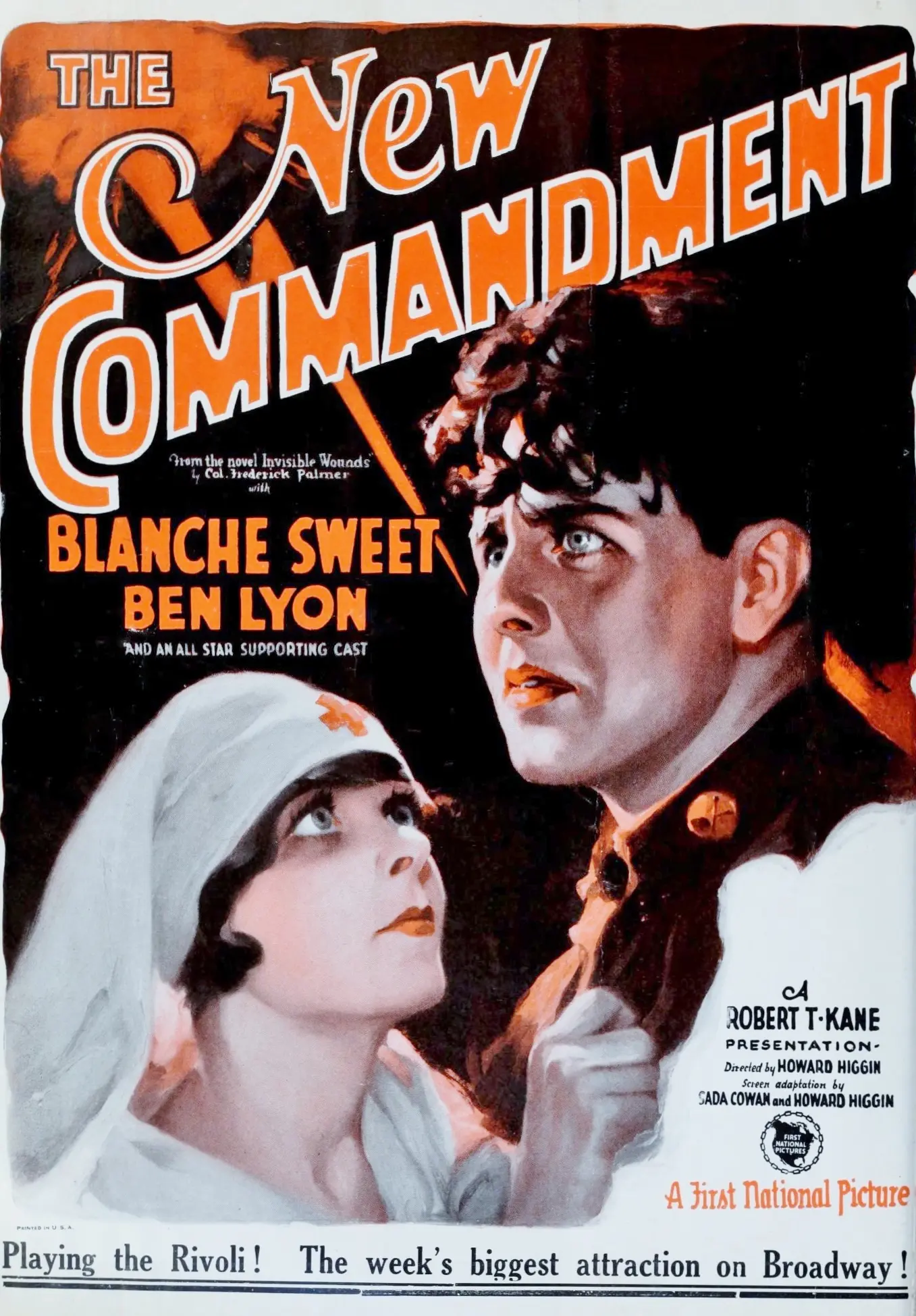
Short answer: Yes, but only if you can stomach a narrative that pivots violently from a breezy romantic comedy into a somber wartime redemption arc. This film is for those who appreciate the expressive power of silent-era legends like Blanche Sweet and those fascinated by the jazz-age obsession with Parisian bohemianism; it is not for viewers who demand a consistent tone or a protagonist who isn't occasionally an insufferable snob.
In the landscape of 1925 cinema, The New Commandment stands as a fascinating, if somewhat fractured, artifact of a world on the brink of total change. It captures a specific moment where the Victorian sensibilities of the past were being steamrolled by the hedonism of the 1920s, only to be reminded of the lingering shadows of the Great War. You should watch it to see Blanche Sweet at the height of her powers, delivering a performance that outclasses the script at every turn.
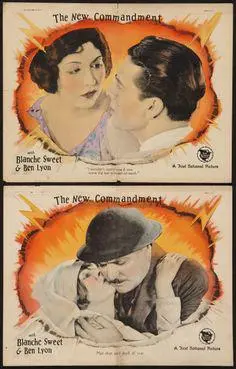
This film works because it refuses to let its high-society trappings stifle the genuine chemistry between its leads, particularly in the mid-section set in Paris. This film fails because the third-act pivot into the Foreign Legion feels less like a character evolution and more like a desperate attempt to find a resolution when the romantic conflict hit a stalemate. You should watch it if you want to see how silent cinema transitioned from the moralizing of In the Bishop's Carriage into the more cynical, fast-paced world of the mid-20s.
The film opens with a biting look at the American upper class. Effie Shannon plays Mrs. Ormsby Parr with a chilling, calculated grace that makes her feel more like a chess grandmaster than a maternal figure. Her attempt to manufacture a marriage is the catalyst for the entire plot, yet the film treats her machinations with a surprising amount of levity. The cruise ship scenes are polished and feel appropriately claustrophobic, highlighting the artificiality of Billy’s life.
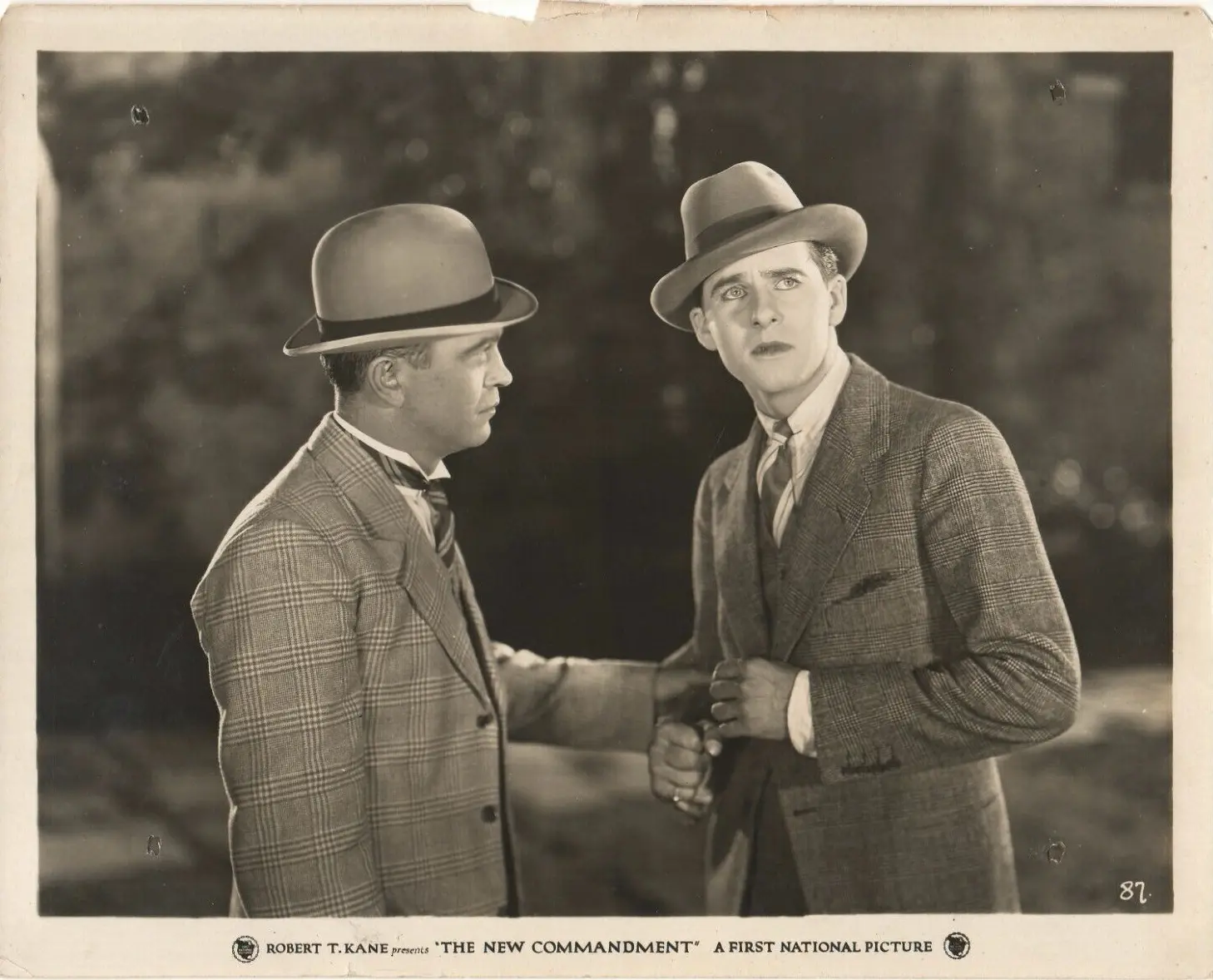
The escape sequence, where Billy and Red (George Cooper) ditch the high-society life for the French coast, provides the film's first real spark of energy. George Cooper’s performance as Red is a highlight; he brings a gritty, working-class humor that offsets Ben Lyon’s somewhat soft-edged Billy. Their dynamic feels modern, reminiscent of the "buddy comedies" that would become a staple of cinema decades later. Red’s cynicism about the "swells" on the boat provides a necessary grounding for the audience.
Once the action shifts to Paris, the cinematography takes on a more intimate, almost voyeuristic quality. The artist’s studio, where we meet Gaston Picard and Renée Darcourt, is a masterclass in set design. It feels lived-in, cluttered with the debris of creative passion and the lingering scent of tobacco and turpentine. Here, the film moves away from the broad strokes of social satire and into the messy reality of human desire.
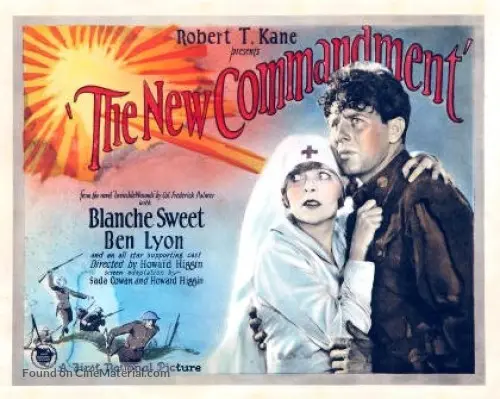
Blanche Sweet, as Renée, is the soul of the film. While the plot asks her to be a source of jealousy and doubt for Billy, Sweet portrays Renée as a woman with agency and a weary understanding of how men perceive her. In one specific scene, where she poses for Picard while Billy watches from the shadows, her eyes convey a profound sense of exhaustion. She isn't just a model; she is a woman being commodified by two different men for two different reasons.
The conflict between Billy and Renée is rooted in Billy’s own insecurity. Despite his rebellion against his stepmother’s world, he carries its prejudices with him. He cannot reconcile Renée’s profession with his idealized version of a wife. This is where the film takes a debatable stance: it suggests that Billy’s jealousy is a sign of his love, rather than his immaturity. A modern viewing reveals Billy to be quite frustrating in these moments, a pampered youth not unlike the protagonist in Pampered Youth.
Just as the domestic drama reaches its boiling point, the film throws a curveball: the outbreak of war. This is a common trope in 1920s cinema, used to provide a "cleansing fire" for characters who have become stuck in their own petty dramas. However, in The New Commandment, the transition feels particularly abrupt. One moment we are in a Parisian cafe, and the next, Billy is donning the uniform of the Foreign Legion.
The war sequences are surprisingly gritty for a film that started as a romantic comedy. The mud, the cramped trenches, and the chaotic energy of the hospital scenes provide a stark contrast to the luxury of the opening act. It’s here that Billy finally grows up, but it feels like the movie had to literally blow up his world to make him realize that Renée’s "reputation" didn't matter. It’s a heavy-handed moral lesson that lacks the nuance of the earlier scenes.
The hospital reunion is a classic silent film climax. The lighting is soft, the acting is heightened, and the emotional payoff is designed to pull at the heartstrings. While it is undeniably effective, it feels a bit unearned. The film skips over the hard work of reconciliation in favor of a miraculous encounter on a hospital bed. Compared to the grounded realism of Hitchin' Posts, this feels like a bit of a narrative shortcut.
Ben Lyon is serviceable as Billy, though he often struggles to match the emotional depth of Blanche Sweet. He excels in the physical comedy of the early scenes but feels a bit out of his element in the heavier dramatic moments of the finale. Pedro de Cordoba, as the artist Gaston Picard, brings a much-needed layer of sophistication and ambiguity to the film. You’re never quite sure if he’s a villain or just another man caught in the web of Parisian romance.
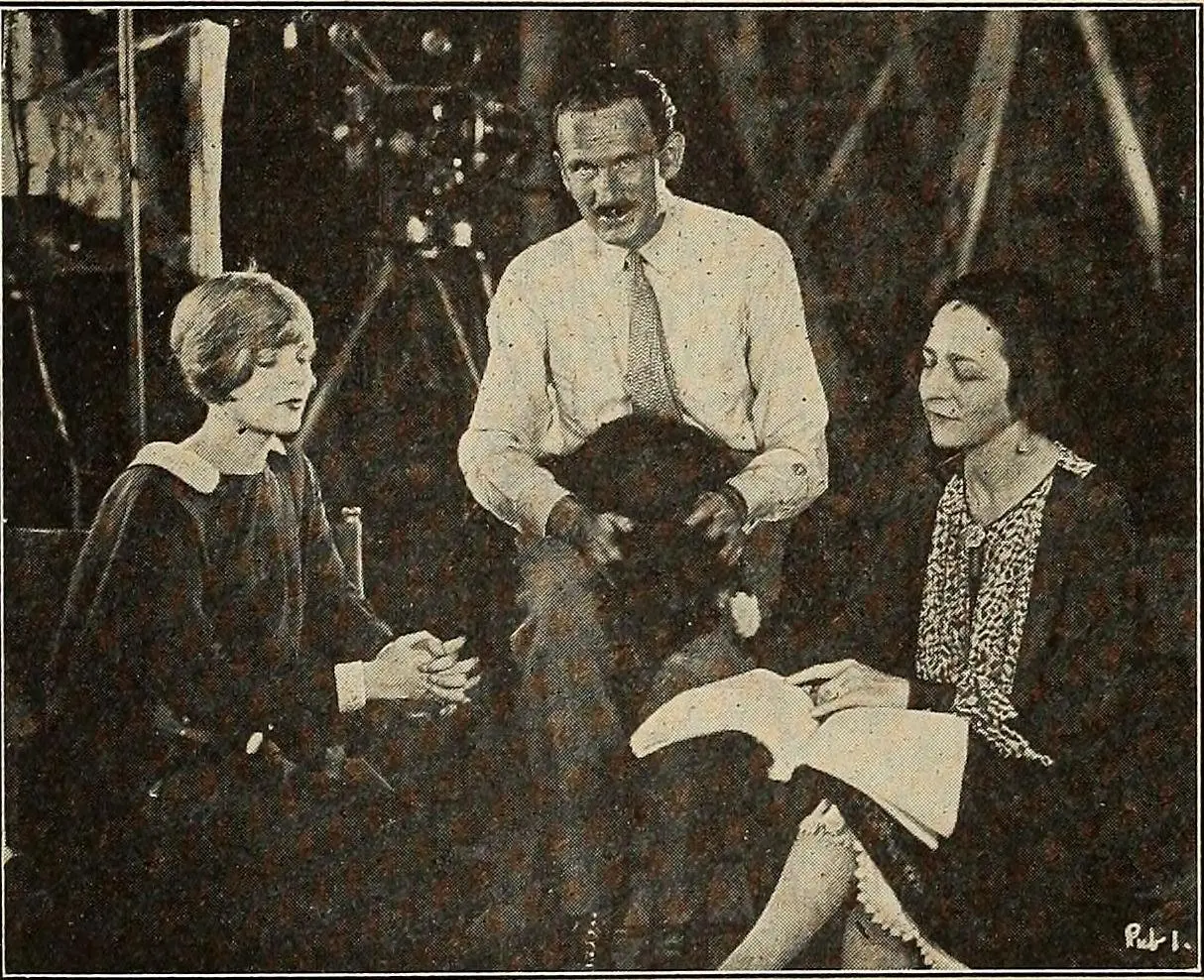
Director Howard Higgin shows a keen eye for framing, particularly in the way he uses depth of field to show characters observing one another from a distance. The use of shadows in the studio scenes creates a sense of tension that the dialogue (via intertitles) doesn't always achieve. The pacing, however, is uneven. The first half moves at a brisk, engaging clip, while the middle section drags as the characters circle the same jealous arguments repeatedly.
The New Commandment is a film of two halves that don't quite fit together, yet the friction between them creates something memorable. It is a story about the death of the old world and the messy birth of the new one. While it lacks the cohesive brilliance of something like Fate's Frame-Up, it makes up for it with sheer personality and the magnetic presence of its lead actress.
Ultimately, the film is a fascinating look at the anxieties of the 1920s. It asks if love can survive the rigid structures of class and the brutal reality of war. The answer it gives is a resounding "yes," even if the path it takes to get there is a bit rocky. For fans of the era, it’s a mandatory watch. For the casual viewer, it’s a beautiful, if occasionally frustrating, glimpse into a bygone age of cinema.

IMDb —
1917
Community
Log in to comment.