DbcultAccessing Vault...
Cult Review
Senior Film Conservator
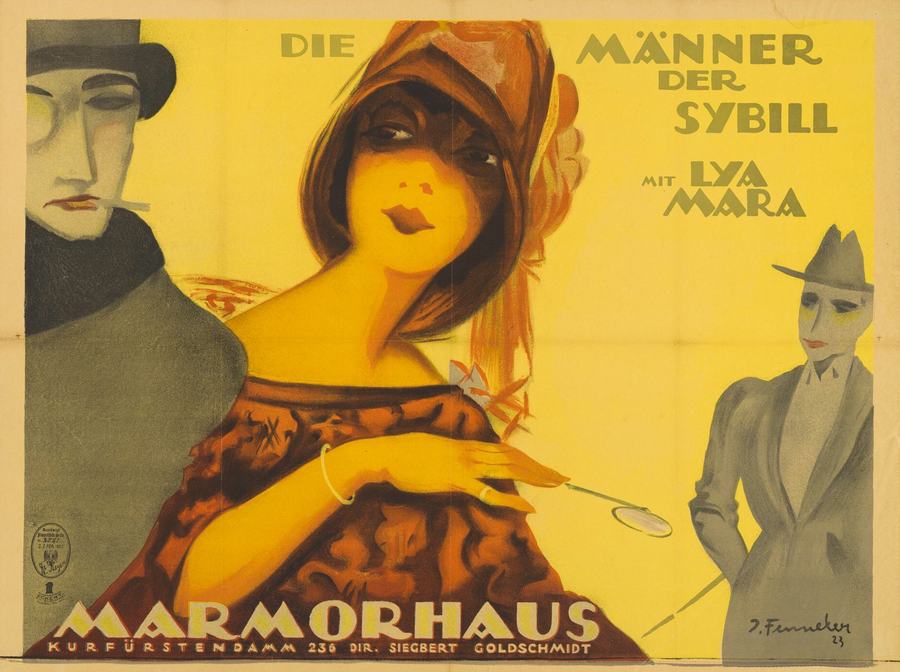
To gaze upon Die Männer der Sybill is to witness the delicate crystallization of the Weimar-era 'Frauenfilm.' It is a work that breathes through the luminous presence of Lya Mara, an actress whose ability to convey internal turbulence through the mere flicker of an eyelid remains unparalleled in the silent canon. Directed by Friedrich Zelnik, the film transcends its melodramatic origins to become a poignant meditation on the ephemeral nature of identity. Unlike the more overt sensationalism found in The Exploits of Elaine, Zelnik’s work here is one of quietude and shadow, prioritizing the psychological architecture of its characters over the frenetic pacing of a serial.
The narrative does not merely unfold; it exhales, releasing the pent-up anxieties of a generation caught between the wreckage of the monarchy and the uncertain promise of modernity.
The casting of Rudolf Forster and Fritz Lederer provides a fascinating counterpoint to Mara’s fluidity. Forster, in particular, carries a gravitas that suggests a world weary of its own traditions, while Lederer embodies a more volatile, contemporary energy. This friction between the old and the new is the engine that drives the plot forward. In many ways, the film shares a thematic kinship with The Unbroken Road, yet it eschews that film’s more rugged sentimentality for a sophisticated, urban cynicism that would later become a hallmark of the Kammerspielfilm. The men in Sybill’s life are not villains in the traditional sense; they are victims of their own inability to perceive her as anything other than a reflection of their own needs.
Fanny Carlsen’s contribution to the screenplay cannot be overstated. As a female writer in a male-dominated industry, Carlsen imbues Sybill with a sense of interiority that feels radical for 1923. There is a specific scene—a long, agonizingly slow pan across a ballroom—where Sybill’s isolation is made manifest. She is surrounded by suitors, yet she is profoundly alone. This visual metaphor for the female condition resonates with the same haunting power found in A bánat asszonya, where the weight of grief becomes a physical presence on screen.
Technically, the film is a marvel of early 1920s craftsmanship. The cinematography by the uncredited masters of the Zelnik-Mara-Film production unit utilizes a soft-focus aesthetic that lends the proceedings a dreamlike quality. It contrasts sharply with the stark, almost brutal realism of The Eternal Struggle. Here, the world is draped in velvet and lace, yet the emotional stakes are no less visceral. The production design by the likes of Albert Patry (who also appears in a supporting role) creates a claustrophobic elegance—a gilded cage that mirrors Sybill’s social standing. Every frame is meticulously composed, drawing the viewer into a space where the unspoken word carries more weight than any intertitle could possibly convey.
The supporting cast, including Frida Richard and Johannes Riemann, provides a solid foundation for the central drama. Richard, as is often the case, serves as the moral anchor, her weathered features providing a stark contrast to the porcelain perfection of the younger leads. Riemann, meanwhile, brings a touch of the 'bon vivant' that briefly lightens the mood before the inevitable descent into melodrama. This balance of tones is reminiscent of the structural complexity seen in Die Legende von der heiligen Simplicia, though Zelnik’s film remains more grounded in the temporal realities of the 1920s.
One of the most striking aspects of Die Männer der Sybill is its treatment of male vulnerability. In an era where cinema often demanded stoicism from its leading men, Zelnik allows his male characters to crumble. There is a scene involving Carl Auen that is almost uncomfortable in its raw display of emotional disintegration. It subverts the expectations of the 'hero' in a way that feels surprisingly modern, prefiguring the deconstruction of masculinity that would dominate later European cinema. This subversion is far more sophisticated than the binary morality found in something like The Silent Avenger.
The Legacy of the Zelnik-Mara Collaboration
The partnership between Friedrich Zelnik and Lya Mara was one of the most prolific and commercially successful in the history of German silent film. Die Männer der Sybill stands as a testament to their shared vision. While many of their contemporaries were looking toward Hollywood for inspiration—as seen in the stylistic echoes of Betty and the Buccaneers—Zelnik and Mara remained steadfastly European. Their films were rooted in the soil of the continent, obsessed with the nuances of class, the weight of history, and the intricate dance of social etiquette.
Comparing this film to The Chalice of Sorrow reveals a fascinating divergence in how silent cinema handled the theme of sacrifice. While the latter leans into the operatic and the grand, Die Männer der Sybill finds its power in the domestic and the intimate. The stakes are not the fate of nations, but the survival of a single woman’s soul. It is this intimacy that makes the film so enduringly watchable. We are not just spectators to Sybill’s life; we are confidants. The camera lingers on her face with a devotion that borders on the hagiographic, yet it never loses sight of her humanity.
The pacing of the film is deliberate, demanding a level of patience from the audience that is rarely asked for in contemporary cinema. However, for those willing to surrender to its rhythm, the rewards are profound. There is a sequence involving a carriage ride through a rain-slicked Berlin that is among the most beautiful things ever captured on celluloid. The way the light catches the droplets on the windowpane, mirroring the tears on Sybill’s cheeks, is a masterclass in visual storytelling. It evokes a similar sense of melancholic beauty found in Her Silent Sacrifice, yet with a distinctly German edge.
In the broader context of 1923, a year that saw the release of diverse works like the animated whimsy of Kapten Grogg bland vilda djur or the rugged adventure of Just Tony, Die Männer der Sybill occupies a space of high-minded artistry. It is a film that refuses to offer easy answers. Does Sybill find happiness? The ending is ambiguous, a soft fade to black that leaves her future as uncertain as the future of the republic itself. This lack of resolution is precisely what gives the film its staying power. It does not seek to comfort the audience, but to provoke them, to leave them questioning the very nature of the 'men' who claimed to love her.
The writing of Fanny Carlsen ensures that the dialogue—conveyed through sparse but poetic intertitles—never feels redundant. Every word is chosen for its maximum emotional impact. When Sybill finally speaks her truth, it is with a brevity that stings. This economy of language is a sharp contrast to the more verbose narratives of the era, such as Where Is My Father?. Carlsen understands that in the world of Sybill, what is left unsaid is often more devastating than what is articulated.
Ultimately, Die Männer der Sybill is a triumph of atmosphere and performance. It is a film that requires us to look past the surface of things—past the beautiful costumes, the opulent sets, and the glamorous stars—to see the raw, pulsing heart underneath. It is a reminder of the power of silent cinema to communicate complex psychological truths without the aid of sound. Like the best works of the era, it remains a haunting experience, a ghost from the past that continues to speak to the present with startling clarity. It is as essential as the darkly comedic observations in Pufi - Hogyan lett ünnepelt hös egy jámbor pesti férjböl? or the tension of Forbandelsen, yet it possesses a unique elegance that is entirely its own. To ignore this film is to ignore a vital piece of the cinematic puzzle that is the Weimar Republic.
Critique by the Cinephile's Journal. All rights reserved. No part of this analysis may be reproduced without the express permission of the author, unless you're willing to brave the same existential dread as Sybill herself.
IMDb 7.7
1928
Community
Log in to comment.