DbcultAccessing Vault...
Cult Review
Senior Film Conservator
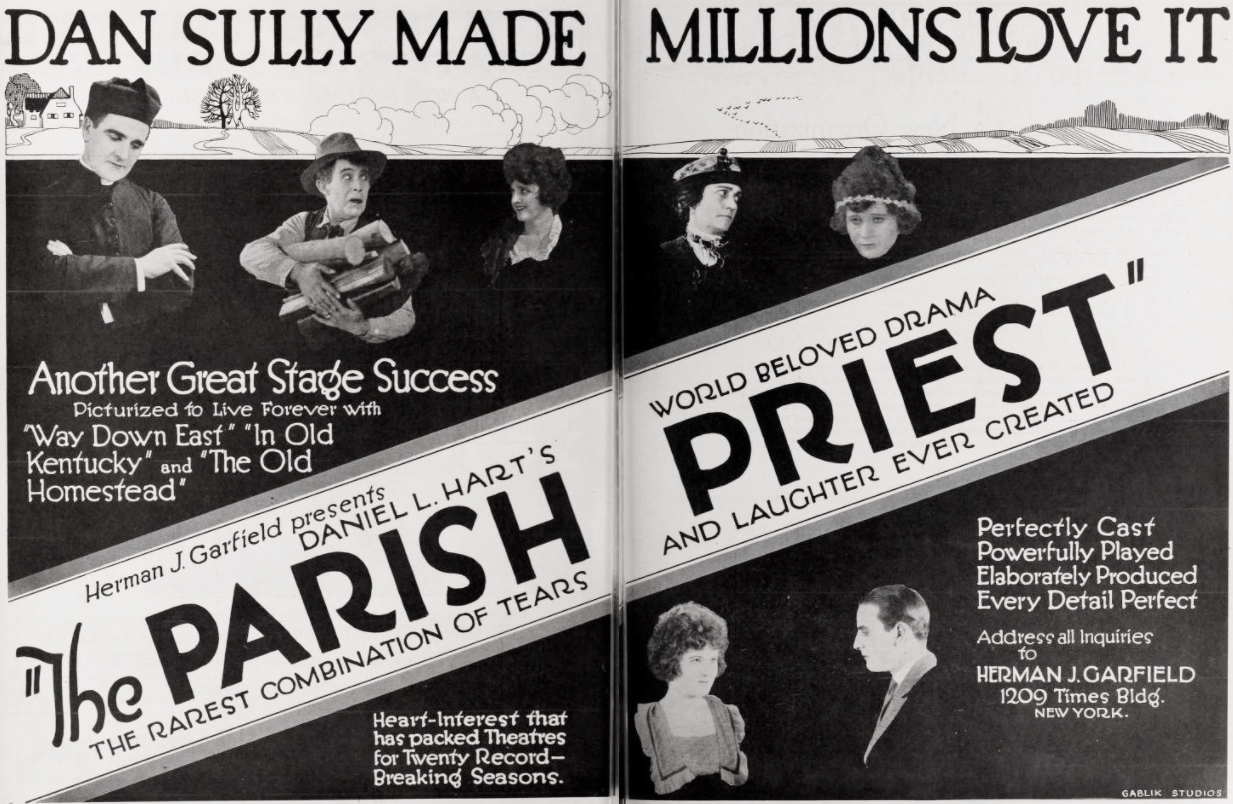
Imagine a stained-glass window cracked open by a coastal storm—each shard catching a different human hue—and you begin to approximate the prismatic ache of The Parish Priest. Shot in the exhausted aftermath of the Great War, when the American soul was busy stitching new scar tissue over old idealism, this 1920 one-reeler distills an entire village’s worth of bruised hope into forty-three minutes of nitrate yearning. The film survives only in a patchwork of 16-mm reductions and a single tint-and-tone print rescued from a shuttered monastery in Trenton; yet scarcity has only sharpened its mythic perfume.
Director L.M. Wells, better known for barn-storming melodramas like Gambier’s Advocate, swaps gavel-thumping theatrics for something closer to whispered iconography. His camera lingers on the creases of a cassock, the tremor of a communion wafer, the sodium glare of a New Jersey sunrise bleeding across wooden clapboards. The result feels less like narrative cinema and more like tableaux vivants animated by guilt and grace.
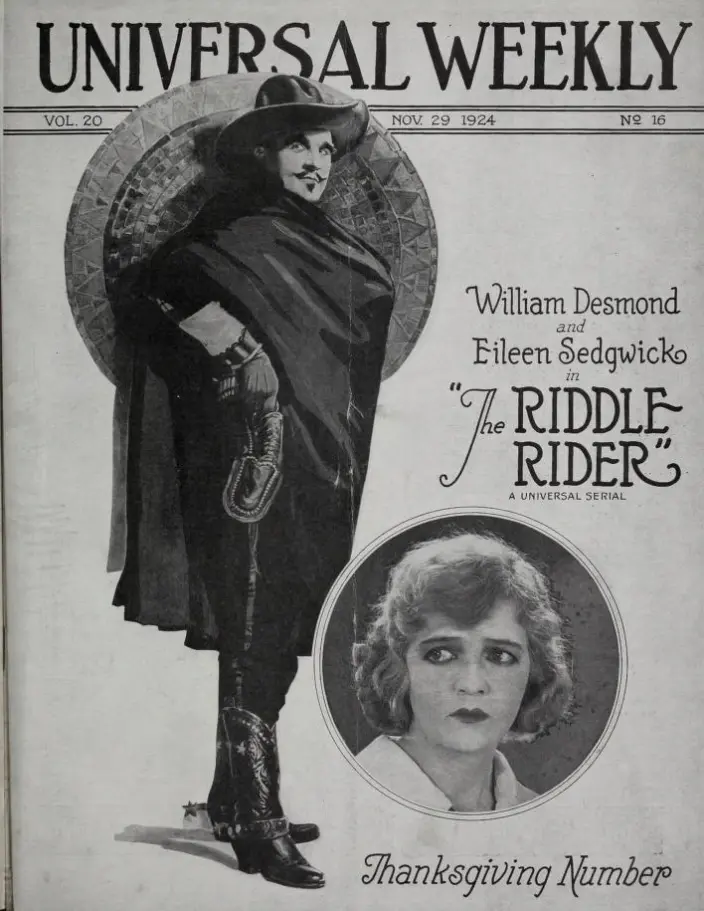
The plot, deceptively simple, is a bouquet of thorns: freshly ordained John Whalen (played with porcelain stoicism by Carl Miller) inherits not merely a parish but a maternal deathbed covenant—unite the skeptical doctor Edward Welsh (William Desmond) with his childhood beloved, Ruth (a radiant Ruth Renick). The conceit sounds like a greeting-card synopsis, yet scenarists Daniel L. Hart and George Elwood Jenks lace every beat with the acrid taste of fiscal panic and spiritual vertigo.
Money—its absence, its humiliating procurement—becomes the true antagonist. Edward cannot marry without settling a malpractice judgment; Ruth’s father faces foreclosure; the church itself teeters on insolvency. Thus Whalen moonlights as broker of miracles, haggling with dock bosses, railroad foremen, even the local madam who keeps her accounts tucked inside a hymnal. Each negotiation is filmed in medium two-shots that let silence pool between the speakers, so every whispered threat or swallowed apology lands like a dropped crucifix.
Carl Miller, years before his tortured turn in Love (1921), gives Whalen a gait of calibrated diffidence—shoulders slightly forward as if perpetually leaning into confession. His eyes, caught in lingering iris close-ups, shimmer with the terror of someone who has traded certainty for shepherd-duty. Watch the way his fingers worry the fringe of his cassock sash when he lies to the bishop about the missing chalice—an infinitesimal twitch that speaks volumes on the theology of white lies.
Margaret Livingston, essaying the thankless role of the jilted ex-fiancée, transforms stock vengeance into something feral yet comprehensible. She enters frame left like a cold wind, veil trailing behind her like a comet tail of resentment, and delivers her ultimatum with the crisp diction of a creditors’ ledger. In a lesser film she’d be hiss-able; here she’s merely another pilgrim afraid of drowning.
Cinematographer Tom Ricketts (also splendid as the town drunk) bathes interiors in amber that graduates toward bruise-violet near doorways—an unsubtle yet potent visual correlative for souls caught between worldly temptation and sacramental refuge. Exterior scenes exploit the Jersey shoreline’s winter palette: slate skies, ochre dunes, fishing nets stiff with salt. The wedding finale—shot on an actual pier during a thunderstorm—required the cast to mime vows while gale winds shredded the bridal veil. The footage is scarred with raindrop blemishes; instead of scrapping it, Wells leaned into the imperfection, letting the celluloid scars read as stigmata of commitment.
Unlike the florid verbosity of Her Body in Bond, the intertitles here are haiku-shy: “Hope is a currency the bankrupt know how to spend.” or “His mother’s breath fogged the crucifix—then cleared.” Each card is hand-lettered by nuns in Newark, the seraphic ascenders on the ’h’ suggesting wings. The brevity forces the viewer to inhabit the ellipses, to pour private longing into the lacuna.
Place The Parish Priest beside Charlie’s The Kid and you notice both trade in parent-shaped absences; swap it with Sirens of the Sea and you detect mirrored preoccupations with tides that give and tides that devour. Yet while Black Friday stages morality as gangster roulette, Wells’ film gambles on the quotidian: unpaid rent, nosy telegraph boys, a priest who pockets a pawn ticket instead of a pistol. Its DNA anticipates later saint-vs-small-town sagas like Bells of St. Mary’s, but without the studio-system varnish.
Original road-show prints carried a cue sheet recommending “Adagio in G minor, played rubato during chalice-theft scene”. Contemporary restorations often opt for a lone pump organ, its wheeze synchronizing with the flicker of projector shutter to produce an inadvertent threnody. I once caught a 2018 screening at MoMA where a trio improvised using found objects: paper clips for hail, rosary beads for percussion. The audience held breath communally when the groom’s ring clinked against the pier plank—sonic synecdoche for matrimonial precarity.
Modern viewers, shackled by student loans and gig-economy anxiety, may find the film’s obsession with IOUs prophetic. Whalen’s parish operates like an ad-hoc credit union where grace is collateral and absolution accrues compound interest. The movie dares to suggest that salvation is less vertical ascent than horizontal barter—an economy of mercy. In an era when churches face foreclosure alongside family farms, the parable lands with documentary immediacy.
For all its lyric restraint, the picture cannot escape the casual racism of its period: a Chinese laundryman appears for exactly eight frames, goggle-eyed, to deliver a gambling note. The shot lands with a thud, a reminder that even saintly cinema can carry the stink of caricature. Likewise, the resolution of the malpractice suit relies on a deus-ex-rich-uncle device that feels narratively glib amid earlier grit.
The Parish Priest is not a masterpiece in the cathedral sense—more like a wayside shrine, half-overgrown yet glowing with votive persistence. It offers the rare spectacle of faith rendered without halo polish, of prayer as hustle, of love as liability. Seek it in 16-mm secret screenings, in basement archives, in torrented fragments with Portuguese subtitles—seek it anywhere the hum of projector emulates perpetual ora pro nobis. You will emerge blinking into neon modernity, pockets full of borrowed grace, conscious that every debt, like every devotion, longs for someone brave or foolish enough to co-sign.
Availability: A 2K restoration circulates among private collectors; bootleg DVD-R occasionally surfaces on eBay under “Jersey Clergy Silent”. Digital transfer rumored to stream on an upcoming Criterion Channel “Small Town Salvation” cycle alongside God and the Man. Check your local parish basement—sometimes they screen it for pancake-supper fundraising.

IMDb 7.5
1922
Community
Log in to comment.