DbcultAccessing Vault...
Cult Review
Senior Film Conservator
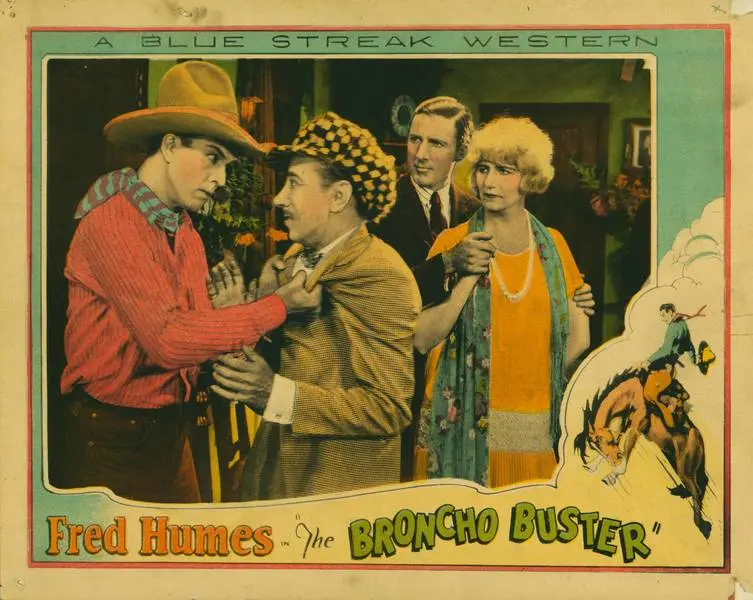
Is 'The Broncho Buster' worth watching today? Short answer: yes, but with significant caveats. This 1923 silent Western, a relic from cinema’s nascent years, offers a fascinating glimpse into early genre conventions and the raw power of visual storytelling, yet it demands a certain patience and appreciation for historical context.
It's a film for those with a genuine interest in the evolution of cinema, silent film enthusiasts, and anyone curious about the foundational myths of the American West as presented on screen a century ago. It is definitively NOT for viewers expecting modern pacing, complex character psychology, or crisp sound design. Prepare for a time capsule, not a contemporary blockbuster.
William Berke's 'The Broncho Buster' emerges from an era where storytelling was paramount, conveyed through expressive physicality and dramatic intertitles. At its core, it's a quintessential melodrama wrapped in a Western aesthetic: a damsel (or rather, a family fortune) in distress, a villainous schemer, and a heroic rescuer.
This film works because it distills universal themes of greed, honor, and loyalty into a stark, visually driven narrative that, despite its age, retains a surprising emotional punch. Its simplicity is its strength, allowing the archetypes to resonate without the clutter of modern exposition.
You should watch it if you are a film historian, a silent film aficionado, or someone eager to understand the roots of cinematic storytelling, particularly within the Western genre. It's an educational experience as much as it is entertainment.
The plot, while straightforward, is packed with familiar dramatic beats. Major John Furth, portrayed by Buck Connors with a weathered dignity, embodies the fading Southern aristocracy. His desperation to save his family's estate through the success of his prize horse, Blue Bird, sets the emotional stakes high from the outset. This isn't just about money; it's about legacy, pride, and survival.
The introduction of the villain, the opportunistic lender who desires Furth's daughter, Barbara (Gloria Grey), immediately establishes the central conflict. His machinations, particularly the planting of a crooked trainer (William Malan) to sabotage Blue Bird, are classic melodramatic devices. Malan, in his limited screen time, manages to convey a palpable sense of menace through his sneering expressions and furtive glances, typical of silent-era antagonists.
Enter Charlie, the neighboring miner, played by Fred Humes. Humes’s portrayal is one of earnest, rugged masculinity—a stark contrast to the villain’s duplicity. His immediate disbelief in Blue Bird being a 'man killer' and his subsequent act of taking the horse to his mine isn't just about saving an animal; it's a declaration of his moral compass and his burgeoning affection for Barbara. This act of defiance is the film's primary engine, propelling the story towards its inevitable confrontation.
William Berke, in 'The Broncho Buster,' demonstrates a utilitarian approach to direction, typical of many quick-turnaround Westerns of the era. The focus is on clarity and advancing the plot. Berke utilizes wide shots effectively to establish the vastness of the Western landscape, particularly in scenes depicting the journey to Charlie's mine. These moments, while not groundbreaking, provide a necessary sense of scale and isolation.
The film relies heavily on visual cues and physical performances to convey emotion. For instance, the conspirators' secret meetings are often shot with an emphasis on their conspiratorial whispers and shifty eyes, leaving no doubt as to their nefarious intentions. Conversely, Charlie's gentle interactions with Blue Bird are framed to highlight the bond between man and animal, a powerful counterpoint to the villain's cruel accusations.
Pacing, as mentioned, is a significant challenge for modern viewers. The exposition can feel drawn out, with scenes lingering perhaps a touch longer than necessary. However, once the central conflict involving Blue Bird intensifies, Berke does employ more rapid cutting, particularly between the threatened horse and Charlie's efforts, attempting to build suspense. It’s effective for its time, even if it doesn't match the frantic energy of later thrillers.
The cast of 'The Broncho Buster' operates within the distinct parameters of silent film acting, where emotions are writ large on the face and body. Buck Connors, as Major Furth, delivers a performance built on stoicism and quiet despair. His slumped shoulders and furrowed brow speak volumes about the weight of his financial burdens, making his eventual vindication all the more satisfying.
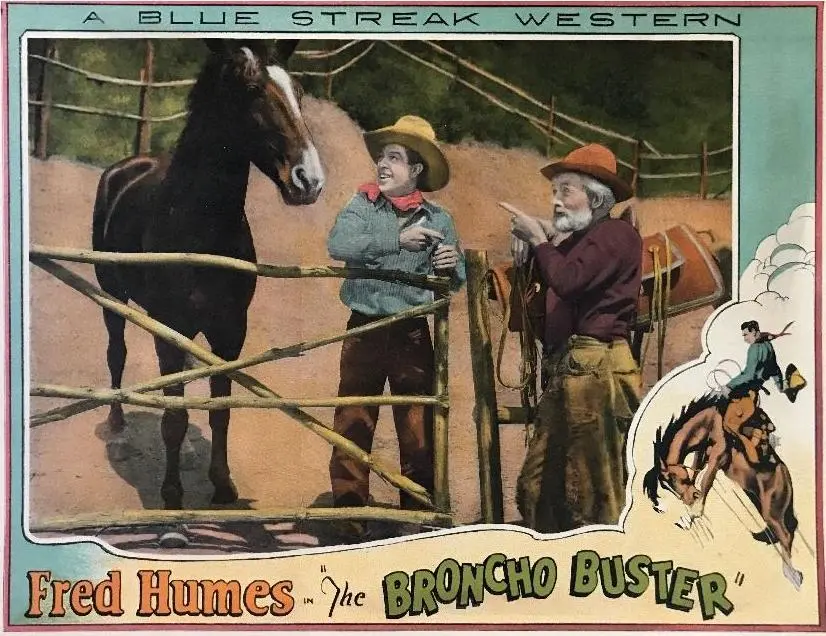
Gloria Grey, as Barbara, embodies the innocent, virtuous heroine. Her expressions of concern for her father and her growing admiration for Charlie are clear, if somewhat conventional. She represents the prize, both literally and figuratively, that the men are fighting over, a common trope in early cinema.
Fred Humes, as the titular 'Broncho Buster' (though not explicitly called that in the plot summary, his character Charlie embodies the spirit of one), is perhaps the film's most engaging presence. His performance is one of understated heroism, relying on a naturalistic physicality that feels less melodramatic than some of his co-stars. His scenes with Blue Bird are particularly strong, conveying genuine empathy and determination without a single spoken word. It’s a testament to the power of silent acting when done right.
William Malan, as the crooked trainer, excels in his villainy. His sneering lip and exaggerated gestures of deceit are perfectly calibrated for the silent screen, ensuring the audience instantly understands his malevolent intent. He is the archetypal antagonist, and he plays it with relish.
The cinematography in 'The Broncho Buster,' while not groundbreaking, effectively captures the essence of the early Western. The film uses natural light to its advantage, rendering the sun-drenched plains and rugged hills with a stark authenticity. There’s a raw, untamed beauty to the locations that serves as a powerful backdrop to the human drama.
Scenes involving Blue Bird, particularly her supposed 'wild' nature and Charlie's attempts to calm her, are shot to emphasize the horse's power and grace. The camera often frames Blue Bird majestically, highlighting her importance to the plot. The journey to Charlie's mine, though brief in description, is visually rendered to convey a sense of arduous travel and hidden refuge. It's a simple approach, but one that effectively grounds the fantastical elements of the plot in a tangible world.
'The Broncho Buster' is rich with themes that resonate even today. At its heart is the conflict between honor and deception. Major Furth's desperate attempt to maintain his family's honor through the race is contrasted sharply with the lender's manipulative and dishonorable tactics. Charlie, the unassuming miner, stands as the embodiment of true Western integrity, willing to risk everything for justice and what he believes in.
The bond between man and animal is another powerful undercurrent. Blue Bird is not merely a plot device; she is a character in her own right, representing hope, purity, and the very essence of the West. Charlie's unwavering faith in the horse, despite the slander against her, speaks to a deeper connection that transcends mere ownership. It’s a surprisingly tender portrayal amidst the broader melodrama.
The film also touches on the changing face of the West. While it presents familiar tropes of ranchers and miners, it also hints at the encroaching influence of wealth and manipulation, suggesting a shift from a frontier based on simple honesty to one threatened by more complex, urban-style corruption. This is a subtle, perhaps unintentional, observation, but one that adds a layer of depth to what might otherwise be a straightforward tale.
Absolutely, but approach it as an archaeological expedition into cinema's past. This is not a film to casually stream while multitasking. It demands your full attention, a willingness to engage with its unique storytelling language, and an appreciation for the historical context from which it emerged.
For silent film purists, it's a solid, if not spectacular, entry into the genre. For those new to silent cinema, it serves as an accessible entry point due to its clear narrative and strong moral compass. It offers a valuable lesson in how films communicated emotion and plot before the advent of synchronized sound.
'The Broncho Buster' is not a lost masterpiece, nor is it a forgotten gem that will revolutionize your understanding of cinema. It is, however, a sturdy and earnest example of early silent Western filmmaking. It works. But it’s flawed. Its true value lies less in its individual artistic brilliance and more in its capacity as a historical document, a window into the cinematic techniques and cultural narratives that shaped an entire genre. For those willing to adjust their expectations and immerse themselves in a bygone era of storytelling, it offers a quietly rewarding experience. It serves as a stark reminder of how far cinema has come, and occasionally, how much of its foundational spirit remains relevant. If you're looking for a film to compare it to in terms of historical significance within the Western genre, consider the early works of directors like John Ford, or even other contemporary silent Westerns such as Youth and Adventure, to truly appreciate its place in the lineage. Ultimately, 'The Broncho Buster' is a film that deserves to be seen, not just watched, by those who cherish cinema's rich and varied past.
IMDb —
1917
Community
Log in to comment.