DbcultAccessing Vault...
Cult Review
Senior Film Conservator
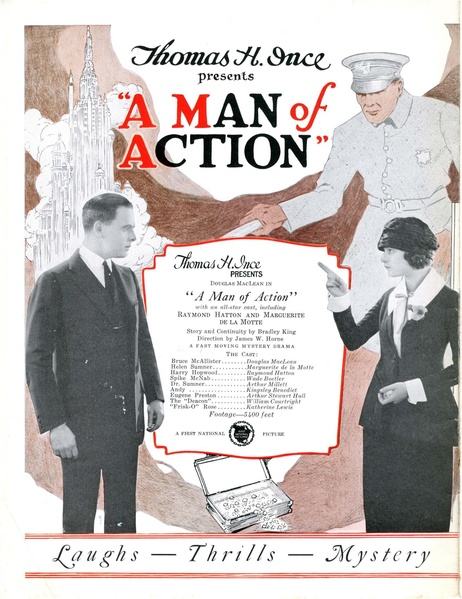
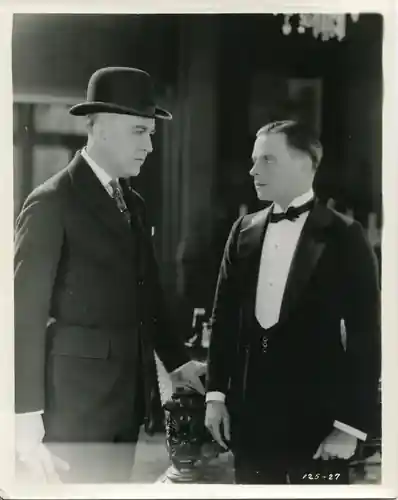
The 1920s offered a cinematic landscape obsessed with the friction between inherited wealth and the rugged individualism required to survive the modern era. In A Man of Action (1923), we find a quintessential example of this obsession, filtered through the charismatic lens of Douglas MacLean. This isn't merely a caper; it's a satirical deconstruction of the 'idle rich' archetype, a theme we've seen explored with varying degrees of gravity in works like Miss Hobbs or the more dramatic The Inferior Sex.
Bruce MacAllister begins the film as a creature of habit and high thread counts. His world is one of mahogany-paneled studies and the sycophantic deference of servants. However, the screenplay by Bradley King smartly introduces a catalyst in the form of Helen Sumner (Marguerite De La Motte). Helen isn't merely a love interest; she is the mirror reflecting Bruce’s own inadequacy back at him. Her demand for a 'man of action' is the spark that ignites the narrative powder keg.
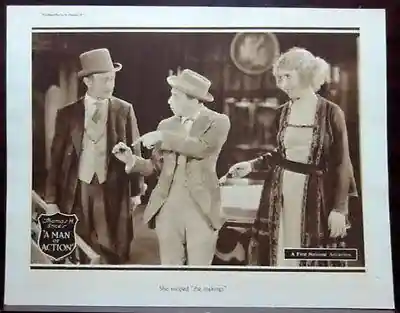
This setup mirrors the social anxieties of the post-WWI era, where the traditional aristocracy was often viewed as vestigial or decadent compared to the emerging self-made man. Bruce’s decision to infiltrate the San Francisco underworld isn't just a lark; it's a desperate attempt to reclaim a masculine identity that he feels has been eroded by his bank balance. It’s a thematic cousin to the identity shifts found in The Fool's Revenge, though MacLean plays the notes with a much lighter, more agile touch.
When Bruce descends into the fog-drenched alleys of San Francisco, the film shifts gears from a drawing-room comedy to a gritty, albeit stylized, crime thriller. The production design here is surprisingly evocative for a 1923 production, capturing the claustrophobia of the docks and the menacing allure of the speakeasy culture. The moment Bruce is mistaken for 'The Chicago Kid' is handled with a deft sense of timing that highlights MacLean’s physicality. He doesn't just put on a costume; he adopts a different syntax of movement.
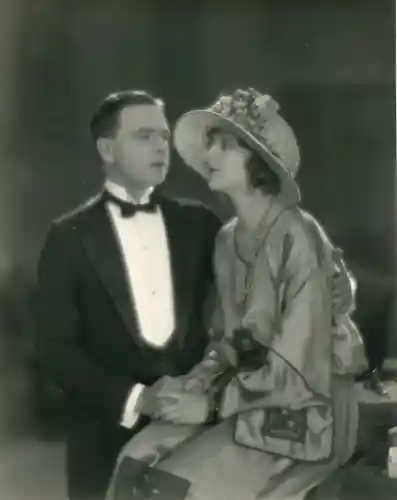
The irony of leading a gang to rob his own diamonds is a stroke of narrative genius. It places Bruce in a precarious position where he must protect his assets while maintaining his criminal credibility. This duality is a common trope in silent cinema—think of the complex social maneuvering in Beloved Rogues—but here, it serves as a vehicle for character growth rather than just plot convenience. Every time the diamonds change hands, we see Bruce shedding another layer of his former, pampered self.
While the 'underworld' provides the external threat, the true villainy resides within Bruce's own inner circle. Eugene Preston (Arthur Stuart Hull), the estate administrator, represents the cold, calculating greed that hides behind a suit and tie. Preston is the antithesis of the 'man of action'; he is a man of manipulation. His plot to steal the jewels adds a layer of genuine peril to the proceedings, elevating the stakes from a mere test of courage to a battle for survival and justice.
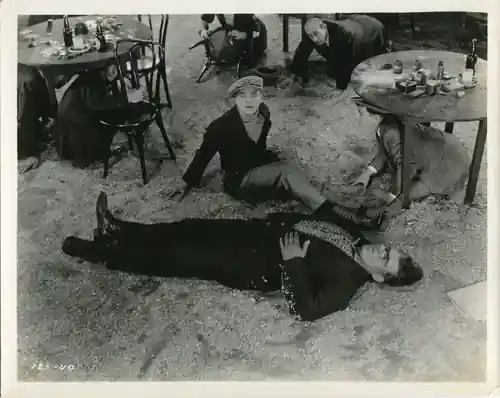
This subplot grounds the film, preventing it from becoming a purely slapstick affair. It reminds the audience that the dangers of the criminal world are often mirrored in the halls of legitimate business. The tension between the overt criminality of the gang and the covert criminality of Preston provides a fascinating study in morality, reminiscent of the darker undertones found in Kinder der Finsternis - 1. Der Mann aus Neapel.
Douglas MacLean’s performance is a masterclass in silent era charisma. He possesses a mercurial quality, shifting from the wide-eyed innocence of the socialite to the steely-eyed focus of the 'Kid' with remarkable ease. His chemistry with Marguerite De La Motte is palpable, providing the emotional anchor the film needs. De La Motte herself is more than just a damsel; she is the one who eventually summons the authorities, proving that she, too, is a person of decisive action.
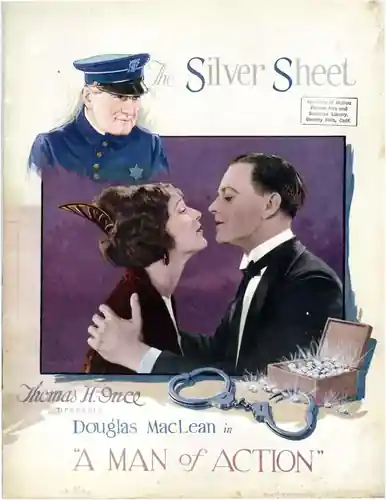
The direction (though James W. Horne is uncredited in some records, his influence is clear) maintains a brisk pace that never feels rushed. The action sequences, particularly the climax involving the police raid, are choreographed with a precision that predates the modern action blockbuster. The use of lighting to distinguish between the bright, sterile world of the MacAllister estate and the shadowed, high-contrast world of the criminals is a subtle but effective storytelling tool. This visual dichotomy is as effective here as it was in The Daring of Diana or Shore Acres.
Looking back at A Man of Action from a modern perspective, it’s easy to dismiss it as a lighthearted romp. However, that would be a disservice to the script's underlying commentary on class mobility and the performative nature of identity. Bruce has to 'play' a criminal to become a 'real' man. This suggests that the attributes of strength and decisiveness aren't inherent to one's class but are forged in the crucible of conflict. It’s a theme that resonates with other films of the era that dealt with the struggle for authenticity, such as No Trespassing or The Third Generation.
The film also touches upon the concept of 'slumming'—the practice of the wealthy visiting the lower-class districts for entertainment. Bruce’s journey starts as a form of slumming but quickly turns into a visceral reality. The film punishes his initial arrogance by putting his life and fortune on the line, forcing a genuine evolution rather than a superficial one. This narrative arc is far more satisfying than the quick-fix resolutions found in lesser films like Saving Sister Susie.
In the pantheon of 1920s cinema, A Man of Action stands as a testament to the era's ability to blend humor, heart, and high-stakes drama. It avoids the melodramatic pitfalls of films like The Pines of Lorey, opting instead for a narrative rhythm that is both engaging and thought-provoking. While it may not have the haunting atmosphere of Das Schweigen am Starnbergersee, it excels in its specific mission: to entertain while subtly challenging the social status quo.
For those interested in the evolution of the action-comedy, this film is essential viewing. It showcases a star at the height of his powers, a writer who understood the power of irony, and a production team that knew how to make the most of every frame. Whether you're a fan of the ruggedness of Durand of the Bad Lands or the urban wit of The Cigarette Girl, there is something in Bruce MacAllister’s journey that will strike a chord. It is a film about finding one's spine, proving one's worth, and realizing that sometimes, to save your life, you have to be willing to lose it—or at least pretend to rob it.
Ultimately, A Man of Action remains a vibrant, pulsing piece of cinematic history. It’s a reminder that even in the silent era, the loudest thing on screen was often the protagonist's burgeoning sense of self. It’s a film that deserves to be pulled from the shadows of history and given a seat at the table of great American comedies.
IMDb —
1916
Community
Log in to comment.