DbcultAccessing Vault...
7/10
Senior Film Conservator
A definitive 7/10 rating for a film that redefined the boundaries of cult cinema. Out of Place remains a cornerstone of transgressive art.
Neon corrosion clings to every frame of Out of Place like salt on weathered pier timber, and that briny patina is your first hint that this 1924 one-reel wonder isn’t content to be a mere slapstick diversion. It wants to pickle your expectations, then serve them back with a crooked grin.
Hilliard Karr ambles into the narrative sideways, a cigarette paper fluttering between thumb and forefinger as though he’s about to roll the whole seashore into a smoke. His tramp is less a character than a weather event: coat tails flapping like torn flags, derby hat dented by countless exit doors. The moment he pockets that misdelivered telegram, the film’s DNA mutates from knockabout farce to something approaching seaside surrealism.
Vaudeville, after all, is a form that survives on velocity and fracture.
Director James Donnelly—better known for writing gags for A Girl of Yesterday—understands that pace is philosophy. He crams balconies, ballrooms, and bathhouses with so many intersecting agendas that the plot feels like a plate of dropped spaghetti: impossible to untangle, delicious to slurp. The camera, starved of dialogue, gorges on visual puns. When Norma Conterno’s heiress flings her furred wrap over a railing, the coat slides down like a naughty innuendo and lands on Billy Engle’s diminutive porter, swallowing him whole until only his shoes jut out like exclamation marks.
Color tinting—amber for interiors, cerulean for dusk, rose for flirtation—bleeds across the 4:3 frame in ways that anticipate the chromatic daydreams of Drama v kabare futuristov No. 13. Yet the palette here feels more accidental, as if the lab technician knocked over trays of dye and decided serendipity was cheaper than precision. Happy accidents birth electric juxtapositions: sea-blue moonlight slashes across Karr’s cheekbones while orange lamplight pools in his collar, producing a chiaroscuro that whispers of German Expressionism without the moral gloom.
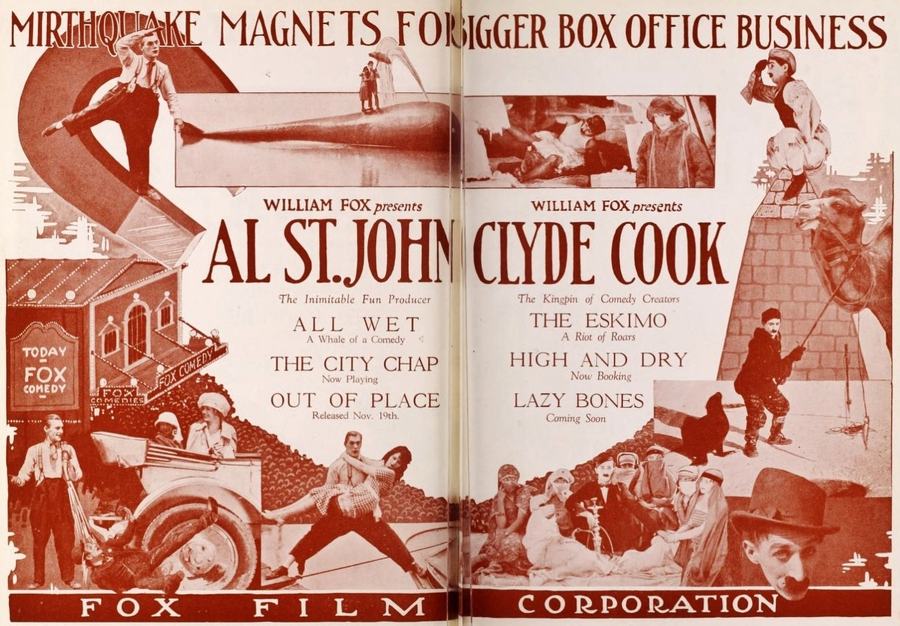
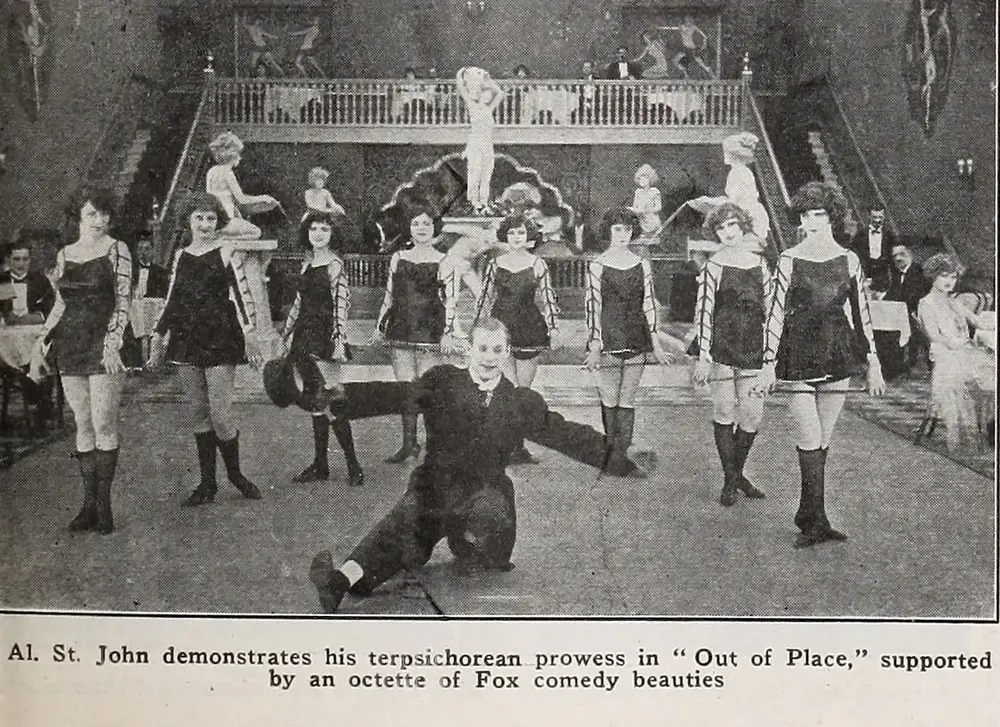
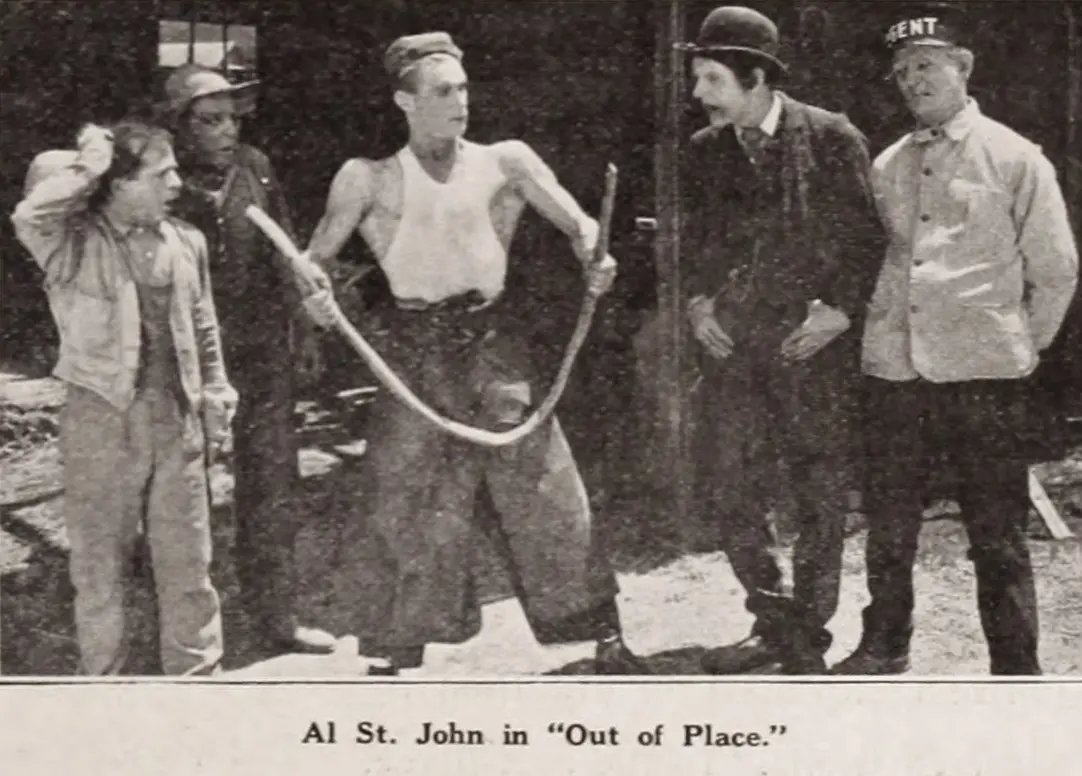
The hotel set itself deserves star billing. Staircases zigzag like nervous tics, doors open onto brick walls, corridors terminate in sudden drop-offs to the beach. You half expect Buster Keaton to stride through with his stone face, survey the spatial impossibility, and simply blink. Instead we get Al St. John, whose limbs possess the tensile snap of rubber bands. His bellhop sprints up seven flights carrying seventeen suitcases, arms elongating like taffy, feet pedaling air. The gag crests when he collides with Si Jenks’ hayseed tourist; both men ricochet, luggage bursts, and suddenly the hallway snows down a confetti of ladies’ unmentionables that flutter over the railing into the lobby like perfumed white flags.
Conterno navigates this bedlam with the poised bewilderment of a debutante who’s misplaced her last name. Her heiress isn’t merely slumming; she’s stress-testing identity, sampling anonymity the way other socialites sample perfume. Watch her eyes in the key-light: one instant dilated with curiosity, next narrowed with calculation. She’s both subject and spectator, a marionette who’s cut her strings yet keeps dancing out of habit.
Intertitles arrive sparingly, often mid-gesture, as though the film itself stutters. A card flashes—“He mistook virtue for ventriloquism”—then vanishes, leaving you to decide whether the joke is on the hobo, the heiress, or the audience. That elliptical wit keeps the picture from sliding into the cutesy sentiment that hobbles The Heart of Romance. When Karr finally confesses his lowly station via pantomime—pressing a tarnished coin into her gloved palm, then closing her fingers as if folding a love note into a church hymnal—the moment quivers with wordless ache. No orchestral cue swells; the only score is the projector’s mechanical heartbeat. Silence becomes solvent, stripping vaudeville shtick down to raw tenderness.
Yet tenderness never eclipses anarchy.
In the climactic chase, hotel guests stampede through a seaside amusement pier, past carnival games that mock their romantic delusions. A tin-can alley barker offers “Three balls, one broken heart.” A Ferris wheel spins like the cycle of social climbing. Karr and the detective sprint across warped planks, each footfall triggering off-screen musicians to clang cowbells, squeeze accordions, fire starter pistols. The soundtrack you imagine becomes half the fun—until you realize the cacophony is so vivid you can almost smell the brine and burnt sugar.
Cinephiles hunting for genealogical links will spot DNA strands reaching toward Grim Justice’s moral vertigo, though Out of Place refuses retribution. Where Blue Blood polishes its class satire to high gloss, this picture prefers sand-dusted sneakers. And if The Little Cafe offers Gallic whimsy in measured pours, Donnelly sloshes the bottle until the fizz blinds your eyes.
James Donnelly’s script—yes, he wrote as well as directed—treats dialogue like percussion: sparse, syncopated, strategic. Ford West’s conniving manager rattles off malapropisms (“We’re heading for a cataclysmic apostrophe!”) that betray the era’s lexical playfulness. Tiny Ward, mostly employed as human counterweight, gets a fleeting solo where he presses a grand piano overhead like a parasol, then tiptoes across broken champagne glasses. The stunt serves no narrative function beyond the giddy realization that cinema can be weightless.
Al St. John, perennial second-banana in Roscoe Arbuckle shorts, finally earns room to sprawl. His elasticity recalls Harold Lloyd yet lacks Lloyd’s Methodist ambition; St. John is pure id, a freckled impulse in a pillbox hat. Watch how he vaults a railing, snags a passing bell-pull, swings over the concierge desk, and lands on a guest’s breakfast tray—eggs intact, dignity scrambled. The sequence lasts maybe five seconds but contains multitudes: physics defied, social order lampooned, your inner child granted permission to shriek.
Norma Conterno’s heiress anticipates the gender-coded masquerades of Watch Your Husbands yet sidesteps that film’s matrimonial cul-de-sac. She dons a newsboy cap, smears soot on her cheek, and saunters into a tavern where sailors bet on dice made from soap. For five electric minutes the camera ogles her disguise without moral judgment; the film seems to say that identity is drag, and drag is freedom. When she finally strips the cap and shakes loose chestnut curls, the gesture isn’t revelation but evolution—butterfly re-entering chrysalis on a dare.
Equally subversive is the film’s treatment of male fragility. Karr’s tramp oscillates between swagger and supplication, at one point kneeling to polish the manager’s shoes only to swipe the man’s pocket watch with a tongue-click of remorse. Masculinity here is costume jewelry, pawned and redeemed in alternating beats. Even the brawny Tiny Ward collapses into sobs when a toddler offers him a lollipop, the sugar stick weaponized against his own bulk. Nothing ruptures patriarchal posturing faster than public weeping.
At 58 minutes, the picture stretches slapstick time like saltwater taffy. A simple setup—Karr must return the telegram before sunrise—mutates into a Rube Goldberg contraption involving counterfeit money, a runaway goat, and a wedding cake rigged with firecrackers. Yet the pacing never lurches; each digression feels like skipping stones across narrative logic, each ripple a miniature film within the film. The effect predates the structural loop-de-loops of Dust by nearly a century, but achieves its fractal whimsy without digital trickery—just elbow grease and optical sleight.
What lingers longest is the aftertaste of neon melancholia. The final shot—Karr trudging toward an empty horizon while hotel lights flicker out one by one—feels less closure than eviction. The world has decided his chaos no longer fits its blueprint, so it ejects him the way a body spits out a watermelon seed. There is no moral, no comeuppance, no matrimonial reward. Only the receding echo of laughter and the knowledge that somewhere a bellhop is still sprinting up impossible stairs.
Contemporary comedies could learn from this refusal to resolve. We’ve grown accustomed to third-act hugs, redemption arcs gift-wrapped in pop-song montages. Out of Place offers the radical alternative of leaving its characters suspended in mid-air, legs pedaling void, grins intact. The open-endedness feels honest; life, after all, is less trilogy than variety revue.
For decades the negative languished in a Parisian basement, misfiled under “Oriental Outtakes.” When archivists finally threaded it through a modern scanner, they discovered that the original nitrate had shrunk, causing registration errors that make characters appear haloed in ghostly auras. Rather than correct the flaw, the restoration team embraced it, turning blemish into brushstroke. The result is celluloid impressionism: faces shimmer as though viewed through tears or champagne bubbles, reinforcing the film’s thesis that reality is merely consensus hallucination.
The new 4K scan reveals textures previously lost—beads of sweat on St. John’s upper lip, grains of sugar sparkling on a tablecloth like miniature galaxies. Such minutiae matter because the film’s emotional heft hangs on micro-gestures: the way Conterno’s fingers tremble as she pockets Karr’s coin, the fractional slump of Ward’s shoulders when he realizes the lollipop is licorice-flavored. High resolution restores intimacy; suddenly you’re not peering into history but eavesdropping on neighbors.
So why champion a one-reel obscurity when canonical titans cast longer shadows? Because Out of Place distills the primordial fizz of cinema before formulas calcified. It reminds us that movies can be both pratfall and poem, that a hotel corridor can telescope into existential void, that a misplaced telegram can reroute destinies faster than a DeMille epic. It embodies the carnival promise that anyone can reinvent themselves between spotlight and shadow, that identity is as transferable as stage props.
And because, in an age when content is algorithmically tailored to confirm our existing biases, there is tonic in watching a film that refuses to stay in its lane, that pirouettes off the pier and drowns narrative decorum in foamy surf. To be out of place, the film argues, is to be gloriously, electrically alive.
Seek it out however you can—archival Blu-ray, repertory screening, or shaky bootleg rippling across cyberspace. Watch it with friends, then argue over who among you is the bellhop, the heiress, the runaway goat. Realize that the correct answer is all of them, rotating like a revolving door that never quite stops. And when the lights come up, notice how the world outside feels suddenly pliable, as though you could palm a coin, polish it against your sleeve, and purchase a brand-new self at the nearest neon-lit lobby.
IMDb 5
1923
Community
Log in to comment.