DbcultAccessing Vault...
Cult Review
Senior Film Conservator
A cigarette ember punctures the 1920 Copenhagen night; somewhere a phonograph needle drags across shellac, and the city’s collective ear tilts toward a voice it will soon tire of. The Penalty of Fame—long misfiled as a morality yarn—plays more like an autopsy performed on a living body. Director A.V. Olsen, a name scrubbed from canonical annals, wields iris shots, double exposures, and staggered intertitles like a surgeon who insists the patient remain awake.
The plot, deceptively linear, spirals inward: a bakery assistant with a nightingale trill is vacuumed into the capital’s cabaret vortex, rechristened, repackaged, and finally dismembered by the very spotlight that once crowned her. Yet narrative is only the brittle spine; the film’s marrow is the corrosive chemistry between spectatorship and selfhood. Every close-up of Ulla Hell—cheekbones strobed by carbon-arc light—registers as a small seizure of possession. The camera does not observe; it confiscates.

Olsen’s visual grammar predates both Hate and The Corsican Brothers in its expressionist DNA, yet the film’s DNA is distinctly Nordic: frost-bitten palettes, herringbone shadows, and a metallic tang of sea-salt that seems to cling to the negative. Note the recurring visual leitmotif of gilt lattice: first as theater-box proscenium, later as prison bars superimposed across the protagonist’s face. The metaphor is unspoken yet deafening—fame as ornamental incarceration.
Carl Schenstrøm, better known for his comic tandem with Harald Madsen, here weaponizes his rubber eyebrows into something predatory. His impresario, Mr. Valdemar Sørensen, enters each scene half a beat too late, as though even time itself must negotiate terms with him. Watch the way he fingers the frayed corner of a contract: the gesture is almost carnal, a pimp counting freckles on a wrist.
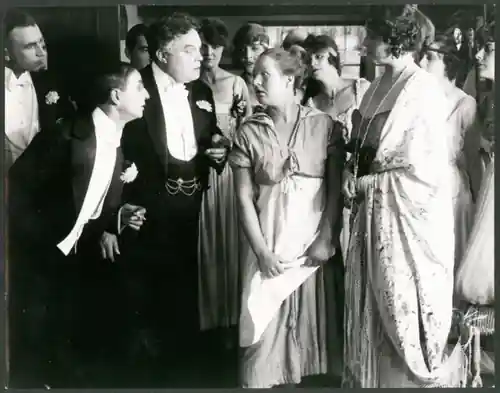
If Hell’s chanteuse is the film’s bruised saint, Krygell’s character—listed only as "The Forgotten" in surviving pressbooks—operates as its vengeful chorus. She appears in negative space: a pallid hand slipping between stage curtains, a tear-shaped pearl rolling across parquet. Her silence is louder than any intertitle. When she finally confronts the star during a private soirée, the scene is shot through a prism, fracting two faces into a dozen jealous shards. The effect predates similar kaleidoscopic unease in Spiritisten by a full decade.
The film’s original Danish score—now lost—was reportedly performed by a sextet featuring theremin and bowed saw. Contemporary accounts describe audiences clutching their programs as though they might levitate. Even bereft of that sonic aura, the surviving mute print throbs with synesthetic suggestion. One can almost taste the nickelodeon’s carbon arc, smell the beeswax haze used to slick back chorus boys’ hair.

A pivotal montage—the scandal sequence—unfurls like a malignant poppy blooming in time-lapse. Newspapers spin toward camera lenses, headlines superimpose across bare shoulders, and a courtroom sketch dissolves into a paparazzo’s bulb flash. The cutting cadence predates Soviet rhythmic montage yet feels oddly aqueous, as if each splice were a drop of mercury sliding across marble.
Where The Lottery Man treats celebrity as raffle ticket, and A Virtuous Vamp lampoons it via screwball froth, The Penalty of Fame opts for hematological analysis: it tracks fame’s spoor through bloodstream and bile. The film’s final third—where the protagonist rehearses for a comeback that everyone but she knows is fictitious—rhymes tonally with the mortifying carnival in Mr. Wu, yet Olsen withholds redemption. There is no curtain call, only a slow dimmer on a face that has learned to impersonate itself.
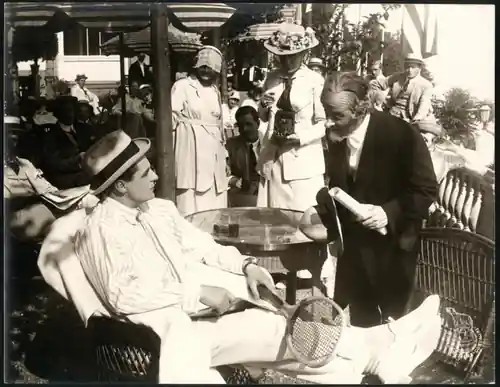
Read beneath the celluloid and you’ll glimpse Denmark’s anxiety over its waning maritime empire. The impresario’s office is stuffed with taxidermied exotic birds—macaws, birds-of-paradise—whose lurid plumage rhymes with the protagonist’s stage gowns. Colonial plunder masquerades as urbane décor, just as the singer’s voice is exported, commodified, then discarded. A nation in twilight rehearses its own obsolescence through the body of a woman.
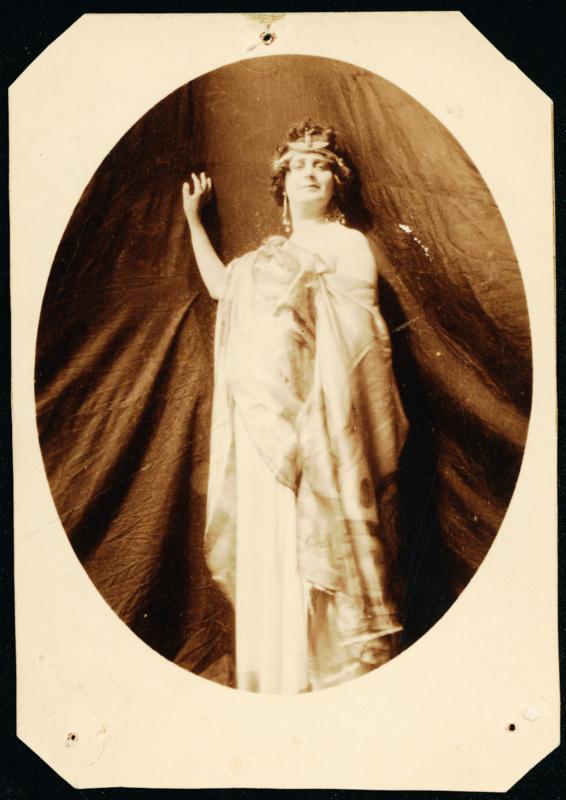
Ulla Hell—whose career never again scaled such heights—delivers a masterclass in incremental self-erasure. Watch the way her pupils dilate between verses: first the tremulous hope of a provincial girl, later the black hole of someone who recognizes her own absence. In the penultimate close-up, greasepaint cakes like dried riverbed, and her attempt at a smile produces a hairline crack across the cheek. The moment is silent yet sonically violent; you can practically hear enamel splinter.
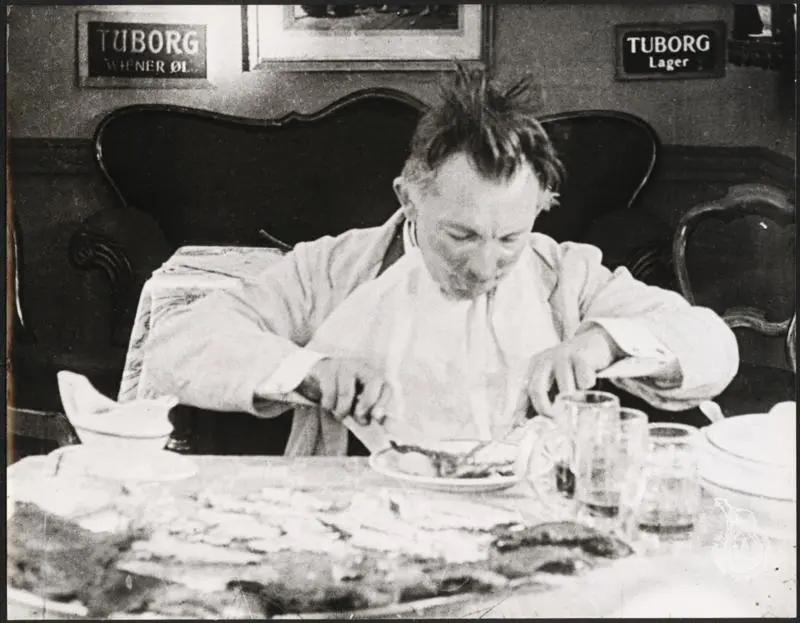
Christian Engelstoft, as the morphine-addicted critic, sketches addiction with quivering economy: every hand tremor syncopates with the flicker of the projection lamp itself, reminding us that even the spectators are combustible.
Upon release, the film was trimmed by Danish morality boards for "excessive feminine suffering"—a euphemism for the scene in which the protagonist, broke and delirious, barters her stage costume for a bottle of laudanum. That excised fragment survives only in a Swedish 16mm diascope discovered in a Malmö attic in 1987. Restored versions splice the vignette back into the reel; the sudden shift in grain density feels like a wound abruptly reopened.
Modern viewers will detect pre-echoes of En defensa propia’s claustrophobic indictment, and the toxic fandom pathology later probed by Hate. Yet The Penalty of Fame remains a phantom limb—felt, feared, but rarely screened. Perhaps because its truth is too banal to bear: we are not simply voyeurs of celebrity demolition; we are the contractors hired to tear it down, applauding each brick as it falls.
The film ends on an iris-out that contracts to a pinpoint of light hovering over the singer’s left eye. For a split second the screen is entirely black, and in that darkness you may glimpse your own reflection—an audience of one, complicit, insatiable, waiting for the next pretty throat to ripen for the blade.

IMDb 2.7
1919
Community
Log in to comment.