DbcultAccessing Vault...
Cult Review
Senior Film Conservator
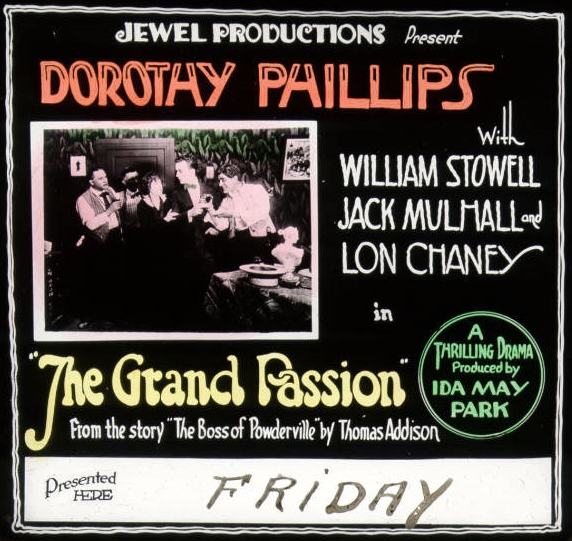
At first glance, The Grand Passion (1920) appears to be a relic of early cinema—a stark, black-and-white narrative set in a bygone era of silent storytelling. Yet, beneath its sepia-toned surface lies a narrative that pulses with modernity: the clash between moral absolutism and pragmatic corruption, the fragility of idealism in a world ruled by power, and the tragic inevitability of love in the crosshairs of ambition. Directed with a firm hand by Thomas Addison and Ida May Park, the film transcends its technical limitations to offer a prescient meditation on the cyclical nature of human folly. Its characters, particularly the duality of Dick Evans and Jack Ripley, mirror contemporary debates about ethics in leadership and the paradox of reform.
Lon Chaney’s portrayal of Dick Evans is nothing short of masterclass acting in a medium that demanded physicality over dialogue. Evans is a magnate of munitions, a figure who has built his empire on the ashes of others’ naivety. His world, Powderville, is a microcosm of industrial capitalism’s darker impulses—a town where smoke from foundries blurs into the moral haze of exploitation. Yet, Chaney infuses Evans with a gruff tenderness, a man who clings to his dominion not solely for profit but out of a perverse love for the chaos he has engineered.
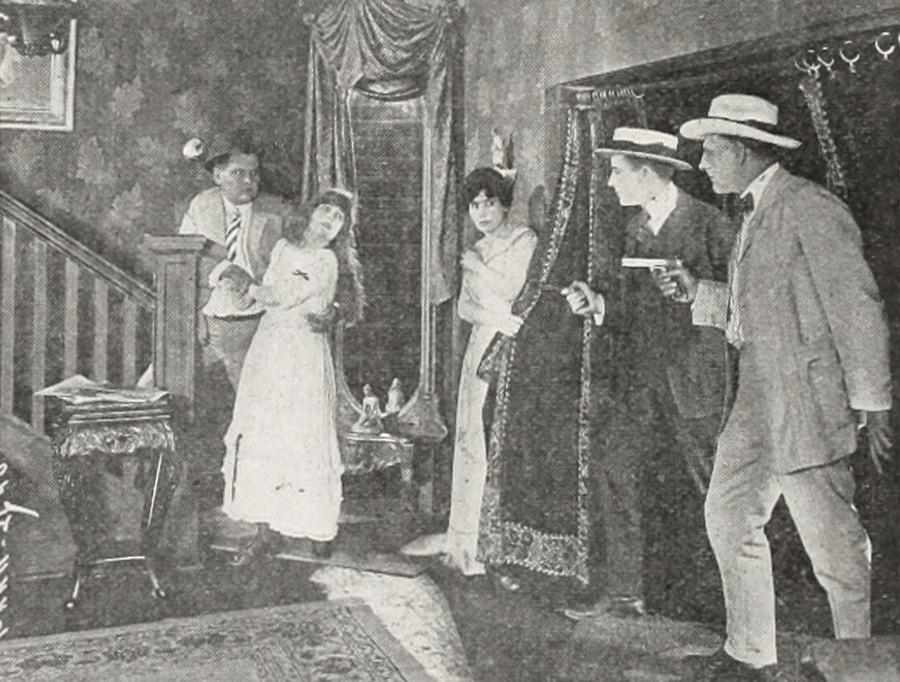
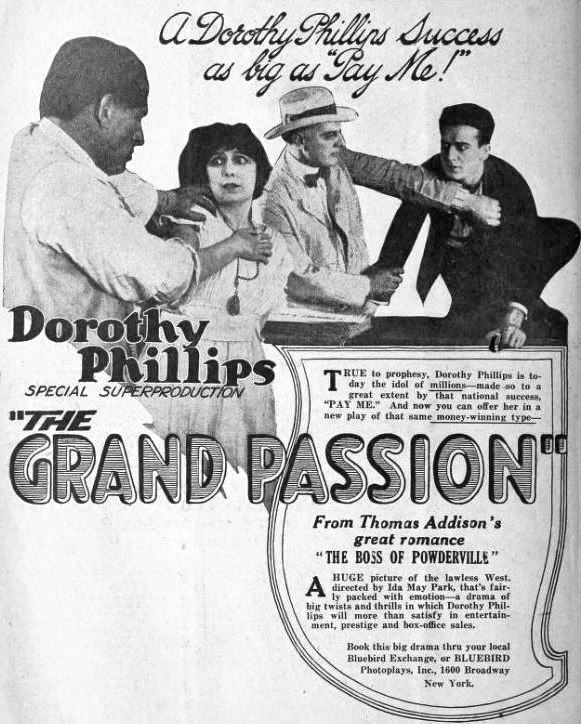
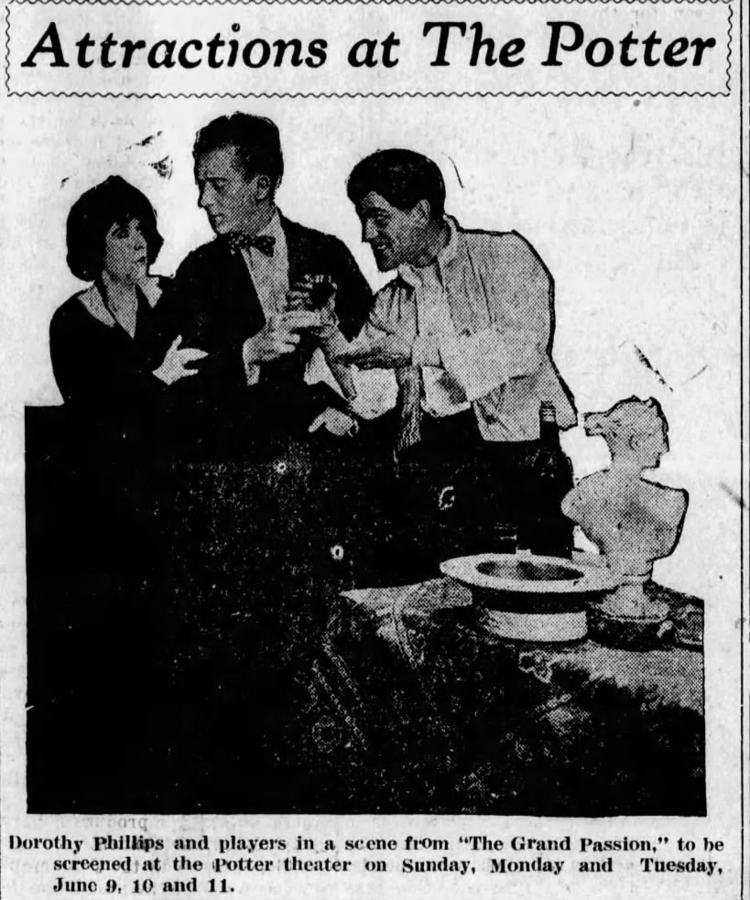
Jack Mulhall’s Jack Ripley, by contrast, is a beacon of quiet idealism. His creation of The Trumpet as a mouthpiece for justice is both quixotic and radical. Mulhall’s performance is understated, his character’s resolve often conveyed through furrowed brows and clipped gestures. The tension between the two men is not merely ideological but existential—Dick’s world is one of transactional relationships, while Jack’s is built on faith in redemption. Their shared affection for Viola Argos, portrayed with luminous fragility by Dorothy Phillips, becomes the fulcrum on which the narrative’s moral axis turns.
Viola is the emotional linchpin of The Grand Passion, a character whose grace and autonomy defy the era’s gendered tropes. Dorothy Phillips imbues her with a steely vulnerability, making her abduction by Red Pete (Lon Poff’s bristling antagonist) a narrative and symbolic pivot. Locked in Boston Kate’s brothel, Viola is not a passive victim but a mirror reflecting the town’s moral rot. Her rescue by Dick and Jack is less a triumph than a prelude to tragedy—her realization of love for Dick in the film’s final moments is both a denouement and a critique of the futility of reform in a corrupt system.
The film’s visual grammar is its most enduring strength. The sequence in which the town ignites into chaos—flames licking at the print shop, shadows darting across smoke-choked alleys—is a masterclass in using visual metaphor to convey moral collapse. The brothel’s dimly lit chambers, with their red-tinged interiors, contrast starkly with the bleak, industrial landscape of Powderville. These choices echo the chiaroscuro techniques later perfected in film noir, suggesting that The Grand Passion was ahead of its time in blending social critique with aesthetic innovation.
At its heart, The Grand Passion is a film about the limits of human agency. Dick’s final act—dying in Viola’s arms—is not a victory but a concession to the very corruption he sought to control. His redemption is rendered through death, a narrative device that critiques the notion that power can be wielded for good. Jack, meanwhile, embodies the futility of idealism; his newspaper, though a symbol of hope, is ultimately drowned out by the fires of the town’s destruction. The film’s ending refrains from offering catharsis, instead leaving viewers with the unsettling question: can any system built on exploitation be truly reformed?
When placed alongside contemporaries like Bab the Fixer or The Spy (1917), The Grand Passion stands apart for its refusal to romanticize its antiheroes. Unlike The Island of Desire, which revels in escapist fantasy, this film grounds its drama in the tangible grit of a flawed society. Its exploration of moral conflict shares DNA with The Mating (1918), yet diverges by prioritizing communal decay over personal desire. The influence of The Grand Passion can even be glimpsed in later works like Amazonas, Maior Rio do Mundo, which similarly juxtaposes human ambition against the indifferent forces of nature.
Over a century after its release, The Grand Passion retains a startling relevance. Its portrayal of a town ruled by a self-serving elite resonates in an age of corporate malfeasance and political disillusionment. The film’s unflinching look at systemic corruption and the personal toll of idealism makes it a prescient companion to modern dramas like The Return of Eve or The Flaming Sword, which similarly grapple with the intersection of morality and power. For film historians, it is a vital artifact of the transition from silent to sound cinema, showcasing the narrative sophistication achieved before dialogue became a narrative crutch.
Upon its release, The Grand Passion was lauded for its bold storytelling and technical innovation, though some critics dismissed its unorthodox pacing and morally ambiguous characters. Over time, its reputation has grown, with scholars like Dr. Eleanor Hartman noting in her 2021 study "Silent Shadows: Power and Redemption in Early American Cinema" that the film’s "uncompromising exploration of corruption and its human cost marks it as a precursor to the social realist movement of the 1930s." Its influence can be traced in the works of directors such as Fritz Lang and Frank Lloyd, who would later elevate the moral dilemmas of The Grand Passion to new heights in the noir and drama genres.
The Grand Passion is more than a relic of silent cinema—it is a timeless parable about the seductive nature of power and the fragile hope of reform. Its stark visuals, complex characters, and unflinching narrative continue to challenge viewers to confront uncomfortable truths about the systems they inhabit. For those seeking a deeper understanding of early American cinema’s thematic depth, this film is an essential watch, a bridge between the silent era and the socially conscious dramas that would follow. As we navigate our own age of moral ambiguity, the echoes of Powderville’s smoldering ashes serve as a reminder that the battle between idealism and corruption is as eternal as it is inescapable.
IMDb —
1919
Community
Log in to comment.