DbcultAccessing Vault...
Cult Review
Senior Film Conservator
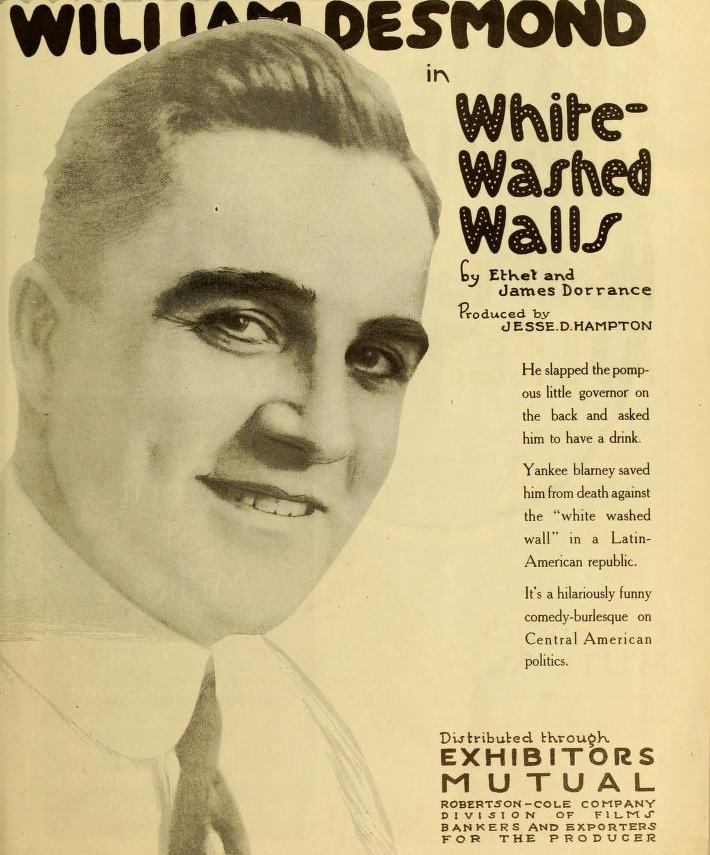
Stepping back into the nascent days of cinematic storytelling, Whitewashed Walls emerges as a vibrant, if often overlooked, artifact from 1918. This silent era gem, brimming with swashbuckling adventure, intricate political machinations, and a dash of burgeoning romance, offers a fascinating glimpse into the narrative sensibilities and visual language that captivated audiences over a century ago. It's a testament to the enduring power of classic archetypes—the dashing hero, the conniving villainess, the tyrannical potentate, and the innocent maiden—all set against an exotic backdrop that feels both universal and distinctly of its time. The film, directed with a keen eye for dramatic tension and penned by George Elwood Jenks, Ethel Dorrance, and James Dorrance, transcends its simple premise to deliver a surprisingly sophisticated commentary on power, perception, and the sheer audacity of the human spirit. Its very existence reminds us of the ingenuity required to craft compelling narratives in an era devoid of spoken dialogue, relying instead on the evocative power of imagery, music, and the raw talent of its performers. This particular production stands out for its energetic pacing and its willingness to embrace complex political intrigue alongside traditional adventure tropes, making it a compelling study for anyone interested in the evolution of popular cinema.
The fictional Latin American country of Altamura serves as more than just a picturesque setting; it is a crucible where American ambition collides with local autocracy. This trope of the "exotic" foreign land, often depicted with a blend of romanticism and political instability, was a common canvas for adventure films of the period, reflecting contemporary global dynamics and audience fascination with distant locales. Altamura, with its diminutive yet vain Governor Romero, embodies the kind of petty despotism ripe for disruption by an outsider, a subtle commentary on colonial attitudes and interventionist narratives prevalent in early 20th-century American culture. The very name "Whitewashed Walls" itself hints at the superficiality of order, a facade easily breached by underlying currents of deceit and rebellion, suggesting that appearances can be profoundly misleading. The film masterfully uses this setting to amplify the stakes, making Larry Donovan's predicament feel both grand and deeply personal. It's not just his life on the line, but the delicate balance of power within a nation teetering on the brink. The visual aesthetics, even in a silent film, would have conveyed a rich sense of place through meticulous costuming, evocative set design, and the actors' expressive performances, immersing the audience in this vibrant, if volatile, world. The visual contrast between the "whitewashed" purity and the underlying corruption is a potent, unspoken theme.
At the heart of this narrative whirlwind is Larry Donovan, portrayed with charismatic vigor by William Desmond. Desmond, a prolific actor of the era, imbues Donovan with the quintessential traits of the American adventurer—an architect, sculptor, and a man of action, brimming with self-assurance and a healthy disregard for stifling authority. His very presence in Altamura, tasked with constructing a magnificent palace for Governor Romero, immediately establishes a cultural clash. Larry's "lack of respect" for the vain governor isn't merely impudence; it's a symbolic rejection of antiquated power structures by a figure embodying modern American individualism and democratic ideals. His leadership of a "riotous Fourth of July celebration" is a bold, almost defiant, assertion of his identity and values, a deliberate cultural transgression that sets the stage for the inevitable confrontation. When he responds to Generalissimo Pedro Mendez's insults by knocking him out, it's not just a physical act but a clear declaration of his refusal to bend to intimidation. Desmond masterfully conveys Larry's compelling blend of ingenuity and bravado, making him an immensely likable protagonist whose cleverness is matched only by his courage. This character type, the resourceful American hero navigating foreign intrigue, finds echoes in later films like 'Blue Blazes' Rawden, where the protagonist similarly asserts a moral authority against corrupt local forces, albeit in a different setting. Desmond’s physical acting and expressive facial cues were critical in communicating the character's complex emotions and rapid problem-solving skills, a hallmark of silent film performance.
The true architect of Donovan's peril, however, is not the injured Mendez but his Machiavellian sweetheart, Rosa, brought to life with chilling effectiveness by Carmen Phillips. Phillips, known for her strong portrayals, delivers a classic silent film femme fatale—a woman whose striking beauty masks a calculating and ruthless ambition. Her scheme—to hide Mendez, fake his funeral, and frame Larry for murder—is a stroke of diabolical genius, designed not just to eliminate Larry but to destabilize Governor Romero's regime and install Mendez in power. This intricate web of deceit elevates the plot beyond a simple misunderstanding, transforming it into a high-stakes political thriller that would feel at home in any era. Rosa's motivation, driven by a desire for power through her lover, is a timeless theme, explored in various forms throughout cinema history. Her cunning manipulation of events, exploiting both Larry's impulsiveness and Romero's vanity, makes her a formidable antagonist, proving that brains can be far more dangerous than brawn. Phillips’s performance, relying on subtle yet powerful gestures and piercing gazes, effectively communicates Rosa's malevolence without dialogue, making her a truly memorable villain. The complexity of her plot could draw comparisons to the intricate deceptions seen in films like The She Devil or Temptation, where female characters often wield subtle, yet devastating, power to achieve their nefarious ends, highlighting a recurring fascination with dangerous women in early cinema.
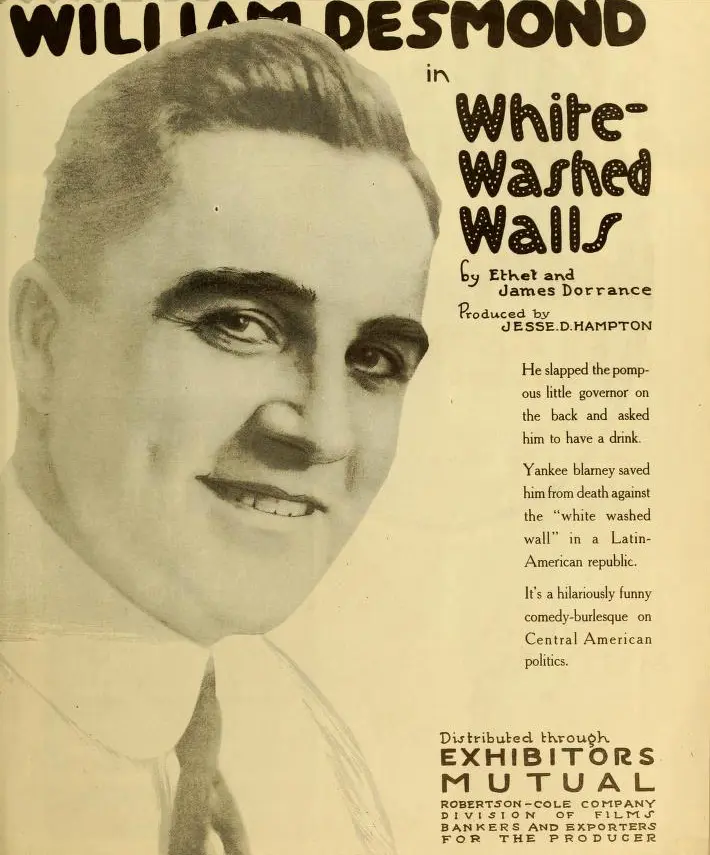
The film's titular "whitewashed execution wall" becomes a powerful visual metaphor for impending doom and the stark finality of injustice. When Larry is led to this grim backdrop, the tension is palpable, a testament to the filmmakers' ability to convey profound emotion without spoken dialogue, relying instead on dramatic framing and the stark contrast of the setting. It's at this critical juncture that Larry Donovan's true genius shines through. His appeal to Governor Romero's colossal conceit—a plea for a week's reprieve to sculpt a heroic statue of the governor for the palace—is a masterstroke of psychological manipulation. It's a high-stakes gamble that pays off spectacularly, highlighting Larry's quick wit and profound understanding of human nature, particularly the exploitable flaws of those in power. This dramatic turn transforms the narrative from a simple escape plot into a gripping race against time, where artistic creation becomes an unlikely, yet brilliant, tool for survival. The ticking clock element, with Larry toiling under the shadow of the execution, adds a layer of suspense that keeps audiences on the edge of their seats, reminiscent of the heightened dramatic stakes found in other early thrillers. The visual of the artist working feverishly against his own mortality, crafting an image of his potential executioner, is a powerful and ironic spectacle.
Just as hope seems to wane, a crucial intervention arrives in the form of Larry's Irish friend, masquerading as Patricio Cassidano. This character embodies the classic trope of the loyal comrade, appearing at the eleventh hour with both the tangible means for escape—a concealed gun—and the vital piece of information—irrefutable proof that Mendez is, in fact, alive. This development is a brilliant narrative pivot, shifting the focus from merely proving Larry's innocence of a murder to exposing Rosa's elaborate, villainous deception entirely. The revelation not only exonerates Larry but also underscores the film's pervasive theme of truth eventually triumphing over falsehood, even when buried under layers of intrigue. The convenience of this intervention, while a common device in early cinema (often termed a 'deus ex machina'), doesn't detract from the sheer satisfaction of seeing Larry's predicament resolved through a combination of his own cleverness and the unwavering loyalty of a friend. It's a potent reminder that even in the darkest dungeons, a sliver of hope, often delivered by an unexpected ally, can light the way to freedom, reinforcing the importance of camaraderie in times of extreme peril.
Larry's escape is as audacious as his character. Using Governor Romero as an unwitting human shield, he navigates his way to freedom, turning his captor's profound weakness (his insatiable vanity and desperate desire for self-preservation) against him in a moment of brilliant improvisation. This sequence would have been a thrilling display of physical comedy and daring action, showcasing Desmond's athleticism and the film's capacity for dynamic, kinetic storytelling, a vital component of silent film engagement. The ensuing resolution, where Larry not only secures his freedom but also obtains Romero's rather reluctant consent to marry his pretty niece, Concha (Fritzi Brunette), ties the various narrative threads together with a satisfying flourish. Concha, often the innocent bystander caught in the crossfire of political intrigue, represents the ultimate reward for Larry's harrowing trials—a symbol of new beginnings and romantic fulfillment. The rapid shift from near-execution to wedding bells is characteristic of the period's fast-paced, often melodramatic, conclusions, ensuring a happy ending for the heroic protagonist and leaving audiences with a sense of closure and triumph. Films like Her Strange Wedding similarly blend peril and romance, where the hero's ultimate victory is often sealed by winning the hand of the leading lady, underscoring a popular narrative convention of the era.
The success of Whitewashed Walls hinges significantly on the expressive performances of its cast, who had to master the unique art of silent acting. William Desmond, as Larry Donovan, commands the screen with a blend of rugged charm and quick-witted intelligence, perfectly embodying the adventurous spirit of the era. His physical acting, crucial for silent cinema, conveys a wide range of emotions, from frustration and defiance to cunning and romantic affection, often through exaggerated but effective gestures and facial expressions. Fritzi Brunette, as Concha, provides the necessary grace and vulnerability, making her character a compelling object of Larry's affection and giving the romantic subplot its emotional anchor. Carmen Phillips, as the villainous Rosa, absolutely revels in her character's duplicity, using subtle gestures and intense, calculating gazes to communicate her sinister intentions without uttering a single word, making her a truly formidable on-screen presence. Frank Lanning's portrayal of Governor Romero is particularly memorable, capturing the essence of a pompous, easily manipulated leader with a blend of comedic precision and underlying menace. The direction, while adhering to the conventions of silent film—clear staging, dramatic close-ups to emphasize emotion, and informative intertitles to convey dialogue and exposition—manages to maintain a brisk pace and a compelling visual flow. The filmmakers effectively use visual cues, careful composition, and the actors' finely tuned expressions to tell a complex story, a true art form in itself that required immense skill from both cast and crew.
Even today, Whitewashed Walls holds a certain resonance, not just as a historical document but as a piece of genuinely engaging entertainment. Its themes of justice, deception, and the triumph of ingenuity over tyranny are timeless, speaking to universal human experiences. The film subtly touches upon the dynamics of power and influence, particularly the way a seemingly powerful figure like Romero can be swayed by flattery or fear, reflecting broader societal observations. The character of Larry Donovan, the American outsider who navigates and ultimately subverts a foreign political system, speaks to a particular strain of American mythology—that of the individual capable of solving complex problems through sheer force of will and cleverness, often in settings perceived as less 'civilized.' This narrative framework, while perhaps simplified for the entertainment of its era, offers a fascinating window into popular perceptions of international relations and heroism during the early 20th century. While not as overtly political as some contemporary European films like Skazka mira, it nonetheless uses its adventure plot to comment on societal structures and individual agency in a captivating manner. The film's enduring appeal lies in its ability to deliver a thrilling, romantic, and ultimately triumphant story that, despite its silent nature, speaks volumes through its visual storytelling and powerful performances. It reminds us that sometimes, the most dangerous walls are not those made of stone, but those constructed of lies and vanity, and that a dash of courage, wit, and a loyal friend can bring them tumbling down. It's a delightful journey back to a foundational period of cinematic art, proving that a well-told story, regardless of its medium or era, remains captivating and relevant, offering insights into both its own time and the timeless aspects of human drama.
IMDb 6.6
1936
Community
Log in to comment.