DbcultAccessing Vault...
Cult Review
Senior Film Conservator
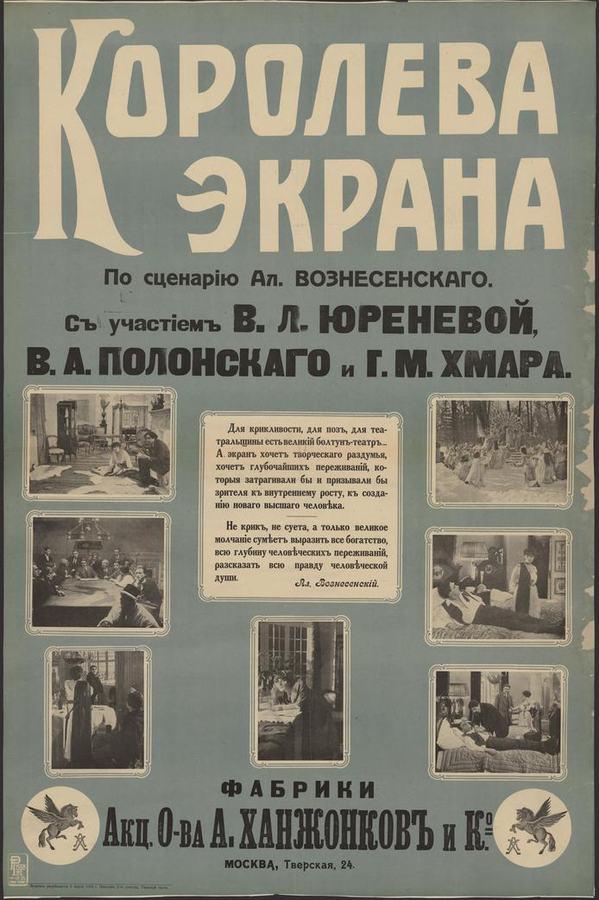
In the flickering, ephemeral glow of early 20th-century cinema, a film emerges from the archives not merely as a historical artifact, but as a searing, timeless indictment of ambition's cost and the precarious tightrope walked by those who dared to chase the spotlight. 'Koroleva ekrana', or 'Queen of the Screen', stands as a monumental achievement, a silent epic that, even today, resonates with an unsettling prescience regarding the nature of celebrity and the often-destructive power dynamics inherent in artistic creation. It is a work that transcends its era, offering a profound psychological portrait wrapped in the opulent drapery of a burgeoning art form.
The narrative thrust of 'Koroleva ekrana' centers on Anya Petrova, a character brought to life with an almost unbearable vulnerability and burgeoning strength by an unnamed actress whose performance is a masterclass in silent film emoting. Anya is a creature of raw, untamed talent, her very essence radiating a quiet desperation for something more than her humble origins can offer. She is, in essence, a blank canvas awaiting the brushstrokes of destiny, or perhaps, a more sinister hand. Her discovery by Sergei Volkov, portrayed with chilling charisma by Vitold Polonsky, is less a stroke of luck and more the sealing of a Faustian pact. Polonsky, a titan of the Russian silent screen, imbues Volkov with a complex duality: a visionary artist whose genius is inseparable from his controlling, almost predatory nature. He sees in Anya not just an actress, but a malleable vessel for his grand cinematic ambitions, a 'queen' he can crown and, crucially, control. This dynamic forms the bedrock of the film, a simmering tension that permeates every frame, every lingering close-up of Anya's increasingly haunted eyes.
Volkov’s transformation of Anya is depicted with meticulous detail, a fascinating, if disquieting, look behind the curtain of early film production. We witness her arduous training, the endless rehearsals, the careful sculpting of her public image. The film cleverly juxtaposes the glamorous facade of stardom with the grueling, often dehumanizing process required to achieve it. Anya’s meteoric rise is breathtaking, a whirlwind of adoring crowds, extravagant costumes, and critical acclaim. Yet, the camera, with its uncanny ability to penetrate surface appearances, consistently hints at the hollowness beneath the glitter. The more she becomes 'Koroleva ekrana', the less she remains Anya Petrova, her authentic self slowly eroding under the relentless glare of the Klieg lights.
Amidst the intoxicating chaos of her newfound fame, Anya finds a flicker of genuine connection with Mikhail, an idealistic and gentle writer, sensitively portrayed by Gregori Chmara. Chmara’s performance is a poignant counterpoint to Polonsky’s theatrical intensity, offering a quiet dignity and earnestness that grounds Anya’s increasingly fantastical existence. Mikhail represents a refuge, a glimpse of a life unburdened by artifice and manipulation. Their burgeoning romance is depicted with a tender, almost lyrical quality, a brief respite from the encroaching shadows. However, this nascent love becomes the primary target of Volkov’s insidious jealousy. His possessiveness extends beyond the professional realm; he views Anya’s emotional independence as a direct threat to his artistic dominion.
Volkov’s machinations are subtle yet devastating. He isolates Anya, manipulates information, and subtly undermines her trust in Mikhail, ultimately orchestrating their separation. This narrative thread powerfully explores themes of control, artistic ownership, and the tragic consequences of emotional blackmail. The film suggests that for some, creation is not merely an act of expression but an act of subjugation, where the artist seeks to own not just the work, but the very soul of their collaborators. The silent film medium, with its reliance on exaggerated gestures and expressive faces, perfectly amplifies the emotional turmoil of this betrayal, each anguished glance and desperate plea rendered with heart-wrenching clarity.
Adding another layer of tragic complexity to 'Koroleva ekrana' is the character of Elena, a fading star, played with remarkable pathos by Vera Yureneva. Yureneva, herself a legendary figure, brings an authentic weariness and bitter wisdom to the role. Elena is not merely a rival; she is a spectral harbinger, a living embodiment of the ephemeral nature of fame. Her presence serves as a chilling mirror for Anya, reflecting the inevitable trajectory of those who burn too brightly, too quickly. Elena watches Anya's ascent with a mixture of envy, pity, and a profound understanding of the sacrifices she herself endured. Her quiet, often wordless interactions with Anya are charged with unspoken warnings, a silent lament for a bygone era and a poignant reminder that the 'queen' today will be forgotten tomorrow.
The film masterfully uses Elena’s character to underscore the cyclical cruelty of the industry. Her decline is juxtaposed with Anya’s rise, creating a powerful commentary on the relentless demand for new faces, new sensations, and the brutal discard of those deemed past their prime. This thematic resonance is not unique to 'Koroleva ekrana'; echoes of this can be found in later cinematic explorations of stardom’s dark side, such as in Life's Shop Window, which similarly scrutinizes societal pressures and the commodification of identity, albeit through a different lens. However, 'Koroleva ekrana' achieves a raw, almost primitive power in its depiction, unvarnished by the narrative complexities of sound film.
Beyond its compelling narrative, 'Koroleva ekrana' is a triumph of early cinematic artistry. The direction, though uncredited for specific individuals in the provided information, exhibits a sophisticated understanding of visual storytelling. The use of dramatic lighting, particularly in the studio scenes, creates stark contrasts between light and shadow, effectively mirroring Anya's internal struggle. The camera work is dynamic, employing tracking shots and expressive close-ups to draw the audience into the emotional core of the characters. Montage sequences, a hallmark of the era, are utilized with striking effect to convey the passage of time, the frenzy of stardom, and the fragmenting of Anya's psyche.
The set designs are lavish, depicting the grandeur of early film studios and the opulent homes of the newly rich stars, yet always with a subtle undercurrent of artificiality. Costuming, too, plays a crucial role, transforming Anya from a simple girl into a sartorial goddess, each gown a new layer of her constructed identity. The film’s visual language is rich and evocative, speaking volumes where dialogue would later reside. It demonstrates a profound mastery of the silent medium, proving that narrative depth and emotional complexity were not solely the domain of the spoken word. One might even draw parallels to the visual storytelling found in works like The Quest, which also relied heavily on evocative imagery to convey profound internal journeys, though with a distinct adventurer's spirit.
The brilliance of 'Koroleva ekrana' also lies in the collective genius of its uncredited or less-emphasized contributors. The cinematographers, editors, and art directors, though often unsung in the annals of early film history, wove together a tapestry of images that are both aesthetically stunning and deeply resonant. The film’s pacing is deliberate, allowing moments of quiet contemplation to punctuate scenes of dramatic intensity, building a cumulative emotional impact that is both cathartic and devastating. This careful calibration of rhythm and visual information is a testament to the sophisticated understanding of film grammar that was rapidly developing during this period. The film’s enduring power is a tribute to these anonymous artisans who, with limited technology, crafted a work of such profound emotional and thematic richness.
In considering the sheer technical and artistic ambition of 'Koroleva ekrana', it is worthwhile to reflect on other contemporary productions that pushed boundaries. For instance, the intricate character studies found in films like His Wife or the social commentaries explored in A Daughter of the City, while distinct in their narrative focus, share a common thread with 'Koroleva ekrana' in their earnest attempts to grapple with complex human experiences within the nascent cinematic framework. Each film, in its own way, contributed to the evolving language of cinema, proving that even in its infancy, the medium was capable of profound storytelling.
The climax of 'Koroleva ekrana' is nothing short of operatic in its tragedy. Anya, shattered by Volkov’s manipulations and the loss of Mikhail, finds herself performing a role that chillingly mirrors her own tortured existence. The film brilliantly blurs the lines between performance and reality, as Anya’s on-screen tears become genuine, her staged anguish a true reflection of her soul. This meta-narrative element is remarkably sophisticated for its time, questioning the very nature of artifice and authenticity in performance. The audience, both within the film's narrative and watching the film itself, is left to ponder the profound cost of her stardom. The final images of Anya, a hollowed-out shell of her former self, yet still radiating an undeniable, tragic beauty on the screen, are indelible.
This devastating conclusion elevates 'Koroleva ekrana' beyond a mere melodrama, transforming it into a searing commentary on the dehumanizing aspects of fame and the ruthless demands of the entertainment industry. It is a precursor to countless 'rise and fall' narratives that would follow, from 'A Star Is Born' to 'Sunset Boulevard', yet it retains a unique, raw power, stripped bare of dialogue, relying solely on the universal language of human emotion. The film’s capacity to evoke such profound empathy and sorrow, despite the passage of a century, is a testament to its enduring artistic merit and the timelessness of its themes.
'Koroleva ekrana' is more than just a historical curiosity; it is a foundational text in the study of early cinema and a compelling exploration of universal human themes. Its examination of ambition, control, love, and loss remains as pertinent today as it was in its initial release. The performances, particularly from Polonsky, Chmara, and Yureneva, are exemplary, showcasing the profound dramatic capabilities of silent actors who communicated entire worlds through gesture, gaze, and posture. The film's technical innovations, its sophisticated narrative structure, and its unflinching gaze into the darker corners of human nature solidify its place as a masterpiece.
For enthusiasts of early cinema, 'Koroleva ekrana' offers a window into the artistic ferment of an era when the rules of filmmaking were still being written. It stands proudly alongside other significant works of the period, such as the compelling psychological drama of The Raven, or the nuanced social observations found in The Havoc, each contributing to the rich tapestry of silent film. The film is a powerful reminder that the struggles of artists and the allure and perils of fame are perennial concerns, echoing through generations and across different artistic mediums. Its resonance today is a testament to its profound artistic integrity and its courageous exploration of the human condition, making it an indispensable viewing experience for anyone seeking to understand the enduring power of cinema.
IMDb —
1924
Community
Log in to comment.