DbcultAccessing Vault...
Cult Review
Senior Film Conservator
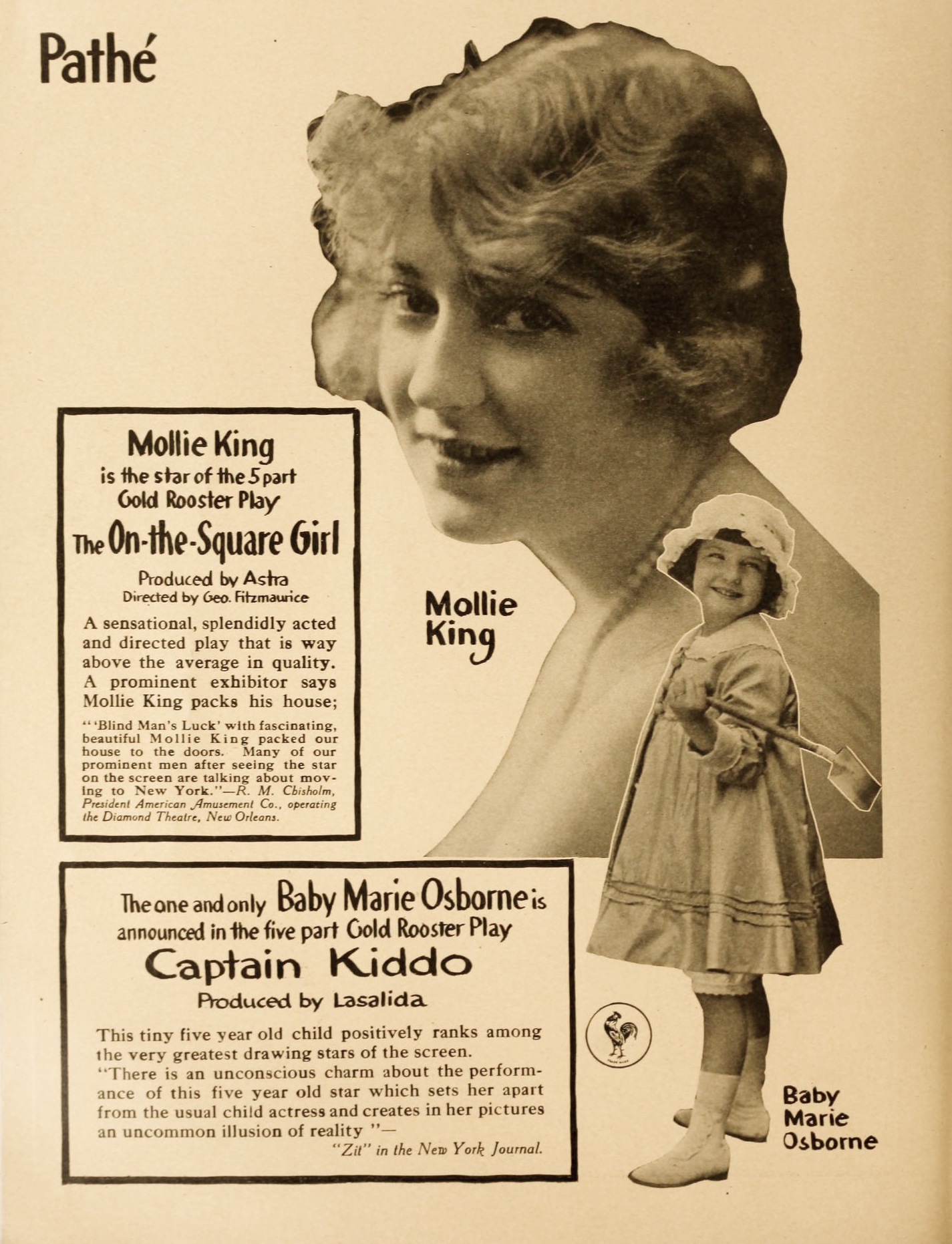
Imagine, if you can, a world where every stitch in a hem is a moral ledger entry, where the rasp of a needle through cambric sounds like distant thunder to the conscience. Director Ouida Bergère—also the scenarist—unfurls such a universe in The On-the-Square Girl, a 1917 seven-reel fever dream that treats the nickelodeon like a confessional booth. From the first iris-in on a Manhattan sweatshop, the film announces itself as something pricklier than your standard urban fable of woe: the camera glides past faceless seamstresses until it lands on Anne Blair—played by Mollie King with the brittle radiance of a porcelain doll left too long in the kiln.
King, barely nineteen at the time, carries the picture on collarbones that look ready to snap under the weight of their own alabaster. Her Anne is no passive muse; she is a wage-earning Penelope whose tapestry unspools into a noose. When the invalid mother coughs blood onto a monogrammed handkerchief, the close-up lingers until the scarlet bloom feels almost decorative—an haute-couture memento mori. Anne’s transaction with Brockton (L. Rogers Lytton, oozing the languid menace of a man who has never heard the word “no” spoken aloud) is filmed in chiaroscuro: his shadow literally swallows her diminutive form against the wall, a visual shorthand for capital devouring labor.
The attempted seduction sequence—central to the censorious cluck-clucking that followed the picture from state to state—remains startling. Brockton’s drawing room, all Louis-XIV gilt and predatory upholstery, becomes a gladiatorial pit. Anne’s refusal is not the coquettish slap of Victorian stagecraft; it is a full-bodied insurgency. She claws, bites, finally drives the dressmaker’s shears into the satin swell of his shoulder. The edit is jagged, almost Soviet in its montage: a flash of the blade, a cut to black, then the scream overdubbed by the theater’s own Aeolian pipe organ. Contemporary reviewers winced at the “indelicacy,” yet the moment plays like an early feminist cri de coeur, predating similar tableaux of female vengeance by half a decade.
Flight follows, and with it the film’s most lyrical passage. Anne hops a northbound freight, the locomotive’s plume of steam smearing across the frame like erasure poetry. Bergère superimposes the speeding wheels over the mother’s death certificate—an experimental flourish that anticipates European avant-gardists. Upon arrival in the unnamed northern sanitarium town, she learns the cadaverous truth: mama has expired, coffin already lowered into the frost-veined earth. Anne’s grief is rendered without intertitles; King simply walks into a blizzard, her black coat flapping like a torn flag until she collapses. The camera tilts skyward to a vertiginous swirl of snow, a vortex that seems to vacuum sound itself from the auditorium.
Enter Richard Steel—Richard Tucker channeling a young, slightly dissipated John Barrymore. He finds Anne half-buried, carries her to his atelier fire, and proceeds to paint her as “Resurrection,” robes of cobalt, halo of burnt umber. Their courtship unfolds in painterly dissolves: brushstroke dissolving into flesh, canvas into caress. Tucker and King generate the hushed electricity of two people who have each, in separate lifetimes, already died once. When Steele proposes, Anne’s hesitation reads less like coy melodrama than post-traumatic vertigo; she knows DNA is a closet full of skeletons.
The epistolary reveal—that Brockton is her progenitor—lands like a dull axe. Letters arrive bundled in lavender ribbon, their handwriting a spidery confession from the grave of Anne’s mother. Bergère withholds the actual text from us; we see only Anne’s pupils dilating, a tear tracking through rice-powder. The ethical calculus is baroque: expose the tyrant, mortify the dead mother’s name, or stay mum and marry the painter? Anne chooses silence, a decision the film neither condemns nor applauds, letting the moral frost settle on the viewer’s own conscience.
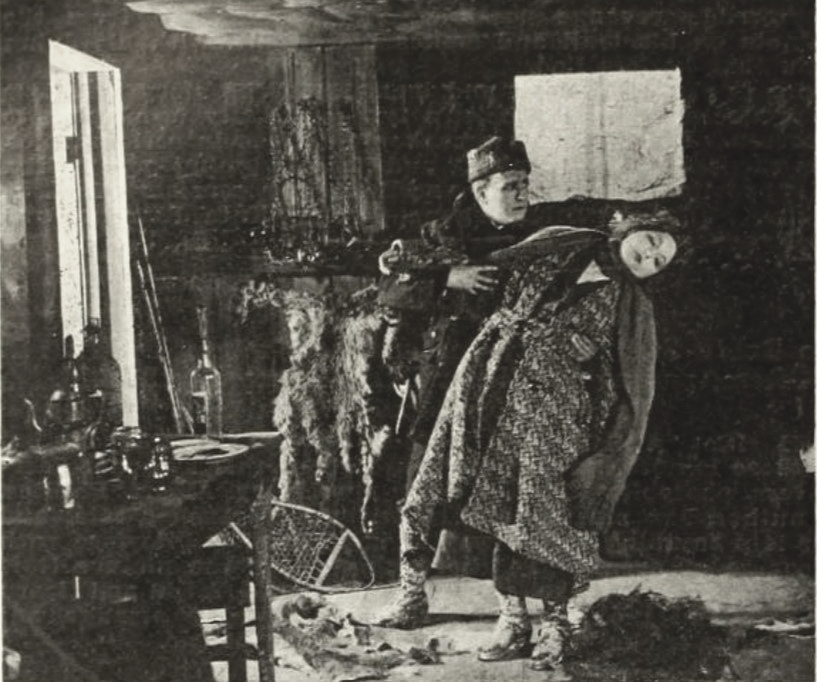
Meanwhile, Steel breaks his betrothal to Inez Brockton (Aimee Dalmores, all hauteur and swan-neck). The catalyst? A dalliance with a third-tier matinee idol—barely a kiss, but enough to ignite the scandal sheets. When Brockton père storms the studio, the film stages its true coup de théâtre: father and unrecognized daughter stand inches apart, the space between them crackling with unspoken chromosomes. Anne’s confession—“I am the child you tried to ravish”—is delivered not in hysterics but a whisper that could etch glass. Lytton’s face cycles through predation, incomprehension, and something like spiritual collapse in the span of three seconds, a master-class in silent-era micro-acting.
Repentance arrives as a kind of capitalist miracle. Brockton bestows upon the couple his “blessing,” plus a trust fund hefty enough to gild every pew in the cathedral where they will wed. The gesture is absurd, yet Bergère sells it by cutting to a final image of Anne’s mother’s headstone, snowflakes settling on the chiseled dates like blank pages awaiting a happier inscription. Fade to white—an inversion of the usual iris-out, implying resurrection rather than closure.
Mollie King’s career never again reached this altitude; within two years she was playing ingénues in two-reel farces. Watching her here is akin to stumbling on a lost Garbo test reel—there is the same aqueous vulnerability armored in steel. Lytton, a stalwart of Edison and later historical pageants, locates the human frailty inside the roué, making Brockton’s late-film contrition feel earned rather than preposterous. Tucker, saddled with the thankless “good painter” role, injects bohemian swagger—he’s the rare male lead who listens more than he declaims.
Cinematographer Ernest Haller (later to lens Jezebel and Gone with the Wind) shoots the wintry exteriors through diffusion filters fashioned from cheesecloth and glycerin, giving the snow the granular texture of celluloid dandruff. Interiors brim with Rembrandt triangles of lamplight, so that faces emerge from umber gloom as if painted by the Dutch master himself. The palette—hand-tinted in select prints—restricts itself to arsenic greens and consumptive blues, save for the crimson gush of Brockton’s wound, a shock of saffron guilt in a world leached of warmth.
Modern viewers, weaned on the ironic distance of neo-noir anti-heroines, may snicker at the convenient eleventh-hour absolution. Yet the film’s preoccupation with bodily autonomy, class blackmail, and the hereditary sins of capital feels eerily au courant. Replace Brockton’s carriage with a private jet, Anne’s shears with a viral tweet, and you have a #MeToo parable avant le hashtag. The picture even anticipates the current vogue for DNA-reveal thrillers, though here the twist liberates rather than condemns the heroine.
Only two 35 mm prints are known to survive: one at the Library of Congress (incomplete, decomposing around reel five), the other in a private Dutch collection recently scanned at 4K. A restored DCP toured festivals last autumn under the auspices of the Eye Filmmuseum, accompanied by a live score that blended gamelan with analog synth—an odd hybrid that nonetheless honored the film’s own clash of Victorian morality and modernist form.
The On-the-Square Girl is no relic; it is a cracked mirror held up to our own appetites for transactional intimacy. It asks whether forgiveness can be bought at wholesale, whether blood can both violate and redeem. The answers it offers are as ambiguous as snow continuing to fall after the final embrace—an immaculate, indifferent benediction.
IMDb —
1932
Community
Log in to comment.