DbcultAccessing Vault...
6.4/10
Senior Film Conservator
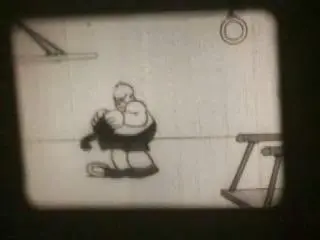
A definitive 6.4/10 rating for a film that redefined the boundaries of cult cinema. Felix the Cat in Gym Gems remains a cornerstone of transgressive art.
Is Felix the Cat in Gym Gems still relevant in a world of high-definition CGI blockbusters? Short answer: Yes, but only if you value the raw, unpolished DNA of animation over modern, sanitized sentimentality.
This film is for the animation historian and the fan of surrealist comedy who prefers their heroes with a bit of a mean streak. It is absolutely not for those who expect the soft, moralizing edges of modern family entertainment.
1) This film works because it treats its protagonist like a desperate vagabond rather than a cuddly mascot, grounding the surrealism in a relatable, primal need: hunger.
2) This film fails because its final act relies on a 'mule-ex-machina' that, while funny, lacks the cleverness of the earlier, more inventive gags involving the billposter’s bucket.
3) You should watch it if you want to see the exact moment in history when animators realized that physical logic was a suggestion, not a law.
In the mid-1920s, Felix wasn't just a character; he was a phenomenon. Unlike the later, more corporate iterations of cartoon animals, the Felix of 1926 was a survivor. In Gym Gems, we see him trying to eat a shoe. This isn't just a gag; it’s a reflection of the era’s anxieties, a theme also explored in more dramatic tones in films like Prohibition.
The sequence where Felix attempts to consume paste from a billposter’s bucket is a masterclass in visual storytelling. There is no dialogue, yet we feel the stickiness, the frustration, and the eventual resignation of the character. It’s a gritty start for a comedy, but it sets the stakes high. Felix isn't looking for adventure; he’s looking for a meal, and that makes his subsequent beating in the gym feel all the more earned and tragic.
When Felix wanders into the boxer's training camp, the film shifts from a survivalist drama into a deconstruction of masculinity. The boxer is a towering, muscular figure, a stark contrast to Felix’s fluid, ink-blot design. This visual disparity is where the comedy lives. The boxer represents the rigid, physical world, while Felix represents the chaotic potential of the pen.
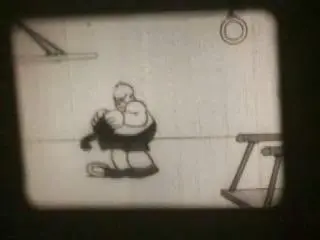
The moment the boxer begins to use Felix as a literal punching bag is shockingly violent for those used to modern standards. However, Otto Messmer’s direction ensures it remains within the realm of the absurd. Felix’s body stretches and deforms, absorbing the impact in a way that prefigures the 'squash and stretch' principles that would later define the industry. It’s a brutal scene, but it serves a purpose: it justifies the revenge.
Messmer’s work in Gym Gems is often overlooked in favor of his more famous shorts, but the technical craft here is fascinating. Look at the way the mule is animated. It’s not a realistic animal; it’s a collection of geometric shapes that move with a rhythmic, almost mechanical precision. When the mule kicks the boxer, the impact is felt through the timing of the frames, not the detail of the drawing.
This style of animation is far removed from the experimental visuals of An Elephant's Nightmare, which leaned more into the grotesque. Instead, Messmer keeps things clean and readable. The background is sparse, focusing the viewer’s eye entirely on the character movement. This simplicity is its greatest strength. It works. But it’s flawed in its repetitive pacing during the middle section.
Yes, Felix the Cat in Gym Gems is a vital piece of cinematic history that remains genuinely funny. It offers a window into the 1920s obsession with slapstick and the burgeoning power of animation as a medium for adult-leaning humor. If you enjoy seeing the roots of modern comedy, this short is essential viewing.
The final act of the film is where we see the "spite" that I mentioned earlier. Felix isn't a saint. He is a vengeful little creature. After being pummeled by the boxer, he doesn't just walk away; he orchestrates a calculated strike. The use of the mule as a weapon is a classic example of the 'Felix logic'—using the environment to solve a problem that physical strength cannot.
Compare this to the more dramatic narratives of the time, like Spartak, which dealt with uprising and rebellion on a grand scale. Felix offers a more personal, localized version of that same struggle. It’s the individual against the system, or in this case, the cat against the athlete. It’s a petty rebellion, but it’s immensely satisfying to watch.
Cons:
Felix the Cat in Gym Gems is a fascinating artifact. It isn't the most polished of the Felix shorts, but it is one of the most revealing. It shows a character that is defined by his needs—hunger, safety, and respect—and his willingness to break the world to get them. While it lacks the narrative complexity of a feature like Confessions of a Queen, it succeeds as a pure distillation of visual comedy. It’s a quick, punchy, and occasionally mean-spirited romp that reminds us why Felix was the first true star of animation. He wasn't just a drawing; he was an attitude.
IMDb 6.6
1921
Community
Log in to comment.