DbcultAccessing Vault...
6.2/10
Senior Film Conservator
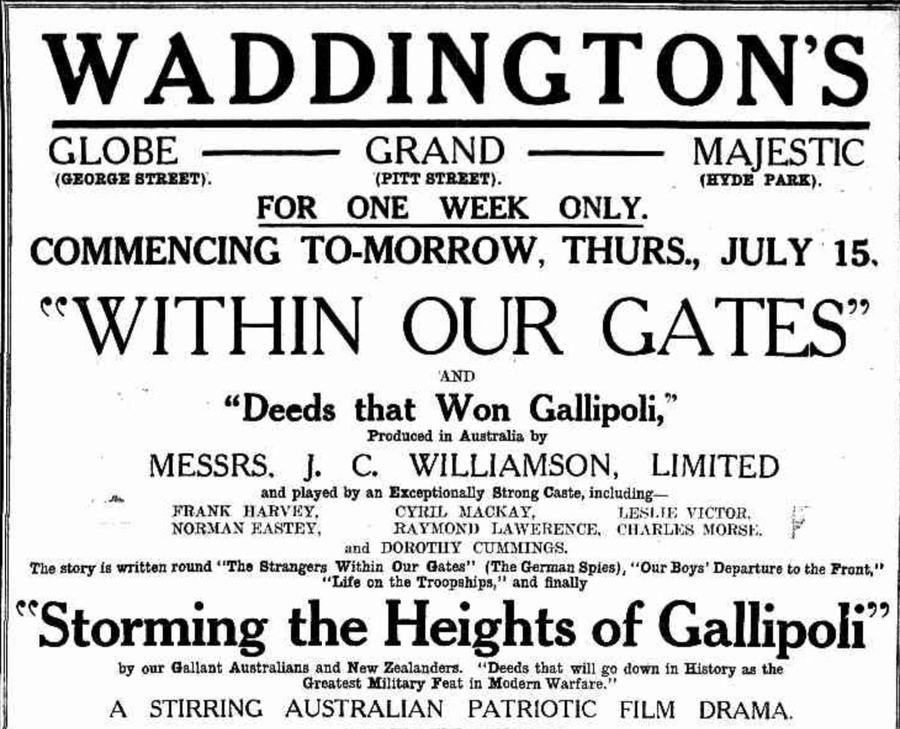
A definitive 6.2/10 rating for a film that redefined the boundaries of cult cinema. Within Our Gates remains a cornerstone of transgressive art.
The nickelodeon curtain rises on 1915 Melbourne and already the air is thick with cordite and conspiracy. W.J. Lincoln—whose name now lingers like a half-remembered prayer in Australian film lore—concocts a narrative cocktail equal parts patriotic blood-surge and proto-noir paranoia. Within Our Gates is not merely a propaganda leaflet stapled to a war bulletin; it is a celluloid séance where empire anxiety, hyphenated identity, and proto-feminist audacity swirl in a dizzying foxtrot.
Consider the film’s daring pivot: it lures its audience with the promise of khaki spectacle—rows of Anzac volunteers shouldering rifles beside the Princes Bridge—yet delivers its most visceral charge in the hush of a bourgeois parlour. German-born Australian clerk Franz (Frank East, all cheekbones and twitching guilt) embodies the hyphenated subject, that liminal creature whom nations profess to trust yet always suspect. When Herr Henschell (Charles Morse, exuding the oleaginous charm of a man who could sell you your own shadow) rescues Franz from a card-table scandal, the camera lingers on a handshake: two palms, one manicured, one ink-stained, sealing a Faustian pact. The moment is lit like a Rembrandt, chiaroscuro slicing their faces so that half of each man gleams with civic virtue while the other half sinks into Teutonic or Antipodean darkness.
Upstairs, the attic wireless set crackles with Morse dashes that echo across oceans. Berlin becomes an auditory character, a disembodied whisper curling through copper filaments. Lincoln intercuts these transmissions with typed intertitles whose jittery font mimics official communiqués—an avant-garde flourish that predates the Soviet montage school by half a decade. The effect is uncanny: viewers in 1915 were literally seeing espionage being invented on screen, the way Das Modell would later aestheticise surveillance, or Silence of the Dead would render guilt as sonic residue.
Yet the film’s true insurgent is Hilda, the adopted daughter played by Dorothy Cumming with a combustible mix of porcelain delicacy and magnesium ferocity. Watch her eyes in the ballroom sequence: while violins slither through a Strauss waltz, her gaze keeps darting to the grandfather clock, each tick a reminder that troopships are slipping past the Heads. Cumming’s performance anticipates the ambivalent heroines of Moths and Jess—women whose loyalty is larger than blood. When she finally confronts her father among the Gothic shadows of their Kew mansion, the lighting schema inverts: Hilda’s face is haloed by a gas-lamp while Henschell dissolves into silhouette. It is as if the film itself is disinheriting him.
Just as the domestic intrigue reaches a crescendo, Lincoln yanks the rug. A smash-cut transports us aboard HMAT Orvieto, its deck swarming with troops who minutes earlier were parading outside Flinders Street Station. The transition is jarring—deliberately so. The director wants the viewer to feel the imperial conveyor belt that whisks boys from genteel drawing-rooms to the maw of industrial death. Cinematographer Cyril Mackay mounts his camera to the ship’s rail; the resultant images sway with nauseous authenticity, prefiguring the handheld chaos of later combat reportage.
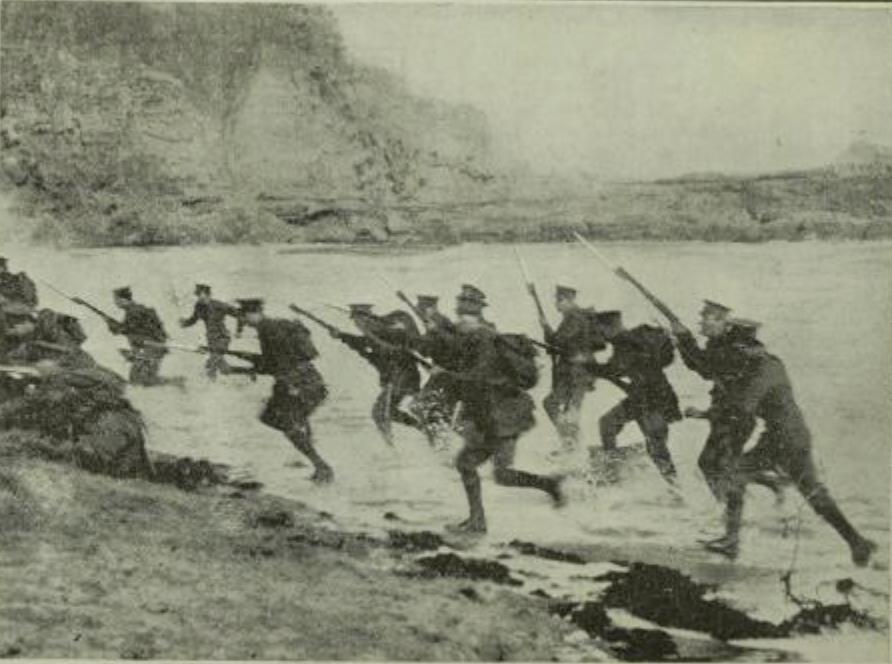
Arrival at Anzac Cove is staged as a chiaroscuro apocalypse. Shells puncture the sea like white-hot coins, and when they burst the screen blooms with hand-tinted amber flames—each frame hand-painted by a team of women in a St Kilda warehouse, their brushes conjuring sulphur ghosts. The troops hit the beach in long shot, then the film fractures into staccato close-ups: a sand-caked wristwatch forever frozen at 4:28 a.m.; a rosary snagged on barbed wire; a periscope reflecting the silhouette of a Turkish sniper. These micro-montages stitch together to form a palimpsest of national trauma.
Crucially, Lincoln refuses to demonise the Ottoman defenders. In a breathtaking insert, we see a Turkish officer writing a letter to his wife in Smyrna; the envelope bears a stamp depicting the crescent moon mirrored over the Bosphorus. The visual rhyme is unmistakable: Australia and Turkey—two peninsulas dreaming across hemispheres—are now locked in reciprocal slaughter. Such humanist nuance would be unthinkable in The Life and Adventures of John Vane, where colonial authority is absolute, or even in The Squatter’s Daughter, whose nationalism is pastoral, uncomplicated by global entanglements.
Because Within Our Gates is silent, every rustle of the audience becomes part of its acoustic ecology. In 1915 exhibitors often enlistedReturned servicemen to provide live gunfire effects by cracking whips against tin sheets. Contemporary journals report patrons fainting when the theatre filled with the smell of cordite—sometimes real, sometimes a concoction of saltpetre and methylated spirits spritzed by ushers. Thus the film’s silence becomes a resonant chamber into which history pours its clamour.
Modern restorations have experimented with ambient scores, yet the most haunting accompaniment remains the original cue sheet: a medley of La Marseillaise, Rule Britannia, and the folk tune Waltzing Matilda—anthems whose ideological contradictions mirror the film’s own ambivalence toward empire. At the climactic moment when Hilda denounces her father, the score instructs the pianist to strike a single diminished chord and hold it until the celluloid itself seems to blister. Viewers reported a collective intake of breath so sharp that the theatre curtain fluttered.
Frank East’s Franz is a study in recursive self-loathing. His eyebrows—perpetually arched like circumflex accents—betray a man who has memorised his own guilt. Watch how, when ordered to steal the dispatch book, he opens the minister’s safe with the reverence of a communicant partaking in an unholy sacrament. East never overplays; instead he lets the sweat on his upper lip become the film’s barometer of moral barometric pressure.
As Henschell, Charles Morse channels the velvet menace of Erich von Stroheim a full four years before Hollywood discovered the Austrian ogre. His costume palette graduates from dove-grey waistcoats in early scenes to a midnight-black dinner jacket in the attic finale, a sartorial descent into ethical stygian. When he slaps Hilda across the cheek, the gesture is filmed in profile—the impact occurs just outside frame, leaving the viewer to imagine the red welt blooming on porcelain skin. Censorship boards in Adelaide and Brisbane demanded this cutaway, yet Lincoln’s refusal to show the blow only amplifies its violence; we feel the sting in our own nerve endings.
Among the supporting cast, Leslie Victor’s turn as the War Minister’s son deserves reappraisal. He enters as a caricature of chin-up Anzac virility, but his farewell scene—delivered via close-up as troopship foghorns groan—collapses into tremulous vulnerability. His lip quivers, eyes glisten, and for a second the imperial adventure dissolves into a boy’s terrified realisation that he may never again taste his mother’s lamingtons. It is a moment of rawness that anticipates the shell-shocked candour of post-war memoirs.
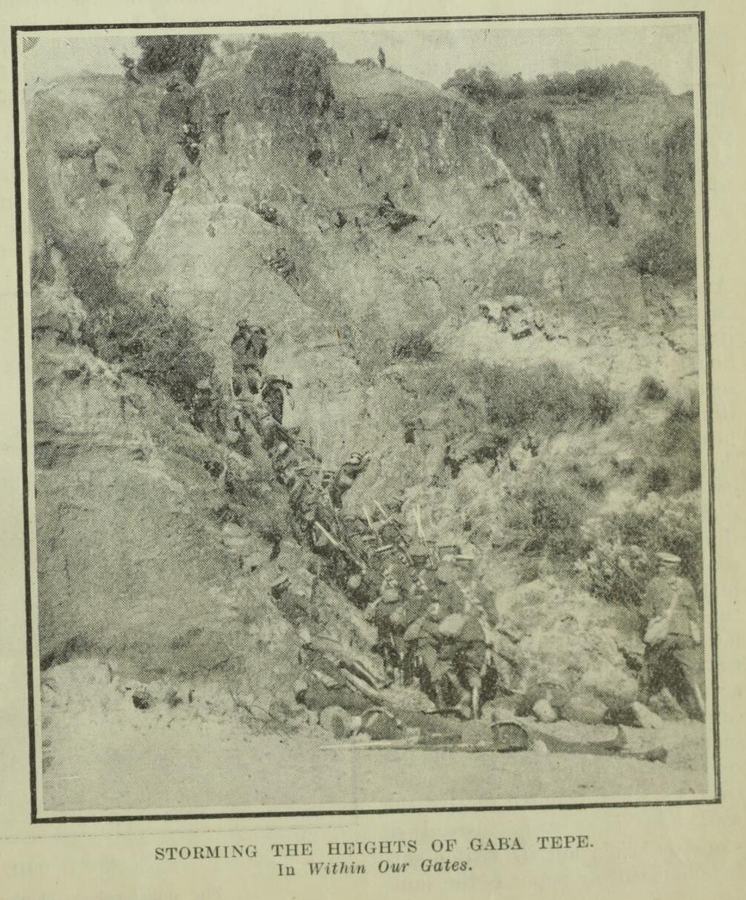
Shot almost entirely on location—rare for 1915—the film exploits Melbourne’s gothic arteries: the bluestone lanes off Little Lonsdale become clandestine drop points; the Exhibition Building’s cupola doubles as a semaphore lookout; the sand dunes of Port Melbourne, sprayed with aluminium paint, impersonate Gallipoli’s cliffs. Such verisimilitude lends the espionage sequences a grubby authenticity. In one alleyway scene, the gas-lamp flicker reveals not only the actors but the condensation of their breath—visual proof of July pre-dawn shoots.
Cinematographer Cyril Mackay’s chiaroscuro reaches its apotheosis in the wireless attic. Here, keyholes spill yellow shafts that bisect the darkness like scalpels, while the transmitter’s valves pulse with infernal orange—an colour scheme predating the neon religiosity of Drama v Kabare Futuristov No. 13 by a decade. When Henschell pounds the table in rage, dust motes rise, each speck lit so that the air itself seems corporeal, a swarm of guilty particles.
“Every shadow in this film weighs a ton,” wrote critic Mabel Foster in The Bulletin, “and when it lifts, the light feels like a wound.”
Released days after news of the Gallipoli landings reached home shores, the picture was hailed by The Argus as “a tonic to every loyal heart,” yet its depiction of a German-Australian antagonist triggered riots in Broken Hill where the local German Club’s windows were smashed. Censors in New South Wales excised four intertitles referencing the “Teuton menace,” while Victorian authorities insisted on a new epilogue showing Franz repenting in a POW camp. Thus the film existed in multiple textual bodies, a Frankensteinian corpus whose scars chart the contours of wartime hysteria.
For decades the movie was presumed lost, a casualty of nitrate decay and archival indifference. Then in 1988 a truncated 46-minute print surfaced at a country estate sale in Dunkeld, its tin can mislabelled “Wounded Anzacs 1916.” The National Film and Sound Archive performed digital miracles: missing scenes were reconstructed using production stills, cue sheets, and a contemporaneous novelisation serialised in The Winner. The restored edition premiered at the 2015 Melbourne International Film Festival with a new score by Sándor Szabó performed on bayan and electric guitar—an ethno-spy sonic palette that honours the film’s fractured identity.
Today the film circulates on boutique Blu-ray and streams in 2K on niche platforms, yet it still carries the whiff of the archive, a ghost demanding witness. Each viewing feels like switching on that attic transmitter: the past hums through us, and somewhere in the static we discern our own divided loyalties—blood or soil, ancestry or aspiration.
Because citizenship is once again interrogated under emergency legislation. Because hyphenated Australians still field the susurrus of suspicion. Because every smartphone is a potential wireless attic. Lincoln’s century-old thriller feels prophetic: it knows that nations are narrated, not ordained, and that the most lethal saboteur is seldom the foreign agent but the unresolved paradox within the self.
So when the last reel flickers and the house lights rise, we carry something of Henschell’s attic out into the neon night. The film invites us to tune our moral dials, to decide which transmissions we will amplify, which we will jam. And in that decision lies the difference between empire and community, between propaganda and memory.
See it for the Gallipoli sequences that prefigure Spielberg’s Normandy. See it for Cumming’s proto-feminist glare that could incinerate celluloid. See it because history, like a spy, never dies—it merely changes passports.
Stream the 2015 restoration here or explore how it converses with Liberty Hall and Volunteer Organist in our curated Imperial Anxieties collection.
IMDb —
1919
Community
Log in to comment.