DbcultAccessing Vault...
Cult Review
Senior Film Conservator
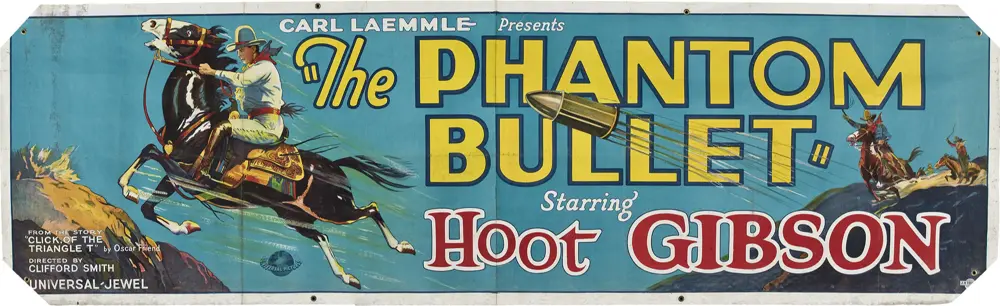
Does a century-old silent Western, "The Phantom Bullet," still resonate with modern audiences, or is it merely a historical curiosity? Short answer: yes, but with significant caveats that demand a certain cinematic palate. It's a fascinating artifact for cinephiles and historians, yet it might test the patience of those accustomed to contemporary pacing and narrative conventions.
This film is undoubtedly for enthusiasts of early cinema, particularly those with a keen interest in the formative years of the Western genre and the silent era's unique storytelling techniques. If you appreciate the art of visual narrative without dialogue, and possess a curiosity for how foundational genre tropes were established, then "The Phantom Bullet" offers a valuable glimpse. Conversely, it is decidedly NOT for viewers seeking rapid-fire action, complex psychological character studies, or a polished, accessible viewing experience free from the inherent quirks of early filmmaking. If you're looking for a casual Friday night watch with modern sensibilities, this isn't it.
This film works because of its audacious central premise: a detective story wrapped in a Western, where the very tool of deception becomes the instrument of truth. The idea of a camera as a pivotal plot device in 1917 is genuinely innovative and provides a compelling hook, even if its execution feels rudimentary by today's standards. It grounds the mystery in a tangible, almost proto-forensic method, distinguishing it from simpler revenge narratives.
This film fails because its pacing often drags, a common pitfall of early silent features, and its character development remains largely superficial. The emotional stakes, while clear in their intent, struggle to fully translate across the century-long divide, often feeling more told than shown. The limitations of the era's acting styles, while historically significant, can also feel stilted to a modern viewer, hindering deeper engagement with the characters' plights.
You should watch it if you are a student of film history, a dedicated fan of silent cinema, or someone who enjoys dissecting the origins of genre conventions. It’s a foundational piece, not a flawless one, but important for understanding the evolution of cinematic storytelling.
At its core, "The Phantom Bullet" is a revenge tale, but one cloaked in a surprising layer of proto-detective work. Click's return home, spurred by his father's bizarre death, immediately sets a somber, determined tone. The film doesn't waste time on excessive exposition regarding the "phantom bullet" itself; it's presented as an almost supernatural element, a catalyst for the central quest. This immediate plunge into mystery is commendable for an early film, avoiding the slow burn often characteristic of the era.
The decision for Click to pose as a "dude with a camera" is the narrative's most intriguing, and perhaps most baffling, choice. It’s a brilliant stroke of misdirection, not just for the killer, but also for the audience. We expect a hardened cowboy seeking vengeance, perhaps with a six-shooter, not a photographic apparatus. This unconventional disguise immediately separates "The Phantom Bullet" from its more straightforward Western contemporaries. It forces the audience to consider the power of observation and documentation long before such concepts became commonplace in cinema.
However, the pacing, while initially brisk in setting up the premise, often meanders in the mid-section. There are stretches where Click’s photographic endeavors feel less like active investigation and more like mundane filler, a series of interactions that don't always propel the plot forward with the urgency the premise demands. This is a common hurdle for silent films, where the absence of dialogue necessitates a reliance on visual storytelling that sometimes struggles to maintain momentum without constant dramatic beats.
The tone oscillates between serious mystery and lighthearted Western escapades, a blend that can feel uneven. One moment, we're immersed in the gravity of a son seeking justice; the next, we might be witnessing a more comedic or romantic subplot involving Rosemary Cooper’s character, which, while adding texture, occasionally dilutes the central tension. This tonal inconsistency is perhaps one of the film's biggest debatable aspects: is it a flaw, or an attempt at broader appeal in an nascent industry still experimenting with genre fusion? I lean towards it being a structural weakness, preventing the narrative from achieving a singular, powerful emotional punch.
The eventual reveal, facilitated by the camera, is conceptually satisfying, but its execution feels somewhat rushed. After the deliberate build-up of Click's undercover work, the ultimate unmasking happens with a swiftness that almost underserves the cleverness of the device. One might wish for a more drawn-out, climactic confrontation or a deeper exploration of the killer's motives once exposed. This is where the film’s ambition outstrips its ability to fully capitalize on its own ingenuity. It works. But it’s flawed.
The acting in "The Phantom Bullet," like many films of its era, is a fascinating study in early cinematic performance. Silent era actors relied heavily on exaggerated facial expressions and broad physical gestures to convey emotion and intent, a style often perceived as melodramatic by modern viewers. Yet, within this framework, certain performances manage to cut through the stylistic conventions to leave an impression.
Hoot Gibson, as Click, embodies the stoic Western hero with a quiet intensity. His portrayal, while lacking the nuanced psychological depth we expect today, effectively communicates his underlying determination. Gibson’s physical presence is undeniably strong; he carries the weight of his character’s mission not through dialogue, but through his posture and the focused gaze he directs at potential suspects. There’s a scene where he subtly adjusts his camera, his eyes scanning the crowd, which perfectly encapsulates his dual role as observer and avenger. It's a testament to his screen presence that he can convey such a complex internal state with minimal external cues.
Rosemary Cooper, likely playing a love interest or a key supporting role, brings a certain vivacity to the screen. Her expressions, while sometimes overtly dramatic, are characteristic of the period and serve to punctuate emotional beats. In a particularly tense moment, her wide-eyed alarm feels genuine, adding a necessary human element to the otherwise procedural nature of Click's investigation. She provides a contrast to Gibson’s more reserved demeanor, bringing a touch of expressive warmth that prevents the film from becoming too grim.
The supporting cast, including veteran character actors like Pat Harmon and William H. Turner, fulfill their roles with the expected theatricality. Harmon, often playing villains or tough guys, likely brings a gruff authenticity to his character, whatever his specific role. These actors understood the need to project emotions to the back row of a vast theater without the aid of sound, and their performances, while perhaps not subtle, are undeniably effective in their historical context. It's crucial to view these performances through the lens of their time, appreciating the skill required to communicate complex narratives solely through physicality and expression. To judge them by modern standards is to miss the point entirely.
One unconventional observation: the sheer physical stamina required for these performances is often overlooked. Long takes, heavy makeup, and the constant need for expressive movement without the luxury of dialogue meant these actors were essentially performing a stage play for the camera, often multiple times. This isn't just acting; it's an athletic endeavor. Their commitment is palpable, even through the flickering frames of a century-old print.
The directorial hand, likely from a collective effort or an uncredited talent given the era, demonstrates a clear understanding of visual storytelling, even if limited by the technology of the time. The blocking of scenes, particularly during moments of suspicion or confrontation, is often quite effective, guiding the viewer's eye to key characters or objects. There are instances of surprisingly dynamic compositions, moving beyond static, proscenium-arch framing, which speaks to a burgeoning awareness of cinematic language.
Cinematography in "The Phantom Bullet" is, predictably, functional rather than flashy. The camera is primarily a documentarian, capturing the action rather than actively interpreting it with complex angles or movements. Yet, within these constraints, there are moments of striking visual clarity, particularly in the outdoor Western settings. The vastness of the landscape, the dusty streets, and the rugged architecture are captured with an authenticity that grounds the fantastical element of the "phantom bullet" in a tangible world. This focus on naturalistic backdrops is a hallmark of early Westerns, and "The Phantom Bullet" utilizes it well.
One specific example that stands out is the use of close-ups, albeit sparingly. When Click examines a clue or focuses his camera, the film occasionally tightens its frame, drawing the audience into his point of view. This simple technique, while standard today, was still evolving in 1917 and serves to heighten the sense of mystery and investigation. It's a subtle but effective way to emphasize the importance of observation, echoing the film's central conceit of the camera as a reveal tool.
The overall visual style is unpretentious, prioritizing narrative clarity over artistic flourishes. This approach ensures that the plot, with its unique camera-as-detective twist, remains the primary focus. While it might lack the breathtaking artistry of later silent epics like Camille (1921), its directness is its strength. The film doesn't try to be something it's not; it’s a straightforward Western mystery, and its visual execution reflects that honest ambition. This pragmatic cinematography contributes to the film’s enduring value as a historical document, showcasing how filmmakers balanced storytelling with technological limitations.
The use of intertitles is, of course, critical. They are generally concise, delivering necessary dialogue and narrative exposition without overstaying their welcome. The balance between visual action and textual explanation is handled competently, a delicate dance that defines the entire silent era. A particularly effective intertitle might foreshadow danger or deliver a crucial piece of information about the "phantom bullet," serving to heighten
IMDb —
1920
Community
Log in to comment.