DbcultAccessing Vault...
5.5/10
Senior Film Conservator
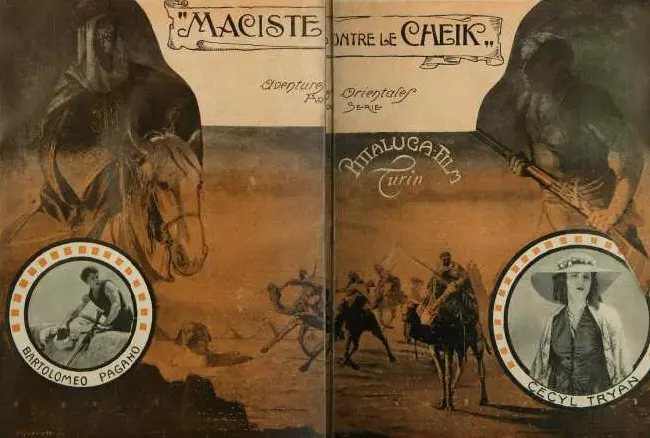
A definitive 5.5/10 rating for a film that redefined the boundaries of cult cinema. Maciste in Africa remains a cornerstone of transgressive art.
Is Maciste in Africa worth your time in the modern era? Short answer: No, unless you are a dedicated film historian or an enthusiast of early 20th-century physical culture. This film is for the academic viewer interested in the roots of the peplum genre; it is absolutely not for anyone seeking a nuanced narrative or culturally sensitive storytelling.
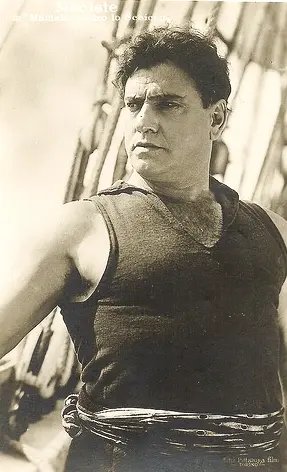
1) This film works because it captures the raw, physical magnetism of Bartolomeo Pagano, who essentially invented the blueprint for the modern action hero.
2) This film fails because its reliance on colonial stereotypes and a thin, episodic plot makes it feel more like a dated travelogue than a compelling drama.
3) You should watch it if you want to witness the primitive origins of underwater practical effects and the transition of the 'strongman' archetype from myth to modern adventure.
To understand Maciste in Africa, one must first understand Bartolomeo Pagano. He was not just an actor; he was a phenomenon. By 1926, the character of Maciste had already been established as a powerhouse in the 1914 epic Cabiria. In this African outing, Pagano’s presence is the only thing holding the celluloid together. He moves with a deliberate, heavy grace that modern audiences might find slow, but in the context of the 1920s, he was the pinnacle of masculine power. Unlike the refined drama found in Calvaire d'amour, Maciste’s appeal is purely visceral.
Every scene is designed to highlight his musculature. Whether he is lifting heavy objects or fending off multiple attackers, the camera lingers on his form with a fetishistic intensity. It is a precursor to the 1950s sword-and-sandal craze, but without the technicolor gloss. The acting is, predictably, broad. Pagano doesn't emote so much as he poses. It works. But it’s flawed. The lack of interiority makes Maciste feel less like a human and more like a moving statue.
Maciste in Africa is significant because it represents the bridge between the historical epics of the 1910s and the adventure serials of the 1930s. It demonstrates how early cinema utilized 'exotic' locales to bolster nationalistic pride and colonial narratives. The film also features one of the earliest attempts at a sustained underwater action sequence involving a live predator, marking a milestone in practical special effects.
We cannot ignore the elephant in the room: the film’s blatant and often uncomfortable portrayal of Africa. Written by Mario Camerini, the script views the continent as a playground for European heroics. The local populations are depicted as either monolithic threats or helpless bystanders. There is no attempt at cultural specificity. This is Africa as a backdrop, not a place. Compared to the more focused character studies of the era, such as The Slacker, this film feels intellectually hollow.
The pacing is equally problematic. Silent films often struggle with 'stretching,' where a simple action is drawn out to fill the runtime. Here, we see Maciste wandering through various landscapes with little narrative urgency. The plot is a series of 'and then' moments. Maciste goes here, and then he fights this, and then he saves that. It lacks the cohesive emotional arc found in A Cumberland Romance. The film is essentially a collection of stunts looking for a story.
The centerpiece of the film, and the reason it is still discussed in film schools, is the shark fight. For 1926, the technical execution is fascinating. The cinematography, handled with primitive waterproof housings or through glass tanks, creates a murky, claustrophobic atmosphere. When Maciste dives into the water to grapple with the beast, the film momentarily transcends its colonial tropes and becomes a pure exercise in man-versus-nature cinema.
The shark is clearly a prop in many shots, and the 'fight' is a clumsy wrestling match that looks ridiculous by today's standards. However, the sheer audacity of the attempt deserves respect. It’s a moment of raw ambition that reminds us of a time when cinema was still figuring out its own boundaries. It’s significantly more daring than the domestic scales of Cooks and Crooks or the quietude of On a Summer Day.
Mario Camerini, who would later become a major figure in Italian 'white telephone' cinema, shows early flashes of his ability to manage large-scale movement. However, the tone is inconsistent. It vacillates between a serious heroic epic and a goofy adventure. The supporting cast, including Michele Mikailoff and Franz Sala, are mostly there to provide reaction shots to Maciste’s greatness. There is very little chemistry between the performers; they are all orbiting the sun that is Pagano.
The cinematography in the terrestrial scenes is standard for the mid-20s—static wide shots with occasional iris-ins for emphasis. It lacks the experimental flair seen in Soviet silents like Vyryta zastupom yama glubokaya... or the atmospheric dread of Der verlorene Schuh. It is functional, commercial filmmaking at its most basic.
If you are looking for entertainment, the answer is a resounding no. The film is a slog. The cultural depictions are offensive, and the story is nonexistent. However, if you are interested in the evolution of the action genre, it is a vital text. It shows how the 'superhero' was being constructed decades before comic books took over the cultural landscape. It is a museum piece: dusty, problematic, but historically significant.
Pros:
Pagano’s screen presence is genuinely impressive; he has a gravity that few silent stars possessed. The underwater photography was a technical marvel for its time. It provides a clear look at the ideological framework of 1920s Italy.
Cons:
The pacing is glacial. The 'shark' is laughably fake in several shots. The treatment of African characters is dehumanizing and repetitive. It lacks the narrative depth of contemporary works like The Virgin Queen.
Maciste in Africa is a difficult film to recommend but an easy one to analyze. It sits at the intersection of early cinematic spectacle and the dark heart of European colonialism. As a movie, it’s a failure; as a historical document, it’s indispensable. It is a brute force experience that offers a window into what the world once considered 'heroic.' The shark fight is the only thing that keeps it from being completely forgotten, but even that can't save it from its own tediousness. Watch it with a notebook and a critical eye, or don't watch it at all.

IMDb —
1929
Community
Log in to comment.