DbcultAccessing Vault...
8/10
Senior Film Conservator
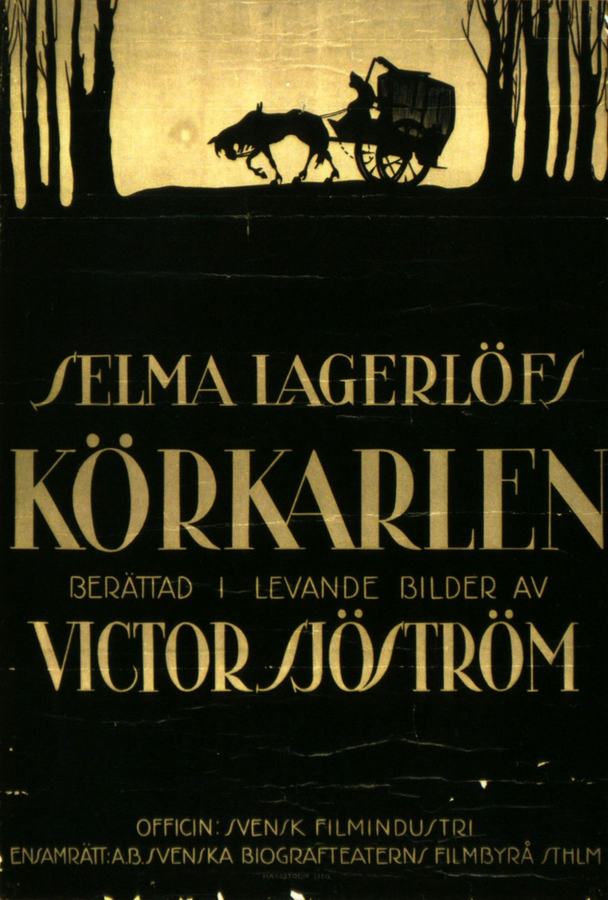
A definitive 8/10 rating for a film that redefined the boundaries of cult cinema. The Phantom Carriage remains a cornerstone of transgressive art.
In the annals of cinematic history, few films possess the raw, enduring power and visionary scope of Victor Sjöström's 1921 masterpiece, The Phantom Carriage (original title: Körkarlen). More than just a silent horror film, it stands as a profound meditation on mortality, redemption, and the inescapable consequences of one's actions. Crafted with groundbreaking special effects and a narrative depth that belies its era, this Swedish classic transcends its genre confines to deliver an allegorical experience that resonates with a timeless existential dread. It's a film that doesn't just tell a story; it plunges the viewer into a moral crucible, forcing an uncomfortable introspection on the nature of human cruelty and the possibility of spiritual rebirth.
The film unfolds on the fateful night of New Year's Eve, a symbolic threshold between past and future, when the dissolute and deeply unpleasant David Holm (portrayed with chilling conviction by Sjöström himself) lies dying in a graveyard after a drunken brawl. His companions recount a chilling legend: the last person to die on New Year's Eve must take up the mantle of Death's coachman for the coming year, collecting the souls of the departed. This grim prospect soon materializes as Holm's recently deceased friend, Georges, appears, driving the eponymous phantom carriage. Georges, burdened by his year-long duty, has come to claim Holm as his successor, initiating a harrowing journey into the depths of David's own wretched past.
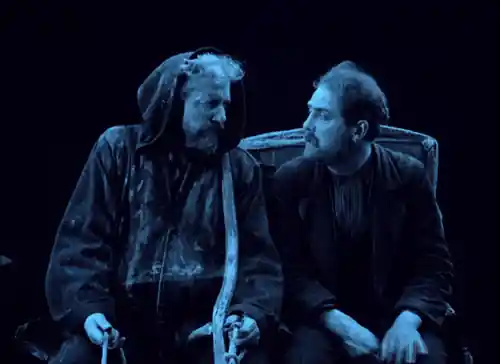
What follows is not merely a recounting of events, but a spectral odyssey through Holm's memory, presented through a series of intricately woven flashbacks. We witness the systematic destruction he has wrought: the abandonment and abuse of his devoted wife, Anna (Astrid Holm), and their children; his callous disregard for his ailing brother, who ultimately succumbs to tuberculosis; and, perhaps most heartbreakingly, his cruel spurning of Sister Edit (Hilda Borgström), a selfless Salvation Army worker who, despite her own terminal illness, clings to a desperate hope for his salvation. Each flashback serves as a brutal indictment, forcing Holm – and by extension, the audience – to confront the devastating ripple effects of his profound selfishness. This narrative structure, a recursive dive into a character's moral failings, was revolutionary for its time, creating a psychological depth rarely seen in early cinema. It's a testament to the power of cinema to explore the human condition with unflinching honesty, laying bare the soul of a man on the brink of ultimate judgment.
Beyond its thematic gravitas, The Phantom Carriage is a monumental achievement in early cinematic technique. Sjöström, alongside cinematographer Julius Jaenzon, pushed the boundaries of visual storytelling, most notably through their pioneering use of double exposure. This technique, used to depict the ethereal forms of the phantom coachman and the souls he collects, creates an unnerving transparency that perfectly conveys their otherworldly nature. The ghostly apparitions seamlessly interact with the physical world, a visual marvel that remains striking even today. The carriage itself, a skeletal, horse-drawn hearse, glides through spectral landscapes and urban environments with an eerie grace, its arrival signifying the inescapable grasp of death.
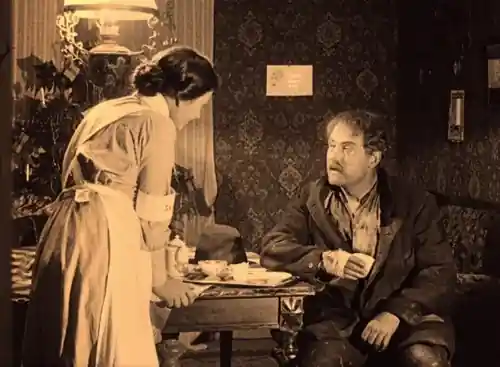
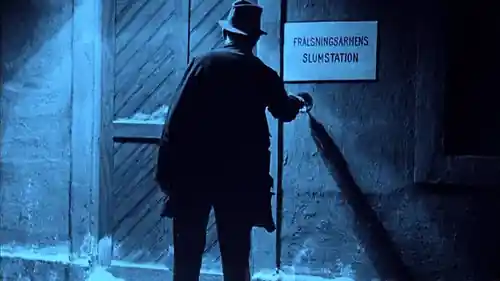
The film's atmosphere is meticulously crafted, a pervasive sense of dread punctuated by moments of stark beauty and profound sadness. The dark, often fog-shrouded streets of the city, the squalid interiors where Holm conducts his debauchery, and the somber, almost sacred spaces of the Salvation Army mission all contribute to a rich, textured world. Sjöström masterfully uses light and shadow to enhance the psychological weight of the narrative. Shadows stretch long and ominous, enveloping characters in their despair, while fleeting glimpses of light offer faint, often unheeded, glimmers of hope. This visual sophistication not only elevates the horror elements but also imbues the dramatic scenes with an almost operatic intensity, drawing the viewer deeper into the characters' emotional turmoil. The visual language speaks volumes, conveying terror, regret, and the arduous path to repentance without the need for spoken dialogue.
At its core, The Phantom Carriage is a powerful allegory for redemption. David Holm is initially presented as an almost irredeemable figure, a man whose life is a testament to vice and cruelty. His journey aboard the phantom carriage is not merely a ride to his final destination but a forced confrontation with his moral bankruptcy, a purgatorial review of his life's ledger. The film suggests that true repentance isn't about escaping punishment, but about understanding the pain caused and actively seeking to mend what has been broken. Sister Edit, the embodiment of selfless love and unwavering faith, serves as Holm's spiritual anchor, her dying wish being his salvation, a testament to the transformative power of compassion even in the face of utter depravity.
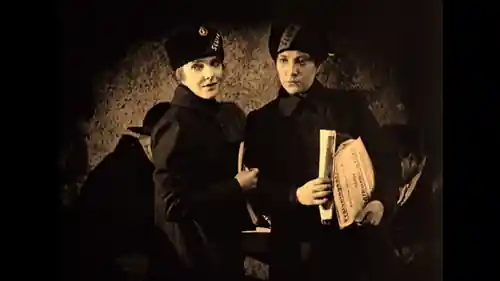
The film also functions as a stark social critique, particularly concerning the devastating impact of alcoholism and poverty. Holm's descent into depravity is inextricably linked to his drinking, which fuels his violence and neglect. The squalor and despair of the urban poor are depicted with unflinching realism, highlighting the societal conditions that can breed such desperate characters. The Salvation Army, with its mission of providing succor to the downtrodden, stands in stark contrast to the destructive forces at play. This nuanced exploration of societal ills, woven into a supernatural narrative, elevates the film beyond a simple ghost story, making it a powerful commentary on human responsibility and collective welfare. In this regard, one might draw a thematic parallel to films like Within Our Gates, which also tackled pressing social issues of its era, albeit from a different cultural perspective.
The concept of guilt, its corrosive power, and the potential for its transcendence, is perhaps the most dominant theme. Holm's suffering is not just physical but profoundly spiritual, a torment born from the realization of his transgressions. The film's message aligns profoundly with the sentiment expressed in the German silent film ...der Übel größtes aber ist die Schuld, whose title translates to "...the greatest evil, however, is guilt." Both films, in their own unique ways, delve into the psychological and moral weight of culpability, suggesting that the internal reckoning is often more harrowing than any external punishment. Holm’s journey is one of confronting this internal evil, a necessary step towards any semblance of peace.
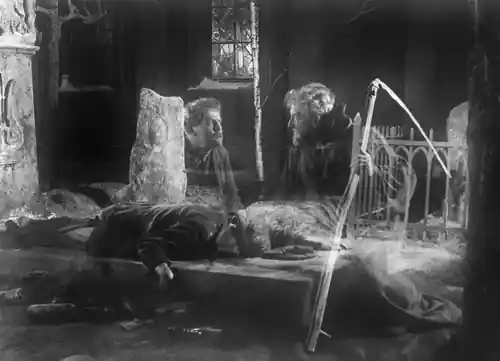
Victor Sjöström's contribution to The Phantom Carriage is nothing short of extraordinary. Not only did he direct the film with an audacious vision, but he also delivered a tour-de-force performance as the tormented protagonist, David Holm. This dual role underscores his profound understanding of the material, allowing him to embody the character's descent and potential redemption with an authenticity that is both chilling and deeply moving. His portrayal of Holm is complex; we see not just a villain, but a man consumed by his own weaknesses, capable of both immense cruelty and, ultimately, profound regret. The physical demands of the role, combined with the intricate technical requirements of the direction, speak volumes about Sjöström's unparalleled talent and dedication.
The supporting cast, including Astrid Holm as the long-suffering Anna and Hilda Borgström as the saintly Sister Edit, deliver performances of remarkable emotional depth. Borgström, in particular, imbues Sister Edit with an almost ethereal grace, her unwavering faith and compassion serving as a beacon in Holm's dark world. The interplay between these characters, often conveyed through subtle gestures and powerful expressions, is a testament to the sophisticated acting prevalent in the silent era, demonstrating that dialogue is not always necessary to convey the most profound human emotions. The raw honesty of these performances elevates the film from a mere spectacle to a deeply human drama.
The impact of The Phantom Carriage on subsequent generations of filmmakers is immense and undeniable. Its innovative use of special effects, particularly the double exposure, set a new standard for cinematic illusion and directly influenced the visual vocabulary of horror and fantasy films for decades to come. Filmmakers like Ingmar Bergman, a devoted admirer of Sjöström, openly acknowledged the profound influence of this film on his own work, particularly in its exploration of spiritual anguish, mortality, and the search for meaning. Bergman even cast Sjöström in the lead role of his own masterpiece, Wild Strawberries, a fitting homage to the maestro whose work so deeply shaped his artistic vision.
Beyond Bergman, The Phantom Carriage's narrative structure, with its non-linear flashbacks and psychological depth, prefigured techniques that would become staples of modern cinema. Its exploration of a character's internal journey, forced by a supernatural catalyst, can be seen as an antecedent to countless morality tales and psychological dramas. The film's ability to evoke genuine terror not through jump scares but through psychological torment and existential dread marks it as a foundational text in the horror genre. It proved that horror could be intellectual, artistic, and deeply philosophical, challenging viewers to confront their own moral compass rather than merely startling them. Its influence can be subtly traced through various films dealing with moral dilemmas and supernatural intervention, even extending to the themes present in a film like The Devil's Bondwoman, which similarly grapples with characters facing the consequences of their choices and the struggle between good and evil.
In conclusion, The Phantom Carriage remains a towering achievement in cinematic history, a film that continues to captivate and challenge audiences a century after its release. It is a testament to Victor Sjöström's unparalleled genius as both a director and an actor, and to the enduring power of Selma Lagerlöf's original story. Its innovative techniques, profound thematic explorations, and unforgettable performances combine to create an experience that is at once terrifying, heartbreaking, and ultimately, deeply hopeful. It forces us to confront our own mortality, to reflect on the legacy we leave behind, and to consider the possibility of redemption, even for the most lost of souls. For anyone seeking to understand the roots of cinematic artistry, psychological horror, and profound dramatic storytelling, The Phantom Carriage is not merely recommended viewing; it is absolutely essential.
It reminds us that cinema, even in its nascent form, possessed the capacity to delve into the most complex facets of the human condition, offering both a mirror to our flaws and a beacon towards our potential for change. The phantom carriage may haunt the screen, but its message reverberates in the soul, a timeless reminder of life's preciousness and the weight of our choices.
IMDb —
1916
Community
Log in to comment.