DbcultAccessing Vault...
Cult Review
Senior Film Conservator
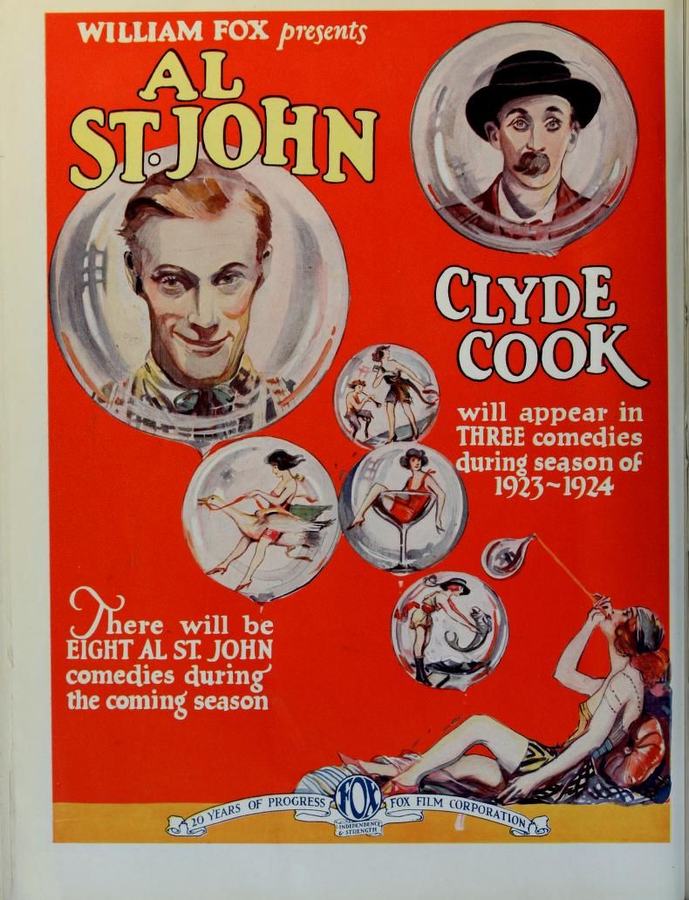
There exists a specific, visceral brand of comedy that can only be achieved through the total physical commitment of a performer to their environment. In Wet and Weary, Clyde Cook—often celebrated as the 'Kangaroo Boy' for his incredible acrobatic elasticity—delivers a performance that is as much a feat of endurance as it is a comedic triumph. The film operates on a premise of escalating dampness, utilizing water not merely as a prop, but as a primary antagonist. Unlike the pastoral serenity found in Singing River, the water here is urban, intrusive, and profoundly inconvenient.
The opening sequence is a masterclass in the 'everyman vs. the elements' trope. As the heavens open, Cook’s character doesn't just get wet; he becomes a magnet for every drop in the city. The lexical diversity of his movements—the frantic shivers, the desperate huddling, the sudden, sharp pivots—creates a rhythmic dance of discomfort. When he seeks shelter under the street cleaner's cart, the film introduces a secondary layer of conflict: the machine. This is a common theme in early cinema, where the industrial world often proves more hostile than the natural one. We see echoes of this mechanical friction in A Journey Through Filmland, though Cook brings a more localized, gritty desperation to his plight.
The transition to the civic department is where the film’s subtext begins to shimmer. There is a biting irony in the fact that the only way for a man to escape the rain is to enter the service of the state, only to be handed a hose. This isn't just slapstick; it’s an early cinematic reflection on the circular nature of labor. The protagonist is essentially hired to recreate the very conditions that drove him to seek employment. This thematic loop is far more sophisticated than the melodramatic beats found in Home-Keeping Hearts, as it relies entirely on the visual irony of the situation.
Cook’s physical vocabulary is vast. He possesses a skeletal fluidity that allows him to appear both fragile and indestructible. In Wet and Weary, his limbs seem to respond to the water with a life of their own. Every splash is met with a reaction that ripples through his entire body. This level of kinetic commitment is what separates the greats of the silent era from the mere practitioners. While a film like Saffo might rely on grand emotional gestures, Cook relies on the twitch of a shoulder or the soggy tilt of a hat to convey a world of misery.
| Element | Thematic Significance |
|---|---|
| The Rainstorm | Natural chaos and the catalyst for the protagonist's journey. |
| The Street Cleaner | The intersection of urban technology and human vulnerability. |
| The Garden Hose | The ultimate irony; the domestication of the very force that oppressed him. |
To understand Wet and Weary, one must look at the broader landscape of 1920s short-form cinema. It was a time of experimentation where the boundaries of the 'gag' were being pushed to their limits. In comparison to the high-society dramas like A Scream in Society or the dark, brooding atmospheres of Silence of the Dead, Cook’s work feels refreshingly grounded in the physical reality of the working class. There is no pretense here; there is only the man, the water, and the struggle to remain upright.
The film’s pacing is relentless. Once the 'wet' theme is established, it never relents. This creates a cumulative effect on the audience; by the time Cook is wielding the lawn sprinkler, the viewer feels a phantom dampness themselves. This immersion is a testament to the cinematography of the era, which managed to capture the texture of water with a clarity that was often missing in more ambitious features like The Serpent. The way the light catches the spray from the street cleaner’s cart isn't just a technical achievement; it’s an aesthetic choice that heightens the protagonist's isolation.
When the story shifts to the civic department, the film enters the realm of political satire. The nameless clerks and officials who process Cook are as cold and indifferent as the rain itself. This portrayal of the 'system' as a faceless entity that processes human misery into productive labor is surprisingly modern. It mirrors the social anxieties seen in Does the Jazz Lead to Destruction?, where the rapid changes in society are viewed with a mix of humor and trepidation. In Wet and Weary, the destruction isn't moral, but physical—the erosion of the individual by the relentless demands of the city.
One might compare the protagonist's journey to the arduous legal battles in Die Abenteuerin von Monte Carlo - 3. Der Mordprozeß Stanley, where the individual is similarly swallowed by the machinery of the state. However, where that film finds tragedy, Wet and Weary finds a resilient, soggy humor. Cook’s character doesn't fight the system; he simply tries to find a dry corner within it, only to find that the system requires him to keep the grass wet.
As we analyze the final act, where the lawn-sprinkling job becomes a chaotic ballet of misdirected water, we see the culmination of Cook’s genius. He doesn't just spray the lawn; he sprays himself, the passersby, and the very idea of municipal order. It is a subversion of duty. If the city wants him to manage the water, he will do so with a catastrophic enthusiasm that borders on the anarchic. This is the same spirit of defiance found in Impossible Susan or the rebellious energy of Vent debout.
The film concludes not with a resolution, but with a continuation of the theme. The cycle of wetness is perpetual. This lack of a 'happy ending' in the traditional sense—where the hero dries off and finds riches—is what makes Wet and Weary so enduring. It acknowledges that for some, the rain never truly stops; it just changes form. It is a sentiment that resonates through other works of the period, such as Gigolette or the folk-tinged Miarka, the Child of the Bear, which both deal with characters trapped by their circumstances.
Ultimately, Wet and Weary stands as a monumental example of silent slapstick. It eschews the complex plotting of The Inn of the Blue Moon in favor of a singular, focused exploration of a physical state. Clyde Cook remains a titan of the genre, a man who could turn a puddle into a stage and a hose into a weapon of comedic mass destruction. In the annals of film history, few have suffered so hilariously for their art. Whether he is being splashed by a cart or drenching a municipal lawn, Cook reminds us that while we cannot always stop the rain, we can certainly find the rhythm in the downpour. His performance is a testament to the enduring power of the physical gag, a reminder that before there were words, there was the perfectly timed slip, the precisely aimed spray, and the eternal, weary struggle to stay dry in a very wet world. In the same vein as I Am the Woman, which explores identity through struggle, Wet and Weary explores the human condition through the most basic of elements: water.
IMDb —
1924
Community
Log in to comment.