DbcultAccessing Vault...
7.5/10
Senior Film Conservator
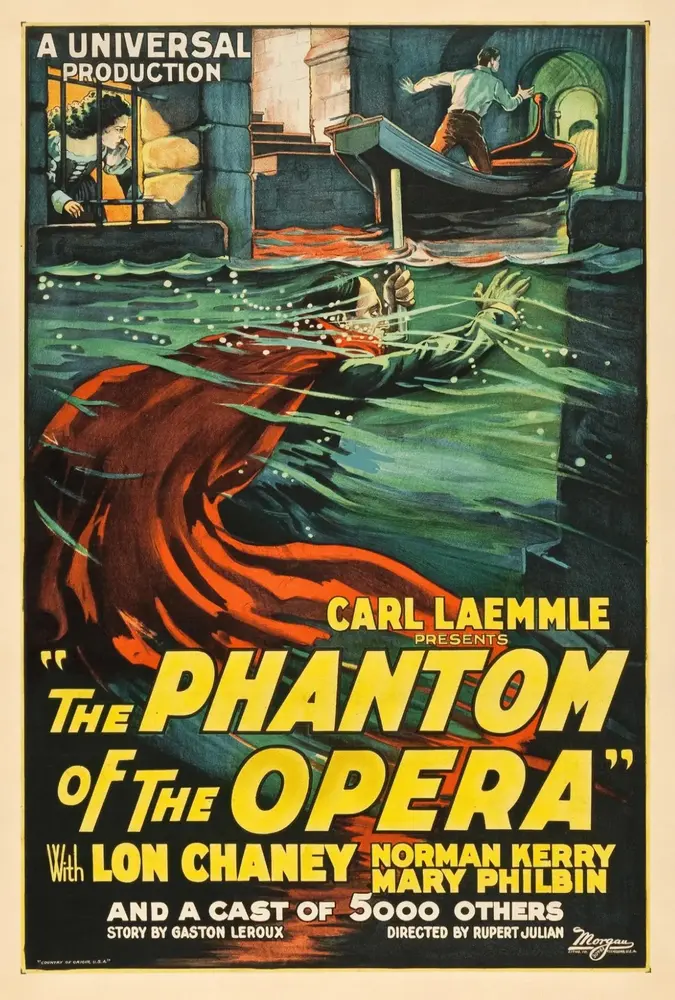
A definitive 7.5/10 rating for a film that redefined the boundaries of cult cinema. The Phantom of the Opera remains a cornerstone of transgressive art.
The 1925 iteration of The Phantom of the Opera stands not merely as a relic of the silent era, but as a towering monument to the macabre imagination that defined early Universal horror. While contemporary audiences might be accustomed to the polished artifice of modern CGI, there is a tactile, almost sulfurous quality to this production that remains profoundly unsettling. The film is a masterclass in atmospheric dread, utilizing the cavernous spaces of the Palais Garnier—reconstructed with obsessive detail on Universal’s Stage 28—to evoke a sense of claustrophobic grandeur.
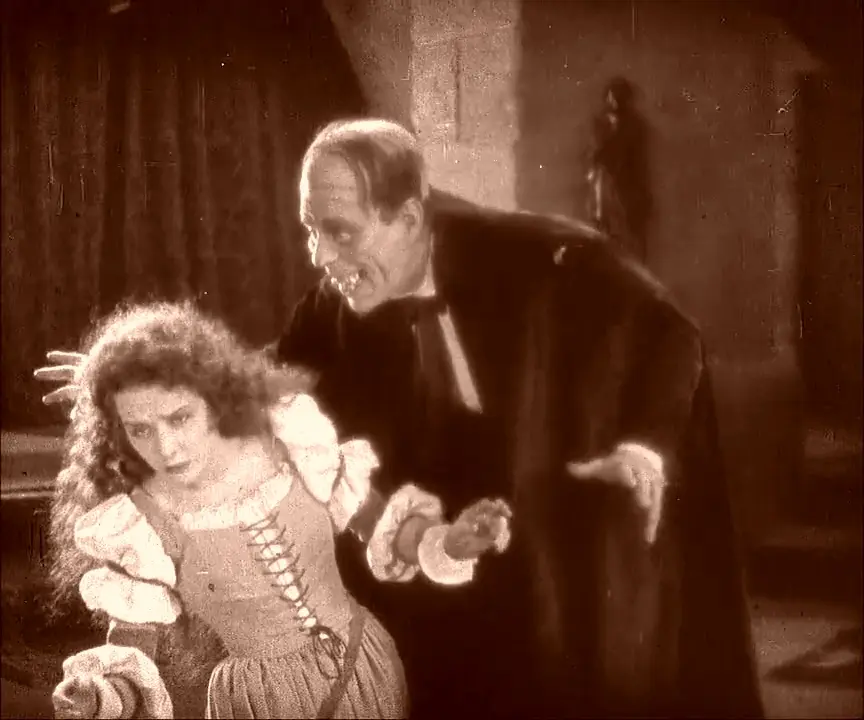
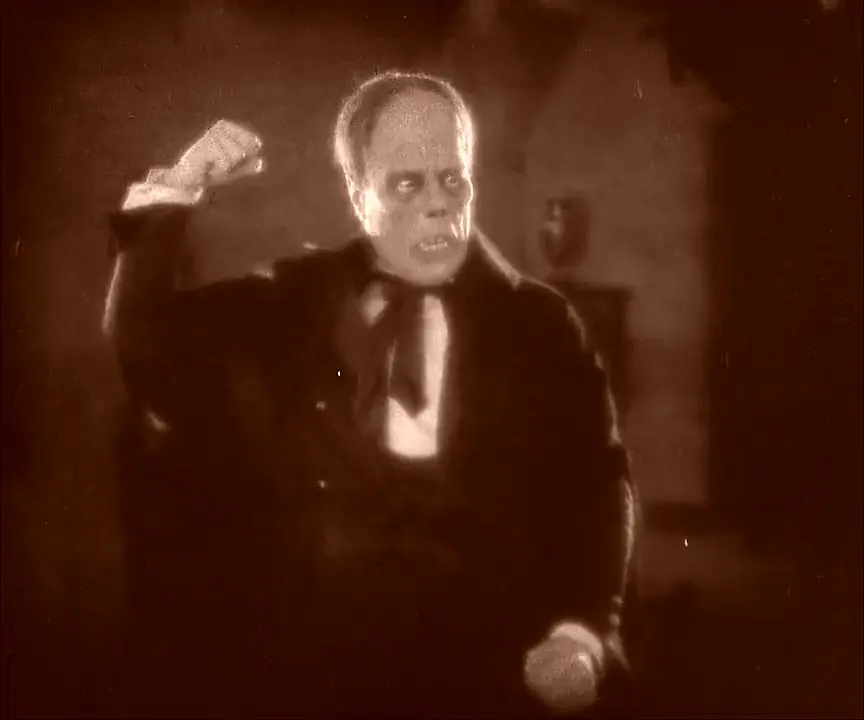
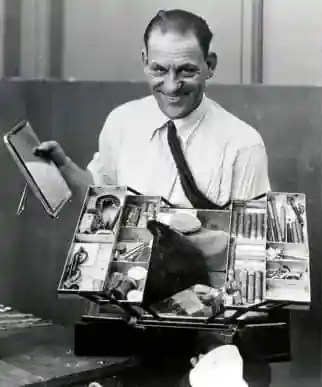
Lon Chaney, the legendary 'Man of a Thousand Faces,' delivers a performance that transcends the physical limitations of the medium. His Erik is not a mere monster; he is a manifestation of rejected humanity, a creature of shadow whose every movement is dictated by a cocktail of resentment and unrequited longing. Unlike the sanitized versions of the character seen in later decades, Chaney’s Phantom is a skeletal nightmare. The self-applied makeup—involving fish skin to tilt the nose, wire to distend the nostrils, and spirit gum to pull back the eyelids—creates a visage that is authentically repulsive yet strangely pathetic. It is a far cry from the more melodrama-heavy performances of the period, such as those found in The Love Letter, where the emotional stakes are often conveyed through broad, theatrical gestures.
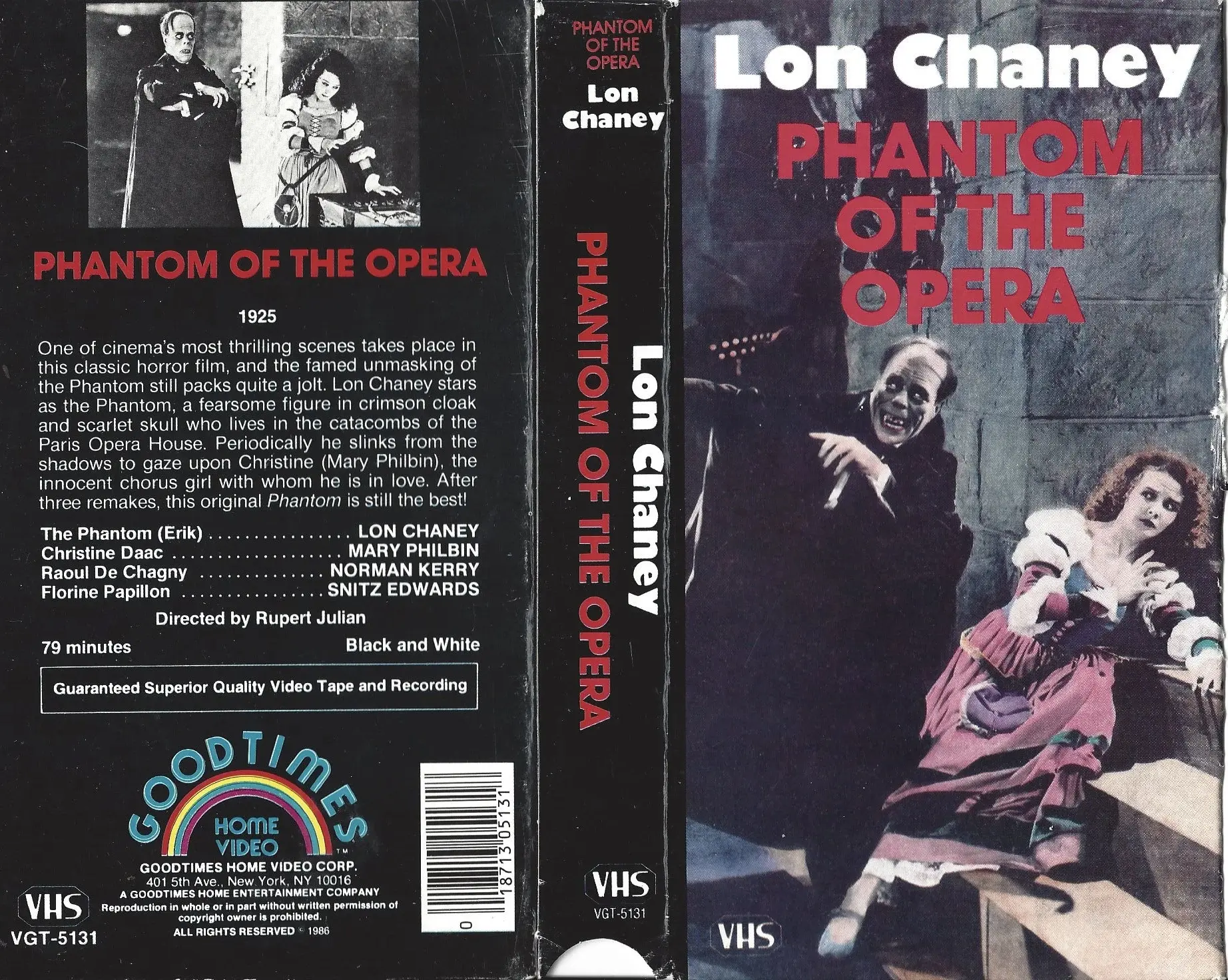
The unmasking scene remains, arguably, the most iconic jump-scare in cinematic history. When Mary Philbin’s Christine Daaé tentatively reaches for the mask while Erik is engrossed in his organ composition, the tension is palpable. The revelation of the death’s-head underneath is a moment of pure, unadulterated horror that relies on the audience's psychological vulnerability. The way Chaney spins around, his eyes bulging with a mixture of rage and shame, creates a visceral impact that few modern films can replicate. This sequence alone elevates the film beyond the standard fare of 1920s cinema, distinguishing it from the more grounded narratives of Dangerous Days or the social commentaries of The Yellow Traffic.
The set design functions as a character in its own right. The labyrinthine cellars, the dark, stagnant waters of the subterranean lake, and the five-story descent into Erik’s lair provide a spatial representation of the character’s fractured psyche. The contrast between the gilded opulence of the opera house above and the ossuary-like dampness below is stark. While films like Australia's Own explored naturalistic landscapes, The Phantom of the Opera leans into an expressionistic aesthetic that favors shadow over light. The use of chiaroscuro lighting—long before it was codified by film noir—creates a world where the darkness feels thick enough to touch.
The 'Masque of the Red Death' sequence is another technical marvel. Filmed in early two-color Technicolor, it provides a jarring, vibrant interruption to the monochromatic gloom of the rest of the film. Erik’s appearance as the Red Death, descending the grand staircase amidst a sea of revelers, is a visual symphony of crimson and shadow. This use of color was revolutionary for its time, offering a level of immersion that contemporary audiences, accustomed to the black-and-white limitations of films like Lest We Forget, would have found breathtaking.
The film’s structure is a fascinating study in silent era pacing. It moves with a deliberate, almost operatic tempo, building tension through a series of escalating threats. The falling chandelier, while perhaps expected by modern viewers, was a feat of practical engineering and timing that still holds a sense of weight and danger. The narrative doesn't shy away from the brutality of Erik’s actions, yet it manages to maintain a sliver of empathy for his plight—a nuance that is often missing in more action-oriented silent films like The Lone Star Ranger.
The supporting cast, while overshadowed by Chaney’s magnetism, performs admirably within the constraints of the genre. Mary Philbin captures the delicate terror of Christine, though her performance occasionally veers into the hyper-dramatic tropes common in films like Foolish Lives. Norman Kerry as Raoul provides a sturdy, if somewhat conventional, hero, representing the daylight world that seeks to reclaim Christine from the Phantom’s nocturnal grasp. The dynamic between the three creates a classic triangle of obsession, love, and societal expectation.
The production of The Phantom of the Opera was notoriously troubled, involving multiple directors including Rupert Julian, Edward Sedgwick, and even Lon Chaney himself. Despite this fragmented leadership, the film possesses a surprisingly cohesive vision. The camera work is remarkably fluid for 1925, utilizing tracking shots and creative angles that enhance the sense of voyeurism. When compared to the more static cinematography of Miss Crusoe or The Flower Girl, Phantom feels modern, almost avant-garde in its execution.
The film also benefits from its adherence to Gaston Leroux’s original novel, particularly in its depiction of Erik as a master of illusion and engineering. The sequence involving the heat-trap chamber and the subsequent flood is a testament to the film’s ambition. It’s a high-stakes climax that rivals the tension found in contemporary war documentaries like The Battle of the Ancre and the Advance of the Tanks, though it operates in the realm of the fantastic rather than the historical.
Decades later, the influence of this film remains inescapable. It laid the groundwork for the Universal Monsters cycle that would follow in the 1930s, establishing the template for the tragic antagonist. Erik is the progenitor of the sympathetic monster, a lineage that includes Dracula, Frankenstein’s creature, and the Wolf Man. The film’s ability to balance high-art aesthetics with pulp horror sensibilities is a feat that few subsequent adaptations have managed to achieve with such raw power.
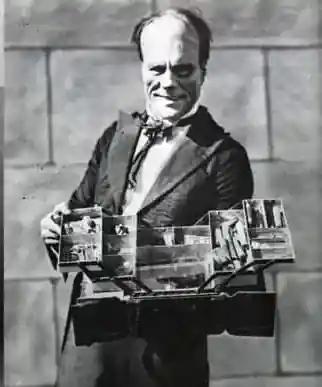
In the broader context of silent cinema, The Phantom of the Opera serves as a bridge between the early experimental shorts and the sophisticated features of the late 1920s. It lacks the pastoral simplicity of The Jungle Child or the domestic intimacy of The Inner Voice. Instead, it aims for the jugular, seeking to provoke a physical reaction through visual storytelling. Even the smaller roles, like those played by Snitz Edwards or Chester Conklin, contribute to a world that feels inhabited and historically grounded, much like the ensemble work in Mutiny or Two-Gun Betty.
To watch The Phantom of the Opera today is to witness the birth of a genre. It is a film that understands the power of the unseen, the terror of the distorted, and the beauty found in the grotesque. The 1925 original remains the definitive version precisely because it refuses to sanitize Erik. He is a murderer, a kidnapper, and a madman, yet in the hands of Chaney, he is also a mirror held up to society’s own cruelty. The final chase through the streets of Paris, culminating at the edge of the Seine, provides a cathartic, if violent, resolution to a story that began in the quiet corners of an opera box.
Whether you are a scholar of the silent era or a casual fan of horror, this film demands your attention. It is a haunting, beautiful, and deeply disturbing piece of art that continues to resonate across the century. It stands as a testament to what can be achieved when technical innovation meets a singular, uncompromising performance. In the pantheon of cinema, few figures loom as large or as terrifyingly as Lon Chaney’s Erik, clutching his cape as he disappears into the shadows of history.
A timeless descent into the depths of obsession and the enduring power of the macabre.
IMDb 3.2
1920
Community
Log in to comment.