DbcultAccessing Vault...
Cult Review
Senior Film Conservator
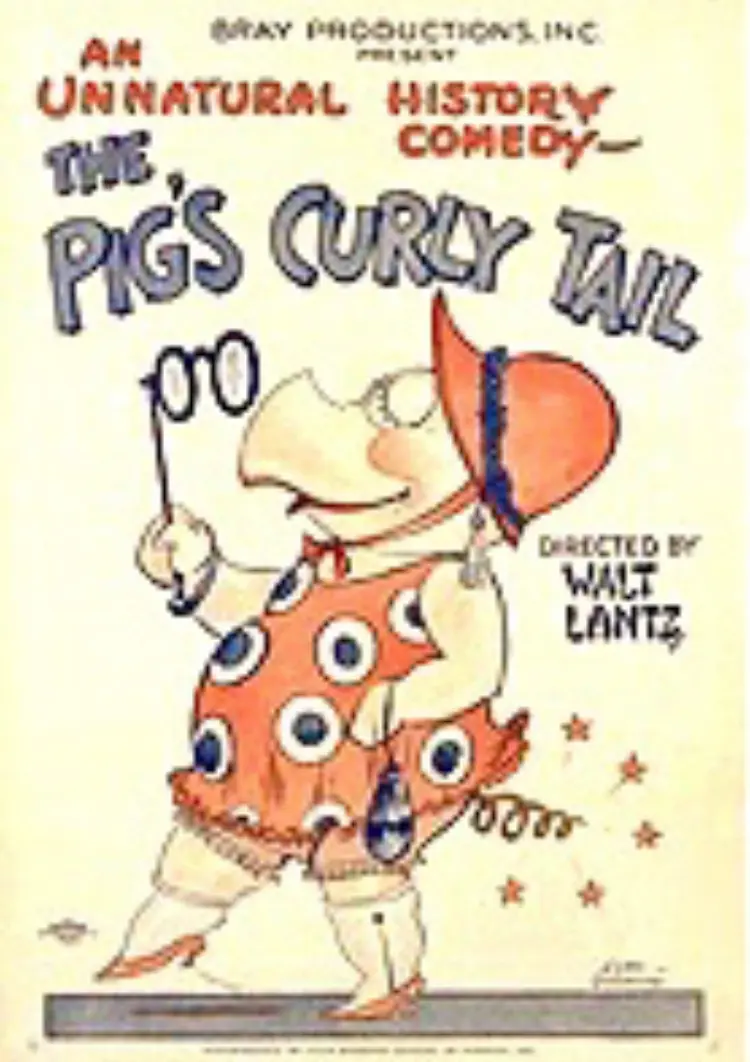
Is The Pig's Curly Tail a foundational pillar of animation or a manic fever dream? Short answer: yes, but only if you view it through the lens of a cinema historian. This film is essential for those curious about the primordial soup of Universal’s cartoon department, but it is certainly not for viewers seeking the narrative sophistication or emotional depth of modern feature-length animation.
This film works because its kinetic energy is relentless, capturing the frantic spirit of the early 1930s. It fails because the slapstick logic is often disjointed, lacking the rhythmic precision found in contemporary Disney shorts. You should watch it if you are interested in the evolution of the 'mad artist' trope or the technical transition between silent and sound-era animation aesthetics.
For the casual viewer, the answer is a firm no. The humor is dated, and the pacing is jarring. However, for the student of film history, it is a fascinating document of Walter Lantz’s early sensibilities. It offers a raw look at how creators like Lantz and Clyde Geronimi were experimenting with the medium before the industry standardized its tropes.
The centerpiece of the film—the car crash and subsequent laundry sequence—is a masterclass in early 'rubber hose' animation. When the pigs hit the stone wall, the physics are intentionally non-Newtonian. They don't just fly; they glide with a weightlessness that defines the era. This lack of physical consequence is what makes early animation so distinct from the grounded realism of something like The Pitfall.
The laundry wringer scene is where the film finds its true voice. As the pigs' tails are flattened and then coiled by the rollers, the animation shifts into a body-horror-lite territory. It is a visual pun taken to its logical, painful extreme. The way the tails pop out in a corkscrew shape is a definitive moment in character design history, providing a 'rational' explanation for a permanent anatomical feature. It is simple. It is effective. It is slightly disturbing.
Contrast this with the more traditional storytelling found in Andy's Lion Tale. While Lantz often leaned into fable-like structures, The Pig's Curly Tail is much more interested in the mechanics of the gag than the morality of the story. The pigs are agents of chaos, and their punishment is purely aesthetic.
The most striking element of the film isn't the animation at all, but the live-action bookends. Walter Lantz appearing as himself was a common trope for the time, popularized by the Fleischer brothers. However, the ending here takes a darker turn. Lantz isn't just a creator; he is a man driven to the brink of insanity by his own drawings. When the asylum keeper leads him away, the film makes a surprisingly cynical statement about the creative process.
It is a bold choice for a 1930 short. Most films of this era, such as The Agent or Bonds of Love, were preoccupied with social order and romantic resolution. Lantz, conversely, chooses to end his film by dismantling the authority of the author. He suggests that to imagine a world where pigs steal cars and survive laundry wringers, one must be fundamentally detached from reality. It works. But it’s flawed in its execution, feeling more like a punchline than a thematic exploration.
Being an early sound film, the audio-visual synchronization in The Pig's Curly Tail is primitive. The sound effects for the Ford automobile and the laundry machinery are literal and heavy-handed. There is none of the sophisticated foley work we would see later in the decade. Yet, there is a charm to this clunkiness. It reminds the viewer of the technical hurdles these animators were overcoming.
When you compare the soundscape here to a silent-era holdover like Sic 'Em Brownie, you can hear the industry's growing pains. The music is jaunty but repetitive, acting as a metronome for the animation rather than an emotional guide. It lacks the sweeping romanticism of The Virgin of Stamboul, but it serves the manic energy of the pigs perfectly.
Clyde Geronimi’s direction is focused entirely on momentum. There are no quiet moments in this film. From the moment the pigs see the car, the film is a sprint. This relentless pacing can be exhausting. Unlike the calculated suspense of The Master Key, The Pig's Curly Tail relies on a constant barrage of visual stimuli.
One specific scene involving the police chase stands out. The way the police car mirrors the movements of the pigs' car creates a visual rhythm that is almost hypnotic. It’s a precursor to the more refined 'chase' sequences that would become a staple of the Looney Tunes era. However, the transition from the chase to the laundry is abrupt. It feels like two different shorts stitched together by a collision.
It is interesting to note how this film treats its characters compared to the dramatic weight of Enemies of Women or the high-stakes survival of Fighting Blood. In the world of Lantz, consequences are temporary. A tail can be flattened and curled, and the character remains unbothered. This resilience is the core of the cartoon genre, and The Pig's Curly Tail is one of its earliest manifestos.
The film also touches on class dynamics, albeit briefly. Mrs. Hippo, with her new Ford, represents the bourgeois class of the pre-Depression era. The pigs, in stealing her car, are not just committing a crime; they are disrupting a social hierarchy. This undercurrent of rebellion is common in early cartoons, where the small and the 'lowly' frequently outsmart or humiliate the 'stuffy' upper class.
The Pig's Curly Tail is a loud, messy, and fascinating artifact. It doesn't have the polish of Together or the narrative complexity of Tseka komissar Mirostsenko, but it has a soul. It represents a time when the rules of cinema were still being written in ink and sweat. It is a minor work in the grand scheme of film history, but it is a vital one for understanding where our modern visual language came from. It is a 6-minute window into a world where an animator could be dragged to an asylum for simply doing his job. And in that, there is a strange, enduring truth.
IMDb 5.6
1928
Community
Log in to comment.