DbcultAccessing Vault...
Cult Review
Senior Film Conservator

Stepping into the sepia-toned world of The Pillory (the-pillory) is to embark on a journey through the labyrinthine corridors of human cruelty, self-sacrifice, and the often-unforgiving gaze of societal expectation. This cinematic offering, penned by the insightful Philip Lonergan, isn't merely a narrative; it's a profound meditation on the devastating consequences of concealed truths and the arduous path to redemption. From its initial frames, the film establishes a somber tone, weaving a tapestry of familial estrangement and the insidious nature of secrets kept under duplicitous pretenses. The central conceit—a young girl deliberately kept in the dark about her biological mother by a Machiavellian aunt—sets the stage for a tragedy that unfolds with an almost classical inevitability, echoing the grand, sweeping narratives of Greek drama where fate, once set in motion, cannot be easily diverted. Lonergan’s script, even in its silent form, possesses an intricate emotional architecture, building layers of misunderstanding and misplaced loyalty that culminate in an almost unbearable climax.
Our protagonist, brought to life with a delicate fragility by Marie Haynes, embodies an innocence that feels almost too pure for the harsh realities awaiting her. Her very existence is predicated on a lie, a carefully constructed illusion designed to sever her from her rightful heritage. The aunt’s death, rather than offering liberation, plunges the girl into a different kind of peril, perhaps even more insidious than the emotional deprivation she’d already suffered. Bereft of even this twisted form of guardianship, she becomes a susceptible target for the predatory elements lurking in the shadows of urban life. The film’s depiction of her subsequent exploitation by crooks and her inevitable arrest carries a stark, almost documentary-like realism, highlighting the profound vulnerability of those cast adrift without protection or guidance. This period of the film resonates with the brutal pragmatism found in works like The Fugitive, where characters are often stripped of their agency and forced to confront the harsh arbitrariness of justice, often through no fault of their own. It's a stark reminder of the social safety nets that were often nonexistent for the vulnerable in that era, leaving them exposed to the whims of fate and the machinations of the unscrupulous.
The prison sequence, while narratively concise, is pivotal. It’s here that the film introduces the critical element of cosmic irony, a cruel twist of destiny that sets the stage for both profound connection and devastating revelation. Within the stark confines of incarceration, she encounters a woman of profound kindness, portrayed with an understated grace by Marie Shotwell. This benevolent figure, the wife of a respected judge, becomes a beacon of hope in the girl’s desolate world, a shimmering mirage of compassion in a landscape of despair. The dramatic irony is palpable, almost excruciating, as the audience is privy to a truth that remains agonizingly hidden from both characters: this compassionate stranger is, in fact, the girl’s long-lost biological mother. The burgeoning bond between them, culminating in the woman’s adoption of the girl, is a beautifully tragic moment. It’s a reunion achieved through a cruel twist of fate, a surrogate relationship that merely postpones the inevitable revelation, building an almost unbearable tension that permeates every subsequent scene. The silent performances here, particularly from Shotwell, convey a deep, unspoken yearning and maternal instinct, a quiet desperation to nurture and protect, even without the full knowledge of their true, blood connection. One can almost feel the weight of her unspoken love, a powerful current flowing beneath the surface of their interactions.

The narrative’s dramatic zenith arrives with stunning force at a lavish social gathering, a scene masterfully crafted to maximize both spectacle and emotional devastation. The companion of the deceased aunt, a character imbued with a venomous vindictiveness and perhaps a twisted sense of moral superiority, seizes this public forum to unleash a torrent of long-held secrets. This act of denunciation, unfolding amidst the glittering spectacle of a ball, is a masterstroke of dramatic staging. The stark contrast between the superficial opulence of the setting—the elegant gowns, the sparkling chandeliers, the hushed murmur of polite society—and the raw, brutal truth being exposed amplifies the shock and humiliation felt by the mother. The judge, played by Yale Benner, finds his world irrevocably shattered by the revelation of his wife’s concealed past and her true, biological relationship to the adopted girl. The societal implications of such a scandal in that era were immense, and the film effectively conveys the devastating impact of public shame on reputation and marital bonds. It speaks to a time when a woman's past, however distant or justified, could utterly define and destroy her present standing, leaving her vulnerable to the merciless judgment of her peers. This rigid adherence to social convention, often at the expense of genuine human connection and compassion, echoes the moralistic fervor explored in films like A Woman's Power, where female characters are frequently at the mercy of patriarchal judgments and unforgiving societal norms.
The judge’s inability to forgive, his rigid adherence to societal decorum and perceived honor over the profound love and unwavering compassion his wife has demonstrated, forms the agonizing crux of the film’s tragedy. His immediate, unyielding rejection forces the mother and daughter into an exile of their own making, a self-imposed penance that transforms personal suffering into selfless service. Their subsequent life among the impoverished, working tirelessly to ameliorate the suffering of humanity in the squalid misery of the slums, is depicted with a quiet dignity that belies their personal anguish. This profound shift from personal heartache to altruistic endeavor elevates the film beyond a mere melodrama, infusing it with a powerful message of resilience, the redemptive potential of boundless compassion, and the inherent nobility of self-sacrifice. It's a poignant portrayal of how profound loss and public disgrace can, paradoxically, forge an even stronger, more meaningful purpose, a theme that resonates deeply with the human spirit’s enduring capacity for survival and spiritual growth. The quiet strength exhibited by Shotwell's character during this period is truly inspiring, a silent testament to the fortitude of a mother's love and a humanitarian's dedication.
The judge’s eventual relenting, his belated recognition of his wife’s inherent goodness and the unjustifiable severity of his initial judgment, forms the final, heartbreaking arc of the story. His journey towards forgiveness is a testament to the slow, often painful process of self-reflection and remorse, a dawning realization that his pride cost him something truly invaluable. However, the film bravely denies him, and by extension the audience, the easy catharsis of a happy reunion. He seeks his wife for forgiveness, but destiny, in its most cruel and unyielding manifestation, has already intervened. The "too late" aspect of his quest is a gut-wrenching affirmation of the irreversible nature of certain choices and the unforgiving march of time. This tragic conclusion elevates The Pillory from a compelling drama to a profound statement on the human condition, reminding us that opportunities for reconciliation are often fleeting and that pride, once indulged, can exact an immeasurable, irreparable cost. It’s a powerful narrative choice that refuses to sugarcoat the consequences of human folly, leaving a lingering sense of melancholy. This sense of irretrievable loss and the profound impact of time's passage can be seen in the melancholic undertones of films like An Alpine Tragedy, where the harsh realities of life often leave little room for second chances, and the echoes of past decisions reverberate tragically into the present.
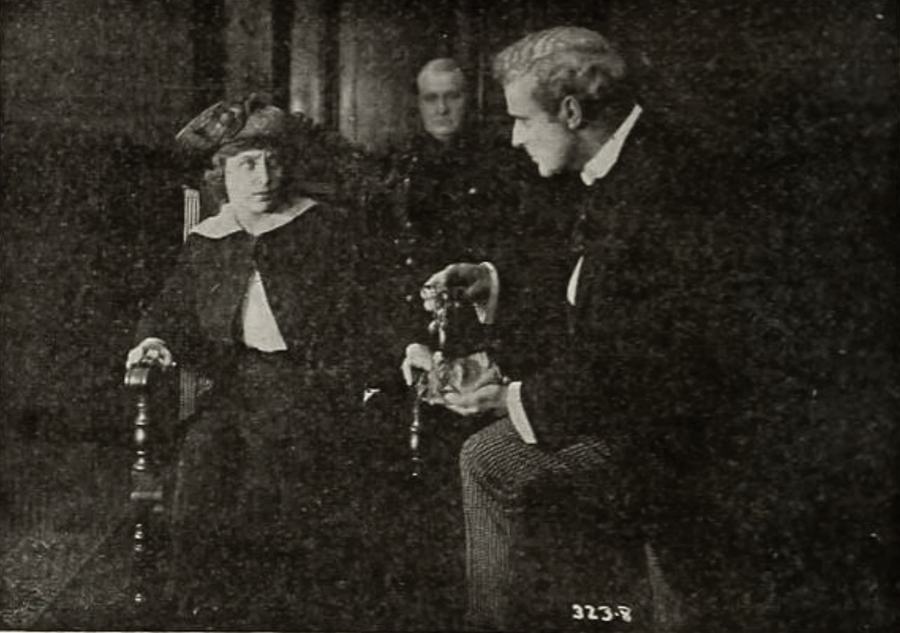
The performances across the board, particularly from Marie Shotwell as the long-suffering mother, are remarkable for their era. Silent film acting often leaned towards the theatrical, relying on exaggerated expressions and gestures to convey emotion. Yet, Shotwell manages to convey a depth of feeling through subtle gestures, nuanced body language, and intensely expressive eyes that transcends the limitations of the medium. Her portrayal of a woman unjustly maligned, yet steadfast in her love and unwavering commitment to humanitarian ideals, is both inspiring and deeply moving. One can discern the layers of pain, resilience, and quiet determination etched into her every movement. Yale Benner as the judge navigates a complex transformation, moving from stern societal arbiter, blinded by convention, to a man consumed by regret and a desperate yearning for absolution. His internal struggle is often visibly manifest in his tormented expressions, a silent dialogue of remorse playing across his features. The supporting cast, including Ethyle Cooke, Nellie Parker Spaulding, Florence La Badie, and George Marlo, each contribute to the film’s rich emotional texture, building a believable and immersive world around the central tragedy. Even in minor roles, their presence adds to the authenticity of the unfolding drama, making the societal pressures feel all the more real.
While specific details of early silent film cinematography can be elusive without direct access to the print, the narrative structure itself, meticulously crafted by Philip Lonergan, demonstrates a sophisticated understanding of dramatic pacing and character development. The careful build-up of the central deception, the sudden, cataclysmic revelation, and the prolonged, melancholic aftermath all point to a deliberate and effective storytelling approach that maximizes emotional impact. The crucial role of intertitles, though not explicitly detailed in the plot summary, cannot be overstated in silent cinema. They served not merely to convey dialogue, but to provide crucial exposition, internal monologue, and even poetic commentary, bridging the gap between purely visual storytelling and the audience's emotional and intellectual comprehension. In The Pillory, these would have been instrumental in articulating the unspoken thoughts and motivations of characters, particularly the judge’s internal conflict and the mother’s quiet suffering. The film’s thematic concerns—justice, forgiveness, the profound nature of motherhood, the corrosive power of secrets, and the often-destructive force of societal judgment—are timeless, granting The Pillory a resonance that transcends its historical context. It explores the profound idea that true societal value might not lie in rigid adherence to conventional morality or social standing, but in the boundless capacity for empathy, selfless action, and unconditional love. This message, delivered without a single spoken word, is remarkably potent.
The film’s title itself, The Pillory, is a potent and multi-layered metaphor. A pillory, an archaic instrument of public shame and physical punishment, perfectly encapsulates the overt societal condemnation faced by the mother. Yet, the film suggests that the true pillory is not merely external, but also profoundly internal – the self-inflicted torment of the judge, who, through his unforgiving pride and rigid adherence to perceived honor, condemns himself to a life of profound regret and spiritual isolation. This dual interpretation adds layers of psychological depth to what might otherwise be perceived as a straightforward melodrama. It’s a powerful commentary on how judgment, once rendered, can become a prison for the judger as much as for the judged, trapping them in a cycle of bitterness and remorse. This introspective quality sets it apart, inviting viewers to ponder the complexities of moral responsibility and the long-term consequences of our decisions. Comparing this to the more direct moral quandaries presented in something like The Chalice of Courage, where virtue often finds a clearer path to triumph, The Pillory offers a more tragic, less triumphant, yet equally profound exploration of virtue under duress and the devastating cost of human fallibility.
Ultimately, The Pillory leaves an indelible mark on the discerning viewer. It’s a film that bravely confronts the darker aspects of human nature—deception, prejudice, and the often-insurmountable barriers of class and reputation—while simultaneously celebrating the enduring power of maternal love, altruism, and the human spirit’s capacity for profound resilience. It’s a testament to the early capabilities of cinema to tell complex, emotionally charged stories that resonate long after the final fade-out. The film serves as a potent reminder that understanding and compassion often arrive too late, and that the most profound acts of love and sacrifice can sometimes go unrewarded in the harsh calculus of human affairs. It implores us to consider the weight of our judgments, the true cost of unforgiveness, and the fleeting nature of opportunities for reconciliation—lessons as relevant today as they were in the silent era. For those interested in the rich tapestry of early cinema, and particularly stories that delve into the profound depths of human emotion and incisive societal critique, The Pillory stands as a compelling, albeit heartbreaking, example of the art form's enduring power. It’s a quiet masterpiece that continues to challenge and move its audience, solidifying its place as a significant work in the annals of dramatic filmmaking and a poignant reflection on the human condition. Its legacy lies not just in its narrative, but in its ability to communicate universal truths through the eloquent silence of its imagery and the raw emotion of its performances.

IMDb 4.6
1931
Community
Log in to comment.