DbcultAccessing Vault...
Cult Review
Senior Film Conservator
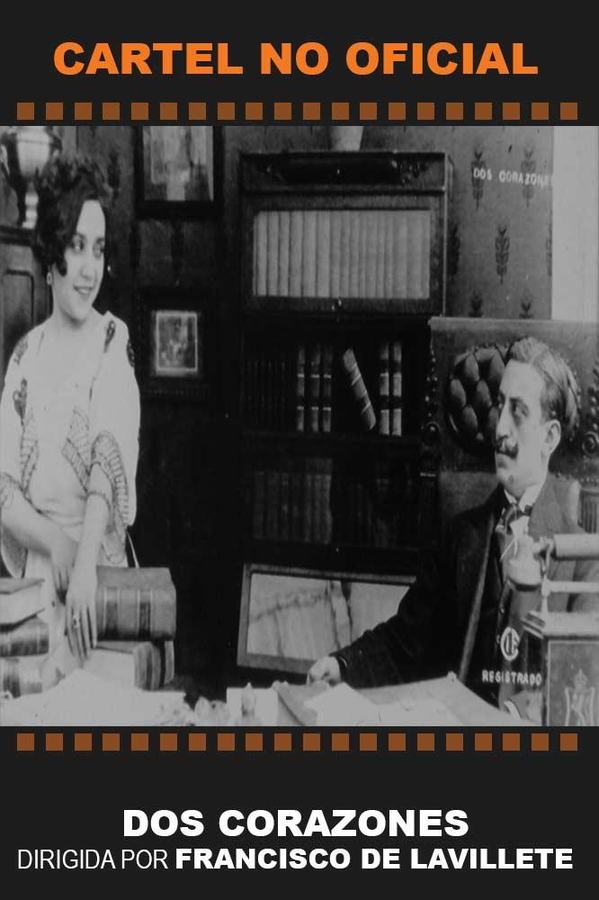
Stepping back into the hallowed, hushed halls of early cinema, one often encounters works that, despite their age, possess an emotional resonance that transcends eras. Such is the case with Dos Corazones, a silent-era masterpiece that, even today, pulses with a vibrant, almost aching sincerity. It’s a film that demands more than passive viewing; it invites introspection, drawing the audience into a maelstrom of artistic ambition, societal pressure, and the eternal, perplexing dance of love. Far from a simplistic melodrama, it presents a nuanced exploration of the human psyche, a testament to the power of visual storytelling when dialogue was but a dream.
At its core, Dos Corazones is a profound character study, centered on Ricardo, portrayed with a compelling, almost tormented intensity by Enrique Cantalaúba. Ricardo is not merely a sculptor; he is an artist possessed, wrestling with the very essence of creation. His magnum opus, 'The Divided Soul,' becomes a stark metaphor for his own bifurcated existence. On one hand, there is Elena (Mimí Derba), a dancer whose ethereal grace and unbridled spirit ignite the very flames of his artistic passion. Derba imbues Elena with a captivating vivacity, a raw, untamed energy that makes her the embodiment of artistic freedom and unconventional love. She is the muse, the spark, the daring splash of color on a muted canvas.
Conversely, we have Sofia (Anita Ferrer), a figure of elegant refinement and societal standing. Ferrer’s portrayal of Sofia is wonderfully nuanced, avoiding the typical villainess trope. Instead, she is a woman of practicality, offering Ricardo not just financial backing but a pathway to legitimate recognition, a validation within the rigid structures of the art world. Her love, while perhaps less tempestuous than Elena’s, promises stability, a secure foundation upon which Ricardo’s grand visions could be realized. The conflict is not merely between two women, but between two divergent paths for Ricardo’s art and his life: the bohemian authenticity inspired by Elena versus the gilded cage of success offered by Sofia.
Adding another layer of compelling tension is Julio Taboada’s Miguel, Ricardo’s assistant. Taboada masterfully conveys Miguel’s simmering resentment and unrequited longing for Elena through subtle gestures and piercing gazes. His jealousy is a slow-burning fuse, threatening to detonate the delicate balance Ricardo strives to maintain. This triangular dynamic, while a staple of melodrama, is handled here with a surprising depth, exploring the destructive potential of unspoken desires and the ethical quandaries that arise when personal ambition clashes with loyalty. The film’s narrative architecture, while seemingly straightforward, is remarkably intricate, weaving together these threads of desire, ambition, and betrayal into a tapestry that feels both epic and intimately personal. In this respect, it mirrors the complex emotional landscapes found in films like Love Never Dies, where the stakes of affection are profoundly existential.
The success of any silent film hinges entirely on the expressive power of its cast, and Dos Corazones is a masterclass in this regard. Enrique Cantalaúba, as Ricardo, is a revelation. His face, often a mask of internal turmoil, conveys the agonizing weight of his choices. His hands, whether sculpting clay or gesturing in despair, are as articulate as any soliloquy. He embodies the archetype of the tortured artist with an intensity that feels utterly authentic, making Ricardo’s struggle palpable to the audience. We witness his creative ecstasy and his profound despair, his moments of clarity and his bouts of self-doubt. It’s a performance that truly defines the film’s emotional core.
Mimí Derba, as Elena, is simply incandescent. Her performance is a study in physical eloquence. Every pirouette, every glance, every subtle shift in posture communicates a wealth of emotion – joy, defiance, vulnerability. She embodies the bohemian spirit with such conviction that she becomes the very symbol of freedom that Ricardo yearns for. Her scenes with Cantalaúba crackle with an undeniable chemistry, portraying a love that is both inspiring and, ultimately, tragically complicated. One might even draw parallels to the spirited independence seen in characters from films like Her Fighting Chance, though Elena’s struggle is more internal and artistic than overtly physical.
Anita Ferrer provides the perfect counterpoint as Sofia. Her elegance is not merely superficial; it’s a reflection of a woman who understands the world’s machinations and seeks to navigate them with grace and intelligence. Ferrer’s subtle expressions convey Sofia’s quiet strength, her underlying vulnerability, and the genuine affection she holds for Ricardo, despite the societal expectations that dictate much of her life. She is not a villain, but a woman operating within her own set of circumstances, offering a different, yet equally valid, vision of love and partnership. Her portrayal adds significant depth, preventing the narrative from devolving into a simplistic good-versus-evil dichotomy. The internal conflict Sofia experiences, though less overt than Ricardo’s, is just as compelling, reminiscent of the societal pressures explored in Scandal.
Julio Taboada’s Miguel is a masterclass in controlled malevolence. His silent seething, his furtive glances, and his carefully orchestrated manipulations build a palpable sense of dread. Taboada conveys the agony of unrequited love and the bitterness of envy without resorting to caricature. He is a figure of tragic consequence, a testament to the corrosive power of obsession. The ensemble is rounded out by Leopoldo del Cerro, perhaps as a cynical art critic whose pronouncements carry significant weight, and Consuelo Mayendia and Cristobal Sanchez in supporting roles that lend further texture to the film’s rich social tapestry. Each actor, through their nuanced pantomime, contributes to a collective performance that is remarkably cohesive and emotionally resonant, a true feat of ensemble acting for the era.
The directorial hand guiding Dos Corazones is evident in every meticulously framed shot and every carefully orchestrated sequence. The pacing, often a challenge in silent cinema, is expertly managed, allowing moments of quiet reflection to breathe before plunging into dramatic crescendos. The use of intertitles is judicious, providing necessary exposition without interrupting the flow of visual storytelling. This film understands that sometimes, what is left unsaid, what is conveyed through a lingering gaze or a sudden shift in posture, speaks far louder than any dialogue could.
Cinematically, the film is a marvel. The lighting, particularly in Ricardo’s studio, is used to great effect, creating dramatic chiaroscuro that highlights the sculptor’s internal struggles. Shadows cling to his brow when he is tormented, while a warm glow bathes Elena during their moments of shared passion. The camera work, while restrained by the technology of the time, is dynamic enough to convey emotion and movement. Close-ups are employed strategically to emphasize key emotional beats, drawing the audience into the characters’ inner worlds. The visual language is rich with symbolism, from the unfinished 'Divided Soul' sculpture itself to the contrasting environments of Elena’s vibrant dance studio and Sofia’s opulent, yet perhaps stifling, mansion. The visual narrative is so strong that one could almost follow the plot without the intertitles, a true mark of masterful silent filmmaking, much like the compelling visual narrative of The Raven.
The film’s aesthetic choices are consistently purposeful. The costumes, for instance, are not just period-appropriate; they are integral to character definition. Elena’s flowing, unrestrictive attire contrasts sharply with Sofia’s more structured, elegant gowns, visually reinforcing their differing philosophies of life and love. The sets, whether grand or intimate, are imbued with a sense of place and atmosphere, from the bustling energy of the city to the tranquil (or perhaps lonely) solitude of Ricardo’s workspace. This attention to detail in every visual element elevates Dos Corazones beyond simple narrative into a work of art in itself, echoing the meticulous craft seen in productions like Das Modell, where every visual component contributed to the overall thematic impact.
The thematic richness of Dos Corazones is perhaps its most enduring quality. It's a film that grapples with universal dilemmas that remain relevant today. The central theme of the 'two hearts' is multi-faceted. It speaks to Ricardo's internal conflict between passion and pragmatism, between the wild, untamed inspiration of Elena and the structured, validating world of Sofia. It also alludes to the duality of love itself – its capacity for both profound joy and agonizing pain, for liberation and for constraint. The film asks profound questions: Can true art flourish under the weight of societal expectations? Does authentic love demand sacrifice, and if so, what kind? These are not easily answered, and the film wisely refrains from offering simplistic solutions.
Another powerful theme is the nature of artistic integrity. Ricardo’s struggle to complete 'The Divided Soul' becomes a metaphor for the artist’s eternal quest to reconcile personal truth with external validation. Does he compromise his vision for fame and fortune, or does he remain true to the raw, unfiltered inspiration that first moved him? This internal battle is portrayed with such authenticity that it speaks to anyone who has ever wrestled with the demands of their craft versus the pressures of the world. It’s a timeless question, explored with a sensitivity that elevates the film beyond mere entertainment, placing it in conversation with the more cerebral explorations of character and choice seen in films like The Tempting of Justice, where moral and personal integrity are rigorously tested.
The film also delves into the destructive power of jealousy and unrequited love, particularly through the character of Miguel. His quiet machinations serve as a powerful cautionary tale about the corrosive effects of envy and the tragic consequences that can arise when desire curdles into resentment. This psychological depth, often overlooked in analyses of silent cinema, is handled with remarkable skill, adding a layer of realism to the melodramatic framework. The societal commentary, though subtle, is also poignant. The film implicitly critiques the rigid social structures of the time, where patronage dictated artistic fortunes and women were often forced into predefined roles. Elena’s spirited independence and Sofia’s constrained elegance both highlight the limitations and expectations placed upon individuals within these societal frameworks.
In an era saturated with CGI and rapid-fire dialogue, the quiet power of Dos Corazones serves as a poignant reminder of cinema's foundational strengths: the universality of human emotion, the eloquence of the visual image, and the profound impact of compelling storytelling. It's a film that doesn't rely on grand spectacle but on the intimate drama of the human heart. Its exploration of love, sacrifice, and the elusive nature of artistic truth resonates as strongly today as it did decades ago. The performances, particularly from Cantalaúba, Derba, and Ferrer, are timeless, embodying archetypes with such specificity that they feel utterly fresh.
For cinephiles and casual viewers alike, Dos Corazones offers a window into a bygone era of filmmaking, yet its themes are refreshingly contemporary. It invites us to consider our own choices, our own divided loyalties, and the compromises we make in the pursuit of our passions. It’s a film that, despite its age, feels vibrantly alive, a testament to the enduring power of classic cinema to speak to the human condition. While it might not have the explosive action of The Spitfire or the intricate mystery of Das Tagebuch des Dr. Hart, its emotional impact is no less profound, perhaps even more so for its quiet intensity.
Ultimately, Dos Corazones is more than just a historical artifact; it is a vibrant, beating heart of a film that continues to captivate and challenge its audience. It reminds us that the greatest stories are often those that delve into the intricate, often messy, landscape of our own emotions. Its legacy is not just in its pioneering techniques or its period charm, but in its timeless depiction of the eternal struggle to reconcile the diverse desires that pull at our souls. Seek it out, and allow its quiet power to wash over you; you will find yourself richer for the experience, contemplating the very nature of your own dualities long after the final frame fades to black.
IMDb —
1924
Community
Log in to comment.