DbcultAccessing Vault...
7.5/10
Senior Film Conservator
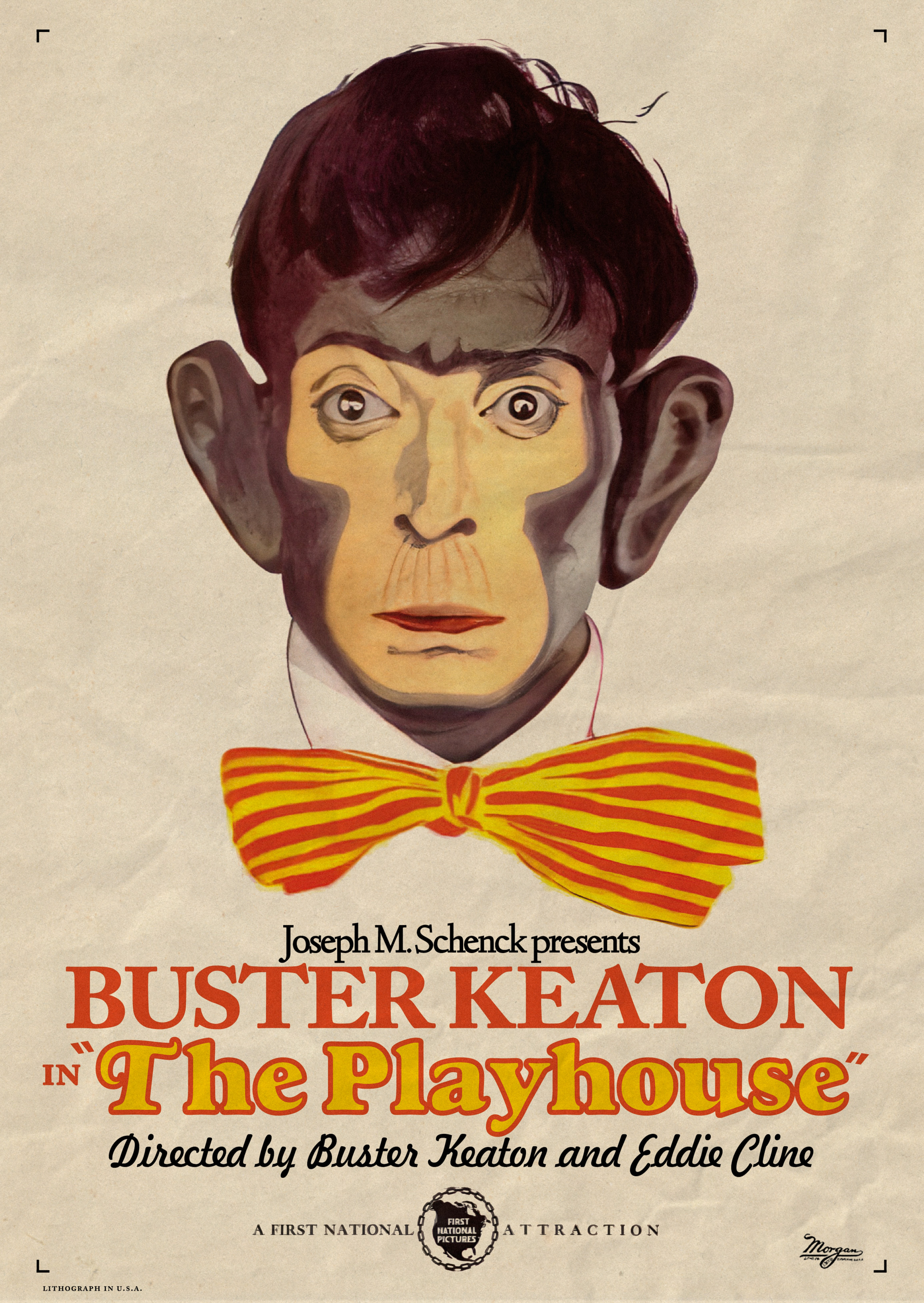
A definitive 7.5/10 rating for a film that redefined the boundaries of cult cinema. The Play House remains a cornerstone of transgressive art.
Stepping into the kaleidoscopic world of Buster Keaton's The Play House is akin to witnessing a master magician reveal his most intricate trick, yet somehow, the wonder only intensifies. Released in 1921, this short film stands not merely as a relic of silent cinema but as a vibrant, audacious testament to Keaton's unparalleled ingenuity, both as a performer and a technical innovator. It's a meticulously crafted ballet of escalating chaos, anchored by the Great Stone Face's inimitable deadpan delivery and his astonishing physical prowess. More than just a series of gags, The Play House is a compact masterpiece exploring themes of identity, illusion, and the delightful absurdity inherent in human endeavor, all wrapped in a theatrical setting that itself becomes a character in the unfolding pandemonium.
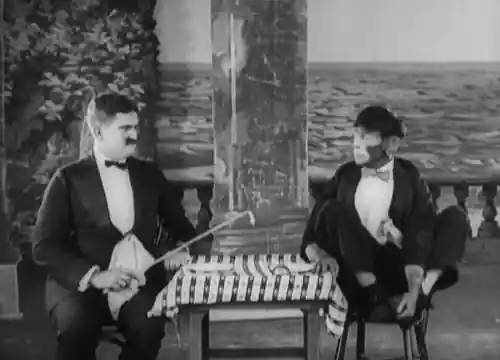
The opening sequence of The Play House is, without hyperbole, a cinematic marvel for its era. Buster Keaton, the Great Stone Face, dons every single role within a bustling vaudeville theater, all within the confines of a dream. He is the entire orchestra – each musician, each instrument – playing in perfect, synchronized discord. He is the conductor, the ticket-taker, the audience members, and every performer on stage, from the chorus line to the minstrel show. This audacious display of technical prowess, utilizing ingenious split-screen techniques and precise timing, transcends mere novelty; it’s a profound statement on the all-encompassing nature of Keaton’s comedic genius. It sets a precedent for the film’s playful blurring of reality and illusion, a theme Keaton would often revisit in his later, longer features. The meticulous planning required to film Keaton performing each part, then seamlessly compositing them into a unified, bustling scene, speaks volumes about his vision and the technical ambition of his production team. It’s a feat that still impresses today, a century later, proving that true innovation is timeless.
Upon waking from this spectacular, self-contained dream, Keaton's character, a humble stagehand, finds himself thrust into the comparatively mundane reality of a working theater. Yet, the echoes of his dream's meticulously orchestrated chaos soon begin to manifest in his waking life. What starts as routine tasks quickly devolves into a series of escalating mishaps, each inadvertently triggered by his presence or actions. The transition from the dream's perfect, self-generated pandemonium to the real world's accidental disarray is handled with Keaton's signature understated brilliance. The film cleverly suggests that even in the most ordinary circumstances, an underlying current of absurdity and potential catastrophe always lurks, waiting for the right, or rather, the wrong, catalyst. It’s a narrative device that allows Keaton to explore the full spectrum of his physical comedy, moving from the sublime control of the dream to the reactive, improvisational genius demanded by reality's unpredictable challenges.
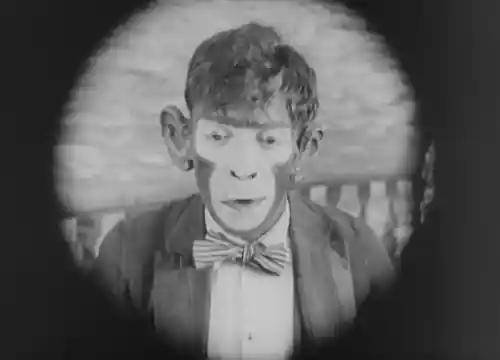
The theatrical setting itself is more than just a backdrop; it’s an integral, dynamic element of The Play House. The stage, the wings, the dressing rooms, and even the audience seating become a vast playground for Keaton's inventive gags. This environment provides a rich tapestry for the film's comedic tapestry, offering a constant stream of props, mechanisms, and precarious structures ripe for comedic disruption. The inherent artifice of the stage — its flimsy sets, its illusions of grandeur — perfectly complements Keaton’s brand of humor, which often thrives on the juxtaposition of the absurd with the mundane. The theater, a place designed for orchestrated performance, becomes a site of organic, spontaneous performance of a different kind, a testament to Keaton's ability to extract humor from any environment. His physical interaction with the theatrical apparatus, from ropes and pulleys to trap doors and backdrops, reveals a profound understanding of space and movement, turning inert objects into active participants in his comedic ballet.
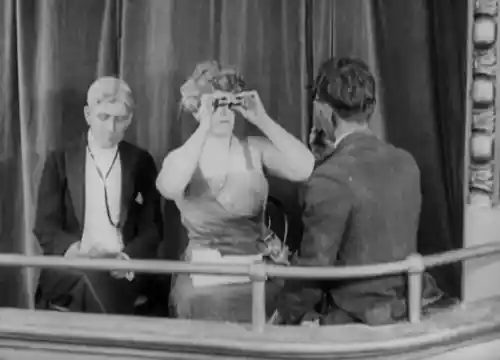
Buster Keaton’s performance in The Play House exemplifies his unique comedic persona: the stoic, resourceful everyman caught in an increasingly chaotic world, yet maintaining an almost zen-like composure. His famed 'Great Stone Face' is not merely an absence of expression but a profound comedic tool, allowing audiences to project their own reactions onto his impassive visage. This emotional neutrality amplifies the absurdity of his predicaments, making his reactions, or lack thereof, even funnier. As the stage around him crumbles and acts go awry, Keaton navigates the mayhem with a quiet determination, his efforts to rectify situations often leading to further, more elaborate complications. It’s a testament to his understanding of comedic timing and character consistency, proving that sometimes, the funniest response is no response at all, simply a pragmatic attempt to survive the latest disaster.
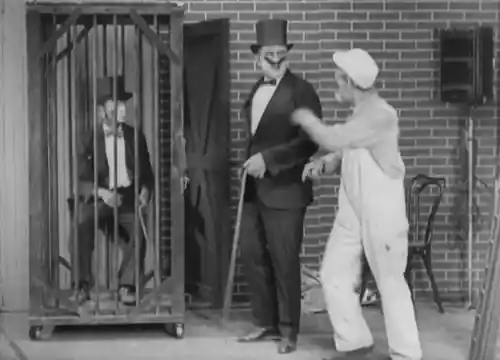
Amidst the theatrical chaos, a subtle romantic subplot unfolds, centering on Keaton's character and the object of his affection, played charmingly by Virginia Fox. His clumsy, yet earnest, attempts to impress her add another layer of endearing humanity to the film. The romance isn’t a grand, sweeping gesture but rather a series of small, often disastrous, interactions that highlight his awkward charm. This pursuit of affection, a common trope in silent comedies, serves to ground the fantastical elements of the film, reminding us that even amidst the most elaborate gags, the simple human desire for connection persists. Fox’s character, initially bewildered by the constant mishaps surrounding Keaton, gradually comes to appreciate his unique brand of resilience and understated heroism. It’s a gentle, humorous courtship, perfectly aligned with Keaton’s gentle, yet persistent, comedic style.
The cascading series of physical gags is the lifeblood of The Play House. Keaton orchestrates a ballet of blunders, each more elaborate than the last. We witness a stage set collapsing with exquisite timing, the misadventures of an unruly monkey act that refuses to be tamed, and a climactic diving scene that defies gravity and common sense. Each sequence is meticulously choreographed, a testament to Keaton’s unparalleled understanding of comedic rhythm and visual storytelling. Unlike some of his contemporaries whose humor might rely more on broad caricature or aggressive slapstick, Keaton’s comedy is often rooted in the elegant execution of the impossible, a quiet triumph of ingenuity over impending disaster. It's a hallmark seen in other early shorts like Bumping Into Broadway, where his character navigates urban chaos with a similar blend of stoicism and inventive problem-solving, always finding an unexpected solution, or at least a graceful way to tumble. The genius lies not just in the spectacle of the pratfalls, but in the intricate chain reaction of cause and effect, where one small mistake blossoms into a full-blown theatrical catastrophe.
Credited to both Buster Keaton and Edward F. Cline, the writing and direction of The Play House showcase a symbiotic creative partnership. Keaton's vision for physical comedy, his acute sense of timing, and his meticulous attention to detail are evident in every frame. Cline, a seasoned director, likely provided the structural framework and helped translate Keaton's elaborate gag concepts into a cohesive cinematic narrative. The film's pacing is impeccable, building momentum from the initial dream sequence to the crescendo of real-world theatrical mishaps. The use of innovative camera tricks, such as the aforementioned split-screen effects, was groundbreaking for the time, pushing the boundaries of what was thought possible in filmmaking. This technical ambition, coupled with a deep understanding of comedic psychology, elevates The Play House beyond mere slapstick, positioning it as a pivotal work in the evolution of cinematic comedy. The collaboration between Keaton and Cline was crucial in translating the former's imaginative gags into a visually coherent and endlessly entertaining experience, setting a high bar for silent film production.
While Buster Keaton undeniably dominates the screen, the supporting cast plays a crucial role in amplifying the comedic scenarios and providing foils for his stoic brilliance. Virginia Fox, as the love interest, brings a necessary warmth and charm, reacting to Keaton's bewildered antics with a mixture of exasperation and eventual affection. Joe Roberts, a frequent collaborator, delivers his usual robust presence, often embodying the authority figure or the befuddled straight man against whom Keaton's chaos unfolds. Other cast members like Joe Murphy, Jess Weldon, Ford West, Edward F. Cline, Monte Collins, and Joe Martin, though often in smaller roles, contribute to the bustling, believable atmosphere of the theater. Their reactions, whether of shock, amusement, or indignation, serve to highlight the surreal nature of the events Keaton inadvertently instigates. This ensemble, under Keaton's guiding comedic hand, creates a vibrant, lived-in world that makes the extraordinary gags feel all the more impactful and hilarious.
In retrospect, The Play House stands as a vibrant testament to Keaton's early, audacious brilliance. It’s a film that not only entertains with its relentless stream of ingenious gags but also fascinates with its technical audacity. It’s a foundational piece in the architectural marvel that is Buster Keaton’s filmography, a delightful precursor to the grander spectacles he would later craft. Its influence can be seen in countless subsequent comedies, particularly those that blend physical humor with clever visual effects and an underlying current of surrealism. The film's exploration of identity through its multi-role opening also speaks to broader artistic themes, making it more than just a laugh-out-loud short. For anyone seeking to understand the enduring magic of silent cinema and the unparalleled artistry of one of its greatest titans, this short is an indispensable viewing experience. It reminds us that true genius, even in the simplest of premises, can create a universe of laughter and wonder that resonates across generations. The Play House is not merely a historical artifact; it is a living, breathing work of art that continues to captivate and inspire, a timeless demonstration of cinematic perfection.
IMDb 8.8
1931
Community
Log in to comment.