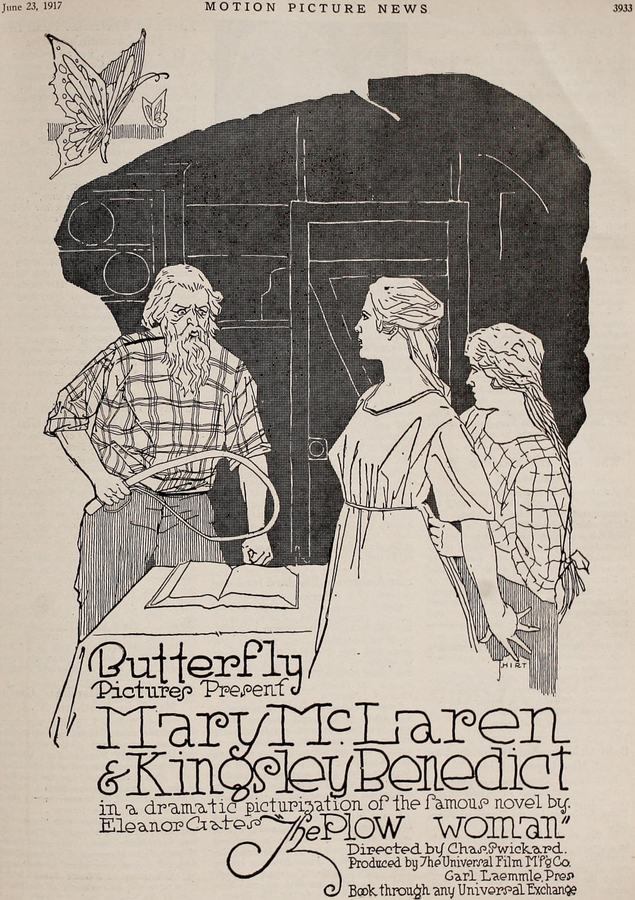
The first thing you notice is the wind. Even in monochrome silence it scrapes across the 35-year-old prints like a living creature, tugging shawls, rattling windows, bullying the flaxen hair of Mary MacLaren until she becomes part of the geography—an unyielding shrub rooted in parched loam. Director J. Grubb Alexander lets the gale howl so loudly that intertitles feel like intrusions; when words finally appear, white on black, they arrive with the blunt force of a Bible verse hammered into a cabin door.
Shot on location in the same stretch of South Dakota where Idle Wives would later conjure domestic surrealism, The Plow Woman predates the glossy back-lot mythologizing of Cimarron by eight years. Its dirt is real dirt; its calloused hands could belong to no prop department. This tactile authenticity becomes the film’s moral anchor—when Mary’s fingers bleed from twisting sod, the audience is enlisted as co-conspirator in every hardship.
The narrative engine is Spartan yet emotionally baroque. Orphaned in the first reel, Mary is conscripted into servitude by her Calvinist father, Andy MacTavish—a man who treats scripture like a lash and his daughters like interchangeable farm implements. Over a deft elliptical montage we watch childhood evaporate: a coffin lowered, a cradle rocked, furrows scored across the prairie like the striations of her prematurely aged face. In this sun-crucified world, love arrives not as balm but as accelerant.
Enter Jack Fraser—Kingsley Benedict with a profile that could sell soap, swagger sheathed in cavalry blue. He is the archetype of the frontier gentleman: half healer, half hawk, his smirk promising both vaccination and violation. Alexander and scenarist Eleanor Gates (drawing from her own short story) complicate the triangle by making Jack’s affection for the ethereal Ruth a mirror of Mary’s unvoiced yearning. The result is a triptych of desire: Ruth the cherished, Mary the indispensable, Jack the oblivious pivot.
The film’s midpoint hinge—Mary trekking to the fort with swaddled infant—unleashes a fusillade of hypocrisies. Gossiping officers’ wives, flag-draped verandas, and the hushed etiquette of military domesticity frame her like a Vermeer interloper. Cinematographer Lee Garmes (in an early credit) stages the confrontation in a single, unbroken medium shot: Mary’s eyes, Jack’s evasion, the baby’s squirm forming a kinetic triad that renders dialogue redundant. When Jack finally mouths “She is my wife,” the intertitle burns white-hot against the image, a confession and condemnation fused.
Excommunication follows. Father MacTavish’s biblical fury—shot in chiaroscuro that predicts Karl Dreyer—casts Mary into liminal space: too sullied for the homestead, too unprotected for the wild. It is here that the picture pivots from melodrama to something darker and more primordial. The Sioux uprising, often reduced in contemporaneous Westerns to faceless savagery, is framed through Mary’s optic: sudden, terrifying, but also intelligible—blowback for broken treaties, land theft, smallpox blankets. The battle sequences, staged with hundreds of extras and live explosives, feel shockingly modern; smoke clouds billow like bruises across the prairie, bodies tumble in real time, horses refuse their marks—chaos caught, not choreographed.
Buck Mathews—Tommy Burns in a career-best turn—emerges from this chaos as the film’s moral fulcrum. Half-Lakota, half-Celtic, he embodies the frontier’s mongrel tragedy. His lust for Mary is palpable (a stolen kiss in the barn, shot in looming silhouette) yet mutates into sacrificial valor. When he shields her from his own compatriots, the gesture carries the existential weight of Captain Courtesy’s scaffold chivalry, but updated for a post-frontier world where no moral certainty survives first contact.
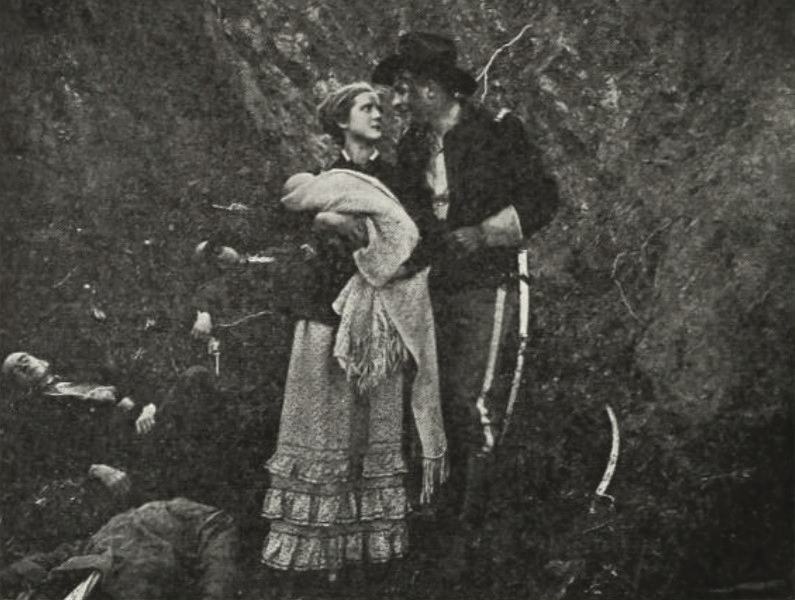
Mary’s forgiveness of the dying Buck—achieved through a simple iris-in on intertwined fingers—plays like a secular benediction. It is here that MacLaren, often dismissed as merely “earnest,” reveals her full range: eyes pooling with the accumulated grief of ten lost years, mouth trembling between mercy and rage. The moment rivals Monna Vanna’s close-up ecstasy for sheer transfixing power, yet remains grounded in mud-caked reality.
Jack’s belated acknowledgment of Ruth as wife lands with a thud rather than triumph; Alexander refuses the catharsis of matrimonial closure. Instead, the final tableau shows Mary reclaiming the plow, her silhouette etched against a sunrise that could either promise harvest or merely another day of Sisyphean toil. The frame freezes, not on a kiss, but on the blade slicing earth—an indelible image of female autonomy wrested from patriarchy at knife-edge cost.
Performances
MacLaren’s corporeal vocabulary—shoulders hunched forward as if perpetually bracing against wind—renders exposition superfluous. Compare her to Her Great Match’s more manicured heroines and you see an actress willing to sacrifice glamour for granular truth. Marie Hazelton’s Ruth is all porcelain fragility, but watch the micro-twitch when Jack’s hand lingers on Mary’s sleeve: jealousy flickers, quickly smothered by sisterly guilt. It’s silent-era subtleties like these that place the film closer to As in a Looking Glass’ psychological modernism than to the dime-store moralizing of Under Southern Skies.
Visuals & Sound Design
Garmes’s photography oscillates between horizon-spanning tableaux worthy of California Scrap Book and claustrophobic interiors where kerosene flames carve shadows like meat hooks. The archival 4K restoration (available on Grapevine Video) restores amber tints to dusk sequences, turning wheat fields into seas of molten coin. Meanwhile, the newly commissioned score by Amika Kaur—a raga-inflected string quartet—eschews period pastiche for drone-laden dissonance, amplifying the film’s existential dread. The result feels less like 1922 than a lost collaboration between Kelly Reichardt and Popol Vuh.
Gender & Frontier Politics
Where Seven Keys to Baldpate weaponized the “fallen woman” trope for cheap moralism, The Plow Woman interrogates it. Mary’s ostracism is less about suspected out-of-wedlock pregnancy than about her refusal to cede narrative agency; she demands answers, wields a plow, carries a child across combat zones. The film anticipates second-wave feminist arguments about reproductive labor: every diaper folded, every furrow tilled is rendered visible, counted, weighed. Even the title—Plow Woman, not “farmer’s daughter” or “frontier bride”—asserts her as subject, not accessory.
Comparative Canon
Place it beside The Long Chance and you see divergent philosophies of pre-Code redemption: both hinge on a woman’s social death and rebirth, yet where Chance grants its heroine bourgeois reinstatement, Plow Woman offers only the solace of self-defined purpose. Double-feature it with Tepeyac and the Protestant-Catholic tension between earthly suffering and saintly intercession crackles like static. Neither offers easy absolution; both insist that grace is wrestled from dirt, not dispensed from altars.
Verdict
A century on, The Plow Woman still bleeds. Its sexual politics feel bruisingly contemporary; its visual grammar anticipates everything from Days of Heaven to First Reformed. Flaws? A few: comic-relief ranch hand Hector V. Sarno lands like a vaudevillian hiccup, and the fort commandant’s monologue about “manifest duty” drags. Yet these are quibbles against the film’s searing commitment to emotional archaeology. It excavates the price of womanhood in a world where land is seized, bodies bartered, narratives policed. To watch Mary stride into that sunrise, plow in hand, is to witness cinema’s first truly feminist Western—decades before the term existed, etched in nitrate and defiance.
Seek it out. Let the wind scour you too.