DbcultAccessing Vault...
Cult Review
Senior Film Conservator
In the annals of silent cinema, particularly within the burgeoning frontier of the American Western, Frank Lloyd’s 1925 adaptation of Zane Grey’s The Rainbow Trail stands as a compelling, albeit often overlooked, artifact. This film isn't merely a relic of a bygone era; it's a vibrant tapestry woven with themes of captivity, unwavering devotion, and the relentless pursuit of justice against a backdrop of breathtaking, untamed landscapes. As a cinematic journey, it encapsulates the moral complexities and raw emotional power that defined much of Zane Grey’s literary output, translated to the silver screen with a potent blend of melodrama and thrilling adventure. For those who appreciate the foundational works of the Western genre, or indeed the art of storytelling in its purest, silent form, The Rainbow Trail offers a fascinating glimpse into the genre’s formative years, showcasing how early filmmakers grappled with epic narratives and profound human struggles without the aid of spoken dialogue.
The narrative thrust of The Rainbow Trail is immediately engrossing, plunging the viewer into a desperate situation born of a grim past. Years prior, the legendary gunman Lassiter, the steadfast Jane Withersteen, and the innocent orphan Fay Larkin were trapped within a secluded valley, living a life stripped bare of modern comforts, akin to primitives. This enforced isolation, a consequence of past conflicts and religious fanaticism, sets a somber tone for the entire film. The arrival of John Shefford, a relative of Lassiter, shatters this fragile equilibrium not by his physical presence initially, but by the sheer force of his determined quest to locate his lost kin. Shefford embodies the quintessential Western hero – resolute, morally upright, and driven by a powerful sense of familial duty. His journey is not just a physical traverse across rugged terrain, but a symbolic descent into a world where societal norms are twisted and individual freedoms are brutally suppressed.
However, fate, or perhaps malevolence, intervenes before Shefford can reach his objective. The sinister Mormon elder, Waggoner, a figure steeped in zealous conviction and a chilling capacity for manipulation, penetrates the valley's hidden defenses. Discovering the isolated trio, Waggoner seizes the opportunity to further his twisted agenda. His abduction of Fay, now a blossoming young woman, is a pivotal moment, transforming her from a sheltered captive into a pawn in a larger, more insidious scheme. Fay is transported to a desolate encampment, a grim sisterhood of women held under Waggoner’s dominion, highlighting the film’s brave, for its time, exploration of polygamy and the subjugation of women within certain extremist communities. This aspect of the plot resonates with a surprising contemporary relevance, delving into themes of autonomy and resistance against oppressive patriarchal structures.
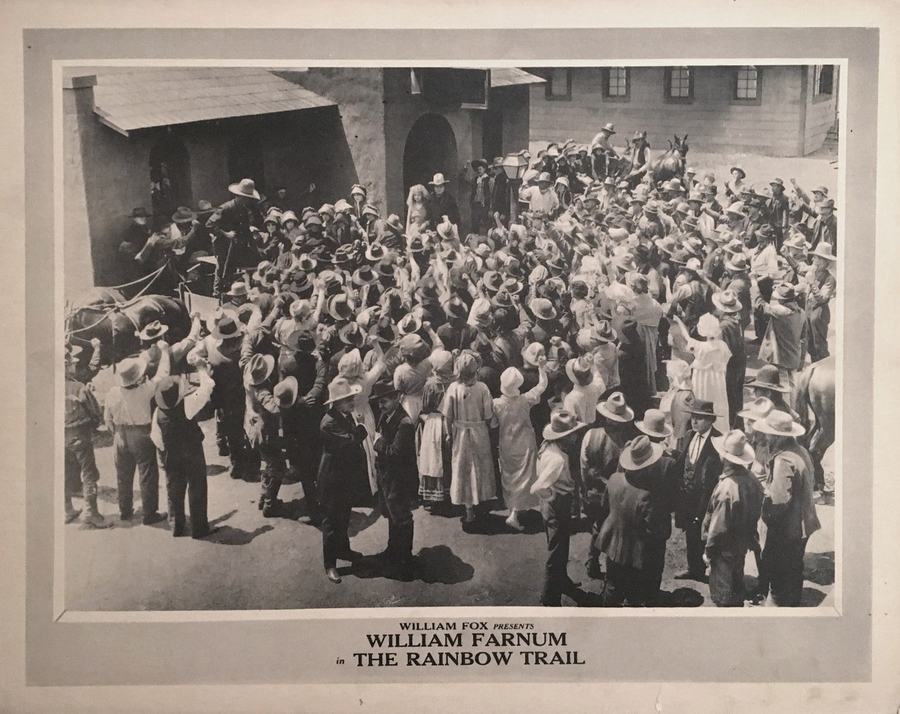
The narrative escalates dramatically with the intervention of United States marshals, who raid the Mormon settlement, bringing charges of polygamy against the women held there. This legal confrontation provides a stark juxtaposition to the lawless frontier, introducing an element of formal justice into the otherwise anarchic setting. It is during the solemn proceedings of Fay’s trial that Shefford finally encounters her. In a moment of classic cinematic romance, their eyes meet across the courtroom, igniting an instant and profound connection that becomes the emotional core of the film. Shefford’s subsequent daring rescue of Fay, a whirlwind escape on horseback, is a thrilling sequence, cementing his heroic status and setting the stage for the climactic confrontations. Their flight is not merely an escape; it's a declaration of defiance, a desperate bid for freedom that propels them across the unforgiving Western landscape.
The pursuit by Waggoner and his zealous followers adds an unrelenting tension to the latter half of the film. Waggoner, a truly memorable antagonist, is a force of unwavering, destructive will. His relentless chase culminates in a moment of visceral frontier justice when he is summarily dispatched by a watchful Indian, a character who serves as a silent, yet powerfully effective, arbiter of the wilderness’s own moral code. This act, while sudden, underscores the film’s commitment to a certain brutal realism inherent in the Western genre. Despite their leader’s demise, Waggoner’s adherents continue their relentless pursuit, their fanaticism undiminished. The ultimate salvation for Shefford, Fay, and their companions arrives in the nick of time, once again orchestrated by the prescient Indian who warns the marshals. This final intervention, a convergence of law enforcement and indigenous wisdom, brings a satisfying, albeit hard-won, resolution to their harrowing ordeal, emphasizing the collaborative spirit often necessary for survival and justice in the untamed West.
The performances in The Rainbow Trail, while adhering to the broader, more expressive style common in silent cinema, manage to convey a surprising depth of emotion and character. Buck Jones, a prolific and beloved Western star of the era, brings his signature blend of stoicism and earnest heroism to the role of John Shefford. Jones’s physical presence and his ability to communicate determination through gesture and expression are perfectly suited for the silent screen. He embodies the ideal of the lone cowboy, driven by a personal code of honor and an unwavering commitment to those he seeks to protect. His portrayal of Shefford is less about verbose declarations and more about quiet resolve, a trait that makes his character profoundly relatable and admirable.
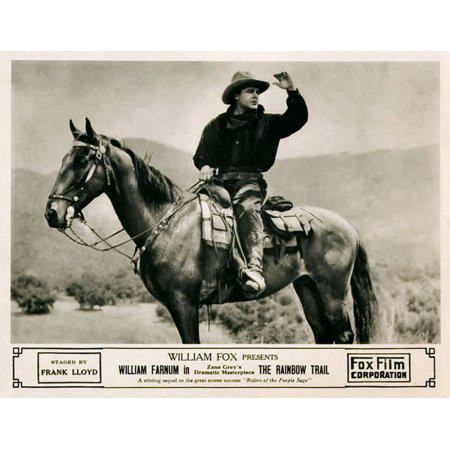
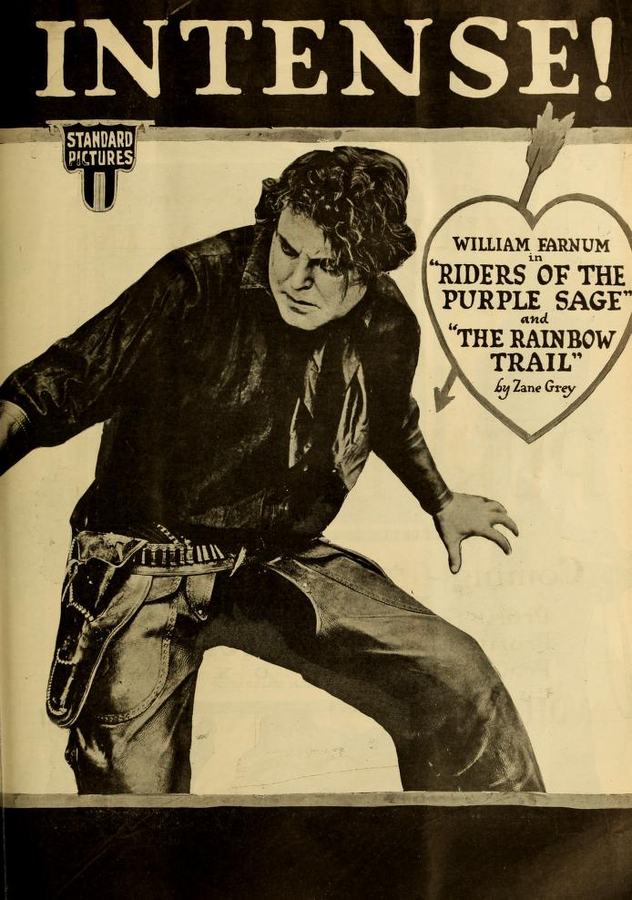
William Farnum, as the grizzled and enigmatic Lassiter, delivers a performance steeped in a weariness born of long suffering, yet underscored by an enduring strength. Lassiter is a man haunted by his past, a figure of silent power whose presence looms large even when he is confined. Farnum’s portrayal skillfully conveys the weight of his character’s history and his deep-seated connection to Jane Withersteen. Genevieve Blinn, as Jane, brings a quiet dignity and resilience to her role, portraying a woman who has endured immense hardship but whose spirit remains unbroken. Her silent strength is a powerful counterpoint to the more overt heroism of Shefford.
Mary Mersch, as the young Fay Larkin, effectively communicates the vulnerability and eventual awakening of her character. Her journey from an innocent, sequestered girl to a young woman caught in the maelstrom of religious fanaticism and then finding love, is central to the film’s emotional impact. Mersch’s expressive eyes and delicate portrayal make Fay’s plight genuinely moving. On the antagonist side, William Burress as Waggoner is chillingly effective. He eschews cartoonish villainy for a more insidious portrayal of religious zealotry, making his character genuinely menacing. Waggoner’s conviction in his twisted beliefs makes him a formidable foe, and Burress conveys this with a chilling blend of authority and fanaticism. The supporting cast, including George Ross and Ann Forrest, contribute to the rich tapestry of frontier life, each playing their part in enhancing the film's sense of authenticity and dramatic tension. The collective performances demonstrate the power of silent acting to convey complex human emotions and motivations without the need for spoken dialogue, relying instead on masterful gestures, facial expressions, and the sheer narrative force of the screenplay.
Frank Lloyd, a director of considerable skill and versatility, brings a masterful touch to The Rainbow Trail. Known for his ability to handle both intimate dramas and large-scale productions (he would later win an Oscar for Cavalcade), Lloyd demonstrates a keen understanding of the Western genre’s demands. His direction is characterized by a strong sense of visual storytelling, utilizing the vast, sweeping landscapes of the American West as more than just a backdrop, but as an active participant in the drama. The cinematography of the film captures the stark beauty and unforgiving nature of the frontier, enhancing the sense of isolation and danger faced by the characters. Lloyd’s camera work is often expansive, emphasizing the sheer scale of the wilderness, yet he is equally adept at framing close-ups that highlight the emotional turmoil etched on his actors’ faces.
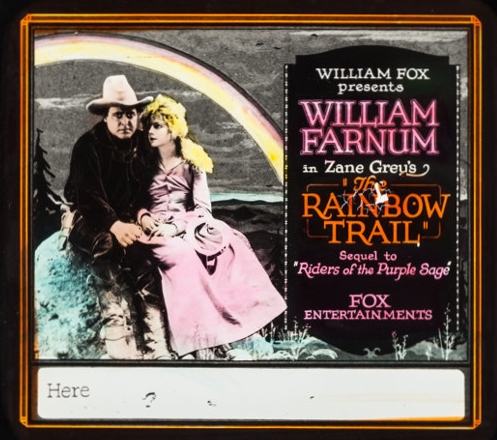
The pacing of The Rainbow Trail is another testament to Lloyd’s directorial prowess. He expertly builds suspense, allowing moments of quiet tension to simmer before erupting into thrilling action sequences. The chase scenes, a staple of the Western, are particularly well-executed, conveying a palpable sense of urgency and danger without relying on modern special effects. Lloyd’s ability to orchestrate large groups of riders across rugged terrain is impressive, creating dynamic and visually engaging sequences. His direction ensures that the narrative never falters, guiding the audience through complex plot points with clarity and emotional resonance, a challenge in the silent era where intertitles carried much of the expository burden. Lloyd’s work here, much like his contemporaries who crafted compelling narratives such as those seen in The Good Bad-Man or even the dramatic tension of The Heart of Humanity, showcases a period of filmmaking where visual spectacle and emotional sincerity were paramount.
At its core, The Rainbow Trail is a profound exploration of several enduring themes that resonate far beyond its specific historical and geographical setting. The most prominent is the perennial conflict between freedom and captivity. From the initial imprisonment of Lassiter, Jane, and Fay, to Fay’s subsequent abduction by Waggoner, the film constantly emphasizes the precariousness of liberty in a lawless land. Shefford’s entire mission is predicated on restoring freedom to those unjustly held, positioning him as a liberator in the grand tradition of Western heroes. This theme is universal, speaking to the human desire for autonomy and the inherent injustice of its denial.
Another crucial theme is the dangerous allure of religious fanaticism. Waggoner and his followers are not merely common outlaws; they are driven by a distorted interpretation of faith that justifies their oppressive actions, including polygamy and the forced subjugation of women. The film, like Zane Grey’s novel, bravely tackles the controversial subject of Mormon extremism, portraying it as a force that corrupts human nature and infringes upon fundamental rights. This exploration of faith gone awry offers a complex moral landscape, where the pursuit of divine will becomes intertwined with human cruelty and control. It prompts viewers to consider the fine line between devotion and dogma, and the destructive power of unchecked authority, a theme that also subtly surfaces in other period dramas, albeit with different cultural contexts, such as Chûshingura, which explores loyalty and duty within a strict societal framework.
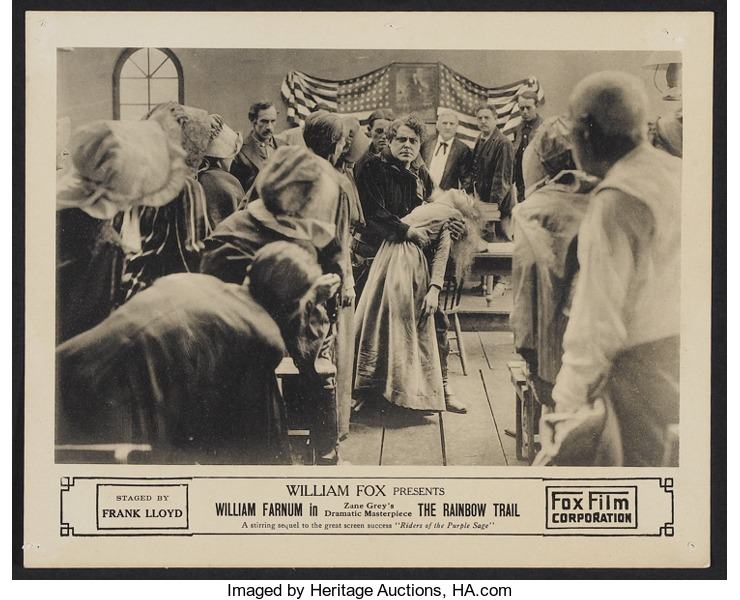
The concept of justice, both formal and informal, permeates the narrative. The arrival of the US marshals represents the slow, arduous extension of federal law into the wild West, challenging the self-governing (and often self-serving) communities that had sprung up. However, the film also acknowledges the necessity of frontier justice, exemplified by the Indian’s decisive action against Waggoner. This dual approach to justice reflects the reality of the era, where formal legal structures were often far removed from the immediate needs of the populace, necessitating more direct, albeit sometimes violent, resolutions. The love story between Shefford and Fay provides the emotional anchor for these grander themes, demonstrating how personal connection and sacrifice can drive individuals to confront formidable obstacles. Their burgeoning romance is a beacon of hope amidst the oppression, a testament to the enduring human capacity for connection even in the most desolate circumstances.
Zane Grey remains an indelible figure in American literature, his name synonymous with the romanticized, yet often brutal, vision of the American West. The Rainbow Trail is a direct sequel to his even more famous novel, Riders of the Purple Sage (though no specific slug was provided for this, I'll mention it as a literary comparison), and the film adaptation faithfully captures the essence of Grey’s storytelling. Grey’s novels were characterized by their vivid descriptions of landscapes, their morally unambiguous heroes and villains, and their exploration of themes like courage, loyalty, and the clash between civilization and wilderness. Charles Kenyon and Frank Lloyd’s screenplay for The Rainbow Trail successfully translates these elements to the silent screen, relying on strong visual cues and compelling character dynamics to convey the narrative’s depth.
The film’s portrayal of the Western landscape, for instance, mirrors Grey’s own reverence for the natural world. The vast, empty expanses and dramatic rock formations are not merely backdrops; they are characters in themselves, shaping the fates of the human protagonists. This attention to environmental detail is a hallmark of Grey’s work, and its successful translation to film is a testament to the filmmakers’ understanding of his literary vision. Furthermore, the moral clarity of the characters, particularly Shefford’s unwavering heroism and Waggoner’s stark villainy, aligns perfectly with Grey’s narrative style. His stories often presented clear-cut battles between good and evil, a characteristic that made his novels immensely popular and easily adaptable to the straightforward narratives often favored in early cinema. Comparisons can be drawn to other adaptations of Grey’s work, or indeed, other archetypal Westerns of the era like The Virginian, which similarly grappled with the moral codes and stark realities of frontier life.
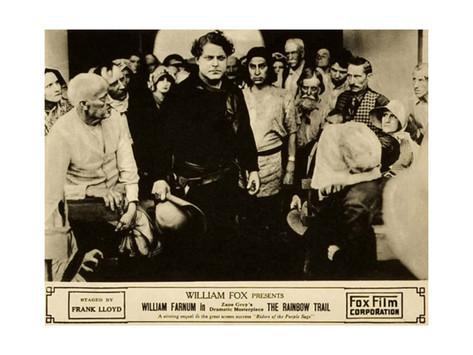
The Rainbow Trail holds significant value not just as an individual film, but as a window into the broader landscape of early Western cinema and the social anxieties of its time. The portrayal of Mormon communities, particularly the controversial issue of polygamy, reflects a period when such themes were often sensationalized and used to explore perceived threats to conventional American values. While the film’s depiction might be seen as simplistic or even biased by today’s standards, it offers a fascinating insight into the cultural perceptions and moralizing narratives prevalent in the 1920s. It was a time when cinema often served as a powerful tool for both entertainment and moral instruction, reflecting societal norms and anxieties.
The film’s engagement with themes of law and order versus frontier justice is also noteworthy. The presence of US marshals signifies the gradual imposition of federal authority over territories previously governed by local customs or sheer force. This tension between established law and the wild, untamed nature of the West is a recurring motif in the genre, and The Rainbow Trail handles it with a clarity that foregrounds the eventual triumph of order, even if achieved through violent means. This blend of adventure, romance, and social commentary makes the film a rich text for understanding the evolution of the Western as a genre, and its capacity to reflect broader societal concerns. It stands alongside other films of the era that explored social dynamics and moral dilemmas, from the intricate relationships in Old Wives for New to the dramatic personal struggles depicted in Enoch Arden, demonstrating the wide range of narratives silent film was capable of tackling.
In conclusion, Frank Lloyd’s The Rainbow Trail is far more than a simple silent Western; it is a meticulously crafted cinematic experience that continues to resonate with its powerful narrative, compelling characters, and stunning visuals. Its exploration of timeless themes—freedom, justice, the dangers of fanaticism, and the enduring power of love—ensures its relevance even nearly a century after its release. Buck Jones and William Farnum deliver memorable performances that define their archetypal roles, while Lloyd’s direction masterfully guides the audience through a complex and thrilling plot. For enthusiasts of classic cinema, particularly those drawn to the foundational narratives of the American West, this film offers a rich and rewarding viewing experience. It serves as a potent reminder of the artistry and storytelling prowess inherent in the silent era, proving that a lack of spoken dialogue does not diminish, but rather enhances, the universal appeal of a well-told story. The Rainbow Trail is a testament to Zane Grey’s enduring vision and Frank Lloyd’s cinematic skill, a true trailblazer in the vast landscape of early American film. It invites us to consider the rugged beauty and moral challenges of a bygone era, leaving a lasting impression of heroism and the ultimate triumph of human spirit against oppression.
IMDb 5.8
1936
Community
Log in to comment.