DbcultAccessing Vault...
Cult Review
Senior Film Conservator
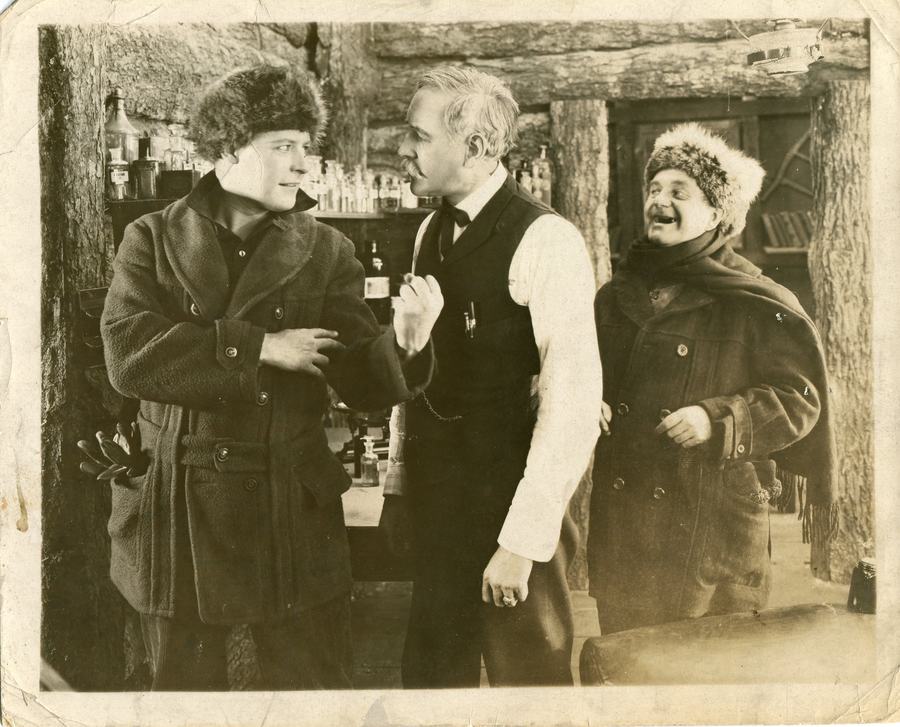
Flickering nitrate exhales the scent of pine tar and kerosene as The Avenging Trail (1916) lurches back to life, a rediscovered plank of America’s silent pulp cathedral. Long misfiled under generic Westerns, this Fred J. Balshofer–Mary Murillo collaboration is closer to lumber-camp noir, its moral circuitry as knotted as the cables that once hauled timber downriver. Watch it once and you taste axe-bitten air; twice and you realize the film’s true protagonist is the forest itself—an implacable jury of spruce and cedar that outlives every scheme.
Balshofer’s camera rarely climbs above shoulder height, so each frame feels choked by tree trunks and low-lying greed. The director, who cut his teeth on 1909’s Prince of Thieves, borrows the staggered staging of German kammerspiel: foreground stumps double as judicial benches while background log piles tower like ossuaries. When Gaston Olaf—played with granite restraint by Harry Russell—accepts Taggart’s offer, the contract is signed atop a freshly felled log that still bleeds sap; nature’s slow ooze becomes a premonition of contractual blood.
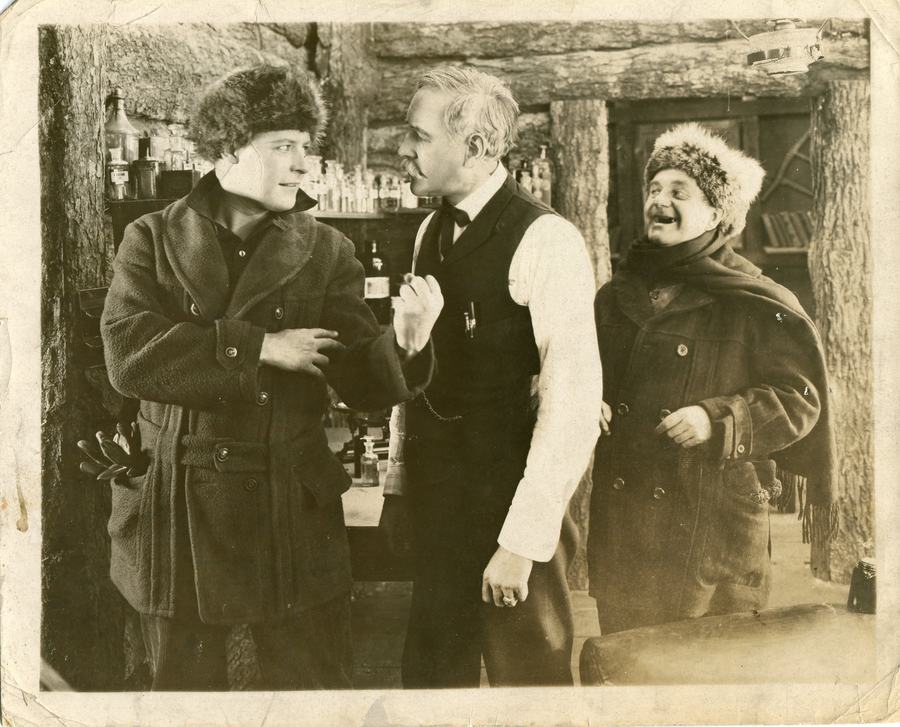
Compare the chiaroscuro interiors to The Reign of Terror’s revolutionary cellars or the mist-slick forests of The Trail of the Lonesome Pine (1916). Here moonlight drips through gaps in plank walls, striping Rose’s face like a prisoner’s tally. The effect anticipates John Ford’s How Green Was My Valley by a quarter-century, yet achieves it without studio backlighting—just Manitoba winter nights and reflective snow.
Lettie Ford’s Rose is no fainting frontier flower; she enters the narrative astride a bay gelding, ledger clenched like a hymnal. Her land claim—inked by a dying father who mistrusted every man with pulse—carries a femme seule clause almost progressive for 1916. When Taggart woos her with promises of rail expansion, Ford lets microscopic disappointment flutter across her cheekbones, the same flicker you’ll later spot in Joy and the Dragon’s Margaret Gibson. Rose’s true rebellion lies in literacy: she deciphers surveyor jargon faster than any lumberjack, turning Taggart’s forged maps into paper kindling.
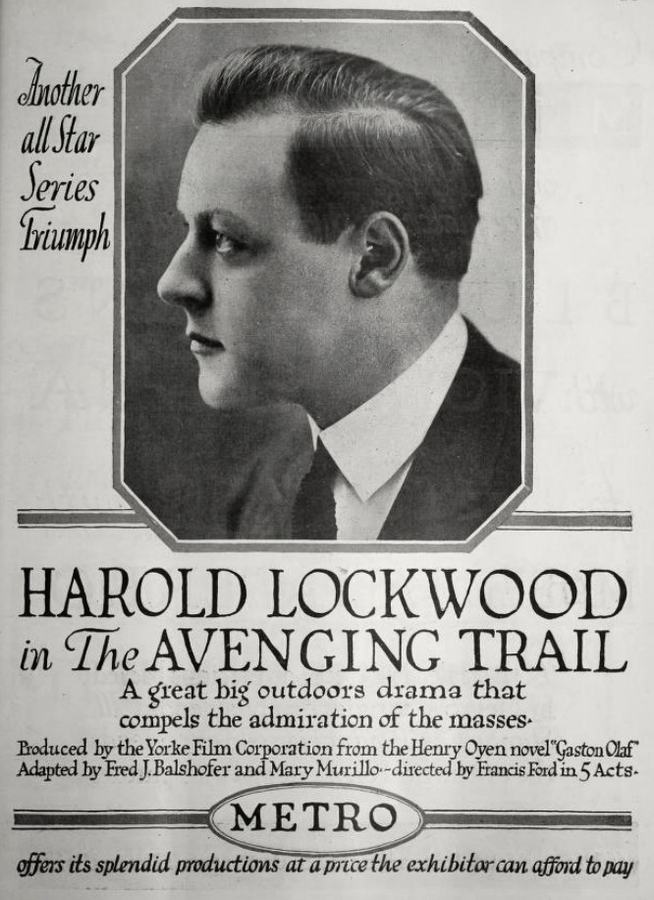
Harry Russell, a Broadway refugee, plays Olaf as a man allergic to syllables. His towering silhouette—6'4" without cork boots—reduces the screen to a letterbox. Balshofer exploits the vertical axis: Olaf’s first axe swing bisects the frame, splitting the composition into before/after moral zones. The performance nods to Norse saga heroism yet undercuts it with proletarian fatigue; watch how he sharpens his saw with the same methodical calm he later brings to dismantling Taggart’s ledger. Russell’s eyes, pale as river ice, betray no anger—only a dawning calculus of justice.
James Robert Chandler essays Dave Taggart as a man who smiles in paragraphs and kills in footnotes. His costume arc charts the erosion of genteel pretense: three-piece town suit gives way to chore jacket, then to a blood-specked undershirt that mirrors the communal flannel of his workers. In the climactic barn-cum-courtroom scene, Chandler delivers a monologue—via intertitles—that compresses Manifest Destiny into one venal sentence: "Land is just wood that hasn’t been converted to money yet." The line, penned by Murillo, could headline any Gilded Age exposé.
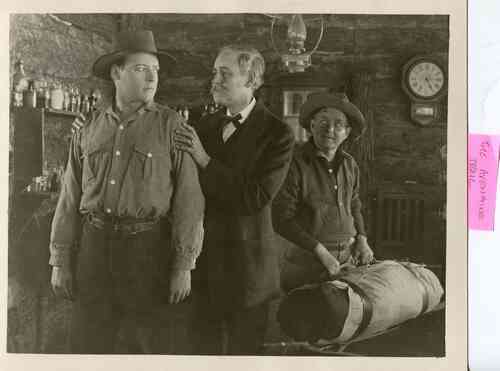
Floyd Buckley’s Lefty is less villain than narrative catalyst—a twitchy embodiment of unchecked appetite. His pursuit of Rose through the sawmill carries faint echoes of Children of Eve’s factory chase, though here conveyor belts are replaced by log-slipways slick with ice. Balshofer cranks the camera speed slightly during the pursuit, so Red’s limbs jerk like a malfunctioning marionette, foreshadowing Expressionist nightmares soon to bloom in Les gaz mortels.
History tags Murillo as a serial adapter of stage potboilers, yet her script here is proto-feminist noir. The pivotal safe—not merely a MacGuffin—contains Rose’s mother’s correspondence, proof that property once passed through matrilineal descent. Taggart’s scheme thus doubles as patriarchal repossession. Murillo seeds every reel with objects that resist phallic coding: Rose’s fountain pen trumps Taggart’s revolver; the safe’s dial rotates counter-clockwise to unlock, a subtextual moon-cycle. Even the final shootout is defused not by bullets but by Rose’s recitation of lien statutes, transforming violence into contract.
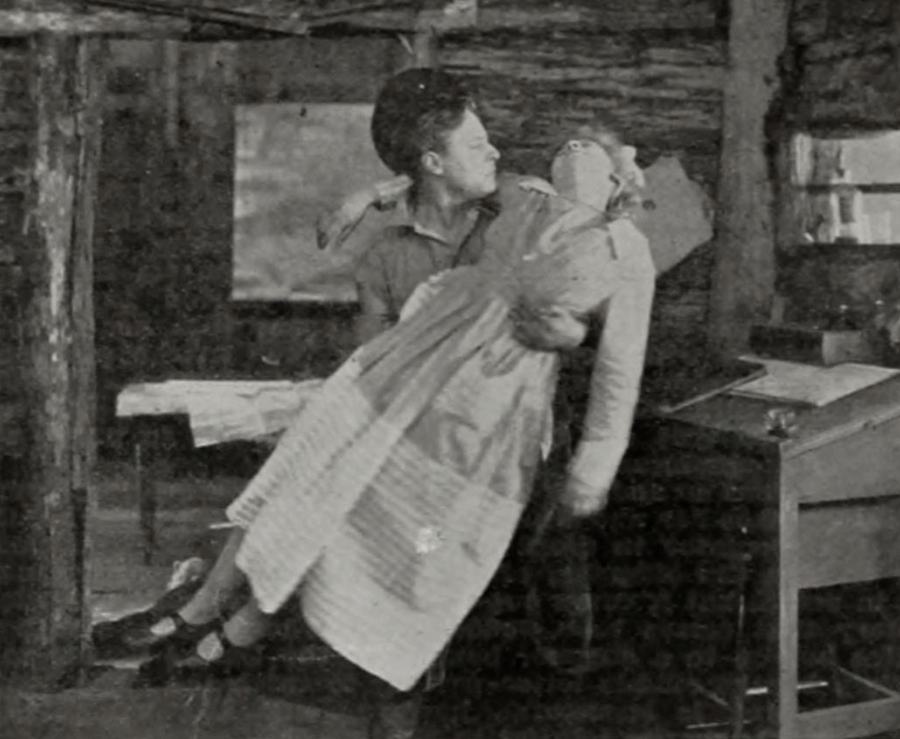
Oyen’s pulp original ends with Olaf cruciform on a logjam, Taggart triumphant. Murillo and Balshofer, sensing post-Birth of a Nation audience fatigue over nihilism, pivot toward communal justice: townspeople form a literal human chain across the frozen river, stopping the log drive and Taggart’s escape. The revision softens the novella’s Social-Darwinist edge, aligning the film with populist melodramas like A Gentleman from Mississippi yet without that film’s capitulation to comic relief.
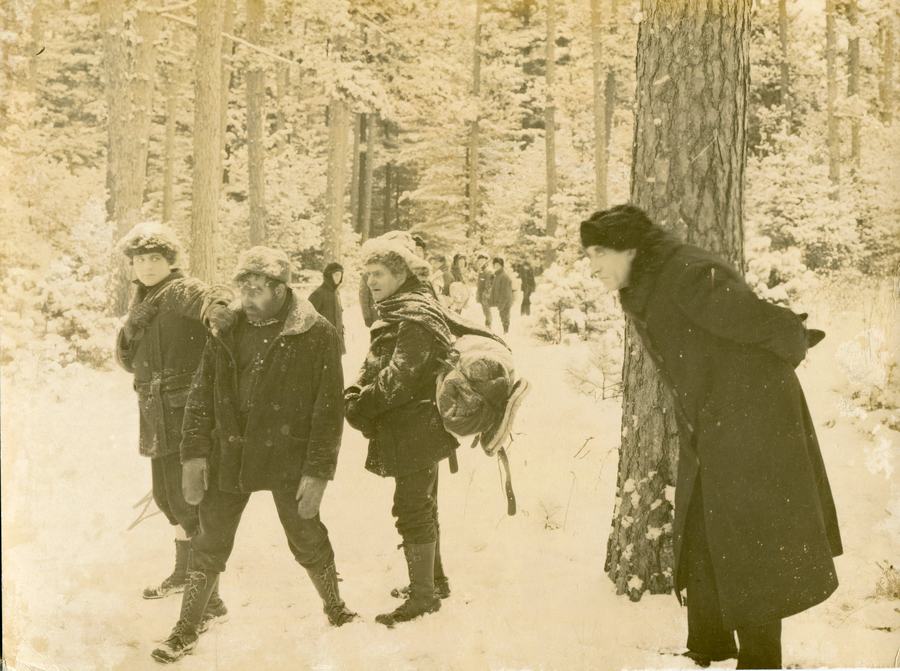
Cinematographer Walter P. Lewis eschews day-for-night clichés, shooting at actual dusk with orthochromatic stock that renders snow as granular static. Note the moment Olaf spots forged survey stakes: the camera tilts 15 degrees, horizon askew, stakes jutting like black fangs—an effect Lewis reused two years later in Hearts of Oak. The absence of under-cranking during river log scenes lends documentary heft; you feel the spray, the threat of crushed bone.
Though originally released sans score, recent 4K restorations by Eye Filmmuseum synched a commissioned soundtrack of bowed saw, pump organ, and sampled ice cracks. The effect is uncanny: the saw’s glissando slides underneath Taggart’s monologue like tectonic plates, while ice recordings creak each time Rose clutches her deed. Purists may bridle, yet the approach honors the film’s timber-soul better than a generic Wurlitzer.
Watch for Louis Wolheim as a nameless scaler—years before his Broadway fame—whose single close-up lasts perhaps four seconds yet conveys a lifetime of wage slavery. Sally Crute, playing Taggart’s lackey Madge, communicates duplicity by repeatedly buttoning and unbuttoning her coat: a sartorial Morse code. These micro-gestures accumulate into a chorus of peripheral conscience, the same way Anfisa’s villagers embody collective memory.
Unlike The Lords of High Decision’s boardroom abstraction, The Avenging Trail roots capitalism in calloused hands. Taggart’s office wall displays a framed blueprint of the Panama Canal—empire’s next horizon—while outside his window loggers gamble away daily wages on dice whittled from scrap. The montage anticipates Eisenstein’s Strike by nine years, though Balshofer’s dialectic is less revolutionary than reformist: decent foreman vs. avaricious boss, with law as referee.
Rose’s parlor—festooned with dried cedar boughs—is shot in rigid two-point perspective, lines converging on the safe, a domestic fortress. Contrast with the forest set, where camera pans wander, never settling, mirroring masculine chaos. The boundary dissolves in the finale: town women invade the logging road, forming a quilting-bee barricade that halts the timber slide. Space is reclaimed as polymorphous, communal, matriarchal.
Scholars cite Olaf’s river-shootout stance as template for John Wayne’s introductory threshold pose in Stagecoach. More elliptically, the film’s communal human-chain finale resurfaces in Frank Capra’s You Can’t Take It With You—a lineage that underscores how populist melodrama shaped Depression-era comedy. Meanwhile, Taggart’s ledger-forgery subplot prefigures the Enron document-shredding century later, proving pulp’s prescience.
For decades the only extant print languished in a Montreal church basement, riddled by vinegar syndrome. A 2021 NFTF grant facilitated 4K wet-gate scanning, reconstructing missing intertitles from Murillo’s shooting script held in Columbia’s archives. The resulting DCP—making rounds at MoMA, Pordenone, and soon streaming on Criterion Channel—runs 78 minutes at 18 fps, retaining original tinting: amber for interiors, viridian for exteriors, rose for romantic close-ups.
The Avenging Trail is no footnote; it is the missing link between Griffith’s Victorian paroxysms and the muscular populism of Walsh and Ford. Its DNA snakes through The Big Trail, They Drive by Night, even Sometimes a Great Notion. Watch it for the proto-eco-feminist subtext, for Lewis’ glacial photography, for Russell’s monolithic quietude—but mostly watch it because every age needs reminding that when money talks, trees keep score.
IMDb 5.1
1935
Community
Log in to comment.