DbcultAccessing Vault...
Cult Review
Senior Film Conservator
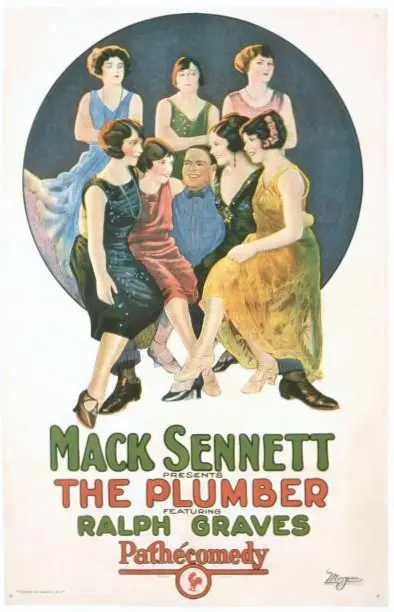
Is The Plumber worth watching nearly a century after its release? Short answer: Yes, but only if you have an appetite for the frantic, mechanical energy of 1920s slapstick. This film is for silent cinema enthusiasts who enjoy seeing the 'everyman' struggle against physical objects; it is not for those who require narrative complexity or nuanced character development.
This film works because Ralph Graves brings a genuine, sweaty physicality to the role that makes the slapstick feel earned rather than choreographed.
This film fails because the middle act relies too heavily on repetitive gags involving water damage that lose their comedic impact through sheer saturation.
You should watch it if you want to see how early Hollywood transformed blue-collar labor into a stage for romantic aspiration and physical comedy.
The opening of The Plumber is a masterclass in silent efficiency. The streetcar serves as more than just a setting; it is a social equalizer where the working class and the elite are forced into physical proximity. When Ralph Graves first sees Alice Day, the direction by the writers Felix Adler and Tay Garnett emphasizes the visual contrast between his rough exterior and her polished presence. This isn't the sweeping, poetic romance found in Stardust; it is a romance born of friction and cramped spaces.
The camera work here is functional but effective. It captures the swaying of the car and the stolen glances with a clarity that many films of the era struggled to achieve. Unlike the heavy-handed drama of Lord Jim, the stakes here are refreshingly low. The film doesn't ask you to contemplate the human condition; it asks you to wonder if a man with a wrench can win the girl of his dreams.
The gags land. The pipes leak. The romance sticks.
Ralph Graves is often overshadowed by the giants of the era like Keaton or Lloyd, but in The Plumber, he proves his mettle. His performance is rooted in a specific kind of frustration that feels modern. When he struggles with a stubborn pipe, his reactions aren't just theatrical—they feel like the genuine annoyance of a man who just wants to finish his job. This relatability is what sets the film apart from more abstract comedies like Cut It Out: A Day in the Life of a Censor.
There is a specific scene where Graves attempts to maintain a suave demeanor while his tools are actively conspiring against him. It is a brilliant bit of physical acting. He uses his entire body to communicate a sense of desperate dignity. It is far more grounded than the stylized performances found in Zigano. Graves is the heart of the film, and without his sincerity, the slapstick would feel hollow.
Graves doesn't just play a plumber; he embodies the struggle of the 1920s working man trying to punch above his weight class in the romantic arena.
Alice Day provides more than just a pretty face for Graves to pine over. She has a reactive comedic timing that is often overlooked in silent actresses. In the scenes where Graves is causing absolute mayhem in a household, Day's expressions of escalating horror and amusement provide the necessary anchor for the audience. She isn't a passive prize; she is an active participant in the chaos.
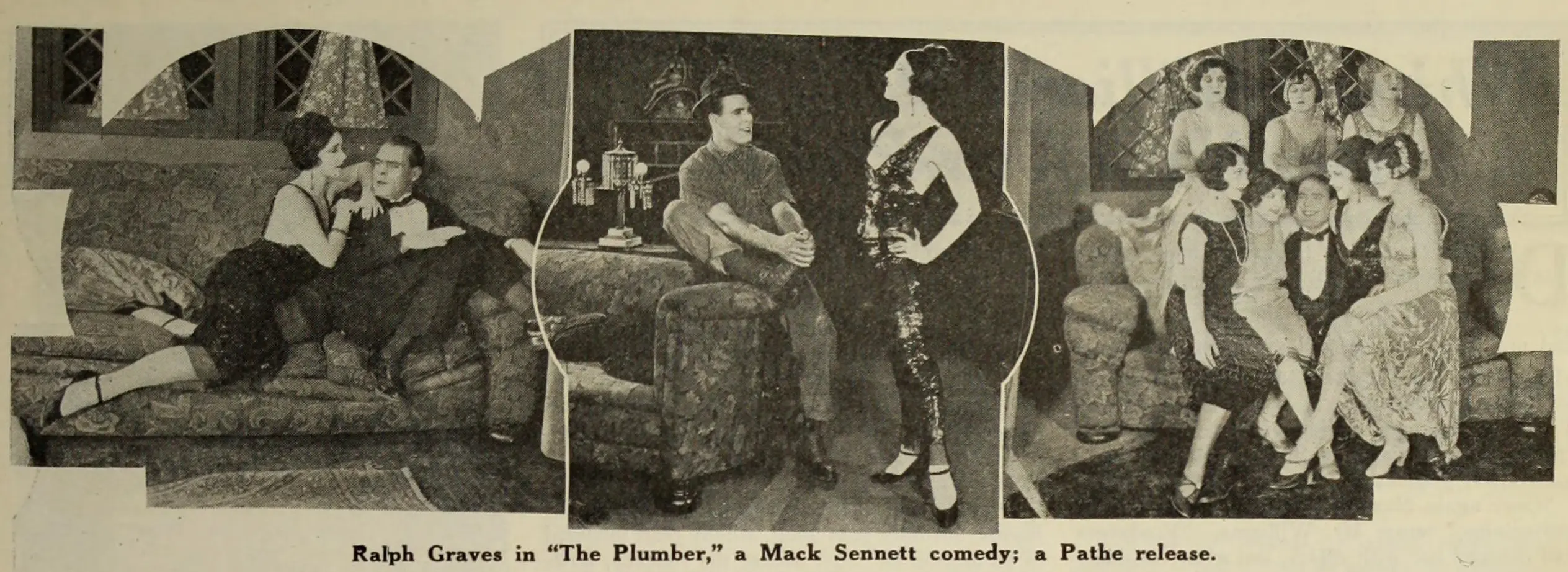
Compare her performance here to the more traditional roles in Love of Women. Day has a spark that suggests she is in on the joke. The chemistry between her and Graves is palpable, even through the flickering grain of a century-old print. It is this connection that keeps the film from devolving into a mere series of mechanical failures. We care about the plumber because we see why he cares about the girl.
While Tay Garnett is credited as a writer here, his influence on the film’s pacing is evident. The film moves with a relentless forward momentum. There is very little 'fat' on this narrative. It lacks the experimental brooding of Der Vampyr or the theatrical weight of Hamlet. Instead, it embraces a populist, fast-paced style that would later define Garnett’s directorial career.
The use of the environment as a comedic weapon is particularly Garnett-esque. A simple kitchen becomes a battlefield. A bathroom becomes a trap. The film understands that for comedy to work, the environment must be an active antagonist. This is a lesson many modern comedies have forgotten. In The Plumber, the setting is just as important as the cast.
Yes, The Plumber (1925) is worth watching for anyone interested in the evolution of American comedy. It is a tight, energetic film that manages to be funny without being overly cynical. While it lacks the high-concept ambition of The Scarlet Road, it excels at being exactly what it intends to be: a crowd-pleasing romance. It is a perfect example of the 'bread and butter' filmmaking that kept the silent era thriving.
Pros:
Cons:
The cinematography in The Plumber is surprisingly sophisticated for a 'minor' comedy. The lighting in the indoor scenes avoids the flat, washed-out look common in lower-budget films like N+N+N. Instead, there is a use of shadow that adds a layer of depth to the plumbing chaos. When water starts spraying, the way the light catches the droplets creates a visual texture that is genuinely impressive.
The tone is consistently light, but it avoids being saccharine. There is a grit to Graves' character that feels authentic. He isn't a dandy or a polished leading man; he is a guy who works with his hands. This grounded tone makes the eventual romantic payoff feel more earned than the melodramatic endings of films like A Kiss for Susie or It Is Never Too Late to Mend.
One debatable opinion: I would argue that Ralph Graves was actually a more relatable lead than Buster Keaton because he felt like a real human being rather than a 'Great Stone Face.' While Keaton is a genius of geometry, Graves is a genius of the common struggle. You don't just watch him; you feel for him.
The Plumber is a delightful, if somewhat slight, entry in the 1925 cinematic landscape. It doesn't have the grand scale of For Freedom or the investigative intrigue of Peggy of the Secret Service, but it doesn't need them. It is a film about a man, a girl, and a very leaky pipe. Sometimes, that is all you need for a successful hour of cinema. It works. But it’s flawed. Ultimately, its charm lies in its simplicity and the earnestness of its lead performers. If you can find a clean print, it is a journey back to a time when comedy was purely physical and love was just a streetcar ride away.
IMDb 7
1933
Community
Log in to comment.