DbcultAccessing Vault...
5/10
Senior Film Conservator
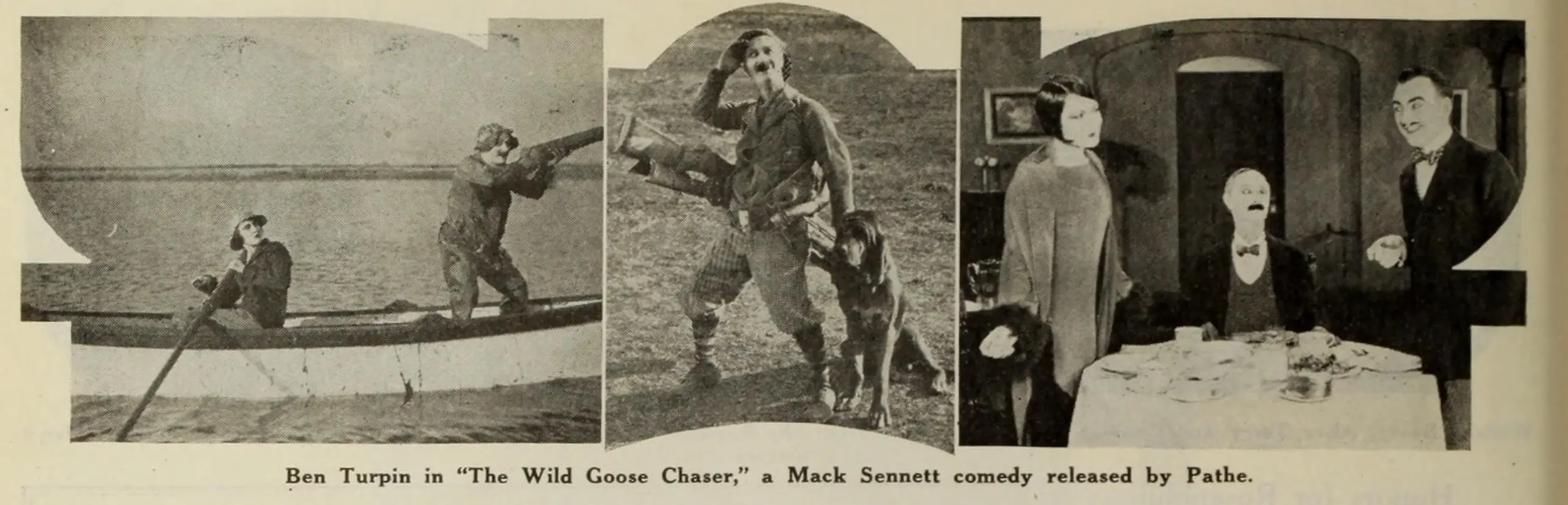
A definitive 5/10 rating for a film that redefined the boundaries of cult cinema. The Wild Goose Chaser remains a cornerstone of transgressive art.
Is The Wild Goose Chaser worth watching today? Short answer: yes, but with significant caveats that depend entirely on your cinematic palate. This film is an essential watch for silent comedy aficionados, film historians, and anyone keen to observe the nascent directorial touches of Frank Capra, but it will likely prove a challenging, perhaps even tedious, experience for those accustomed to contemporary comedic rhythms and narrative structures.
It’s a film that demands context, patience, and a genuine appreciation for the foundational, often exaggerated, humor of the 1920s. For the uninitiated, it might feel like a relic, a curiosity rather than a compelling piece of entertainment. However, for those willing to engage with its historical significance, there are laughs and insights to be found.
This film works because of Ben Turpin’s unique physical comedy and the historical snapshot it provides of early Hollywood’s slapstick era. It fails because its narrative simplicity and reliance on broad, often repetitive gags can feel profoundly dated to a modern viewer. You should watch it if you appreciate the foundational elements of silent film, are interested in the careers of its key players, or simply want a light, albeit historically significant, comedic diversion.
The narrative engine of The Wild Goose Chaser is deceptively simple, yet it touches upon themes of marital neglect and female agency that, for its era, possess a surprising edge. We are introduced to a wife, played by Louise Carver, whose patience has worn thinner than a well-loved silent film reel. Her husband, Ben Turpin, is not merely distracted; he is utterly consumed by his passion for hunting, rendering his wife virtually invisible in their domestic sphere.
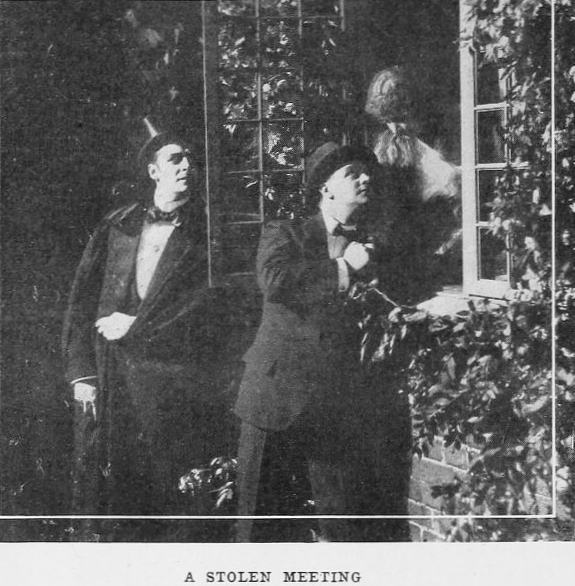
This isn't a nuanced character study, nor does it aim for the emotional depth of a drama like Over the Hill. Instead, it’s a setup for comedic chaos. The wife's solution to her husband's indifference is not divorce, nor a heartfelt discussion, but a theatrical act of rebellion: she elopes with one of his friends. This isn't necessarily about romantic love for the friend; it’s a desperate, almost performative, plea for attention. It’s a marital cry for help delivered with a punchline.
The subsequent chase forms the bulk of the film's runtime, a frantic pursuit driven by a husband suddenly jolted into recognizing his wife's existence, albeit for all the wrong reasons. The plot, while thin by today's standards, serves as an effective vehicle for the physical comedy that defines the era. It's less about 'what happens next' and more about 'how ridiculously it happens.'
Ben Turpin, with his famously crossed eyes and rubbery physicality, is the undeniable center of The Wild Goose Chaser. His performance isn't acting in the traditional sense; it's a masterclass in exaggerated reaction and physical prowess. Turpin wasn't subtle; he was a human exclamation mark, and this film showcases his unique brand of humor in full force.
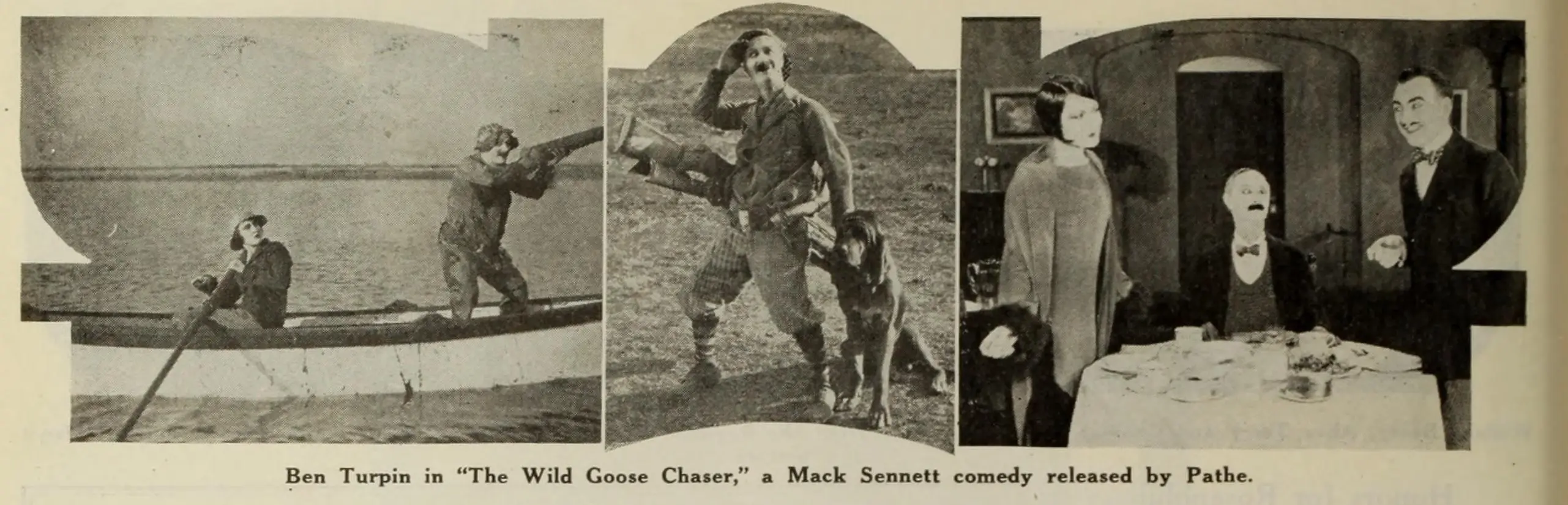
From the moment his character realizes his wife has absconded, Turpin's face contorts into a symphony of disbelief, panic, and outrage. His signature cross-eyed stare becomes a comedic weapon, amplifying every frustrated glance and bewildered expression. Consider the scene where he first reads the note left by his wife; the slow, dawning horror on his face, followed by a rapid-fire succession of double-takes, is pure Turpin.
His physical comedy is equally prominent. The chase sequences involve pratfalls, clumsy sprints, and near-misses that are choreographed with a frantic energy. While some gags might feel repetitive, such as his character repeatedly stumbling over obstacles, their execution is consistently committed. It’s a testament to his sheer stamina and dedication to the bit. He doesn't just fall; he launches himself into the fall with an almost balletic clumsiness that is genuinely singular. Compare this to the more refined, yet equally physical, comedy of Buster Keaton in Why Worry?; Turpin's approach is far more blunt, less about clever invention and more about pure, unadulterated slapstick force.
While the film is undeniably a Ben Turpin vehicle, it's also notable for the involvement of Frank Capra as one of its writers. Even in this early, uncredited capacity, one can almost sense the foundational elements of narrative structure beginning to form, albeit buried under layers of slapstick. The pacing, typical of silent comedies of this era, is relentlessly fast. Gags are introduced, executed, and moved on from with a rapid-fire succession that leaves little room for contemplation.
The direction, likely handled by a series of uncredited hands at the time, prioritizes clarity of action over artistic flourish. The camera is largely static, serving as a window onto the chaotic events unfolding. This isn't the sophisticated blocking or nuanced shot composition that Capra would later become known for in his directorial career. Instead, it’s functional filmmaking, designed to capture the broad movements and exaggerated expressions necessary for silent comedy to land.
The editing is brisk, cutting between the fleeing wife and her suitor, and the furious husband in pursuit. This creates a sense of urgency, propelling the narrative forward despite its inherent simplicity. There are moments, particularly in the escalating chase, where the rapid cuts build a genuine comedic momentum. It’s a testament to the efficient storytelling of the era, even if the individual shots themselves aren't particularly memorable.
The cinematography of The Wild Goose Chaser adheres to the conventions of early silent film. Wide shots dominate, allowing the audience to take in the full scope of the physical comedy and the often elaborate sets or outdoor locations. Close-ups are reserved primarily for reaction shots, particularly those of Turpin, to emphasize his comedic expressions. There’s a utilitarian beauty to it, a focus on function over form, which is charming in its own right.
The film's tone is overtly farcical. It revels in absurdity and exaggeration, never taking itself too seriously. Even the underlying theme of marital strife is handled with a light, almost irreverent touch. The wife's 'elopement' is clearly a theatrical stunt, designed to provoke rather than to genuinely betray. This keeps the tone buoyant and prevents the narrative from descending into any real emotional gravity.
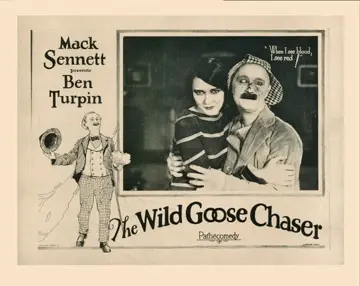
There's a certain innocence to the humor, even as it depicts marital discord. The stakes feel low, the consequences easily reversible. This contributes to its enduring appeal for those seeking pure, unadulterated escapism. It’s a world where problems are solved not through dialogue, but through a series of increasingly elaborate, and often painful, physical gags. It’s a stark contrast to the dramatic tension found in a film like The Doom of Darkness, which was released around the same period, highlighting the vast spectrum of silent cinema.
Absolutely, but with a clear understanding of what you're getting into. The Wild Goose Chaser is a significant piece of film history. It showcases the raw, untamed energy of early silent comedy. It’s a window into the comedic sensibilities of nearly a century ago. It’s short, punchy, and demands little more than an open mind.
However, if you're looking for sophisticated humor or a complex narrative, you will be disappointed. Its gags are broad. Its premise is simple. Its pacing is relentless, sometimes to its detriment. It works. But it’s flawed. It’s best viewed as a historical artifact that still offers occasional chuckles, rather than a timeless comedy masterpiece.
Placing The Wild Goose Chaser within the broader context of silent cinema reveals its place as a quintessential example of the slapstick short. It belongs to an era where the two-reeler was king, and physical comedy was the dominant language. While it doesn't possess the innovative genius of a Chaplin or the architectural precision of a Keaton, it perfectly embodies the spirit of the Keystone Kops and the broader studio output of the time.
My personal take? It’s more historically significant than genuinely hilarious today. The true genius, if you can call it that, lies in its unflinching commitment to the ridiculous, a trait that feels both charmingly naive and surprisingly bold. The idea of a wife orchestrating such an elaborate scheme to get her husband's attention, rather than simply leaving him, speaks volumes about the societal expectations and comedic conventions of the period.
This film, like many of its contemporaries such as Bobby Bumps and the Hypnotic Eye, served as vital training ground for the industry's burgeoning talent. Frank Capra, for instance, would go on to define an entire genre of American filmmaking with his later works. To see his name attached, even peripherally, to such a foundational piece of slapstick is a fascinating footnote in cinematic history. It highlights the often-unconventional paths taken by future legends.
It’s a bizarre ballet of domestic discord, played out with minimal dialogue and maximum physical exertion. The underlying message, if there is one, might be a surprisingly progressive (for its time) commentary on the importance of marital attention and the dangers of neglecting one’s partner. Or perhaps, it’s simply an excuse for Ben Turpin to fall over a lot. Either way, it’s a compelling, if not consistently side-splitting, viewing experience for the right audience.
The Wild Goose Chaser is a fascinating relic. It's a loud, boisterous, and often clumsy piece of early silent comedy that, despite its rough edges, offers genuine historical value. It’s a testament to the raw energy of performers like Ben Turpin and a glimpse into the foundational work of future cinematic giants like Frank Capra. It’s not going to make you laugh until you cry, and it certainly won't convert skeptics of silent film. But for those with an appreciation for the origins of cinema, for the sheer audacity of early slapstick, it's a worthwhile, if fleeting, diversion. Approach it as a historical document with comedic aspirations, rather than a timeless piece of entertainment, and you’ll find its charm. It earns its place in the archives, even if it struggles to consistently land its punchlines today.
IMDb 6
1915
Community
Log in to comment.