DbcultAccessing Vault...
Cult Review
Senior Film Conservator
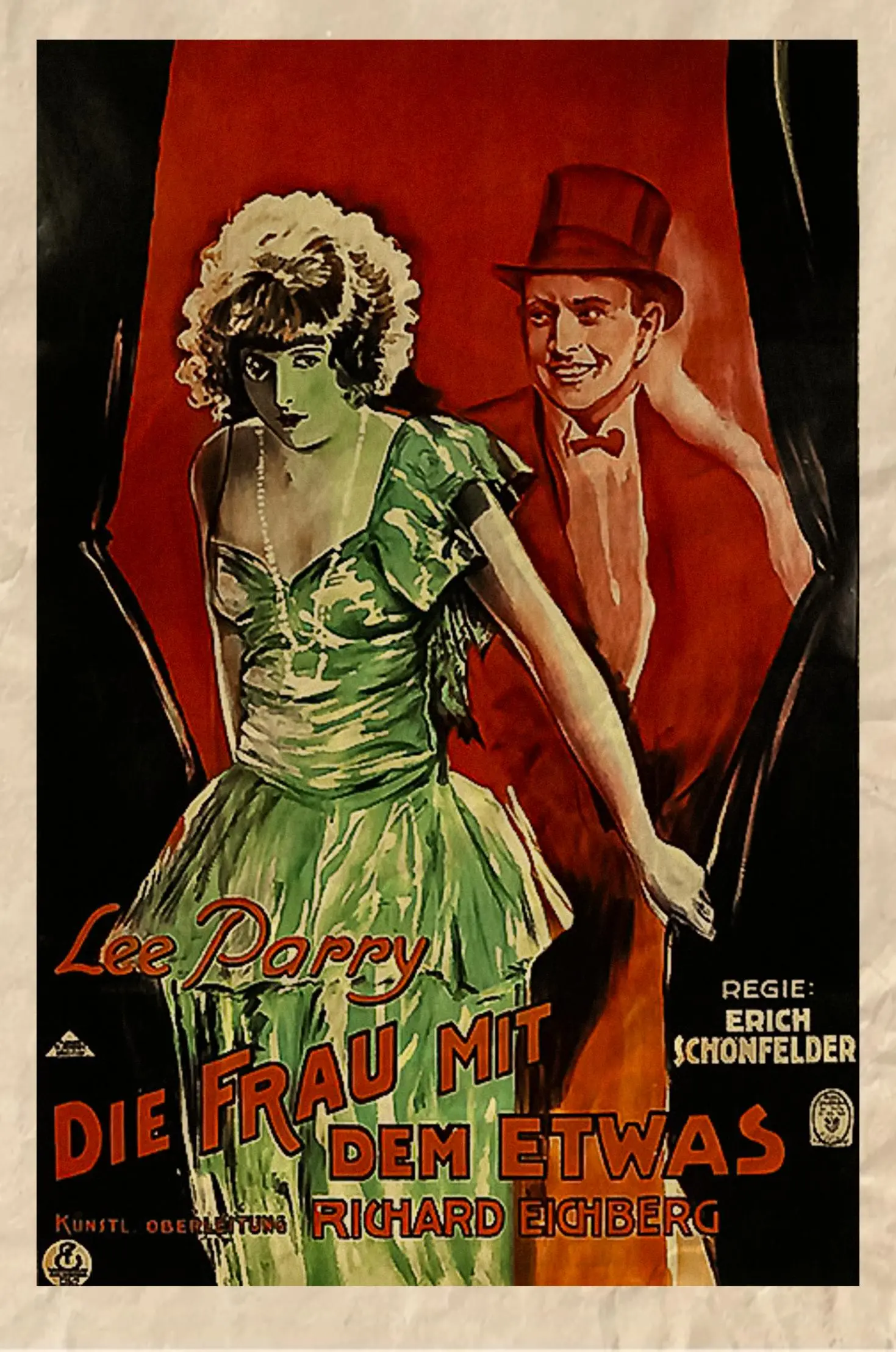
Is 'Die Frau mit dem Etwas' worth watching today? Short answer: yes, but with significant caveats that demand a particular kind of cinephile. This silent-era curiosity is a fascinating, if imperfect, journey into early German cinema, best suited for those with a deep appreciation for film history and an eagerness to unearth forgotten narratives. Casual viewers, however, might find its pacing and stylistic conventions a steep barrier.
The film, a product of the Weimar Republic's burgeoning film industry, offers a unique window into the anxieties and allure of its time. It's a testament to the power of non-verbal storytelling, yet it asks its audience for patience and an open mind. For the dedicated enthusiast, it’s a rewarding deep dive into a period often overshadowed by later, more accessible classics.
This film works because of its audacious commitment to character-driven ambiguity and Lee Parry's captivating central performance, which transcends the limitations of the silent medium. It fails because its narrative can feel deliberately opaque, leaving some viewers longing for more concrete resolutions, a characteristic that might alienate modern audiences accustomed to explicit plot points. You should watch it if you are a scholar of early German cinema, a silent film aficionado, or someone genuinely interested in the evolution of cinematic storytelling and the nuanced portrayal of female agency in a restrictive era.
'Die Frau mit dem Etwas' is less a straightforward plot-driven narrative and more a character study veiled in societal intrigue. The film's strength lies in its central mystery: who is Eleonore, and what exactly is the 'something' she possesses? This ambiguity is not a flaw but a deliberate artistic choice, reflecting the era’s fascination with hidden depths and veiled motivations. The script, penned by Hans Behrendt and Helmuth Orthmann, eschews conventional exposition for suggestive glances and carefully framed interactions.
Eleonore's arrival in Berlin is a catalyst, disrupting the staid social order and exposing the hypocrisies of its inhabitants. Her interactions with Professor Waldemar, a man of intellect but little emotional connection, highlight the chasm between societal status and personal fulfillment. The film doesn't just tell a story; it poses questions about identity, reputation, and the price of maintaining a facade in a judgmental world.
While the narrative might occasionally feel meandering to those accustomed to modern pacing, its deliberate rhythm allows for a slow burn of character development. The 'something' Eleonore possesses ultimately becomes less about a specific secret and more about her intrinsic magnetism, her ability to inspire both adoration and suspicion simultaneously. It's a surprisingly modern take on character, refusing to neatly categorize its protagonist, a refreshing defiance of easy labels.
The ensemble cast of 'Die Frau mit dem Etwas' delivers performances that, while constrained by the conventions of silent cinema, manage to convey genuine emotion and depth. At the heart of it all is Lee Parry as Eleonore. Her portrayal is a masterclass in subtlety for the era, avoiding the broad histrionics often associated with silent film acting. Parry communicates volumes with a delicate tilt of her head, a knowing glance, or a barely perceptible shift in her posture. Consider the scene where she first encounters Franz at the art gallery; her initial aloofness slowly melts into genuine curiosity, a transition conveyed almost entirely through her eyes and the gentle softening of her lips. It’s captivating.
Hermann Picha, as Professor Waldemar, embodies the archetype of the lonely intellectual, his infatuation with Eleonore portrayed with a touching vulnerability that borders on tragic. His performance, while more outwardly expressive than Parry's, never descends into caricature. Margarete Kupfer, as the scrutinizing Frau Schmidt, provides the necessary societal foil, her raised eyebrow and pursed lips speaking volumes about judgment and gossip. Her silent dialogue with the camera is a sharp, often amusing, commentary on the era's social anxieties.
Bruno Kastner, as the earnest artist Franz, brings a youthful idealism that contrasts effectively with the world-weariness of the other characters. His performance is perhaps the most straightforwardly romantic, yet it provides a crucial anchor for the audience, offering a perspective of genuine admiration rather than cynical appraisal. The chemistry between Parry and Kastner, though subtle, is palpable, hinting at a connection that transcends Eleonore's guarded exterior.
The direction, likely overseen by a collaborative effort given the era’s production styles, demonstrates a keen understanding of visual storytelling. The film utilizes its limited technical palette to maximum effect. There’s a particular emphasis on composition, with many shots feeling like living paintings. The use of deep focus in certain interior scenes, allowing both foreground action and background details to remain sharp, is noteworthy, creating a sense of depth often lacking in contemporary productions.
Cinematography plays a pivotal role in establishing the film's tone and enhancing the mystery surrounding Eleonore. The lighting, for instance, frequently employs stark contrasts, with moments of dramatic chiaroscuro casting long, expressive shadows that underscore the characters' internal conflicts. Observe the scene in Eleonore's lavish apartment, where pools of light illuminate her face while the corners of the room recede into darkness, subtly emphasizing her isolation despite her opulent surroundings. This technique is reminiscent of the German Expressionist movement gaining traction around this time, though The Cabinet of Dr. Caligari, for example, took it to more extreme, stylized heights.
The camera work, while largely static by modern standards, is deliberate and effective. Close-ups are used sparingly but powerfully, drawing the audience into the characters' emotional states, particularly Eleonore's. The use of iris shots to highlight specific details – a letter, a ring, or Eleonore's enigmatic smile – serves to focus attention and deepen the sense of intrigue. It’s a directorial approach that trusts the audience to interpret visual cues, a refreshing departure from overt exposition.
The pacing of 'Die Frau mit dem Etwas' is undeniably slow by 21st-century standards, a characteristic common to many silent films like Evangeline (1919) or Kindred of the Dust. Yet, this deliberate speed is integral to its immersive quality. It allows the audience to linger on expressions, gestures, and the intricate details of the period's settings and costumes. The film breathes, giving space for the narrative's central mystery to slowly unfurl rather than being rushed. This requires a different kind of engagement from the viewer, one that rewards patience with a deeper appreciation for the craft.
The tone is a delicate balance of romantic melodrama, social commentary, and psychological drama. There are moments of lighthearted social satire, particularly in the interactions among the gossiping society women, but these are always underpinned by a sense of melancholic introspection, largely emanating from Eleonore herself. The film never fully commits to one genre, instead weaving these elements together to create a rich, textured experience. It’s a sophisticated approach that feels remarkably mature for its time, avoiding the simplistic morality tales often found in early cinema.
The 'silent language' of the film – the intertitles, the music (which, if viewed with a good modern accompaniment, significantly enhances the experience), and the actors' expressions – is expertly employed. The intertitles are concise, providing just enough information to guide the plot without over-explaining, trusting the visual narrative to carry the emotional weight. This reliance on visual cues makes the film a compelling study in non-verbal communication, a skill often overlooked in sound-driven cinema.
Yes, 'Die Frau mit dem Etwas' is absolutely worth watching today, but with a specific mindset. It is not a film for casual viewing or for those unfamiliar with silent cinema. Its rewards are for the discerning viewer who appreciates historical context and artistic nuance.
The film offers a fascinating look into early German filmmaking, pre-dating the more famous Expressionist masterpieces but sharing some of their thematic and visual DNA. It’s a window into a bygone era, with its fashion, social mores, and anxieties brought to life through compelling performances.
Its primary value lies in its historical significance and its surprisingly modern approach to character ambiguity. It challenges the viewer to engage actively, to read between the lines, and to appreciate the artistry of a form that relies on visual storytelling above all else. If you are willing to meet it on its own terms, 'Die Frau mit dem Etwas' will offer a unique and thought-provoking experience.
“Silent films, often dismissed as mere historical artifacts, sometimes possess a psychological depth modern blockbusters rarely achieve. 'Die Frau mit dem Etwas' is a prime example of this overlooked complexity.”
Compelling Central Performance: Lee Parry's portrayal of Eleonore is a masterclass in conveying depth without dialogue, making her a truly memorable figure.
Rich Thematic Exploration: The film delves into themes of identity, societal judgment, and the allure of mystery with surprising sophistication for its time.
Artful Cinematography: The visual composition and use of lighting create a palpable atmosphere, enhancing the film's dramatic and mysterious tone.
Historical Significance: Offers a valuable glimpse into early German filmmaking, showcasing stylistic choices and narrative approaches that prefigure later movements.
Engaging Ambiguity: The film's refusal to provide easy answers forces active viewer engagement, fostering deeper thought about its characters and themes.
Slow Pacing: The deliberate speed can be a significant hurdle for viewers accustomed to contemporary narrative rhythms, potentially leading to disengagement.
Narrative Opacity: While artistically intentional, the film's ambiguity might frustrate those who prefer clear, resolved plotlines and character motivations.
Accessibility Challenges: As a silent film, its enjoyment often hinges on the quality of its musical accompaniment and the viewer's willingness to adapt to its unique form.
Dated Conventions: Some acting styles and storytelling techniques, though excellent for their era, may feel antiquated to modern eyes.
Limited Modern Resonance: While its themes are universal, the specific social context might feel distant to some, requiring an extra effort to connect.
'Die Frau mit dem Etwas' is not an easy recommendation for everyone, and that's precisely part of its charm. It works. But it’s flawed. This is a film for the dedicated, for those who seek to understand the very foundations of cinematic art and appreciate the nuanced storytelling possibilities of the silent era. It’s a testament to the idea that a compelling character, brought to life by an exceptional performance, can carry a narrative even when the plot itself remains shrouded in mystery.
Lee Parry's Eleonore is a figure who truly embodies the title – she possesses 'that certain something' that transcends the flickering images on screen, inviting contemplation long after the final frame. While its pacing and narrative style demand patience, the film rewards that investment with a rich, atmospheric experience and a fascinating glimpse into early 20th-century German cinema. It’s a film that argues for the power of the unsaid, a radical notion even today. Seek it out if you dare to delve into the depths of forgotten cinematic treasures; you might just find your own 'something' within its enigmatic embrace.
IMDb —
1932
Community
Log in to comment.