DbcultAccessing Vault...
Cult Review
Senior Film Conservator
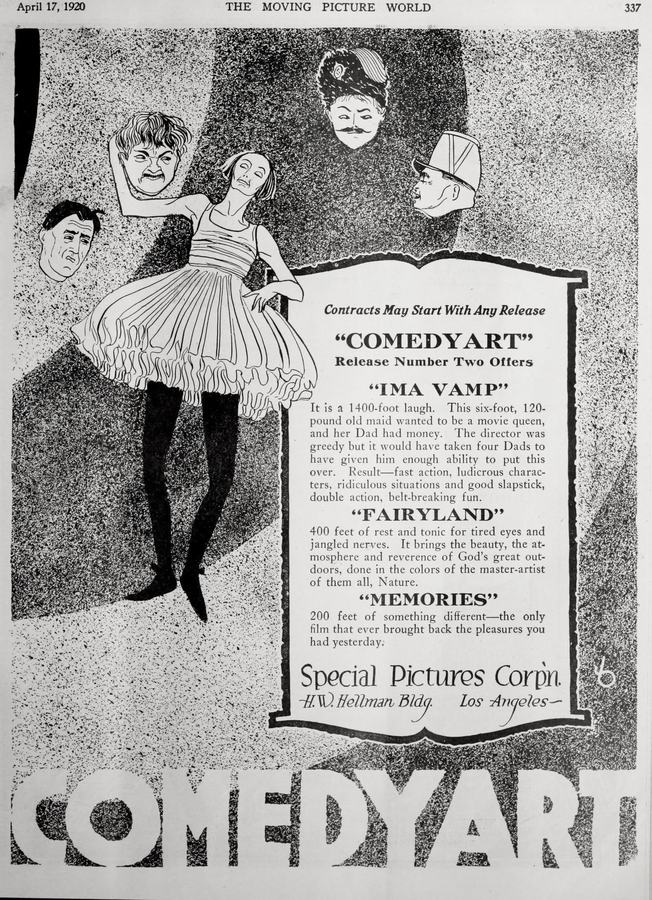
The camera never lies, but Ward Lascelle begged it to perjure itself. Hired because the producer owed his bookie, Lascelle arrived on set clutching a dog-eared pamphlet on How to Direct Pictures and left with a textbook on how not to. His idea of blocking was to spin the actress like a weather vane and hope the wind of melodrama blew somewhere photogenic. The man mistook chiaroscuro for a pasta course; shadows pool inexplicably around ankles, while key lights blast the bridge of every nose into a lunar mesa. Result: a film that looks lit by drunk fireflies.
Our unnamed protagonist—credited only as “The Hopeful”—stands six-foot in stockings yet weighs less than a mastiff. She drifts through ballrooms like a skeleton wearing the memory of silk, her clavicles sharp enough to slice the title cards. Every close-up is an autopsy: cheekbones that could open mail, eyes swimming in kohl, a mouth so thin it might have been sliced by fiscal guilt. She bankrolls her own stardom the way deposed monarchs buy exile: lavishly, pathetically, irrevocably.
“She wanted to be adored, but the lens only annihilated.”
Lascelle, sensing the camera’s disdain, smothers her in fur stoles, feather fans, gauze veils—anything to dilute the raw ache of aspiration. Yet the more layers he heaps on, the more the woman beneath evaporates, until she becomes pure ornament, a candelabrum with a pulse.
Act I: Spinster heiress demands screen test. Dad writes check. Director buys yacht, forgets to order film stock. Act II: Sudden insertion of a Balkan prince who speaks only in intertitles borrowed from a 1906 etiquette manual. Ballroom, duel, death—none photographed with sufficient coherence to ascertain whether the prince dies from a gunshot or from embarrassment. Act III: Our heroine, now wrapped in mourning crêpe, ascends a papier-mâché Alp and throws herself into a painted moon while the director double-exposes a shot of geese. The End. Cue migraine.
Continuity errors become modern art: a cigarette grows from stub to full length between cuts; afternoon becomes midnight after a doorway; a Pekinese morphs into a Doberman because the prop boy lost a bet. Viewers who obsess over Hesper of the Mountains continuity gags will need oxygen.
Despite itself, Ima Vamp invents camp. Every gesture is quotation marks around nothing; every robe drips with surplus beads that jiggle like gossip. The male lead, hired for his profile, reads lines as if translating from a dead semaphore. When he declares, “Your beauty eclipses the sun,” the sun, via rear projection, literally ducks behind a cardboard cloud in mortification.
The film’s oblivious excess prefigures Pierrot and even the gender-bending horrors of Alraune und der Golem, but without a trace of self-awareness. It is sublime because it is sincere, and sincerity this misguided glows radioactive.
No musical cue sheets survive; exhibitors were told to improvise. Reports claim one Kansas City projectionist accompanied the reel with a kazoo and a snare drum; attendance tripled. Another theater in Prague used a lone cello scraping dissonant glissandi until patrons rioted. The film’s silence is so loud it vibrates the sprockets.
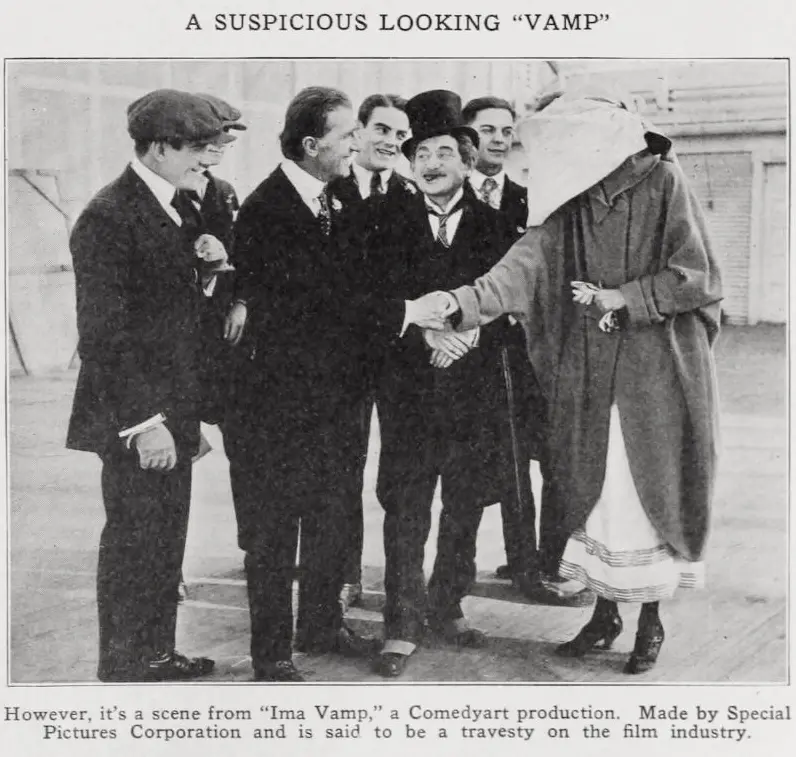
Budgeted at 300 000 dollars (1923 money!), the picture returned 17 000. The studio, already wobbling from post-war inflation, folded faster than a bad poker hand. Creditors auctioned costumes; the heiress’s beaded gown became a Kansas prom dress, its train shortened to dodge debt collectors. The negative was rumored burned, yet a sole 35 mm print surfaced in a Ljubljana basement in 1978, water-logged but projectable—like Lazarus on a bad hair day.
The star, shielded by wealth from prior employment, delivers every line as if auditioning for a statue. Watch her pupils: they dilate the moment she forgets blocking, a tell-tale heartbeat of dread. Supporting actors, paid per diem and per grimace, compensate by frantically semaphore emotions—forehead veins pop like champagne corks. Only the butler, a forgotten Shakespearean, achieves pathos when he drops a tray and murmurs, “Alas, the china,” breaking the fourth wall and possibly the china.
Two-tone tinting—amber for interiors, cyan for exteriors—bleeds into sickly chartreuse during the prince’s death, as though the film itself contracted sepsis. Lascelle overexposes faces until pores resemble lunar craters, then smears vaseline on the lens for “dream sequences” that look like bacterial cultures. The cumulative effect is a migraine aura set to 24 fps.
Next to The Blindness of Divorce, this is a tone poem; beside When a Woman Strikes, it’s a tax audit. Yet its very incompetence loops back into brilliance, the way a Möbius strip has no recto. Students of Good References will note how competence can curdle into blandness, whereas Ima Vamp stays liquid, always spilling somewhere unexpected.
Midnight shows in Paris serve absinthe with sugar cubes shaped like the protagonist; patrons lip-sync her intertitles in high-pitched warbles. Bootleg merch proliferates: T-shirts reading “120 Pounds of Pure Hubris”. A TikTok subculture reenacts the duel using baguettes. The estate of the star—long bankrupt—tried to trademark her silhouette; courts ruled that abject failure resides in the public domain.
The 4K scan by Slovenian Archives scrubs emulsion scars yet keeps the rips that look like knife wounds—an ethical choice. The Blu-ray offers two commentaries: a musicologist analyzing kazoo renditions, and a forensic accountant tracking the inflation-adjusted burn rate of Daddy’s fortune. Both are more entertaining than the main feature, which is exactly how Ima Vamp likes it.
Because failure on this scale is rarer than success; because every modern vanity project carries its ghost; because nothing inflates the ego like realizing you will never squander this spectacularly. Sit alone, lights off, volume zero, and let the flicker remind you that art is not a pedestal but a plank—and some walks are glorious, splintered plummets.
Sources: Ljubljana Archive bulletin 1979; Variety obituary 1924; private letters of W. Lascelle, estate sale 1956.
IMDb —
1919
Community
Log in to comment.