DbcultAccessing Vault...
Cult Review
Senior Film Conservator
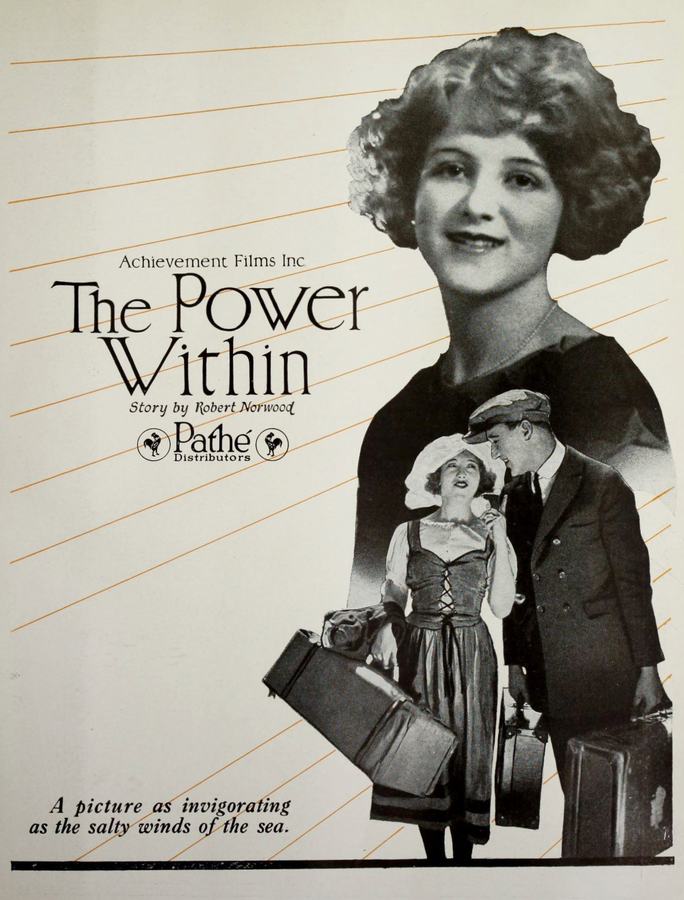
The 1920s cinematic landscape was fertile ground for tales of industrial ambition, and Robert Norwood and Lem F. Kennedy’s script for The Power Within carves a singular niche within this genre. Robert Kenyon’s portrayal of Job Armstrong—a tycoon whose shipyards symbolize both progress and moral compromise—offers a layered exploration of power’s duality. Armstrong’s arc, from self-made magnate to broken man, is rendered with aching specificity, each step echoing the biblical Job’s trials while diverging into uniquely modern territory.
William H. Tooker’s Count Bazaine is a masterclass in cold-blooded manipulation. His schemes, funded by unnamed foreign interests, unfold with mechanical precision, mirroring the ships Armstrong builds. The film’s most chilling sequence—a shadowy negotiation in a smoke-filled chamber—parallels the darker moments of The Eleventh Commandment, yet Bazaine’s ruthlessness feels more intimate, his violence a personal score against Armstrong’s family. This dynamic elevates the film beyond mere melodrama into a study of institutionalized corruption.
The cinematography, though uncredited in the credits, deserves accolades for its stark contrasts. In the film’s third act, as Armstrong spirals into despair, the camera lingers on close-ups of his weathered face, the lighting oscillating between blinding white flares and suffocating darkness. These visual motifs echo the tension between divine grace and human fallibility. A standout scene—a storm-lashed confrontation between Armstrong and Bazaine on a dock—uses rain and lightning to amplify the stakes, reminiscent of the climactic showdowns in The Blazing Trail, yet uniquely its own.
The film’s biblical allusions are neither heavy-handed nor trivial. Armstrong’s name—a nod to the Old Testament—serves as a narrative anchor, but the film resists neat theological conclusions. When a "higher power" intervenes (a figure never explicitly visualized), the moment is tinged with ambiguity. Is it redemption, or mere reprieve? This theological ambiguity places the film in dialogue with The Case of Becky, both grappling with morality in a godless industrial age. The final scenes, where Armstrong rebuilds not with vengeance but cautious hope, suggest a fragile, earned grace.
Robert Kenyon’s performance is a masterwork of physical and emotional transformation. His Armstrong begins with the rigid posture of a man who has conquered chaos, only to unravel into a hunched, gaunt figure by the finale. Nellie Parker Spaulding, as his daughter Edith, delivers a quieter but no less powerful performance; her scenes with William Zohlmen’s conflicted lawyer are charged with subtext, their dialogue laced with the tension of loyalty versus truth. The supporting cast, including Pauline Garon as a morally ambiguous business associate, ensures every scene crackles with purpose.
Though silent films relied on intertitles, The Power Within uses sound design (in its musical accompaniment) to amplify emotional beats. During the trial sequence—a pivotal courtroom drama—the score swells with dissonant strings, echoing Armstrong’s internal turmoil. This technique anticipates the psychological scoring of later sound-era films like Billions, though the absence of spoken dialogue here adds an eerie distance, as if the audience is eavesdropping on a tragedy through a keyhole.
Over decades later, The Power Within remains a cautionary tale for an age still grappling with corporate greed and inherited legacy. Its exploration of how power corrupts—and how it might redeem—feels prescient in today’s climate. The film’s pacing, while deliberate by modern standards, allows the weight of each tragedy to settle, a narrative choice that modern thrillers could learn from. Comparisons to The Sowers are apt; both films use the metaphor of industry as both life-giving and destructive.
In an era saturated with superhero narratives and dystopian futures, The Power Within reminds us of cinema’s capacity to dissect the human soul through the lens of everyday tragedies. Its themes of legacy—both familial and industrial—resonate deeply. The final shot of Armstrong’s shipyards, now quieter but not dormant, lingers as a metaphor for hope’s persistence in the face of ruin. For scholars and casual viewers alike, this film is not merely a relic, but a mirror reflecting our own struggles with power, purpose, and the fragile bridges between them.
IMDb —
1918
Community
Log in to comment.