DbcultAccessing Vault...
Cult Review
Senior Film Conservator
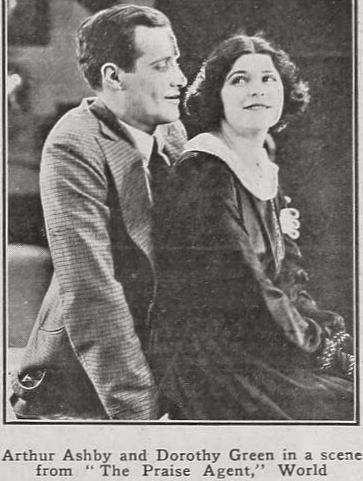
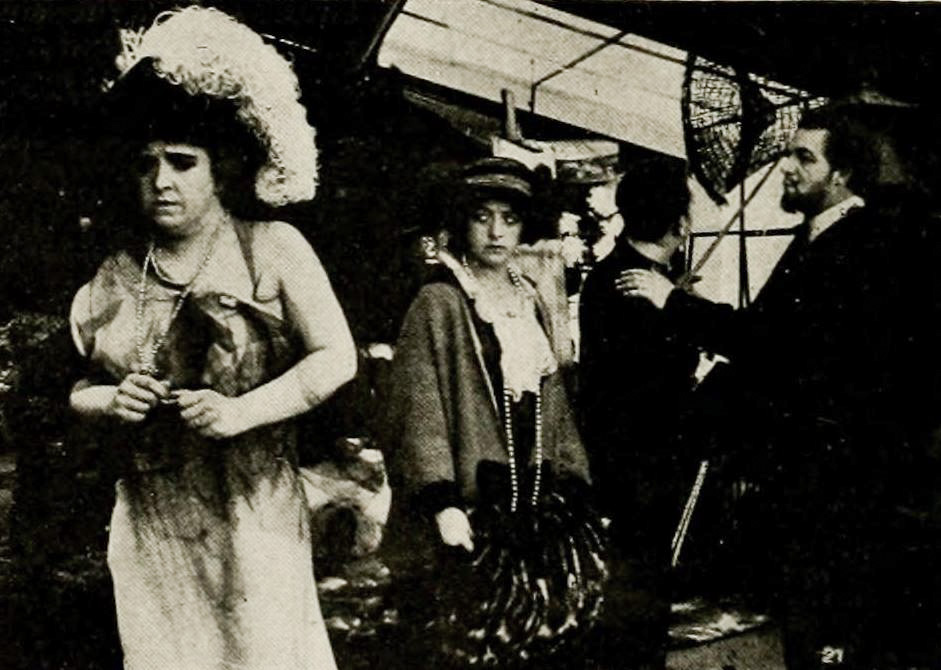
Stepping back into the nascent days of cinema, one occasionally unearths a forgotten artifact that, despite its age and silent demeanor, resonates with surprising vivacity and thematic depth. Such is the case with The Praise Agent, a film whose very title hints at the machinations and manipulations inherent in public perception – a theme as relevant today as it was in its release era. This cinematic offering, a curious blend of romantic comedy, social commentary, and political maneuvering, provides a fascinating lens through which to view the early 20th century's burgeoning women's suffrage movement and the evolving landscape of media influence. It’s more than just a period piece; it’s a vibrant tableau exploring ambition, love, and the often-unseen forces that shape public opinion.
The narrative unfurls with the rather unglamorous demise of a touring theatrical company, leaving its quick-witted press agent, Jack Bartling, high and dry. This initial predicament immediately establishes Jack not as a figure of established power, but as a resourceful opportunist, a characteristic that defines his journey. Rather than succumbing to despair, Jack, with an almost preternatural understanding of human nature and persuasion, pivots his talents towards a new, equally dramatic stage: the political arena. His target? Mrs. Eubanks, a formidable local Suffragette leader whose influence is amplified by her husband, a sitting Senator and a prominent soap manufacturer. This introduction brilliantly sets up the core conflict and the intricate web of relationships that will drive the plot. Jack's initial motivation is purely professional survival, yet his entry into the Eubanks' world quickly complicates matters, blurring the lines between personal ambition and genuine affection.
The film’s portrayal of Mrs. Eubanks is particularly noteworthy. She is not a caricature but a woman of conviction, albeit one whose zeal occasionally blinds her to pragmatic realities. Her unwavering commitment to the Suffragette cause provides the moral backbone of the story, even as her methods and expectations create significant hurdles for Jack. The juxtaposition of her idealism with Jack's pragmatic, almost cynical, approach to public relations forms a compelling dynamic, reminiscent in its clash of ideologies, though perhaps less stark, of the profound societal shifts explored in films like The Iron Woman, which also grappled with the role of women in a changing world.
It is within the Eubanks' household that Jack encounters Nell, their daughter, a spirited young woman who shares her mother's passion for suffrage but perhaps possesses a more nuanced understanding of strategy. Their blossoming romance is the emotional anchor of The Praise Agent, providing a personal stake in the political machinations. This is where the film transcends mere social commentary and delves into the timeless complexities of love across societal divides. Nell and Jack's connection is immediate and palpable, a testament to the power of silent film acting to convey deep emotion through gesture and expression. Their affection, however, immediately clashes with the rigid expectations of Nell's parents, who envision a more politically advantageous match for their daughter.
Senator Eubanks, a man deeply entrenched in the political establishment and perhaps more concerned with appearances than principles, sets a daunting condition for his consent to their union: Jack must ensure Nell, a fervent activist, avoids the ignominy of prison. This stipulation is a masterstroke of characterization, revealing the Senator's priorities – his daughter's reputation and his own political standing – over her personal convictions. Simultaneously, Mrs. Eubanks, ever the strategist for the cause, presents her own formidable challenge: Jack must convert her influential husband to the Suffragette movement. These dual mandates transform Jack's professional assignment into a deeply personal quest, elevating the stakes considerably and setting the stage for a series of increasingly elaborate schemes. The intricate dance of negotiation and conditional acceptance here draws thematic parallels to the subtle, yet powerful, social contracts explored in a film like A Gentleman's Agreement, where personal desires often collide with deeply ingrained societal expectations.
The film’s dramatic crescendo arrives during a Suffragette protest staged in front of the Governor's house. This scene is pivotal, showcasing Jack's quick thinking and his burgeoning affection for Nell. As the situation escalates and Nell faces imminent arrest, Jack intervenes, saving her from incarceration. While this act fulfills the Senator’s condition, it ironically alienates Mrs. Eubanks, who, in her fervent dedication to the cause, had envisioned Nell’s arrest as a powerful symbol, a martyr for public sympathy. This moment highlights the inherent tension between personal safety and political martyrdom, a dilemma that activists throughout history have faced. Jack's choice reveals his priorities: Nell's well-being trumps the strategic advantage of her arrest, a decision that underscores his humanity and the depth of his feelings. It’s a beautifully crafted sequence that speaks volumes without a single spoken word, relying on the visual storytelling prowess inherent in silent cinema.
The immediate aftermath of this incident sees the Eubanks relocate to New York, a strategic retreat that momentarily stymies Jack's progress. However, Jack is not one to be easily deterred. His pursuit of the Eubanks, culminating in his infiltration of their New York apartment disguised as a window washer, is a delightful piece of silent film slapstick and demonstrates his unwavering commitment, both to Nell and to proving his worth. This sequence injects a much-needed element of lightheartedness, a comedic interlude that prevents the film from becoming overly didactic or heavy-handed in its social commentary.
Jack's ultimate scheme to win over Mrs. Eubanks and the Senator is a masterclass in early public relations and consumer activism, a truly ingenious plot device that elevates The Praise Agent beyond a simple romantic comedy. He persuades Mrs. Eubanks to mobilize Suffragettes across the nation to clip and redeem coupons for the Senator's "Floating Lily" Soap. The sheer volume of these ten-cent coupons creates an astronomical financial liability for the Senator, totaling a staggering $650,000. Faced with such an insurmountable debt, the Senator is forced into a corner. His choice is clear: either honor the coupons and face financial ruin, or publicly declare his support for the Suffragette movement, effectively turning a potential public relations disaster into a political triumph.
This resolution is profoundly satisfying, demonstrating that even in the early 20th century, the power of organized consumer action could sway political will. It’s a testament to the film's clever writing, particularly by Clara Beranger and Earle Mitchell, who crafted a narrative that, while entertaining, also subtly champions the power of collective action. The Senator's capitulation is not born of conviction but of expediency, yet the outcome is the same: the Suffragette cause gains a powerful, if reluctant, ally. This clever twist, leveraging economic pressure for political gain, feels remarkably prescient, foreshadowing modern movements that utilize boycotts and consumer power to achieve social change. It offers a fascinating parallel to the strategic maneuvering seen in narratives of political and social upheaval, albeit through a more lighthearted lens, much like the intricate social dynamics at play in Liberty Hall.
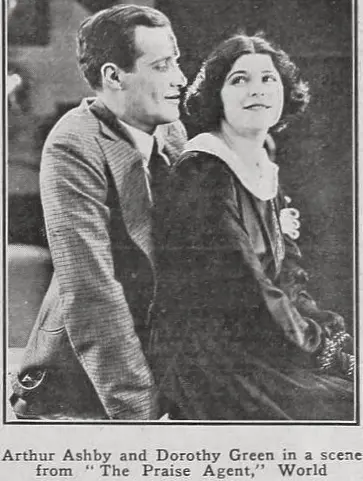
The cast, featuring Mrs. Priestly Morrison, Arthur Ashley, Dorothy Green, and Lucille La Verne, among others, delivers performances that are characteristic of the silent era – expressive, often theatrical, yet deeply effective in conveying character and emotion. Arthur Ashley, as Jack Bartling, embodies the charming rogue with a heart of gold, his gestures and facial expressions expertly communicating his schemes and his growing affection. Dorothy Green, as Nell, brings a vibrant energy to her Suffragette role, balancing conviction with youthful romance. Lucille La Verne, as Mrs. Eubanks, provides a formidable presence, her stern resolve a perfect foil to Jack's playful manipulation. The power of their silent interplay is a reminder of the unique artistry of this period of filmmaking.
Visually, silent films often relied on strong compositions and clear visual cues to advance the narrative. While specific details of cinematography are hard to glean without viewing the film, the plot suggests moments of dramatic tension (the protest) and comedic flair (the window washer disguise) that would have been brought to life through dynamic staging and expressive performances. The use of intertitles, though not detailed in the plot summary, would have been crucial in conveying the clever dialogue and intricate plot points, especially Jack's strategic proposals. The film's ability to communicate such a complex narrative through purely visual and textual means is a testament to the sophistication of early cinema. One can imagine the visual impact of the stacks of coupons, a physical manifestation of Jack's genius, much like the visual grandeur and emotional weight conveyed in epics such as Pyotr Velikiy, albeit on a vastly different scale of production.
The Praise Agent is more than just a charming period piece; it’s a valuable historical document, offering a glimpse into the social and political landscape of early 20th-century America. The suffrage movement, a pivotal struggle for civil rights, is depicted not merely as a backdrop but as an active, driving force of the plot. The film, through its narrative, subtly endorses the cause, portraying the Suffragettes with agency and intelligence, even if some of their methods are portrayed as extreme by Mrs. Eubanks. It captures the energy and determination of a movement that fundamentally reshaped society.
Beyond its historical context, the film explores themes that remain remarkably pertinent. The power of public relations, the manipulation of media for political ends, the clash between personal desire and family expectations, and the efficacy of grassroots activism are all woven into its fabric. Jack Bartling is, in many ways, a precursor to the modern spin doctor, a figure who understands that perception can be more potent than reality. His methods, though ethically ambiguous at times, ultimately achieve a positive outcome, raising questions about the means justifying the ends in political campaigning. This exploration of influence and perception brings to mind the intricate power dynamics often explored in films like The Reckoning, where characters navigate complex social and ethical landscapes.
The film’s resolution, with the Eubanks finally approving Jack as their son-in-law, is a classic romantic comedy trope, but one earned through genuine struggle and clever maneuvering. It’s a testament to Jack’s ability to navigate both the emotional demands of Nell and the formidable conditions set by her parents. The ending, while neatly tying up the romantic plot, also subtly celebrates the triumph of the Suffragette cause, however pragmatically achieved.
In an era dominated by blockbusters and CGI spectacles, revisiting a silent film like The Praise Agent is a refreshing reminder of cinema's foundational storytelling power. It’s a film that speaks to the ingenuity of early filmmakers, who, without the benefit of sound, crafted narratives that were engaging, thought-provoking, and often deeply humorous. Its relevance extends beyond mere historical curiosity; it offers insights into the enduring power of persuasion, the complexities of social change, and the timeless pursuit of love against all odds.
For cinephiles and historians alike, The Praise Agent serves as a compelling example of how early cinema engaged with contemporary social issues, wrapping serious themes in an entertaining package. It’s a film that deserves to be rediscovered, not just for its historical value, but for its enduring charm and its surprisingly sophisticated commentary on the art of influencing public opinion. It stands as a testament to the fact that even in the absence of spoken dialogue, a truly compelling story, well-acted and cleverly conceived, can resonate across generations. It’s a film that, much like the tireless efforts of the Suffragettes it depicts, subtly but powerfully advocates for its own enduring significance. Its narrative, though set over a century ago, holds up a mirror to our own era, reminding us that the battles for influence, love, and social progress are perennial.

IMDb 4.9
1928
Community
Log in to comment.