DbcultAccessing Vault...
Cult Review
Senior Film Conservator
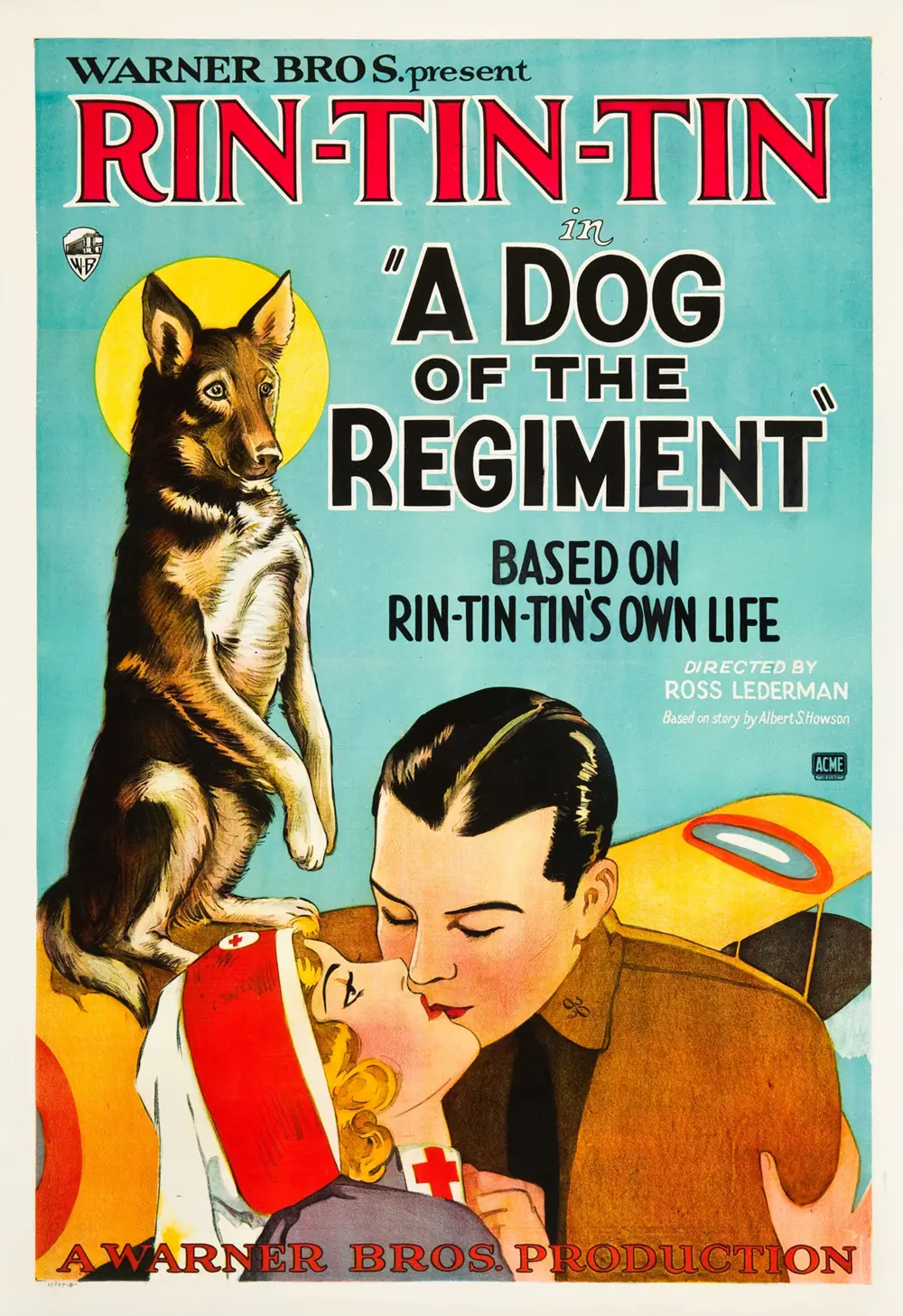
Is 'A Dog of the Regiment' worth watching today? Short answer: yes, but with significant caveats. This silent-era war drama, primarily a vehicle for the legendary Rin-Tin-Tin, offers a fascinating glimpse into early cinematic storytelling and the enduring appeal of animal heroism. This film is for silent film enthusiasts, Rin-Tin-Tin fans, and those interested in early cinematic portrayals of wartime heroism. It is decidedly NOT for viewers seeking intricate character development, modern pacing, or a nuanced exploration of WWI's complexities.
Released in the mid-1920s, 'A Dog of the Regiment' capitalizes on the immense popularity of its canine star, delivering a narrative that intertwines battlefield bravery with a surprisingly dark human melodrama. It’s a film that asks its audience to suspend disbelief not just for its silent format, but for a plot that often strains credulity in its pursuit of emotional impact. Yet, through it all, Rin-Tin-Tin remains an undeniable force, carrying much of the film's dramatic weight with an impressive display of canine intelligence and emotion.
This film works because it leverages the undeniable charisma and intelligence of Rin-Tin-Tin, delivering genuine moments of canine heroism that transcend the silent era's limitations. His performance is the anchor, the heart, and the most compelling reason to engage with this picture.
This film fails because its human drama is woefully underdeveloped and riddled with clichéd melodrama, often reducing its characters to simplistic archetypes rather than believable individuals. The love triangle feels more like a plot device than a genuine conflict.
You should watch it if you appreciate the historical significance of silent cinema, have a fondness for animal performers, and are willing to overlook a simplistic narrative in favor of pure, unadulterated canine charm.
It’s impossible to discuss 'A Dog of the Regiment' without centering Rin-Tin-Tin. The film is, first and foremost, a testament to his star power and the remarkable bond he shared with his trainers. From the moment he appears on screen, there’s an immediate, almost magnetic pull. His actions are not merely trained tricks; they convey a genuine sense of purpose and intelligence.
In the film's most crucial sequences, Rin-Tin-Tin is tasked with locating his master, a downed fighter pilot played by John S. Peters, amidst a war-torn landscape. The stakes are clear, and the dog's urgent, determined movements communicate this far more effectively than any intertitle could. We see him navigating treacherous terrain, sniffing out clues, and ultimately finding the pilot in his wrecked aircraft. This isn't just an animal following commands; it's a character driven by loyalty and instinct.
One particularly striking moment involves Rin-Tin-Tin's precise actions to free his master from the debris of the plane crash. The choreography of these scenes is surprisingly intricate, showcasing the dog's ability to pull, dig, and even untangle in a way that feels organic to the narrative. It’s here that the film truly soars, reminding us why Rin-Tin-Tin was such a phenomenon. His expressive eyes and body language convey more emotional depth than many of his human co-stars. One might argue Rin-Tin-Tin is the most expressive actor in the entire cast, human counterparts included.
His presence elevates what could have been a forgettable B-picture into a notable piece of silent film history. His dedication to his master is the emotional core, a pure, unwavering bond that stands in stark contrast to the human machinations unfolding around it. For anyone fascinated by the history of animal performers in cinema, this is essential viewing. It showcases a level of animal acting that few films, even today, manage to achieve, perhaps only rivaled by the silent film era's other animal star, Strongheart, or later, Lassie.
While Rin-Tin-Tin delivers a masterclass in canine performance, the human narrative struggles to keep pace. The plot centers around a love triangle involving the pilot, a girl (Dorothy Gulliver), and a nefarious rival (Tom Gallery) whose jealousy leads him to order the pilot shot. It’s a premise ripe for melodrama, and the film leans into it with gusto, sometimes to its detriment.
John S. Peters, as the pilot, embodies the heroic archetype of the era, but his character rarely moves beyond that. He’s brave, he’s in love, and he’s in peril. Dorothy Gulliver’s portrayal of the love interest is similarly constrained, often serving more as a prize to be won or a damsel in distress than a fully realized individual. Their romance, while central to the plot, feels more like a series of posed declarations than a genuine, evolving relationship.
The most problematic aspect of the human story is Tom Gallery’s rival. His motivations are thinly sketched, his villainy almost cartoonish in its straightforwardness. The decision to have him actively conspire against the pilot, ordering him shot, feels less like a complex character choice and more like a convenient plot device to raise the stakes for Rin-Tin-Tin. This simplistic portrayal of evil diminishes the overall dramatic impact, making the human conflict feel less weighty than the physical dangers of war.
The stark contrast between the nuanced, believable actions of Rin-Tin-Tin and the often one-dimensional portrayals of the human characters is glaring. It’s a shame, as a more robust human narrative could have provided a stronger emotional anchor for the dog’s heroic deeds. Indeed, the film would have been stronger had it focused almost entirely on the dog's journey, relegating the human drama to a mere backdrop rather than a central conflict.
The visual storytelling in 'A Dog of the Regiment' is competent, a product of its time that occasionally rises above its limitations. The film attempts to convey the grim reality of World War I, though often through broad strokes. The aerial combat sequences, while rudimentary by today’s standards, are effective in establishing the pilot’s perilous occupation. We get glimpses of biplanes dogfighting, creating a sense of scale and danger, however brief.
The cinematographer (uncredited, as was common for the era) makes good use of wide shots to establish the desolate battlefield landscapes, emphasizing the loneliness and danger inherent in Rin-Tin-Tin's search. Close-ups are reserved mostly for Rin-Tin-Tin, highlighting his determination and intelligence. These moments are where the film feels most alive, using the silent medium to its fullest potential by focusing on expressive faces and actions.
However, the film’s visual language often falls back on conventional silent film tropes. The staging of dramatic confrontations between human characters can feel static, relying heavily on exaggerated gestures rather than dynamic camera work. There’s a distinct lack of the innovative visual flair seen in contemporaries like Buster Keaton’s Cops, which pushed the boundaries of visual comedy and action.
The choices made in framing and lighting generally serve the narrative, but rarely elevate it into something truly artistic. It’s a functional approach, ensuring the audience understands the plot, but not necessarily immersing them in a visually rich world. This is particularly noticeable in the less action-oriented scenes, where the visual interest wanes considerably.
The pacing of 'A Dog of the Regiment' is distinctly a product of the silent era, characterized by a rhythm that often feels leisurely by modern standards. The film frequently allows scenes to unfold with a deliberate slowness, giving ample time for audience comprehension through intertitles and exaggerated gestures. This can be a challenge for contemporary viewers accustomed to faster cuts and more dynamic narrative progression.
The film truly picks up speed during Rin-Tin-Tin's sequences. The urgency of his mission injects a much-needed dynamism, and these segments are generally well-paced, building tension effectively. The drawn-out scenes of romantic angst, however, feel jarringly slow compared to the thrilling rescue sequences involving Rin-Tin-Tin. It works. But it’s flawed.
Tonally, the film oscillates between heroic adventure and heavy melodrama. The heroism is almost exclusively reserved for Rin-Tin-Tin, whose unwavering loyalty and courage provide a strong moral compass. The melodrama, however, dominates the human story, with its themes of jealousy, betrayal, and unrequited love often feeling overwrought. This tonal inconsistency can make the film feel disjointed, as if two different stories are competing for attention.
While the film aims for emotional highs and lows, the melodramatic elements often feel unearned due to the simplistic characterizations. The dramatic stakes are clear, but the emotional investment in the human characters can be difficult to sustain. This reliance on broad emotional strokes, rather than subtle character development, is a hallmark of many films from this period, yet some, like The Deciding Kiss, managed to find a more delicate balance.
Yes, 'A Dog of the Regiment' is worth watching today if you are prepared for a silent film experience centered around an extraordinary animal performer. Its historical value is undeniable. The film offers a fascinating glimpse into early cinema's storytelling techniques. Rin-Tin-Tin's performance remains genuinely captivating. However, the human narrative often feels dated and simplistic. It serves as an important artifact in the history of cinema, showcasing the power of animal stars and the enduring appeal of loyalty and heroism.
Viewers with a deep appreciation for silent films, particularly those featuring animal actors, will find much to enjoy. It is a film that demands patience but rewards it with moments of genuine charm and impressive animal acting. For those new to silent cinema, it might be a challenging entry point due to its narrative unevenness, but Rin-Tin-Tin’s charisma is a strong draw.
'A Dog of the Regiment' stands as a fascinating, if uneven, piece of silent cinema. It is an enduring testament to the star power of Rin-Tin-Tin, whose performance remains the film's undeniable highlight and primary draw. His journey of loyalty and heroism provides moments of genuine excitement and emotional resonance that largely compensate for the film's weaker human elements.
While undoubtedly a significant piece of cinematic history, 'A Dog of the Regiment' struggles to fully transcend its era's limitations, relying perhaps too heavily on its four-legged star to carry the narrative. It’s a film that will undoubtedly charm animal lovers and silent film aficionados, but it may test the patience of those seeking a more complex or dynamically paced story.
Ultimately, it's a worthwhile watch for its historical value and for the sheer, unadulterated joy of watching Rin-Tin-Tin in action. For a different take on animal heroism, one might revisit Polar Bonzo, or for a more intense silent war drama, though without the canine focus, consider films like Jacques of the Silver North which explored human endurance in harsh conditions. 'A Dog of the Regiment' is a reminder that sometimes, the simplest stories, told through the most unexpected stars, can leave the most lasting impression.
IMDb —
1926
Community
Log in to comment.