DbcultAccessing Vault...
Cult Review
Senior Film Conservator
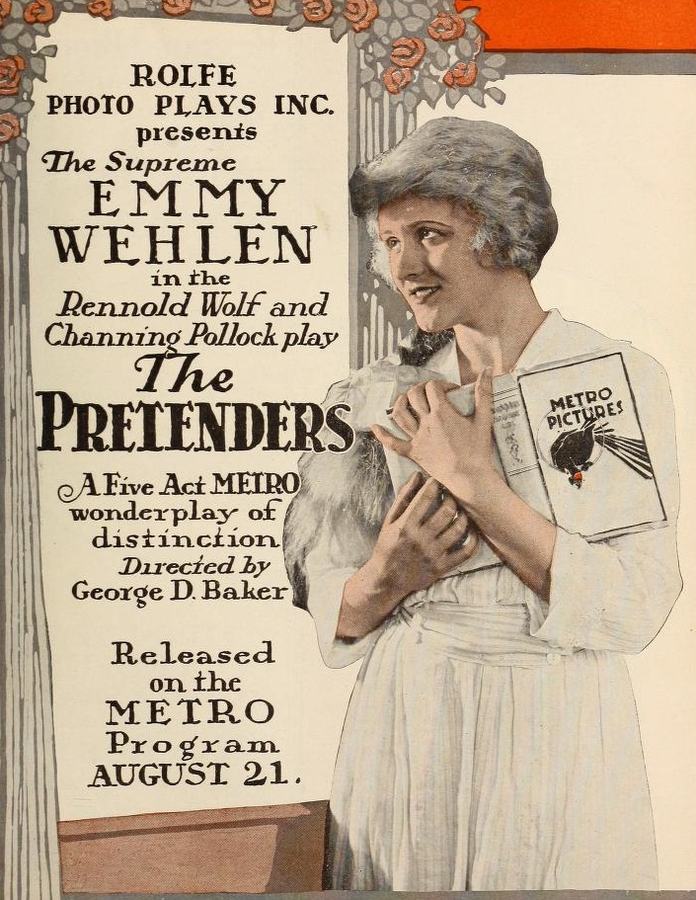
Ah, the silent era! A time when narratives, unburdened by spoken dialogue, often soared on the wings of grand gestures, intricate intertitles, and plots thick with moralizing undertones or boisterous comedic misunderstandings. Among these cinematic relics, The Pretenders (1916) emerges as a particularly fascinating specimen, a social satire wrapped in a romantic comedy, all underpinned by a surprisingly sharp commentary on American class aspirations and the enduring allure of European aristocracy. This isn't just a quaint historical curiosity; it's a vibrant snapshot of a society grappling with its own identity, yearning for old-world prestige while simultaneously forging a new-world destiny.
The film plunges us headfirst into the lives of the Pettingills, a family whose sudden, immense fortune from an oil strike proves to be less a blessing and more a catalyst for an escalating comedy of errors and social anxieties. Silas Pettingill, the unassuming patriarch portrayed by Paul Gordon, finds his simple Middle-Western existence upended by the voracious social appetites of his wife, Maria (Kate Blancke), and their daughter, Helen (Emmy Wehlen). Their migration to a grandiose Fifth Avenue mansion in New York City is merely the first step in an insatiable quest for status. This isn't about comfort or even luxury; it's about fashionable friends, the kind whose pedigrees are as impeccable as their addresses. Helen, in particular, embodies this societal malaise, her head filled with romanticized notions of lords and earls gleaned from countless books. Her lamentations over her fate, devoid of titled acquaintances, are a poignant, if exaggerated, reflection of a nascent American upper class still somewhat insecure about its own standing.
Silas, weary of their incessant complaints and perhaps yearning for a touch of genuine human connection amidst the artifice, embarks on an evening escapade that inadvertently sets the entire plot into motion. His chance encounter and subsequent friendship with Hubert Stanwood (William B. Davidson), an agreeable young taxicab driver, is a refreshing splash of authenticity in a world increasingly defined by pretense. The decision to bring Stanwood home, driven by a mixture of camaraderie and perhaps a touch of paternalistic goodwill, backfires spectacularly. Faced with Maria’s stern inquiries about the stranger in their home, Silas, in a moment of sheer panic and perhaps a desperate attempt to appease his status-obsessed family, introduces Stanwood not as a chauffeur, but as 'Count Erfitt.' This single, impulsive lie becomes the linchpin around which the entire narrative revolves, a testament to the fragile foundations upon which social aspirations were often built.
Maria, thrilled by the prospect of a bona fide European title gracing their salon, wastes no time in broadcasting the 'Count's' presence. Helen, initially captivated by the novelty, soon finds herself genuinely drawn to Stanwood, a man who, despite his accidental masquerade, possesses a sincerity that contrasts sharply with the superficiality of their social circle. Stanwood, caught in this elaborate charade, finds himself in an increasingly uncomfortable position. He yearns to confess, to shed the false skin of aristocracy, but Silas, terrified of the repercussions of his own fabrication, implores him to maintain the deception. This internal conflict within Stanwood adds a layer of emotional depth to what could otherwise be a purely farcical setup. His burgeoning love for Helen becomes entangled with his unwilling complicity in the lie, creating a dynamic tension that drives much of the film's middle act.
The arrival of Macklin Thurston (Howard Truesdale), introduced as the 'Earl of Bradwood,' complicates matters exponentially. His entrance at a tea-dance is not merely a social event but a seismic shift in the narrative landscape. Stanwood's startled reaction to the name 'Bradwood' is the first flicker of the truth, a hint that this charade is far more intricate than anyone, least of all Stanwood himself, initially imagined. Unbeknownst to him, his own grandfather and father, the rightful heirs to the Bradwood title, have passed away, leaving him, Hubert, as the genuine successor. Thurston, a master manipulator and proprietor of an international employment agency, has exploited Stanwood's prolonged absence to fabricate his own claim, weaving a tapestry of lies with calculated precision. His true nature as a calculating criminal mastermind is gradually revealed, moving the film beyond mere social comedy into the realm of thrilling intrigue.
Thurston's machinations extend to placing two clever crooks, Rita and Dugan, within the Pettingills' Adirondack home, Huntington Lodge, under the guise of servants. This meticulous planning underscores the depth of his villainy, transforming a simple case of identity theft into a scheme with broader criminal implications. The stage is thus set for a dramatic house party at the Lodge, where both the 'Earl' and the 'Count' are guests, unknowingly locked in a battle for a title and, more importantly, for Helen's affections. The blossoming romance between Helen and Stanwood reaches its zenith, culminating in a heartfelt proposal and acceptance, but this moment of pure joy is tragically short-lived. Thurston, ever the opportunist, tasks Rita with compromising Stanwood, a betrayal that shatters Helen's trust and leads her to break their engagement, turning instead to the seemingly reputable 'Earl.'
The latter half of The Pretenders becomes a desperate race against time for Stanwood to unmask Thurston. However, Thurston's forged credentials prove robust, and in a cruel twist of fate, it is Stanwood himself who is exposed as a false count by someone who recognized him as a chauffeur. The irony is palpable: the man who is genuinely noble is discredited by the very deception he was forced into. Helen, heartbroken and feeling utterly betrayed, orders him to drive her guests away from the ongoing lawn fete, a moment of profound humiliation for Stanwood, yet one that highlights the superficiality of the social codes they all inhabit. The film masterfully uses these reversals of fortune to comment on the fickle nature of reputation and the ease with which appearances can be manipulated.
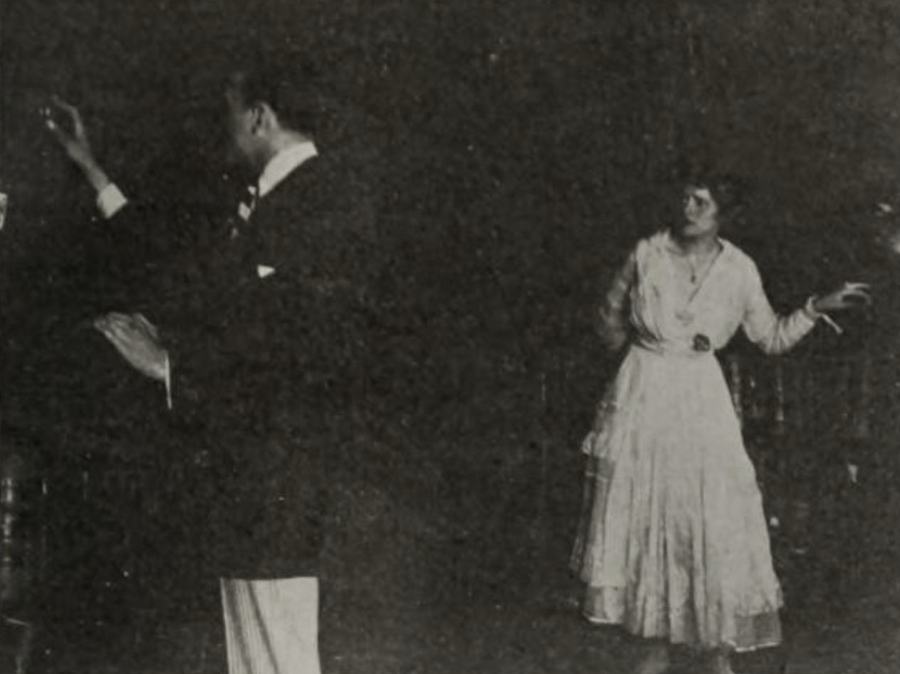
The climax is a whirlwind of events. Thurston attempts to persuade Helen to elope, revealing his true opportunistic nature, but she refuses, perhaps sensing the hollowness of his intentions even amidst her anger at Stanwood. Under the cloak of night, Rita and Dugan make their move, attempting to steal Helen's jewels. Stanwood, ever the hero despite his disgraced status, returns just in time to thwart the robbery. In the ensuing struggle, he is injured, and Helen, entering the scene, tragically mistakes him for the thief. Yet, her enduring love for him, a sentiment that transcends the social facades, prompts her to urge his escape. This moment of selfless concern, even under false pretenses, speaks volumes about the depth of their connection. The apprehension of the real thieves, however, begins to unravel the tangled web of deceit. Detective Burke, initially uncertain of who to take into custody, is poised to arrest both Thurston and Stanwood, until the arrival of a lawyer from New York definitively identifies Stanwood as the genuine Earl of Bradwood.
In its resolution, The Pretenders delivers a satisfying, if somewhat predictable, triumph of truth and authentic love over calculated deception. Thurston is led away, his grand scheme in tatters, while Stanwood, finally recognized for his true nobility (both inherited and personal), is reunited with Helen, now poised to become Lady Bradwood. The film, despite its early cinematic origins, resonates with contemporary themes. The Pettingills' relentless pursuit of status, their obsession with titles and 'fashionable friends,' mirrors modern anxieties about social media validation, designer labels, and the performative aspects of wealth. It's a cautionary tale about the dangers of valuing external markers over intrinsic worth, a narrative thread that remains as relevant today as it was over a century ago.
The performances, typical of the era, likely relied on broad physical comedy and expressive facial gestures to convey emotion and character. Paul Gordon as Silas would have embodied the bewildered everyman, caught between his simple desires and his family's grand ambitions. Emmy Wehlen as Helen would have navigated the transformation from a title-obsessed ingénue to a woman who ultimately sees beyond superficiality. William B. Davidson's portrayal of Stanwood would have required a delicate balance between the charming chauffeur, the reluctant 'Count,' and the noble Earl, showcasing an inner integrity that shone through his various guises. Howard Truesdale's Thurston, on the other hand, would have been the quintessential villain, suave yet sinister, his ambition thinly veiled by an aristocratic veneer.
Written by the collaborative team of Channing Pollock, Rennold Wolf, and George D. Baker, the screenplay for The Pretenders demonstrates a keen understanding of popular theatrical tropes of the time, seamlessly adapting them for the burgeoning cinematic medium. The pacing, though likely slower than modern audiences are accustomed to, would have been engaging for its contemporary viewers, allowing ample time for the development of character and plot through intertitles and visual storytelling. The use of distinct settings, from the provincial Middle-West to the opulent Fifth Avenue and the rustic Adirondack Lodge, would have visually reinforced the themes of social mobility and the different worlds the characters inhabit.
Comparing The Pretenders to other films of its period reveals common threads of societal critique and dramatic irony. One might draw parallels to the themes of hidden identities and social maneuvering seen in films like The Club of the Black Mask, albeit with a more comedic rather than purely criminal bent. The pursuit of wealth and its transformative (or corrupting) power is a central theme shared with films like One Million Dollars, though The Pretenders specifically zeroes in on the social rather than purely financial aspects of new money. Even films that touch on more dramatic societal pressures, such as Sapho or Ghosts, explore the hypocrisy and rigid expectations of society, a sentiment echoed in the Pettingills' desperate attempts to conform to an imagined aristocratic ideal.
What truly distinguishes The Pretenders is its ability to weave together elements of farce, romance, and dramatic intrigue into a cohesive whole. It's a film that, even a century later, offers a compelling look at human nature's more aspirational and deceitful tendencies. The journey of Hubert Stanwood, from a humble chauffeur to a rightful Earl, and the enlightenment of Helen, who learns to value character over title, provide a satisfying moral arc. It reminds us that true nobility is found not in inherited status or fabricated identities, but in integrity, honesty, and genuine affection.
For anyone interested in the foundational narratives of American cinema or the social commentaries of the early 20th century, The Pretenders offers a rich and entertaining experience. It's a testament to the enduring power of storytelling, even without spoken words, to explore the complexities of human desire and the often-comical lengths to which people will go to achieve perceived social standing. A delightful dive into a bygone era, its themes remain surprisingly fresh and thought-provoking.
IMDb 7.3
1931
Community
Log in to comment.