DbcultAccessing Vault...
Cult Review
Senior Film Conservator
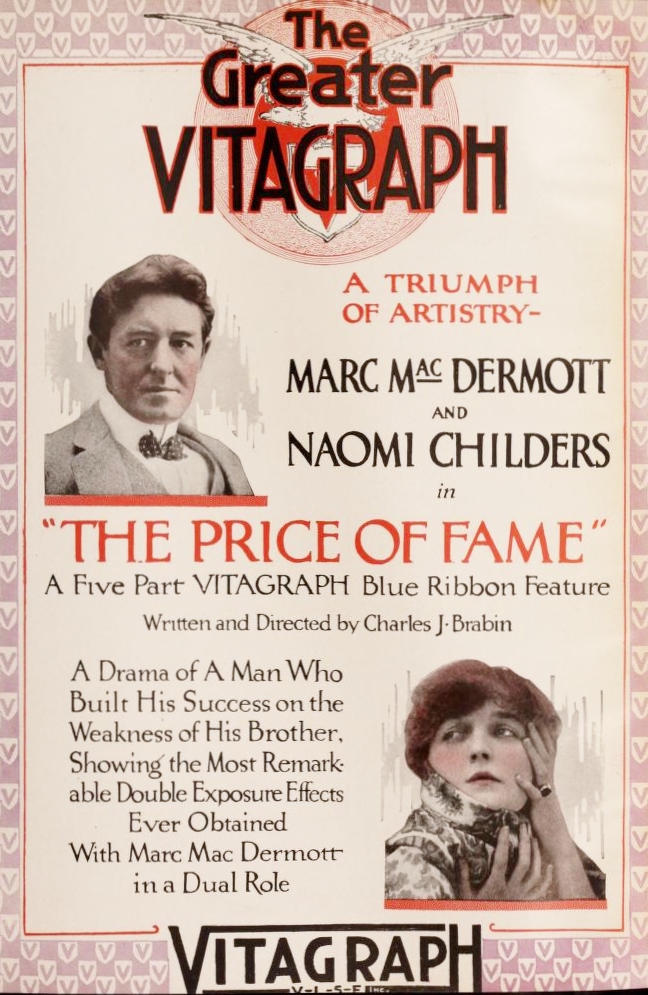
Stepping into the flickering, sepia-toned world of early cinema, one often encounters narratives that, despite their age, resonate with an almost primal force. Such is the case with 'The Price of Fame,' a silent film that, through its intricate tapestry of ambition, identity, and fate, offers a compelling glimpse into the human condition. Directed with a keen eye for dramatic tension by Charles Brabin and penned by Brabin himself alongside Franklin B. Coates, this cinematic endeavor from an era long past transcends its technical limitations to deliver a story that is both morally complex and emotionally charged.
At its heart, 'The Price of Fame' is a profound exploration of fraternal duality, a theme that has captivated storytellers for millennia. We are introduced to William and John, twins whose lives have diverged dramatically. William, portrayed with a certain austere grandeur, embodies the epitome of success, his path leading him inexorably towards the United States Senate. His public persona is one of unblemished triumph, a carefully cultivated image of a man destined for greatness. In stark contrast, John exists in the periphery, a figure shrouded in shadows, seemingly condemned to a life of quiet failure. This initial setup immediately establishes a powerful dynamic, a chiaroscuro of achievement and obscurity that forms the bedrock of the entire narrative.
The film masterfully builds upon this foundation of contrast. John's decision to adopt an assumed name and distance himself from his brother's burgeoning career speaks volumes about the societal pressures of the time, and perhaps, the perennial human desire to protect loved ones from one's own perceived shortcomings. He toils in a modest newspaper position, a quiet observer in the very city where his twin's political campaign dominates headlines. This geographical proximity, coupled with their emotional distance, creates a simmering tension, a dramatic irony that foreshadows the inevitable collision of their disparate worlds. The screenplay, even without spoken dialogue, conveys the weight of John’s self-imposed exile and William’s perhaps oblivious ascent.
The plot thickens with William's sudden illness, a vulnerability that shatters his polished façade and necessitates a drastic measure. It is here that 'The Price of Fame' truly ignites its central conceit: the identity swap. John, driven by a complex cocktail of loyalty, latent ambition, and perhaps a subconscious yearning for recognition, steps into his brother's shoes. This act of impersonation is not merely a plot device; it is a crucible for John's character, forcing him to confront his own capabilities and the allure of a life he had only observed from afar. The scene where John addresses the important meeting, sweeping the audience into 'frenzied enthusiasm,' is pivotal. It's a moment of profound transformation, revealing a charisma and oratorical power that William, despite his success, may have lacked. L. Rogers Lytton, Philip Quinn, Naomi Childers, Marc McDermott, and Mary Maurice, in their collective performances, would have been tasked with conveying these nuanced shifts through gesture, expression, and physicality, a testament to the unique demands of silent acting.
The emotional core of the film deepens considerably with the introduction of William's sweetheart. Her confession of love to John, believing him to be William, is a moment laden with dramatic irony and tragic inevitability. It's a testament to John's newfound presence and genuine connection that he elicits a passion she had 'always missed in William.' This accidental revelation of affection plunges John into a profound moral dilemma. He finds himself not only enjoying the adulation meant for his brother but also reciprocating feelings for a woman who is, by all rights, his brother's betrothed. This love triangle, born out of deception, elevates the narrative beyond simple melodrama, delving into the complexities of desire, loyalty, and the treacherous terrain of the human heart.
The film, through its careful pacing and the expressive acting characteristic of the silent era, would have communicated John's internal turmoil with compelling clarity. One can imagine the close-ups on his conflicted gaze, the subtle gestures conveying his struggle between honor and burgeoning affection. This kind of nuanced emotional storytelling is where silent cinema often excelled, relying on the visual language to communicate depths that dialogue would later articulate. The performances, particularly from the lead actors tasked with portraying the twins and the sweetheart, would have been crucial in selling this emotional verisimilitude. The ability to convey profound psychological states without the aid of spoken words demands a unique set of skills, emphasizing exaggerated yet precise movements and facial expressions.
The resolution of 'The Price of Fame' is both shocking and, in its own way, poetically just. William's death, discovered by John, serves as a grim deus ex machina, unraveling the knot of deception and moral quandary in one swift, brutal stroke. The phrase 'Fate's law is Heaven's justice' encapsulates the film's philosophical underpinning, suggesting a higher, almost predestined order at play. What would have been William's — his political ascent, his fiancée — now becomes John's. It's presented not as a usurpation, but as a 'reward to his genius,' a chilling validation of his inherent, if previously suppressed, capabilities. This ending is deeply unsettling, challenging conventional notions of morality and consequence, and leaving the audience to ponder the true nature of 'justice' when it aligns so conveniently with personal gain.
This conclusion marks 'The Price of Fame' as more than just a suspenseful drama; it positions it as a commentary on the arbitrary nature of success and the often-unseen forces that shape our destinies. The film doesn't shy away from the darker implications of its narrative, presenting a world where opportunity can arise from tragedy and where inherent talent, once unleashed, can override established hierarchies. It forces us to question whether John truly earned his new life, or if he was merely a pawn in fate's grand, indifferent design. The ambiguity adds layers of depth, making it a film ripe for discussion and interpretation, even a century later.
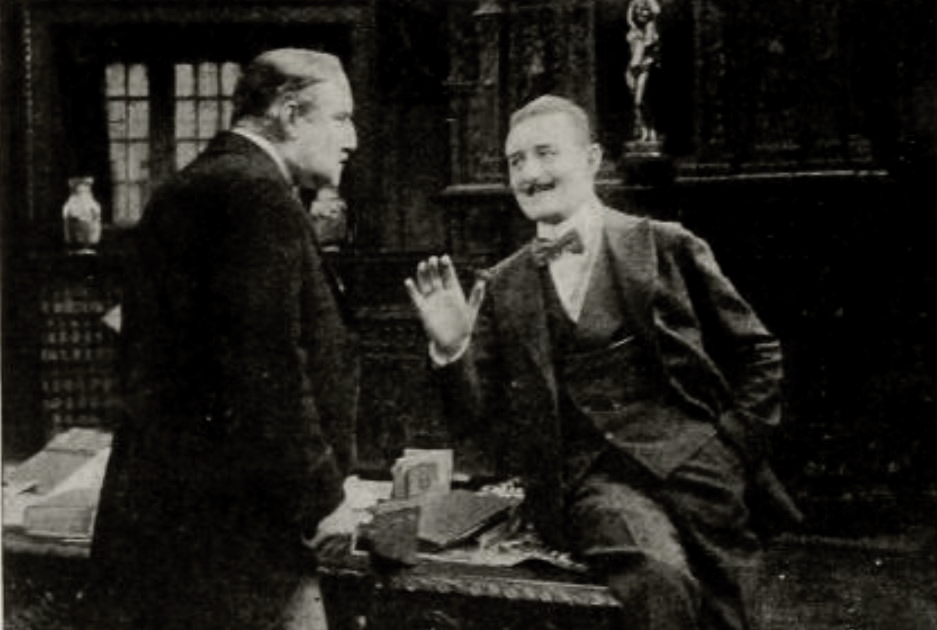
The craft of 'The Price of Fame' lies not just in its compelling plot but in its execution within the confines of silent cinema. Directors like Brabin faced the unique challenge of conveying complex emotions, motivations, and plot points without spoken dialogue. They relied heavily on visual storytelling: expressive acting, elaborate sets, symbolic props, and intertitles that provided crucial exposition or character thoughts. The pacing of the film, often a critical element in silent features, would have been meticulously controlled to build suspense and allow the audience to absorb the visual information. The use of dramatic lighting, a staple of the era, would have further enhanced the mood, perhaps casting William in bright, heroic light initially, only to shroud John in shadows before his moment of triumph.
The performances, particularly from actors like L. Rogers Lytton, Marc McDermott, and Naomi Childers, would have been central to the film’s success. Silent film acting, often maligned as overly theatrical, was in fact a highly specialized art form. It required actors to communicate inner turmoil, passionate love, cunning deception, and profound grief through precise body language, nuanced facial expressions, and often, a heightened physicality. The ability of an actor to convey John's transformation from downtrodden sibling to charismatic imposter, and his subsequent moral struggle, without uttering a single word, is a testament to their skill. Childers, as the sweetheart, would have had to portray a woman caught between her societal obligations and a newfound, visceral attraction, a delicate balance to strike visually.
Beyond the immediate thrills of its plot, 'The Price of Fame' delves into universal themes that remain pertinent. The question of identity, particularly when one's self is intertwined with another, is explored with remarkable depth. How much of our identity is truly our own, and how much is shaped by perception, circumstance, and the shadows or brilliance of those around us? John's journey forces us to consider the fluidity of self and the power of assumption. This resonates with films like The Spider and the Fly, where mistaken identities or assumed roles drive significant dramatic tension, albeit with different moral outcomes. The film also examines the corrosive nature of ambition and the lengths to which individuals might go to achieve success, even if it means stepping into another's life.
The narrative also touches upon the concept of destiny versus free will. Is John merely a beneficiary of a cruel fate, or does he actively seize an opportunity that presents itself? The film's concluding statement, 'Fate's law is Heaven's justice,' leans heavily towards a deterministic view, suggesting that some outcomes are simply meant to be, regardless of human agency or ethical considerations. This philosophical undercurrent elevates the film beyond a simple melodrama, inviting deeper contemplation about the forces that govern our lives. Furthermore, the political backdrop of William's senatorial campaign offers a subtle commentary on public image, the superficiality of political life, and how easily a charismatic speaker can sway public opinion, themes that remain alarmingly relevant even today. One might draw parallels to the political machinations seen in films like The Senator, which also explores the intricate and often deceptive world of politics.
While 'The Price of Fame' might not be as widely recognized as some of its silent era contemporaries, its narrative ingenuity and thematic richness ensure its enduring appeal to cinephiles and historians alike. It stands as a testament to the storytelling prowess of Charles Brabin and Franklin B. Coates, who crafted a tale that is both thrilling and thought-provoking. The film's ability to weave together elements of psychological drama, romance, and political intrigue into a cohesive and compelling whole is truly remarkable for its time. It reminds us that fundamental human desires – for love, recognition, and success – are timeless, and the moral dilemmas they create are universal.
The film's exploration of identity confusion and the unforeseen consequences of deception finds echoes in later cinema, proving the timeless appeal of such intricate plots. The way John's character develops, moving from a self-effacing shadow to a man confidently stepping into a colossal role, offers a fascinating character study. It's a journey of self-discovery, albeit one paved with ethical ambiguities. The sudden, almost shocking conclusion leaves a lasting impression, challenging the audience to reconcile the 'justice' of the outcome with their own moral compass. This kind of narrative daring is what distinguishes truly memorable films, regardless of their era.
In a broader context of silent cinema, 'The Price of Fame' holds its own as a compelling example of the era's capacity for sophisticated storytelling. It demonstrates that long before the advent of sound, filmmakers were grappling with complex themes and crafting narratives that could deeply engage and provoke thought. The reliance on visual cues, dramatic tension, and the raw power of human emotion makes films like this a unique and invaluable part of cinematic history. It's a film that, when viewed through the lens of its historical context, offers not just entertainment, but a window into the artistic and social sensibilities of a bygone era, proving that sometimes, the greatest stories are those that transcend the need for words.
Ultimately, 'The Price of Fame' is more than just a historical artifact; it is a vibrant piece of cinematic art that continues to speak to the enduring fascination with human ambition, the intricate dance of fate, and the profound, often unsettling, consequences of our choices. Its narrative audacity and the powerful performances from its ensemble cast ensure its place as a noteworthy entry in the annals of silent film, a compelling reminder of the rich storytelling traditions that laid the groundwork for modern cinema. It compels us to reflect on what we truly value, and at what 'price' we are willing to achieve it.
IMDb —
1923
Community
Log in to comment.