DbcultAccessing Vault...
Cult Review
Senior Film Conservator
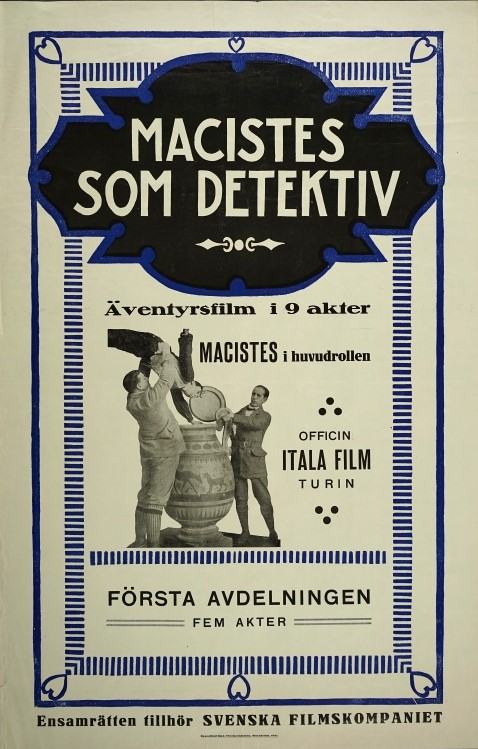
The cinematic tapestry of the early 20th century is rich with archetypes, but few figures resonate with the primal force and enduring appeal of Maciste. In the 1918 masterpiece, Maciste poliziotto, we witness the iconic strongman's formidable presence transposed into an urban landscape rife with moral ambiguity and burgeoning criminality. This particular iteration of Maciste, portrayed with an inimitable blend of physical prowess and stoic integrity by the legendary Bartolomeo Pagano, transcends mere genre fare, offering a profound commentary on justice, societal decay, and the unwavering spirit of an individual against overwhelming odds. It is a film that, even a century later, retains a startling immediacy, a testament to its masterful direction and the magnetic charisma of its central performer.
Bartolomeo Pagano, whose very physique became synonymous with the Maciste persona, delivers a performance in Maciste poliziotto that is nothing short of captivating. His portrayal is not simply an exhibition of strength; it is a nuanced exploration of a character grappling with the complexities of an evolving world. Pagano communicates volumes through his powerful, yet often understated, gestures. The tilt of his head, the resolute set of his jaw, the sheer, unbridled force in his movements – each contributes to a fully realized character whose moral compass remains steadfast amidst the swirling chaos. He imbues Maciste with an almost mythical quality, a figure who seems to have stepped out of ancient epic poetry directly into the gritty realism of a modern metropolis. This fusion of the archaic and the contemporary is one of the film's most striking achievements, making Maciste not just a hero, but a timeless symbol of resistance against injustice.
The narrative thrust of Maciste poliziotto plunges our hero into a murky world of urban crime, a stark departure from some of his earlier, more exotic adventures. Here, Maciste is presented as an ordinary man, albeit one with extraordinary capabilities, whose inherent decency compels him to intercede when an innocent young woman, a symbol of purity in a corrupted world, falls victim to a nefarious criminal enterprise. The film meticulously builds its suspense, drawing the audience into a labyrinthine plot involving shadowy figures, clandestine meetings, and daring escapes. The pacing is expertly handled, oscillating between moments of quiet observation, allowing the audience to absorb the atmosphere of the bustling city, and bursts of frenetic action where Maciste's immense power is unleashed. This dynamic rhythm keeps the viewer utterly engaged, a testament to the sophisticated understanding of cinematic storytelling present in this era.
While Pagano undeniably commands the screen, the supporting cast of Maciste poliziotto plays an indispensable role in enriching the film's narrative tapestry. Italia Almirante-Manzini, a luminary of the Italian silent screen, delivers a compelling performance, imbuing her character with a complexity that transcends the typical damsel-in-distress archetype. Her portrayal brings a crucial emotional depth to the proceedings, providing a poignant counterpoint to Maciste's stoic resolve. Ruggero Capodaglio, often cast in roles demanding a certain gravitas, contributes significantly to the film's dramatic tension, his presence adding another layer of intrigue to the unfolding mystery. Claudia Zambuto, with her delicate yet expressive features, effectively conveys the vulnerability and terror of the victim, making her plight all the more resonant. On the antagonist side, Vittorio Rossi Pianelli and Arnaldo Arnaldi skillfully craft villains who are both menacing and surprisingly nuanced, avoiding caricature to present believable threats to Maciste's mission. Their performances highlight the pervasive nature of the criminal element, making Maciste's struggle feel all the more arduous and heroic.
The visual grammar of Maciste poliziotto is remarkably sophisticated for its time. The cinematography masterfully captures the dichotomy of the bustling city – its grandeur and its squalor, its vibrant life and its lurking dangers. The use of deep focus shots, innovative camera angles, and dramatic lighting techniques creates a sense of immersive realism, drawing the audience directly into Maciste's world. The interplay of light and shadow, particularly in the scenes set within the criminal underworld, is employed with great artistry, enhancing the atmosphere of suspense and moral ambiguity. Close-ups are used judiciously, emphasizing the emotional stakes of key moments, while wider shots effectively convey the scale of Maciste's challenges and the vastness of the urban environment. This visual storytelling prowess ensures that even without spoken dialogue, the narrative remains crystal clear and emotionally impactful, a hallmark of the finest silent cinema.
At its core, Maciste poliziotto is a powerful exploration of justice, both personal and societal. Maciste, in his quasi-policeman role, represents an idealized form of justice, one that is unburdened by bureaucracy or corruption. He is a force of nature, a moral arbiter who acts decisively and righteously. The film implicitly critiques the failures of formal institutions to protect the innocent, suggesting that in certain dire circumstances, a hero of Maciste's caliber is not merely desirable but essential. This thematic resonance finds parallels in other early cinematic explorations of urban crime and vigilantism, such as D.W. Griffith's The Regeneration, which similarly delves into the harsh realities of city life and the struggle for redemption amidst squalor. The film's depiction of a society grappling with rapid modernization and its accompanying moral challenges makes it a fascinating historical document as well as a compelling piece of entertainment.
The decision to place Maciste in the role of a 'poliziotto' (policeman) marks a significant evolution for the character. Originally conceived as a slave in Cabiria, Maciste transcended his origins to become a versatile hero capable of inhabiting diverse narratives. In Maciste poliziotto, his strength is not merely physical; it is a moral strength, a steadfast refusal to succumb to the cynicism and corruption that pervades the urban landscape. This film solidified his status as a popular cultural icon, capable of adapting to various settings and challenges while retaining his fundamental essence. His adventures, whether in exotic locales or the familiar streets of an Italian city, consistently championed virtue and heroism, cementing his place in the pantheon of early cinematic heroes.
While Maciste stands unique, it's insightful to consider his heroic journey alongside other cinematic figures of the era. The resolute determination shown by Maciste in confronting a criminal underworld echoes the tenacious spirit found in films like The Cross Bearer, where individuals face immense personal and societal obstacles with unwavering faith. Similarly, the dramatic tension and sense of impending doom in Maciste poliziotto, particularly during the rescue sequences, can be favorably compared to the suspense built in films such as The Captive, which similarly explores themes of vulnerability and the desperate fight for freedom. These comparisons highlight the universal appeal of stories centered on courage and the triumph of good over evil, themes that resonated deeply with audiences of the silent era.
Even without the benefit of synchronized sound, Maciste poliziotto communicates with remarkable clarity and emotional power. The film's reliance on visual cues, expressive performances, and evocative intertitles creates a unique viewing experience that demands active engagement from its audience. This form of storytelling, often underestimated in the modern era, showcases a particular artistry in conveying complex narratives and profound emotions through purely visual means. The film serves as a potent reminder of the inherent power of cinema as a visual medium, demonstrating how expertly crafted sequences and compelling characterizations can transcend the absence of dialogue to deliver a truly immersive and unforgettable experience. It is a testament to the fact that compelling storytelling is not contingent upon technological advancements, but rather on the creative ingenuity of its makers.
Maciste poliziotto stands as a towering achievement of Italian silent cinema, a film that not only entertains but also provokes thought on the nature of justice and the role of the individual in combating societal ills. Bartolomeo Pagano's portrayal of Maciste is, as ever, the beating heart of the film, a performance that remains etched in the annals of cinematic history. The film's sophisticated cinematography, compelling narrative, and strong supporting performances coalesce to create a work of art that continues to captivate and inspire. For aficionados of silent film, and indeed for anyone interested in the evolution of heroic archetypes in popular culture, Maciste poliziotto is an absolutely essential viewing experience, a testament to the enduring power of a truly legendary figure.
IMDb 4.2
1915
Community
Log in to comment.