DbcultAccessing Vault...
Cult Review
Senior Film Conservator
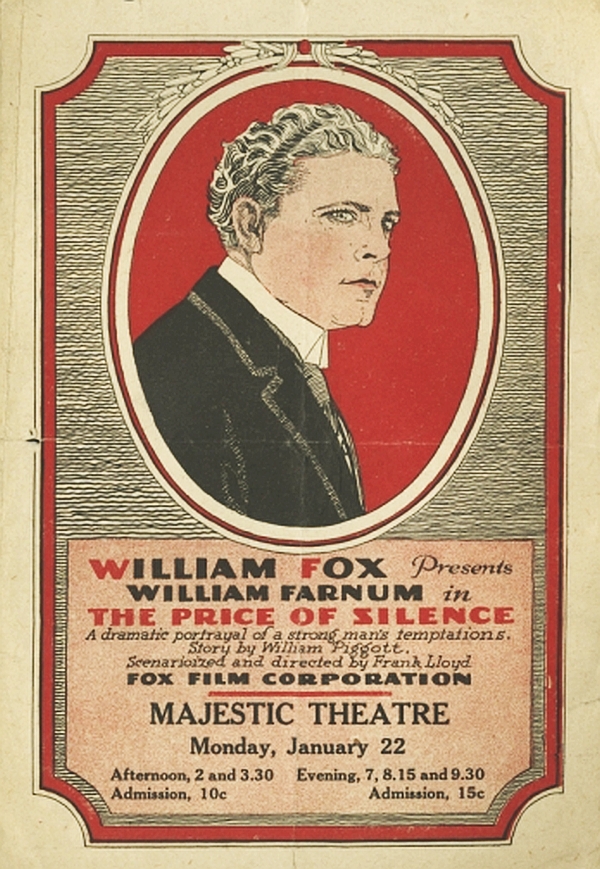
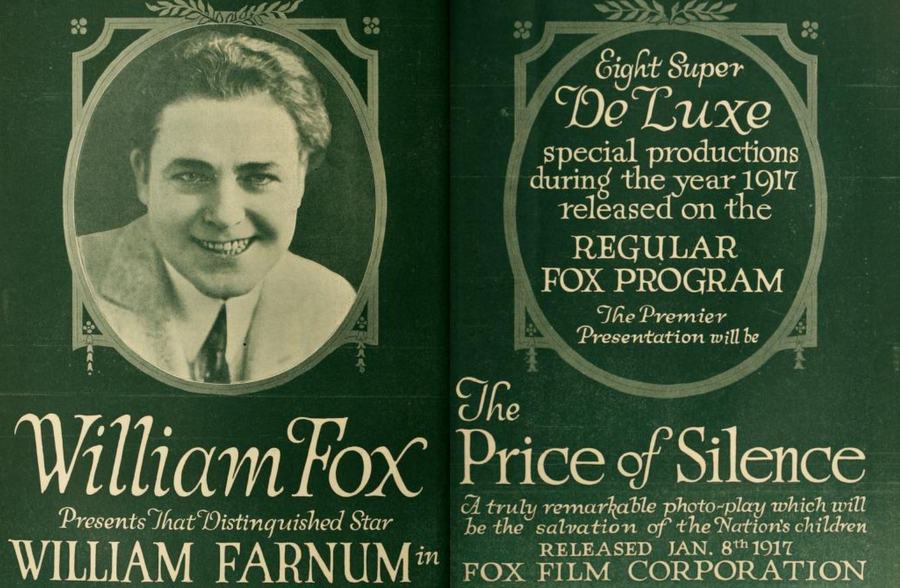
A 1917 senator torches his own child-labor bill to shield a dead friend—Frank Lloyd’s silken melodrama turns the Capitol into Calvary, and the celluloid still smells of scorched conscience.
Picture the first reel unfurling like a soot-black iris: locomotive sparks whiz above the Potomac, illuminating Frank Deering’s profile—half Ab Lincoln, half tarnished centurion—while Judge Vernon’s gavel echoes somewhere off-screen, sentencing not felons but futures. William Farnum plays Deering with the stoic voluptuousness of a man who has memorized every wrinkle in the flag; Frank Clark’s Vernon, by contrast, trembles like a tuning fork struck by debtor’s dread. Their friendship predates talkies, predates electricity; it is the kind forged in antebellum attics over contraband whiskey and shared Latin tags. Into this sanctum slithers Henry McCarthy—Charles Clary in top-hat and moral albinism—offering a quid pro quo sealed with the hiss of steam presses. The loan is a mere formality; the collateral is a child, granddaughter Brooklyn Keller, a wordless cherub whose saucer-eyes will haunt the remaining intertitles like accusatory halos.
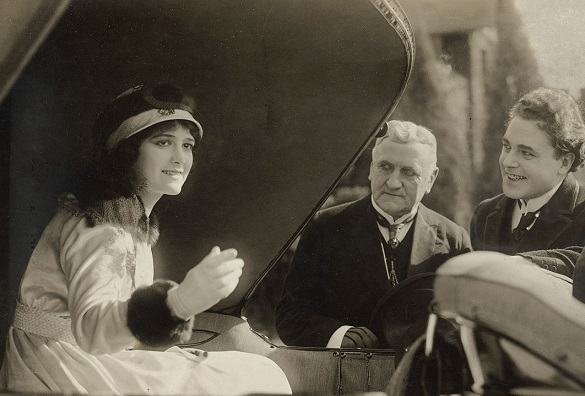
Frank Lloyd, directing from a tri-authored script that crackles with Jacobean bile, stages the transaction inside a mill whose looms clack like mechanized mandibles. Note how the camera—probably hand-cranked by a man with cigarette breath—tilts up to the iron rafters, as though heaven itself were an absentee landlord. The child’s transfer is filmed in a single, merciless long take: Vernon lifts the toddler, McCarthy extends ledger; the two men’s shadows merge into a Mephistophelian hermaphrodite on the wall. No title card intervenes; silence becomes verdict.
Cut to years later: the Senate gallery swarms with plumed matrons and cigar-chewing wire-pullers. Deering’s bill—an abolition of child labor so radical it would shutter half the mills south of Jersey—approaches vote. Cue the telegram: Vernon dying, confession urgent. Farnum’s eyes perform micro-hemorrhages of conscience; you can practically hear retinas rip. He races through corridors that seem to elongate like guilty thoughts, arriving too late to save the man yet just in time to inherit the shame. The death-bed scene is lit by a solitary bulb dangling above a crucifix, its filament buzzing like trapped horseflies. Vernon whispers; intertitles bloom: “I sold a child for my pride—bury my name, not my sin.” Deering’s face, shot in chiaroscuro profile, becomes a topographical map of ethical erosion.
What follows is the film’s bravura sequence: a Senate session staged with the kinetic claustrophobia of a boxing ring. Lloyd intercuts medium shots of sneering colleagues with insert-close-ups of the gavel—each strike sounds like coffin nails. Deering ascends the rostrum, paper trembling like a trapped sparrow. He votes nay. Gasps ricochet; parasols drop; a journalist sketches horns on his notepad. Outside, newsboys howl betrayal; inside, Deering sits motionless while the chamber’s chandeliers blur into starless night. The camera dollies backward, leaving him a solitary black-clad figure swallowed by acreage of marble—a secular Pietà minus consolation.
But Lloyd refuses catharsis. A coda shows Deering years hence, shunned, wandering the same mill town now shuttered and ghost-haunted. Children no longer toil, not because of legislation but because markets shifted; progress arrived by accident, not valor. He stoops to retrieve a broken doll—perhaps the same tot once traded for solvency—and cradles it with the reverence of a priest fondling relics. Fade to black. No iris, no curtain call; only the whir of the projector reminds you that moral rot is celluloid-immortal.
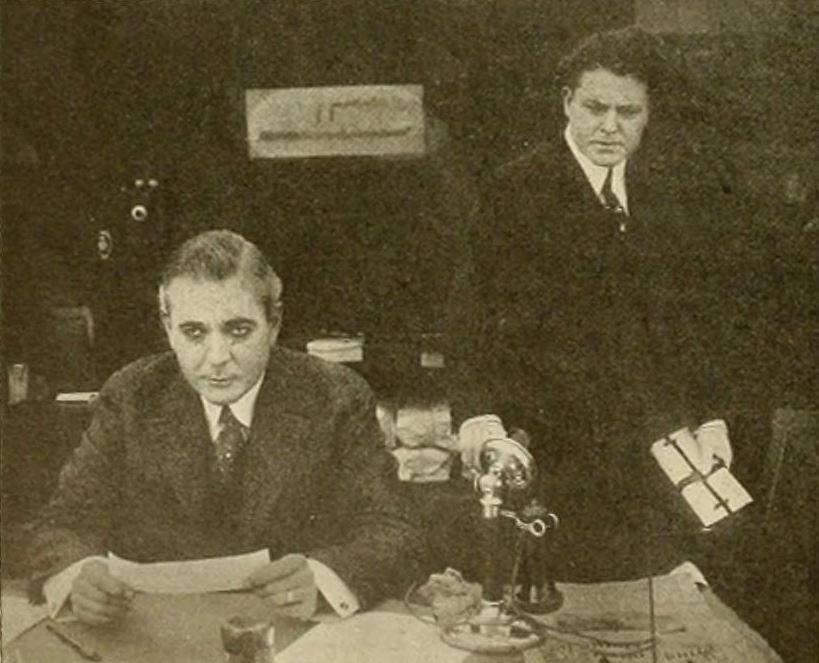
Farnum’s gift lies in letting the camera excavate him rather than perform. Watch the micro-shifts: jaw slackens a millimeter, pupils dilate as if inhaling guilt. Compare to The Crisis where thespian theatrics balloon; here, restraint is stiletto. Vivian Rich, wasted yet luminous as Deering’s fiancée, communicates disillusion with a single blink that seems to last a stanza. Charles Clary’s McCarthy never twirls mustache—he smiles only when signing contracts, a rictus so economical it feels like fiscal assault.
Cinematographer Ray Hanford—unsung hero—bathes interiors in tungsten umber, exteriors in slate-cobalt. Note how child laborers emerge from factory fog like Persephone’s understudies, their faces smeared with cerulean lint that passes for ghostly war-paint. The palette anticipates Homunculus, 1. Teil’s expressionist streak yet grounds itself in soot-streaked realism. When Deering burns Vernon’s IOU in a stove, the ember flare is hand-tinted orange—the only color in a monochrome cosmos, a visual scream.
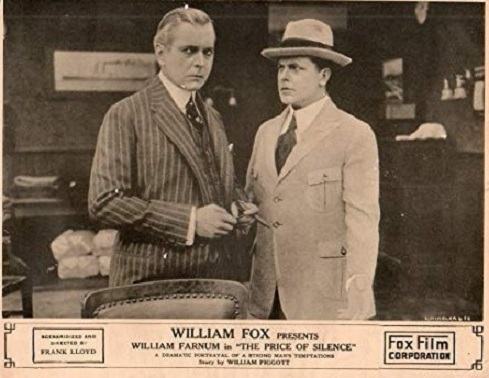
Surviving prints lack original cue sheets, yet modern festivals often commission scores. Try watching with a solo cello: each bow stroke feels like sinew stretched across political fault lines. The absence of diegetic noise paradoxically amplifies moral tinnitus—every loom thud, every gavel crack echoes inside the skull rather than the theater.
Place beside The Golden Chance and you notice Deering’s sacrifice lacks tidy redemption; stack against Judith of the Cumberlands and realize Lloyd refuses Appalachian caricature. Even The Poor Little Rich Girl sentimentalizes childhood; Price of Silence commodifies it with proto-noir bleakness.
Why did it vanish for decades? Partial answer: 1917 audiences, war-dazed, preferred escapism. Studios shelved “depressing” social critiques; prints were recycled for silver nitrate. Rediscovery came in 1998 when a Buenos Aires archive unearthed a 35 mm negative laced with Spanish intertitles. The translation restored M. Pigott’s original cadence—each card a haiku of agony.
Stream it today and feel the chill: political compromise still smells of kerosene and back-room sweat. Deering’s crucifixion mirrors any senator forced to gut a climate bill for home-state patronage. The child’s face swapped for solvency rhymes with lobbyist donations masquerading as “constituent services.” Lloyd’s 1917 cynicism feels prophetic, not antique.
The 4K restoration by EYE Filmmuseum (2022) scrubs mildew yet preserves grain; available on Kanopy and occasional 35 mm rep screenings. Criterion rumor persists—petition if you must. Avoid YouTube bootlegs; they run at wrong speed, turning pathos into slapstick.
Score it 9.5/10—the missing half-point only because Vivian Rich’s subplot evaporates mid-film. Otherwise, The Price of Silence is a scalpel sharpened on the whetstone of American guilt, a reminder that every vote is a Faustian mortgage and every silence costs interest compounded in blood.
IMDb —
1918
Community
Log in to comment.