DbcultAccessing Vault...
4.6/10
Senior Film Conservator
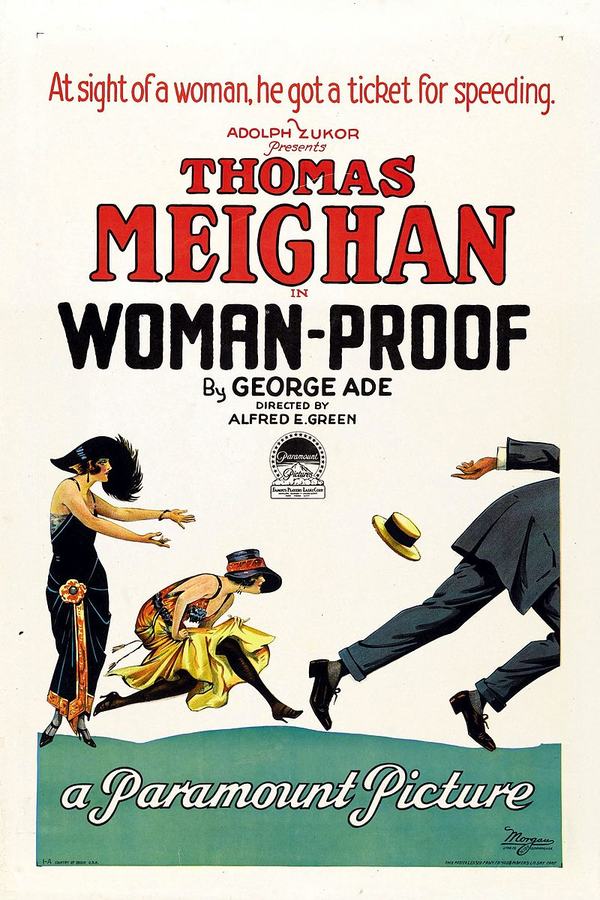
A definitive 4.6/10 rating for a film that redefined the boundaries of cult cinema. Woman-Proof remains a cornerstone of transgressive art.
The year 1923 was a watershed moment for American cinema, a period where the language of the silent film reached a zenith of expressive clarity before the eventual intrusion of synchronized sound. Standing tall among the year's offerings is Woman-Proof, a film that manages to be both a biting social satire and a genuinely affecting romance. Directed by Alfred E. Green and written by the legendary humorist George Ade, the film serves as a vehicle for the burgeoning charisma of George O'Brien and the ethereal beauty of a young Mary Astor. It is a work that interrogates the transactional nature of marriage in the early 20th century while maintaining a light, comedic touch that feels remarkably modern.
George O'Brien, long before he became the iconic face of Murnau's Sunrise, displays a grounded, masculine vulnerability as Tom Rockwood. Unlike the exaggerated dandies often found in the comedies of the era, O'Brien's Rockwood is a man of industry. His profession as a civil engineer is not merely a plot point; it is a character trait. He builds bridges; he creates stability. This makes his resistance to the 'marriage trap' set by his siblings all the more compelling. He isn't a misogynist; he is a man who refuses to be a pawn in a financial game. This thematic depth elevates the film beyond the typical inheritance-plot tropes seen in contemporary works like Sold at Auction, where the stakes often felt more melodramatic than character-driven.
The Rockwood siblings—played with a delightful sense of frantic entitlement by the supporting cast—represent the decaying leisure class. They are the antithesis of Tom's productivity. Their attempt to 'induce' him into marriage is framed through George Ade's sharp wit, highlighting the absurdity of a legal system that treats human affection as a prerequisite for capital distribution. Ade’s influence is palpable here; his 'Fables in Slang' sensibility translates perfectly to the intertitles, which crackle with a dry, observational humor that avoids the sentimentality of many silent dramas.
Enter Mary Astor as Louise Halliday. At this stage in her career, Astor possessed a luminous quality that the camera adored. Her introduction at a blasting site—a location of raw, industrial danger—is a brilliant subversion of the 'damsel in distress' trope. While Tom does indeed rescue her, the event serves as a literal and metaphorical explosion that shatters Tom's 'woman-proof' exterior. The chemistry between O'Brien and Astor is palpable, even through the flickering grain of a century-old print. It is a romance built on mutual respect and shared peril, a far cry from the more artificial courtships found in The Valentine Girl.
Astor’s Louise is not merely a prize to be won; she is a ward of the villainous Bleech, played with oily precision by John St. Polis. This adds a layer of noir-ish intrigue to the proceedings. Bleech is a character who would feel right at home in the dark corridors of The Mysterious Mrs. Musslewhite. His nefarious plans for the Rockwood fortune turn the film’s final act into a ticking-clock thriller. The tension is derived not just from whether Tom and Louise will find happiness, but whether they can outmaneuver a legal system designed to exploit them.
Visually, Woman-Proof is a testament to Alfred E. Green’s directorial prowess. The use of location shooting—specifically the construction and blasting sites—lends the film a grit that contrasts beautifully with the polished interiors of the Rockwood estate. This juxtaposition mirrors the internal conflict of Tom himself: the rugged individualist vs. the scion of wealth. The cinematography captures the scale of the engineering projects, making the world feel expansive and lived-in. It lacks the claustrophobia of stage-bound productions like The Last Dance, opting instead for a panoramic view of American progress.
"The film’s brilliance lies in its ability to balance the cynical wit of George Ade with a sincere belief in the transformative power of love, all while maintaining a pace that would make modern editors envious."
The editing during the climax is particularly noteworthy. As the deadline for the will approaches, the cross-cutting between Bleech’s machinations and Tom’s desperate efforts to reach Louise creates a sense of genuine urgency. It is a precursor to the high-octane pacing seen in later adventure serials like The Radio King, yet it remains firmly rooted in the emotional stakes of its characters. Every frame serves the narrative, driving us toward a conclusion that feels earned rather than manufactured.
Beneath the surface of this romantic comedy lies a sharp critique of the American 'will' and the ways in which dead patriarchs continue to exert control over the living. This was a common theme in the early 20th century, reflecting a society grappling with the transition from inherited wealth to meritocratic achievement. Woman-Proof suggests that Tom’s true inheritance isn't the money, but his ability to break free from the expectations of his class. In this sense, it shares a thematic DNA with The Duchess of Doubt, though it approaches the subject with a more optimistic, masculine energy.
The film also touches upon the changing roles of women. While Louise is technically a ward, her presence in the dangerous world of Tom’s engineering project hints at the 'New Woman' of the 1920s—someone who is not afraid to step out of the parlor and into the fray. This is a subtle but important distinction from the more traditional female roles seen in films like A Petal on the Current. Louise is a partner in the struggle, not just a bystander.
Why does Woman-Proof resonate today? Perhaps it is because the 'bachelor under pressure' is a timeless archetype, or perhaps it is the sheer craftsmanship on display. In an era where many silent films have been lost to the ravages of nitrate decay, the survival of such a vibrant piece of storytelling is a gift. It showcases George O'Brien as a formidable lead who could handle comedy as easily as he handled the physical demands of his roles—a versatility also seen in performers from The Boss of the Lazy Y.
The film’s resolution, while satisfying the requirements of the genre, leaves the viewer with a sense of triumph that is more than just financial. When Tom and Louise marry on the final day, it isn't just to save the family fortune; it is a defiant act against those who sought to manipulate them. It is a victory for the individual over the institution. For fans of silent cinema, Woman-Proof is an essential viewing experience, offering a perfect blend of humor, heart, and high-stakes drama. It stands as a testament to the collaborative genius of Green, Ade, and their stellar cast, proving that even a century later, some stories are indeed 'time-proof'.
In comparison to the more heavy-handed moralizing of international works like Levensschaduwen or the revolutionary fervor of Velikiye dni Rossiiskoi revolutsii, Woman-Proof remains quintessentially American: pragmatic, energetic, and ultimately hopeful. It is a sophisticated piece of entertainment that rewards the discerning viewer with every frame.
IMDb —
1920
Community
Log in to comment.