DbcultAccessing Vault...
Cult Review
Senior Film Conservator
The Primordial Pull of the Tide: Revisiting Shima no onna
Cinema, in its nascent and most potent forms, often seeks to externalize the internal landscape. In the case of Shima no onna, the internal landscape is a tempestuous confluence of salt, sorrow, and the crushing weight of the horizon. This film, a relic of an era when the image was tasked with carrying the entirety of the human soul, stands as a monumental achievement in the subgenre of maritime melodrama. Unlike the more exuberant narratives of the period, such as the comedic antics found in The Great Cheese Robbery or the urban whimsicality of Mutt and Jeff in London, Shima no onna is an exercise in profound restraint and atmospheric dread.
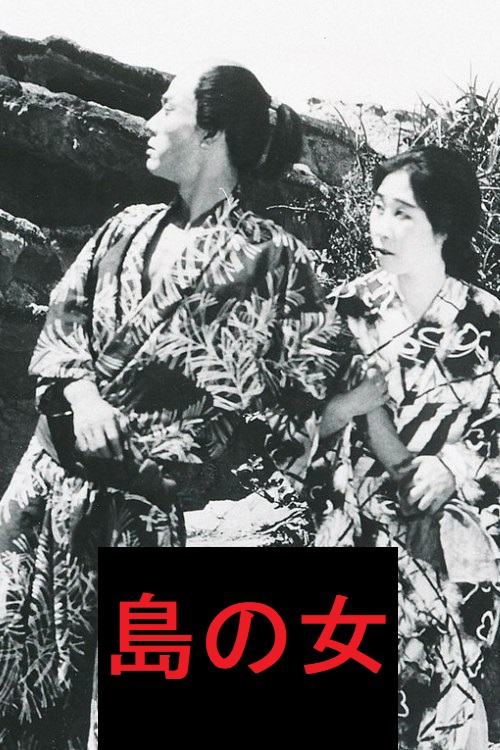
The plot, penned with surgical precision by Kinka Kimura and Shiko Yamazaki, avoids the saccharine pitfalls that often plague the 'star-crossed lovers' trope. Instead, it constructs a world where the environment is the primary antagonist. The young man from the coastal village, played with a simmering, quiet desperation by Tsuruzô Nakamura, is not merely fighting for a girl; he is fighting against the very geography that defines his existence. His counterpart, the ethereal Yachiyo Shizuka, portrays the island girl as a figure caught in a stasis—a living monument to the isolation of her home.
Their love is presented through a series of vignettes that feel like half-remembered dreams. There is a tactile quality to the cinematography; one can almost smell the brine and feel the grit of the sand. This sensory immersion is a far cry from the more stage-bound productions of the early 20th century. While The Winning of Sally Temple might rely on the charm of its protagonist to drive the narrative, Shima no onna relies on the negative space—the silence between waves, the shadows cast by the rocky cliffs.
Yachiyo Shizuka’s performance is a masterclass in the economy of gesture. In the silent era, the temptation toward grandiosity was ever-present, yet Shizuka remains remarkably grounded. Her eyes carry the weight of the Pacific, reflecting a resignation that is both heartbreaking and haunting. When compared to the more overt emotionality seen in The Heart of Nora Flynn, Shizuka’s subtlety feels avant-garde. She does not plead with the camera; she haunts it.
Nakamura provides the necessary kinetic energy to balance Shizuka’s stillness. His movements are heavy, burdened by the physical labor of his village life. There is a scene where he stares across the water at the island—a sequence that lasts several beats longer than a modern editor would allow—which perfectly encapsulates the film's central thesis: the agony of the unreachable. It brings to mind the sociological tensions explored in Within Our Gates, though here the divide is not racial but elemental and economic.
The writing by Kimura and Yamazaki deserves particular scrutiny. To write for the silent screen is to write for the soul, and the duo understands that dialogue intertitles are often the enemies of true cinema. They utilize them sparingly, allowing the visual metaphors to speak. The island is not just a location; it is a character—a silent, stony witness to the futility of human connection. The script echoes the tragic inevitability found in Brændte vinger, where the characters are doomed from the first frame not by their flaws, but by their circumstances.
The inclusion of Yoshiko Kawada in the supporting cast adds a layer of domestic friction that grounds the high-flown tragedy. Kawada represents the reality of the mainland—the expectations of family, the necessity of survival, and the cold logic of the village. Her presence acts as a counterweight to the romantic idealism of the young lovers, much like the grounded reality found in Struck Oil, though the stakes here are significantly more dire.
Visually, Shima no onna is a feast of chiaroscuro. The directors use the natural light of the coast—the harsh midday sun and the murky twilight—to mirror the characters' internal states. There is a specific shot of a boat lost in the mist that serves as a perfect microcosm for the entire film. It is a moment of pure, unadulterated cinema that rivals the poetic realism of European masters. If one considers the thematic depth of L'innamorata, one finds a similar preoccupation with the destructive power of passion, yet Shima no onna feels more visceral, more rooted in the earth and the spray.
The film’s pacing is deliberate, demanding a level of patience from the viewer that is rewarded with a profound sense of catharsis. It does not offer the easy resolutions of Friend Husband or the moral clarity of All Man. Instead, it lingers in the gray areas of morality and fate. The tragedy is not that they love, but that they exist in a world where such love is a form of transgression. This sense of social claustrophobia is also present in The Greater Woman, but here it is amplified by the physical barrier of the sea.
In the broader context of early Japanese cinema, Shima no onna occupies a unique space. It bridges the gap between the traditional shinpa dramas and the more modern, naturalistic styles that would emerge in the coming decades. It possesses a ruggedness that is often absent from the more polished studio productions like The Winchester Woman or the theatricality of The House of Tears. The film is a precursor to the shoshimin-geki, yet it retains a mythic, almost primordial quality that elevates it above simple social commentary.
The final act of the film is a harrowing descent into the inevitable. As the storm gathers, both literally and figuratively, the boundaries between the island and the mainland begin to dissolve in a chaos of wind and water. It is a sequence of immense power, utilizing cross-cutting techniques that were remarkably sophisticated for the time. The audience is left not with a feeling of closure, but with the haunting image of the sea—ever-present, ever-hungry, and entirely indifferent to the human dramas played out upon its shores. Even the most lighthearted viewer, perhaps coming from the breezy world of Telefondamen, will find themselves moved by the sheer gravity of this conclusion.
To watch Shima no onna today is to engage with a ghost. It is a film that speaks from the depths of time, yet its themes of longing, class, and the crushing power of the environment remain as relevant as ever. The collaboration between Shizuka, Nakamura, and the writers Kimura and Yamazaki resulted in a work of art that transcends its era. It is a reminder that cinema, at its best, is not just about telling a story, but about capturing the very essence of what it means to be human in a world that is often cold and unyielding. It shares a certain DNA with 'Twas Henry's Fault in its exploration of domestic consequence, but it expands that scope to the cosmic level.
In the end, the woman of the island remains an enigma—a siren whose song is the sound of the waves, and a victim of a society that could not imagine a bridge across the water. This is a film that demands to be seen, not as a historical curiosity, but as a living, breathing piece of art that continues to ripple through the history of the medium. It is a dark orange sunset over a sea blue horizon, a yellow flicker of hope in a world of stygian shadows. It is, quite simply, essential.

IMDb —
1926
Community
Log in to comment.