DbcultAccessing Vault...
6.8/10
Senior Film Conservator
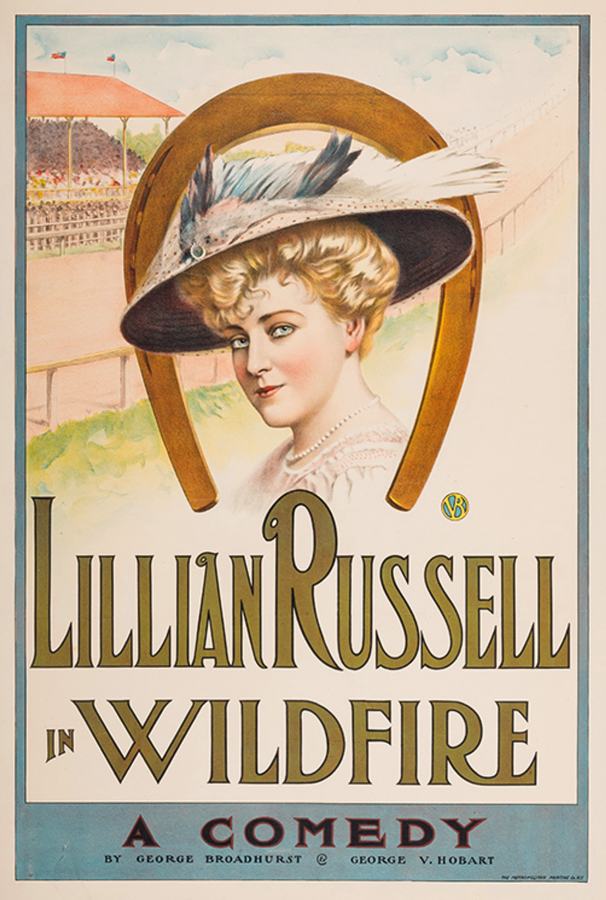
A definitive 6.8/10 rating for a film that redefined the boundaries of cult cinema. Wildfire remains a cornerstone of transgressive art.
The first time I saw Henrietta Barrington’s profile etched against a cobalt sky, hair whipping like a battle standard, I understood that Wildfire is less a nickelodeon curio and more a blood pact between cinema and the feminine id. George Broadhurst’s scenario, stitched together by three writers who must have chain-smoked intrigue, lands like molten shrapnel on the tranquil pastures of 1915 Long Island. The film opens with the hush of dawn fog over a racetrack; within minutes we are thrust into a western saloon whose kerosene shadows feel borrowed from Victor Sjöström’s nightmares. There is no gradual immersion—only a guillotine drop into moral anarchy.
Sam J. Ryan’s Bob Barrington embodies the patrician swagger soon to be extinct; one can almost hear the rustle of empire silk as he signs away his life with the flourish of a man who believes death happens to other people. Enter Riley Hatch’s John Keefe—gambler, flaneur, collector of souls—his eyes twin revolvers perpetually half-cocked. Their poker duel is shot in chiaroscuro so severe that every card turned feels like a vertebra snapping. When Keefe slides the ivory holder across the table, the artifact glows like a radioactive relic, prefiguring the Maltese Falcons and Rosebuds that will haunt future screens.
Aesthetically, the picture pirouettes between western gothic and east-coast equestrian baroque. Cinematographer William C. Chamberlin (whose name deserves resurrection in film schools) traps dust motes in shafts of light that resemble cathedral incense. The murder itself is off-camera—yet the aftermath, a single boot protruding from a pile of scribbled IOUs, is more chilling than any arterial spray. Compare this restraint to the volcanic excesses of The Last Days of Pompeii (1913); here, suggestion scalds deeper than spectacle.
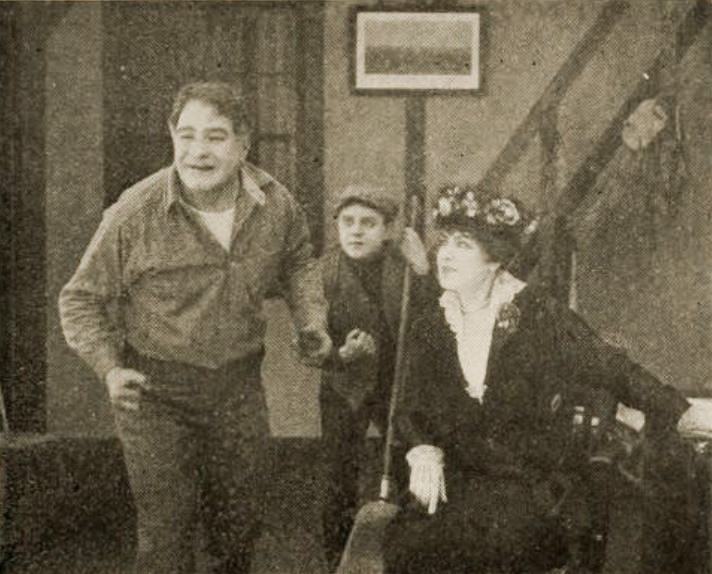
Once Keefe re-materializes as the perfumed Mr. Buffy, the film’s tone pivots from Murnau-esque doom to Wilde-ward flippancy. He flirts with Henrietta while quoting odds like a Wall Street oracle. Ruby Rose, in the role that should have made her the Lillian Gish of suspense, plays Henrietta with the coiled grace of a bowstring. Notice how her spine straightens each time she smells deceit; the gesture is so minute it bypasses the retina and implants directly in the amygdala. When she later presses a derringer against Gorman’s ribs, the camera dares not blink, forcing us to confront the birth of the pistol-packing heroine decades before Fantômas’s masked anti-heroines.
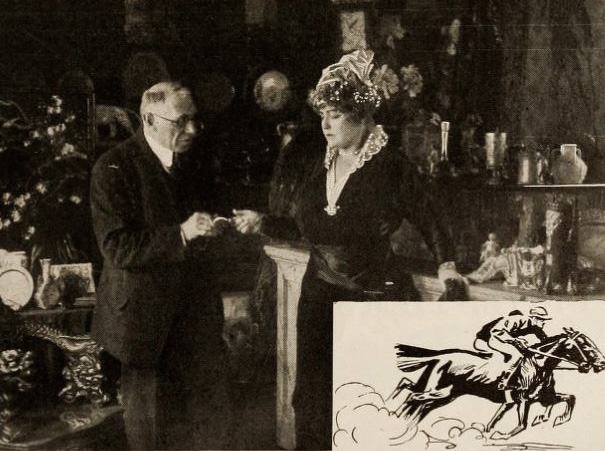
The watch, the cigarette holder, the torn inventory sheet: three MacGuffins decades before Hitchcock coined the term. Yet unlike the suitcase in Kiss Me Deadly, these objects carry emotional ballast. The watch still ticks, echoing Barrington’s stopped heart; the holder retains Keefe’s bite marks, a dental signature of cupidity; the sheet, crumpled and sweat-stained, reads like a pauper’s shroud. When Henrietta discovers them in quick succession, the editing cadence accelerates—intertitles flash like telegrams from Nemesis—until we arrive at the heartbeat-skipping moment she aligns torn edges under a pawnshop’s gaslight. The splice is perfect; the world splits open.
Lionel Barrymore’s Sheriff Garrison could have been a vanilla arbiter of justice; instead he underplays, letting silence carve doubt into his jawline. His courtship of Henrietta unfolds through exchanged glances over crime-scene evidence—an illicit romance conducted via fingerprints. One sublime shot frames them in a doorway: she back-lit, haloed by uncertainty; he foregrounded, face bisected by shadow. It is a visual haiku that anticipates the corridor chiaroscuro of The Mystery of St. Martin’s Bridge.
Race day arrives like a pagan rite. The grandstand swarms with socialites whose feathered hats resemble predators’ plumage. Editors intercut between bookies’ chalkboards and Henrietta’s eyes—two currencies of chance. The flag that will decide Wildfire’s fate flutters atop a cupola, a pennant of perfidy. When Henrietta scales the roof, skirts hitched like a Valkyrie, the camera tilts vertiginously, fusing melodrama with vertiginous spectacle. Her tussle with Keefe is framed against sky and betting slips swirling upward—an aerial danse macabre. The moment she yanks the flag down, the film achieves a proto-Eisensteinian montage: hooves, ticker tape, and a woman’s scream braided into a single cataclysmic breath.
Soundless though it is, Wildfire reverberates with sonic ghosts. The orchestral score—reconstructed by the Library of Congress in 2018—layers ragtime brass over doom-laden cellos, creating a cognitive dissonance that tickles the scalp. Listen for the crescendo that erupts precisely when Wildfire’s nose breaks the ribbon: it is the musical equivalent of champagne laced with strychnine.
Gender politics? The picture flirts with radicalism. Henrietta is never rescued; she rescues. Her final embrace with Garrison occurs only after she has demolished the patriarchal scaffold that murdered her father and commodified her horses. Contrast this with the helpless heroines of Anny – en gatepiges roman or the sacrificial wives in Wolfe; or, the Conquest of Quebec. Henrietta’s autonomy is not a narrative concession but the engine of resolution.
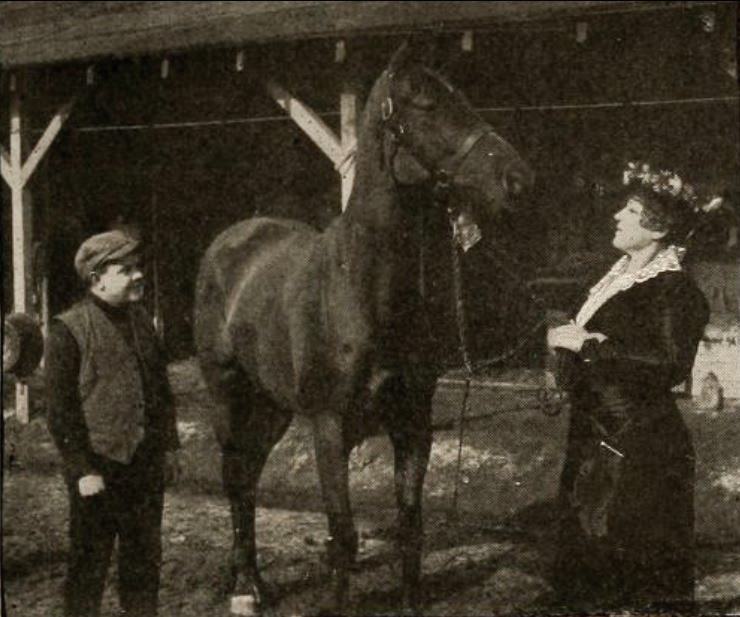
Visually, the palette alternates between umber interiors and the aquamarine vastness of the racetrack. Notice the strategic deployment of yellow—satin ribbons, betting slips, the flicker of Wildfire’s blinkers—like Morse code for moral rot. Sea-blue shadows pool beneath staircases where secrets gestate. And everywhere the infernal orange of lamplight, a reminder that every revelation is also a burning.
Flaws? The comic-relief stable boy belongs in a Mack Sennett two-reeler; his pratfalls puncture tension the way a pin deflates a dirigible. And the subplot involving Myrtle’s fiancé entangled in rigged betting feels like a vestigial appendage from an earlier draft. Yet these are flecks on an otherwise obsidian surface.
Restoration-wise, the 4K transfer from a surviving 35mm nitrate print reveals grain like raw silk; every bead of sweat on Keefe’s temple glistens with criminal guilt. The tinting—amber for interiors, viridian for exteriors—obeys archivist conjecture yet feels intuitively correct, as if the film always yearned for this chromatic resurrection.
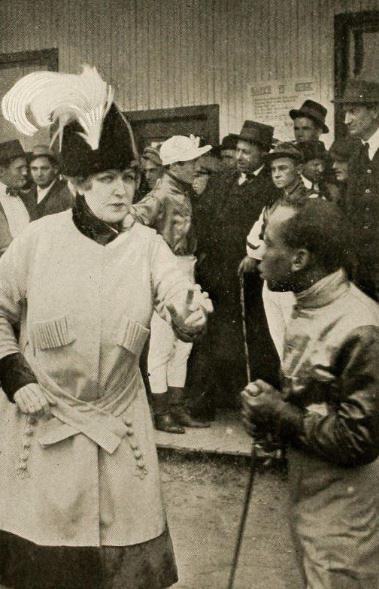
In the pantheon of 1915, Wildfire sits adjacent to The Independence of Romania in historical import but closer to As a Man Sows in moral complexity. It anticipates the formal bravura of On the Fighting Line while outstripping the narrative coherency of Die Jagd nach der Hundertpfundnote.
So why does it matter now? Because we still inhabit a world where ownership papers—be they for stables or start-ups—are wielded like knives. Because women still climb rooftops to tear down flags planted by greedy men. And because cinema, at its most alchemical, can transmute a cigarette holder into a smoking gun and a horse race into a tribunal of justice. Wildfire is that rare silent film that refuses to stay mute; it neighs across a century, urging us to bet not on the rigged odds but on the wild, unbreakable filly of truth.
Verdict: 9/10. A molten cornerstone of proto-noir feminism. Watch it with headphones and the lights off; let the hoofbeats echo through your sternum until you, too, feel the roof tiles under your own rebellious feet.
IMDb —
1919
Community
Log in to comment.