DbcultAccessing Vault...
6.2/10
Senior Film Conservator
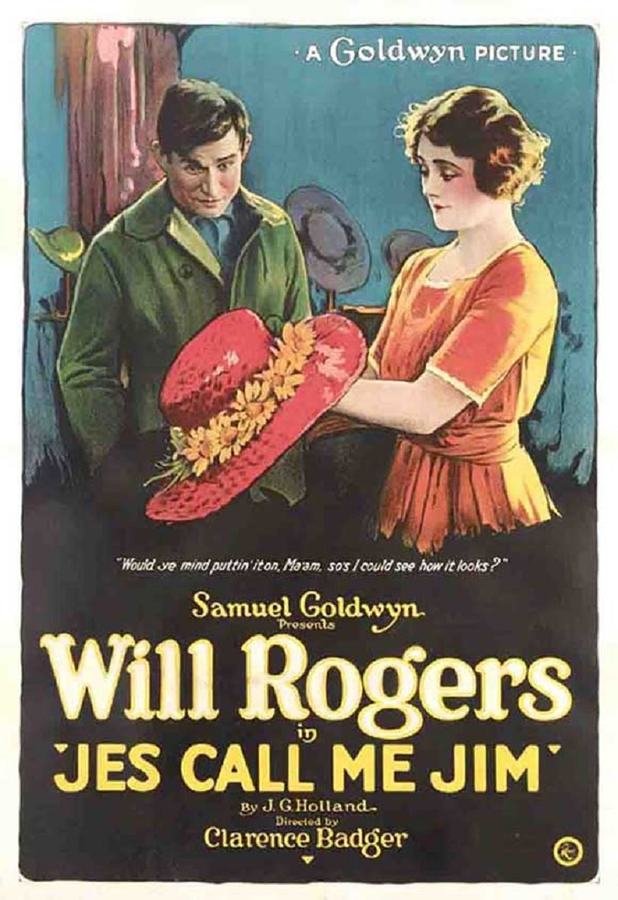
A definitive 6.2/10 rating for a film that redefined the boundaries of cult cinema. Jes' Call Me Jim remains a cornerstone of transgressive art.
The dawn of the 1920s marked a pivotal metamorphosis in American cinema, a period where the rugged individualism of the frontier began to coalesce with the burgeoning complexities of the industrial age. At the heart of this transition stood Jes' Call Me Jim, a film that serves as both a vehicle for the burgeoning stardom of Will Rogers and a scathing indictment of corporate sociopathy. Unlike the more frantic pacing found in Three Mounted Men, this 1920 Goldwyn production opts for a deliberate, character-driven cadence that prioritizes emotional resonance over mere spectacle.
Will Rogers, with his singular ability to project an aura of unvarnished authenticity, delivers a performance that feels strikingly modern. His Jim Fenton is not a superhero, but a man of profound decency whose strength lies in his observational prowess. In an era where many silent film actors relied on histrionic gestures—reminiscent of the stylings in The ABC of Love—Rogers utilizes a minimalist approach. Every tilt of the head and every subtle squint of the eyes communicates a wealth of internal monologue. He is the stabilizing force in a world gone mad with greed, a theme that resonates just as loudly today as it did a century ago.
The plot, penned by the collaborative efforts of James G. Holland, Edward T. Lowe Jr., and Thompson Buchanan, centers on the tragic figure of Paul Benedict, played with a haunting fragility by Lionel Belmore. Benedict represents the vulnerable intellectual, the creator whose innovations are devoured by the vultures of capital. When Sidney De Gray’s Belcher orchestrates Benedict’s downfall, the film shifts from a character study into a high-stakes drama of restitution. This dynamic of the 'stolen life' is a recurring motif in the era, often explored with less nuance in films like The Waxen Doll, yet here it gains a visceral weight through the palpable chemistry between Rogers and the supporting cast.
Directed by Clarence G. Badger, the film employs a visual language that emphasizes the contrast between the claustrophobic confines of the prison and the expansive, liberating vistas of the countryside. The cinematography captures the textures of the period—the grit of the workshop, the polished mahogany of the villain’s lair, and the dust of the open road. While it lacks the avant-garde experimentation found in European imports like Irrungen, its strength lies in its clarity and its commitment to the narrative’s emotional core. The use of lighting to delineate moral boundaries is particularly effective; Belcher is often shrouded in oppressive shadows, while Fenton is bathed in the honest light of the sun.
Irene Rich provides a performance of quiet strength, avoiding the 'damsel in distress' tropes that were all too common in contemporary works like The Divorce Trap. Her presence offers a grounding element to the film, serving as the moral compass that guides Fenton’s altruistic impulses. The interaction between Rich and Rogers is characterized by a mutual respect that feels ahead of its time, suggesting a partnership of equals rather than a traditional romantic subplot. This sophistication in character writing elevates Jes' Call Me Jim above the standard fare of its day, such as Miss Meri.
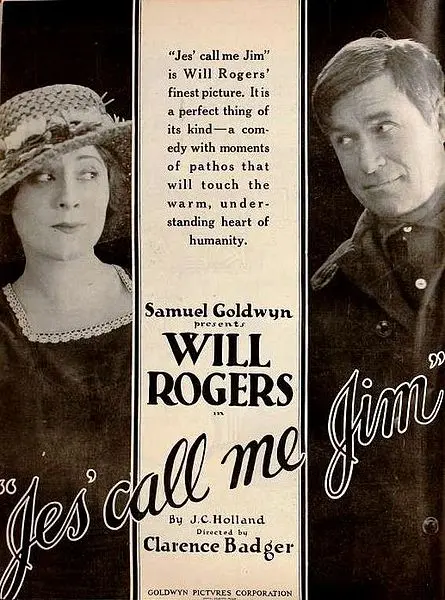
When placing Jes' Call Me Jim alongside films like Barbarous Mexico or Bogdan Stimoff, one notices a distinct American flavor of justice—one that is individualistic yet communal. While Barbarous Mexico deals with systemic political oppression, Badger’s film focuses on the personal betrayal. It suggests that the rot in society can be excised by the intervention of a single honest man. This 'Folk Hero' archetype is a precursor to the characters Will Rogers would play throughout his career, cementing his status as the voice of the common person. In contrast to the more whimsical tone of The Amazing Adventure, there is a somber undercurrent here that acknowledges the permanence of loss, even in the wake of victory.
Sidney De Gray’s portrayal of Belcher is a masterclass in silent film antagonism. He doesn't twirl a mustache; instead, he exudes a cold, calculating indifference that is far more terrifying. His villainy isn't born of passion but of a sterile, corporate greed. This makes the eventual triumph of Jim Fenton all the more satisfying. It is not just a victory of strength, but a victory of humanity over the machine. This thematic depth is something that was often missing from more lighthearted shorts like Ham an- or the situational comedy of Passing the Buck.
Released during a time of immense social change, the film mirrors the anxieties of an America grappling with the aftermath of World War I and the rise of the modern corporation. The inventor's plight reflects the real-world struggles of numerous creators who found themselves sidelined by patent wars and industrial monopolies. In this sense, the film is more than just entertainment; it is a cultural artifact that captures the zeitgeist of 1920. It shares a certain gritty realism with Pierre of the Plains, yet it maintains a hopeful outlook that is quintessentially American.
While some might argue that the film’s resolution is too tidy, it provides a necessary catharsis. In a world where the 'little guy' so often loses, Jes' Call Me Jim offers a vision of what could be if integrity were the primary currency. The film's influence can be seen in later works that tackle similar themes of false imprisonment and redemption, such as the serial thrills of Bride 13 or the domestic struggles in Jim Grimsby's Boy. However, few possess the heart and the genuine charisma that Rogers brings to the screen.
Revisiting Jes' Call Me Jim in the 21st century is a rewarding experience for any cinephile. It serves as a reminder that the core components of a great story—justice, empathy, and the courage to act—are timeless. The film’s refusal to lean into the more cynical tropes of its era, such as those found in Whitewashed Walls, allows it to stand as a testament to the power of simple, honest storytelling. It is a cinematic experience that demands to be seen not just as a historical curiosity, but as a vibrant, breathing work of art that continues to speak to the human condition.
Final Rating: A seminal piece of silent cinema that balances social critique with profound human warmth. Will Rogers is, and will always be, a treasure of the silver screen.
IMDb 8.6
1917
Community
Log in to comment.