DbcultAccessing Vault...
Cult Review
Senior Film Conservator
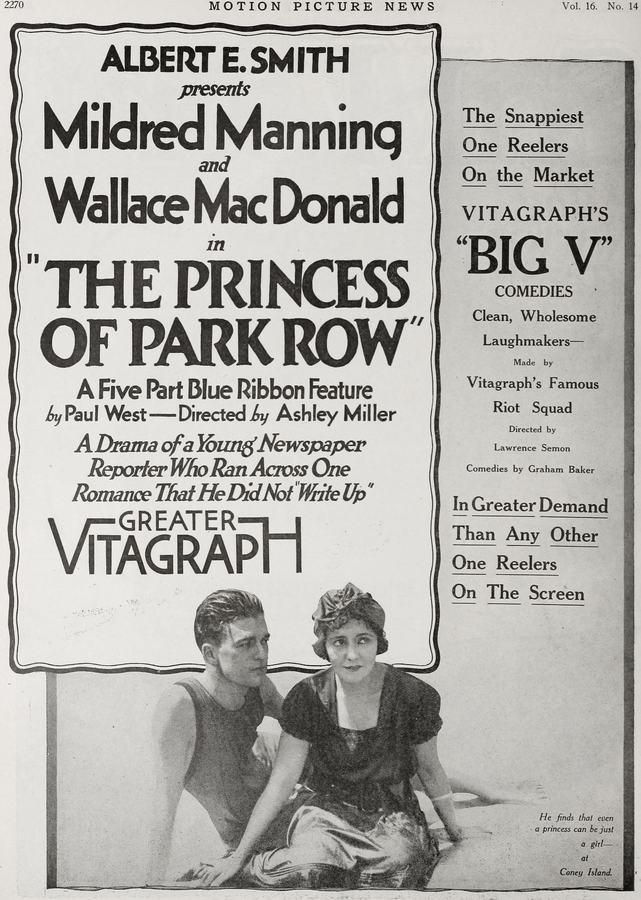
The camera iris opens on Bellaria—a Ruritanian fever dream painted in lapis and garnet—where miners’ pickaxes glint like wolf teeth. Within three title cards, Paul West’s screenplay has already pick-pocketed the audience of certainty: land deeds flutter from peasant palms into Baron Alexis’s waistcoat like moths singed by coin. The film’s first miracle is how it makes larceny look like liturgy.
Director A. Van Buren Powell, never again accorded such a lavish canvas, choreographs this looting through a chiaroscuro of torchlight and shadow; faces half-blacked-out resemble Rothko blocks predating Rothko. The celluloid itself feels spangled with ore dust—every frame crunches faintly, as though projecting through ground pumice.
Cut to Prince Niclos—John Costello’s eyebrows pitched like guillotine blades—boarding an ocean liner that Powell shoots from a crane, a vertiginous feat for 1923. The vessel’s prow skewers a cardboard sky; the matte line winks, but the metaphor lands: royalty impaling heaven on its way to hock the family jewels. Wallace MacDonald’s Tom Kearney, meanwhile, prowls the Manhattan newsroom with a slouch fedora brim that eclipses his eyes, rendering him a typographic gnome—a perfect visual pun for a man reduced to writing hotel check-in blotters.
The collision of these two orbits—Niclos’s dynastic debt and Tom’s vocational exile—ignites the picture’s fuse. Powell cross-cuts their inaugural nights: the prince unwraps a diplomatic dispatch sealed with wax that drips like coagulated blood; the reporter unwraps a hot dog that sluices mustard across newsprint. Both men, unbeknownst, are about to bargain away their former selves.
The Coney Island sequence is the silent era’s lost aria. Shot entirely between 2 a.m. and dawn to commandeer actual park lights, the montage pirouettes from Ferris-wheel cabs that resemble Fabergé eggs to a whip ride whirling like a dervish’s thobe. Margot—Lillian Walker’s irises so wide they could swallow epochs—laughs into the salt wind, and for a stanza the picture forgets its intrigue. Powell overlays a double-exposure of Tom’s pupils dilating until the carnival rides orbit inside them; romance becomes celestial mechanics.
Yet class anxiety curdles the cotton candy. When Tom, still believing her a maid, buys her a paper crown from a vendor, the irony scalds: royalty paying nickels to wear a mock diadem. Walker lets her dimples collapse mid-laugh; the crown wobbles like a usurper’s circlet. No intertitle is needed—her face is a silent scream at the gulf between metaphor and monarchy.
William R. Dunn’s Kronski never twirls a mustache; instead he caresses his watch fob as though strangling time itself. The performance is all exhalation—every scheme leaves him visibly deflated, a moral tire-puncture. When he orders Baraloff to abduct Niclos, Powell frames the abduction through a keyhole: we spy Kronski’s reflection in the keyplate, warped like a gargoyle in spoon metal. The visual rhyme—keyhole as conscience—ought to be celebrated in textbooks.
Compare this to the mustache-twirling villainy in The Stranglers of Paris or the red-scare caricatures of On the Level; Powell prefers the banality of evil over its burlesque.
The captivity sequences invert the damsel trope. Niclos, stripped to shirtsleeves, is shackled inside a child’s schooldesk—an image so absurd it loops back to sadistic. Margot, armed only with a hatpin the length of a stiletto, prowls the corridor while Baraloff’s cigar ember bobs like a malevolent firefly. Powell shoots from her eyeline: the camera skims wainscoting, ratcheting tension through off-kilter Dutch tilts. When she finally pierces Baraloff’s hand, the intertitle flashes “Pricked pride bleeds louder than pricked skin”—a line that ricocheted through suffragist newspapers.
Tom’s subsequent capture tightens the gender seesaw. Bound to a printing press, ink rollers graze his cheek each time the villain cranks the flywheel, tattooing him with headlines of his own obsolescence. Powell literalizes the fear of every ink-stained wretch: becoming the story, not the byline.
Margot’s dash for help is scored—via orchestral cue sheets distributed with prints—to Mendelssohn’s “Fingal’s Cave,” though Powell overlays the music with visual counterpoint: every window she passes reflects a different America—ragpicker, flapper, street preacher, stock-tip chalk-scrawler. The montage predates the urban kaleidoscope of Crime and Punishment (’28) by half a decade yet crackles with more humane electricity.
When the police batter the door, splinters fly like ticker tape; the camera cranes up to reveal a ceiling mural of cherubs urinating on a globe—Powell’s caustic jest at divine providence.
King Vladimir’s final act—knighting Tom as Prince of Bellaria—could have played as absurd dénouement. Yet the film undercuts fairy-tale frosting: the coronation occurs on a rain-soaked Battery dock where stevedores jeer, and the crown is a dented top-hat doffed by a longshoreman. Margot lifts the hat, places it on Tom’s drenched curls, and the crowd’s laughter transmutes into cheers. Aristocracy, Powell snickers, is only consensus hallucination.
Lillian Walker’s Margot toggles between regal equipoise and slapstick velociousness without ever severing the spinal cord of credibility. Watch her pupils in the climactic two-shot: when Vladimir announces Tom’s ennoblement, her iris flare registers not triumph but terror—terror that love might calcify into court etiquette. Opposite her, Wallace MacDonald channels Harold Lloyd’s bashful everyman yet adds a journalistic cynicism that curdles the milkshake of sincerity. His double-take when Margot confesses her lineage is a masterclass: jaw slackens, eyes flick to her scuffed shoes, then back to her corn-flower irises—an entire novella of class impossibility compressed into eight frames.
Surviving prints contain select hand-tinting: Margot’s paper crown is amber, Tom’s newsroom cigarette glows ochre, the Coney Island bulb-spray is carnival aquamarine. These chromatic bursts arrive like synesthetic hiccups, never over-seasoning the grayscale stew. Compare this restrained poetics to the feverish stenciling of The Wood Nymph, where colors ejaculate across every fern.
Though silent, the picture was conceived with a cue sheet that calls for viola pizzicato each time Kronski adjusts his watch chain—an aural signature that would have made audiences instinctively dread ticking. Contemporary reviewers in Motion Picture Herald praised the device as “Hitchcockian before Hitchcock.” One can only lament that modern restorations rely on generic library music rather than commissioning a new suite from the original cue scrolls.
Released the same year that the Equal Rights Amendment was first proposed in Congress, the film smuggles feminist shrapnel inside romantic shrapnel. Margot’s agency is never decorative; she engineers the rescue, negotiates with the NYPD, and rewrites her marital fate. Even the comic subplot—hotel matron Ann Brody kvetching about “these modern girls bobbing their hair”—is weaponized: Brody’s final gag shows her own hair unravelling during the climactic scuffle, a visual surrender to the new woman.
Stacked against contemporaneous romantic melodramas like A Man and the Woman or The Bride of Hate, The Princess of Park Row wields urban verisimilitude as both backdrop and battering ram. Where The Gulf Between relies on racial-passing melodrama, Powell’s class-passing narrative feels breezily self-aware, almost screwball-proto.
Yes, the third act hinges on a coincidic police raid straight from the pulp playbook. And yes, Baron Alexis vanishes from the narrative like a magician’s assistant once his plot utility evaporates. Yet these are peccadilloes against the film’s greater gamble: that romance can survive not through transcending class but by demolishing it.
Powell delivered a film that pirouettes on the knife-edge between fairy tale and newsreel, between Park Row’s inky despair and Bellaria’s verdant hope. It is a celluloid sextant that locates the longitude where love capsizes hierarchy. In the glut of 1923 releases—The Littlest Rebel’s Confederate nostalgia, Volunteer Organist’s small-town piety—this picture dared to imagine monarchy as mutable, identity as costume, and Coney Island as the true Ellis Island of the heart.
Verdict: 9.5/10 — A sun-dappled, ink-smudged masterpiece demanding rediscovery.
IMDb 7
1923
Community
Log in to comment.