DbcultAccessing Vault...
Cult Review
Senior Film Conservator
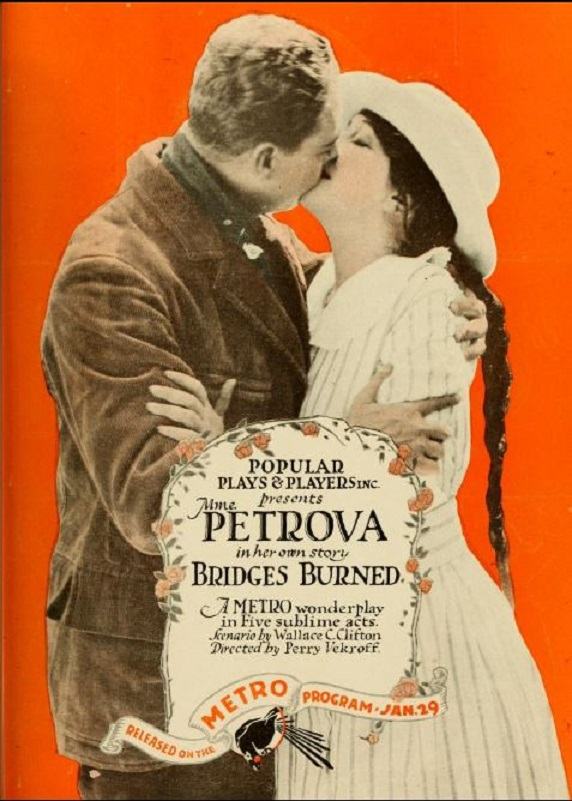
From the very first frame, 'Bridges Burned' plunges its audience into a world where societal expectations clash violently with individual desires, creating a narrative tapestry rich with emotional complexity and moral quandaries. This cinematic offering, a testament to the dramatic prowess of its era, doesn't merely tell a story; it unravels a profound journey of self-discovery, resilience, and the arduous path to earned happiness. It's a sweeping epic, yet intimately focused on the inner turmoil of its central figures, drawing us into their struggles with an almost visceral intensity. The film's enduring appeal lies not just in its intricate plot, but in its bold portrayal of characters who dare to defy the conventions of their time, forging new identities in the crucible of adversity.
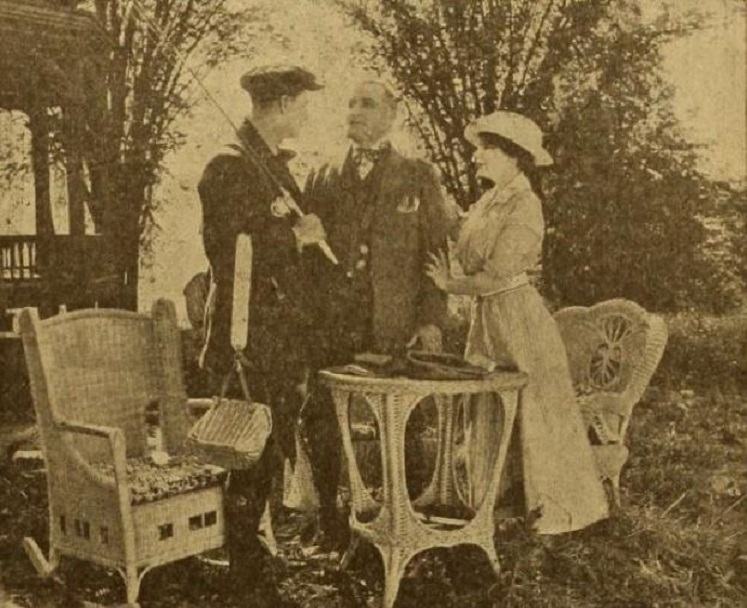
At the heart of this compelling drama is Mary O'Brien, portrayed with captivating depth by Olga Petrova. Mary is introduced as a woman of gentle breeding, yet one whose family fortunes are in precipitous decline, a circumstance that immediately casts a shadow of vulnerability over her existence. Her initial encounter with Ernest Randal, played by Louis Stern, is steeped in the kind of romantic serendipity that only classic cinema can deliver: a chance meeting by a fishing stream, an accidental trespass, and an immediate, undeniable spark. Randal, the son of an English baronet, represents a world of privilege and charm, a stark contrast to Mary's more grounded, albeit increasingly precarious, reality. Their initial conversations, rendered with a delightful lightness, quickly establish a magnetic pull that transcends their differing stations, hinting at the profound connection that will define their lives.
The narrative swiftly takes a dramatic turn when Randal, out hunting with Mary and her father, becomes the unwitting victim of a poacher's errant shot, his peaked cap tragically mistaken for a deer's antlers. This pivotal incident, fraught with both danger and opportunity, brings Randal into Mary's home, where she undertakes the arduous task of nursing him back to health. It is during this period of intense intimacy and shared vulnerability that their nascent affection blossoms into an unreserved love. Mary, with a generosity of spirit that defines her character, gives her heart completely, while Randal finds himself profoundly moved by her unwavering care. The pain of his eventual departure, necessitated by his surgical studies, underscores the burgeoning emotional entanglement, leaving both characters, and the audience, with a palpable sense of longing and uncertainty. This phase of their relationship, while brief, lays the groundwork for all the subsequent trials and triumphs.
The shadow of their illicit romance soon falls upon Mary's household. Norah, the astute old family servant, is the first to discern the truth, her knowing glances and quiet observations adding a layer of poignant foreshadowing. Mary, driven by an unassailable sense of integrity, confesses her predicament to her father, setting off a tempest of paternal fury. His initial instinct, a visceral desire to avenge his daughter's honor by confronting Randal, speaks volumes about the societal pressures and patriarchal codes of the era. When Randal finally returns, ostensibly to complete his college course, his initial hesitation to marry Mary, despite their shared history and her delicate condition, introduces a painful rift. Mary's staunch defense of him, even in the face of his perceived betrayal, highlights her unwavering loyalty. It is only when confronted with the undeniable injustice to their unborn child that Randal, overcome by her magnanimity, finally offers his hand in marriage. Yet, the bitterness of the circumstances compels Mary to leave immediately after the ceremony, a powerful act of defiance that sets her on a path of self-reliance.
Mary's subsequent journey into independence is where 'Bridges Burned' truly distinguishes itself, showcasing a proto-feminist spirit that resonates even today. After the birth of her son, she carves out a new life for herself, finding employment in a bustling cotton mill. Far from being relegated to obscurity, Mary's inherent capabilities and compassionate nature propel her to prominence. She becomes a driving force in welfare work among the employees, establishing an 'uplift club' that quickly garners acclaim throughout Ireland as a model of its kind. Her employer, O'Farrell, a man of integrity and vision, recognizes her exceptional talents, promoting her to a position of significant trust. His subsequent proposal of marriage, a genuine offer of partnership and stability, is met with Mary's principled refusal; she cannot divorce Randal due to the welfare of her child, a decision that underscores her unwavering moral compass and the profound weight of her commitments. This arc of self-made success and unyielding principle sets Mary apart as a character of extraordinary fortitude, reminiscent of the indomitable spirit found in characters like Tess in Tess of the Storm Country.
Randal, meanwhile, remains a figure grappling with his own shortcomings, his life seemingly adrift in a sea of unfulfilled potential. His visit to Mary, an attempt to persuade her to return to him, is met with a stinging rebuke. Mary, ever direct and unsparing, reminds him of his wasted years, a stark indictment that serves as a powerful catalyst for his transformation. This confrontation marks a crucial turning point for Randal. Determined to earn her respect and prove his worth, he makes the momentous decision to enlist in the war, embarking on a perilous journey of self-redemption. This commitment to military service, a stark contrast to his earlier dilettante existence, signals a profound shift in his character, mirroring the sacrifices of countless men who sought purpose in the maelstrom of conflict. His journey evokes parallels with the themes of duty and transformation explored in films like The Second in Command, where personal growth is forged in the fires of national service.
The war, a cataclysmic force reshaping the world, also becomes the crucible for Randal's moral and heroic awakening. On the front lines, in a moment of harrowing brutality, Randal performs an act of extraordinary courage, saving O'Farrell from bleeding to death after his arm is tragically torn off by a shell. This selfless act, a vivid demonstration of his newfound character, is a testament to the man he has become. The narrative then takes a heart-wrenching turn with the news of Randal's supposed death, a blow that reverberates through Mary's life. O'Farrell, returning from the front, brings not only this grim tidings but also the startling revelation that Randal's brother has also perished, making Mary's son the rightful Earl of Randal. It is in this moment of profound loss and unexpected elevation that Mary's understanding of her husband deepens; she finally realizes the true depth of her love for him, a love that transcends their tumultuous past and the societal chasms that once separated them. The bitter irony of this realization, coming at the apparent cost of his life, imbues the narrative with a powerful, almost unbearable pathos.
Yet, 'Bridges Burned' is a drama that understands the nuances of hope amidst despair. A great joy, profound and unexpected, sweeps over Mary when she learns that Randal is, in fact, alive, albeit temporarily blinded by the horrors of war. Her devotion resurfaces with renewed vigor as she dedicates herself to nursing him back to health, a period of quiet intimacy that allows their bond to heal and strengthen. His gradual recovery of sight symbolizes not only his physical restoration but also their shared vision for a future together. O'Farrell, ever the noble and self-sacrificing figure, once more answers the call of duty, declaring his remaining good arm is needed on the field, a poignant farewell that underscores his unwavering commitment to a greater cause. For Mary, life now seems perfect, her happiness deepened by Randal's gesture of love: the deed to her old house, which had been sold to strangers after her father's passing, is returned to her. With deep joy and a sense of profound closure, she embarks on her new life as Lady Randal, a testament to enduring love and the triumph of the human spirit.
The thematic core of 'Bridges Burned' is undeniably Mary's formidable resilience. Her journey is a masterclass in navigating adversity, not merely surviving it, but actively shaping her destiny. From her initial vulnerability as a gentleman's daughter of declining fortunes, through the scandal of an unplanned pregnancy and a forced marriage, to her rise as a respected social reformer, Mary consistently demonstrates an inner strength that is both inspiring and deeply human. She refuses to be defined by her circumstances or by the men in her life. Instead, she forges her own path, building a life of purpose and dignity for herself and her son. This unwavering spirit, her refusal to succumb to despair or to compromise her principles, makes her one of the most compelling female protagonists of her cinematic era. Her story stands as a powerful testament to the enduring human capacity for self-reinvention and the pursuit of a meaningful existence, even in the face of overwhelming odds.
Love and sacrifice are interwoven into the very fabric of this narrative, presenting a nuanced exploration of these profound human experiences. The love between Mary and Randal is not a simple, storybook romance; it is fraught with complications, marked by betrayal, separation, and the arduous journey toward mutual respect. Their eventual reconciliation is all the more potent because it is earned, forged in the fires of personal growth and shared hardship. Beyond their central relationship, the film also highlights the selfless devotion of O'Farrell, whose unrequited love for Mary is characterized by unwavering support and profound respect. His willingness to step aside, to sacrifice his own desires for her happiness and the greater good, adds another layer of emotional depth to the story. This complex interplay of romantic love, paternal love, and platonic affection paints a rich portrait of human connection, where sacrifice often becomes the truest expression of devotion. The narrative subtly suggests that true love often demands the burning of bridges, a leaving behind of past comforts and expectations, to build something more authentic and enduring.
Mary O'Brien, as embodied by Olga Petrova, emerges as a remarkably progressive character for her time. She is not merely a passive recipient of fate's decrees but an active agent in her own life. Her decision to leave Randal immediately after their marriage, despite the scandal it would undoubtedly cause, is a powerful assertion of her autonomy. Her subsequent dedication to welfare work, her leadership in the uplift club, and her refusal to compromise her integrity by divorcing Randal for O'Farrell, all paint a portrait of a woman who prioritizes moral rectitude and self-respect above societal convenience or personal comfort. She is a woman who learns from her mistakes, channels her suffering into meaningful action, and ultimately achieves a happiness that is not granted but earned. Her arc is a compelling study in female empowerment, demonstrating that even within restrictive social frameworks, a determined spirit can forge a path toward self-actualization. This portrayal stands in stark contrast to many contemporary heroines, offering a glimpse into the evolving depiction of women's roles.
Ernest Randal's transformation is equally compelling, providing a powerful counterpoint to Mary's steadfastness. Initially depicted as a charming but somewhat feckless young man, privileged and perhaps a little naive, his journey is one of profound maturation. His initial reluctance to embrace his responsibilities, his subsequent aimlessness, and Mary's cutting criticism serve as crucial catalysts for his growth. The crucible of war, where he performs acts of genuine heroism, is instrumental in forging him into a man worthy of Mary's respect and love. His eventual blindness and subsequent recovery symbolize a metaphorical awakening, a period where he is forced to see the world, and himself, through a different lens. By the film's conclusion, Randal is no longer the impetuous youth but a man of honor, purpose, and deep affection, having truly earned his place by Mary's side. His arc is a testament to the idea that even the most flawed characters can achieve redemption through genuine effort and self-sacrifice, much like the journey of self-discovery seen in The Half-Breed.
The supporting cast breathes further life into this rich narrative. Mathilde Brundage, Louis Stern, Maurice Steuart, Robert Broderick, Mahlon Hamilton, and Arthur Hoops contribute significantly to the film's texture. Norah, the old family servant, serves as a quiet moral compass, her unspoken understanding adding weight to Mary's struggles. Mary's father, initially a figure of patriarchal rage, eventually softens, representing the societal shifts and personal growth that can occur even in rigid environments. O'Farrell, portrayed with understated nobility, is a character of pure good, his selfless love for Mary providing a consistent backdrop of genuine affection and unwavering support. His willingness to step aside, to prioritize Mary's happiness and the integrity of her family, elevates him beyond a mere romantic rival to a figure of profound moral strength. These characters, though secondary, are integral to the plot's progression and the emotional resonance of the story, each playing a vital role in Mary's complex journey.
From a filmmaking perspective, 'Bridges Burned' showcases a narrative sweep that is both ambitious and remarkably effective. The pacing, while deliberate, allows for deep character development and the exploration of complex themes without ever dragging. The emotional intensity is carefully modulated, building to powerful climaxes and tender resolutions. The screenplay, credited to Olga Petrova and Wallace Clifton, is a testament to their ability to craft a story that is both grand in scope and intimate in detail. Their writing navigates the intricate dance between personal drama and broader societal commentary, ensuring that the film remains relevant and engaging. The effective use of dramatic irony, particularly in the war sequences and the revelation of the earldom, heightens the emotional stakes, drawing the audience deeper into the characters' experiences. The film's enduring power lies in its ability to evoke genuine empathy for its protagonists, making their triumphs feel truly earned and their struggles deeply felt.
The legacy of 'Bridges Burned' lies in its bold exploration of themes that remain pertinent today: the constraints of class, the redemptive power of love, and the unyielding spirit of a woman determined to forge her own destiny. It challenges the conventional narratives of its time by presenting a heroine who actively chooses her path, even when that path is fraught with pain and sacrifice. The film's commentary on societal expectations versus individual agency, particularly through Mary's journey in the mill and her welfare work, resonates strongly. It subtly critiques the rigid social structures that often stifle personal growth and happiness, while simultaneously celebrating the strength required to transcend them. This nuanced approach to social commentary, wrapped within a compelling personal drama, ensures its lasting appeal and its place as a significant piece of cinematic history. It's a reminder that even in seemingly distant eras, the human heart grapples with universal questions of love, duty, and self-worth.
Ultimately, 'Bridges Burned' is a testament to the indomitable human spirit, a narrative that champions resilience, integrity, and the transformative power of love. Mary O'Brien's journey from societal outcast to respected Lady Randal is not merely a happy ending; it is a deeply satisfying culmination of a life lived with courage and conviction. Her happiness is not a gift but a hard-won victory, earned through immense personal sacrifice and an unwavering commitment to her principles. The film leaves a lasting impression, a poignant reminder that true fulfillment often lies beyond the path of least resistance, found instead in the courageous act of burning old bridges to build new, stronger foundations. It is a story that resonates with profound emotional truth, celebrating the enduring strength of character and the ultimate triumph of a love that withstands every conceivable trial. The sea-blue hues of perseverance and the golden glow of eventual happiness illuminate this timeless tale.

IMDb —
1922
Community
Log in to comment.