DbcultAccessing Vault...
Cult Review
Senior Film Conservator
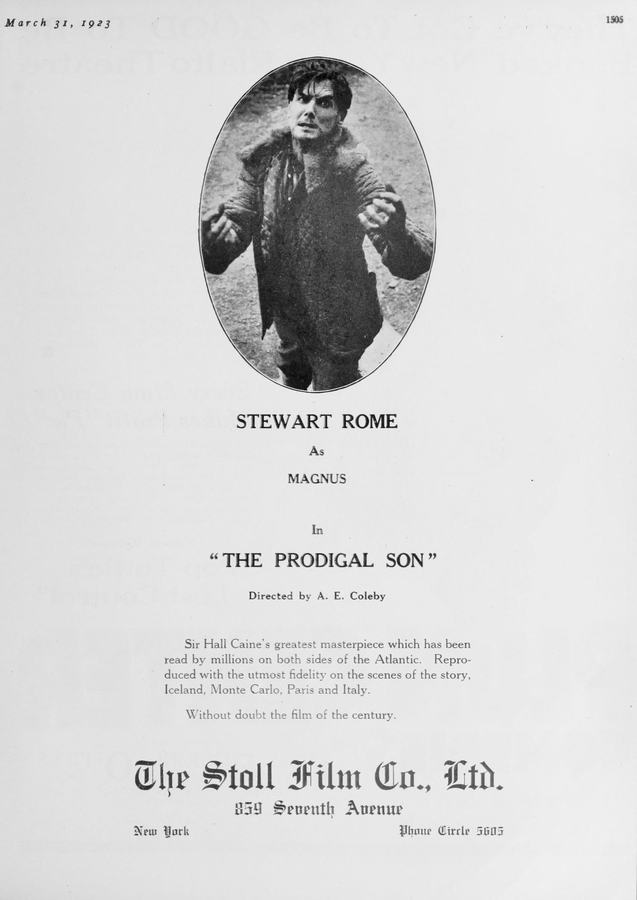
Stepping back into the cinematic landscape of 1923, one encounters The Prodigal Son, a film that, even a century later, retains a potent, almost visceral, dramatic charge. This isn't merely a silent film; it's a profound exploration of human fallibility, a stark tableau painted with the brushstrokes of betrayal, avarice, and the inexorable march of consequence. Penned by the formidable duo of A.E. Coleby and Hall Caine, this Icelandic-set melodrama transcends its era, offering a timeless meditation on moral decay and the elusive promise of redemption. It speaks to the enduring power of narrative, even when stripped of spoken dialogue, relying instead on the expressive visages of its cast and the eloquent sweep of its visual storytelling.
At its core, The Prodigal Son unfurls the harrowing saga of the governor's son, a character whose moral compass is not merely broken but seems to spin wildly in pursuit of self-gratification and illicit gain. His initial transgression is chillingly intimate: he weds his own brother's sweetheart, a union steeped in deceit and calculated cruelty. This act alone would suffice for a lesser drama, but here, it is merely the opening gambit in a sprawling narrative of escalating villainy. The film paints a vivid, albeit silent, portrait of her subsequent abandonment, a tragic figure left to succumb to the rigors of childbirth, a direct casualty of his callous ambition. This sequence, undoubtedly harrowing for audiences of the time, underscores the depth of his depravity, establishing him not as a misguided youth, but as a man actively choosing a path of destruction. His audacious forgery of his father's name, a brazen act of financial malfeasance, further cements his status as a man utterly devoid of ethical constraint, willing to sacrifice family honor and human life for his own fleeting desires.
The narrative then whisks us away from the stark, unforgiving beauty of Iceland to the sun-drenched, yet morally ambiguous, climes of Nice. This geographical shift is more than a change of scenery; it's a symbolic migration from the austere judgment of home to the seductive anonymity of a foreign land. Here, the prodigal son, seemingly unburdened by his past atrocities, embarks on another predatory liaison, this time with the deceased wife's sister. This cyclical pattern of seduction and exploitation is deeply unsettling, highlighting a character incapable of learning from his past, driven by an insatiable hunger for pleasure and power. The opulent setting of Nice, a playground for the wealthy, becomes the backdrop for his continued unraveling, as he squanders his ill-gotten gains through reckless gambling. The film masterfully uses these scenes to depict the intoxicating allure of vice, even as it foreshadows the inevitable crash. His ultimate act of desperation – faking his own suicide to escape burgeoning debts – is a final, theatrical flourish in a life built on artifice, a last-ditch effort to evade accountability.
The journey back to Iceland is not merely a physical return but a symbolic descent into the very crucible of his past transgressions. This homecoming is fraught with the weight of his manifold sins, each step bringing him closer to an inescapable reckoning. The film, through its silent yet powerful imagery, conveys the profound psychological torment that must accompany such a return, even for a character as seemingly unrepentant as our protagonist. The stark Icelandic landscapes, which once represented home and familial ties, now stand as silent witnesses to his crimes, mirroring the barrenness of his soul. The tension builds with exquisite slowness, preparing the audience for the inevitable confrontation with his past, his family, and perhaps, with himself. This narrative arc, though deeply rooted in the biblical parable, finds a unique, bleak expression within the cinematic language of 1923.
In the realm of silent cinema, the burden of conveying complex emotions falls squarely on the shoulders of the actors. The Prodigal Son is fortunate to boast a cast capable of delivering such nuanced portrayals. Frank Wilson, likely embodying the titular prodigal son, must navigate a treacherous emotional landscape, transitioning from charming manipulator to desperate cheat, his expressions needing to convey both the fleeting thrill of his conquests and the underlying hollowness of his existence. Colette Brettel, who we can surmise plays both the ill-fated wife and her unsuspecting sister, faces the challenge of differentiating these two characters, conveying their vulnerability and eventual heartbreak through subtle shifts in posture, gaze, and gesture. Her performance would have been pivotal in eliciting audience sympathy for the victims of the protagonist's relentless cruelty. Peter Upcher, perhaps as the stern but ultimately forgiving governor, would have needed to project authority, disappointment, and the weight of familial responsibility. The silent era demanded a theatricality that, when executed with precision, could be profoundly moving, and the ensemble here appears to rise to that challenge, translating the heavy themes of the script into compelling visual drama.
The narrative prowess of A.E. Coleby and Hall Caine is evident in the film's intricate plotting and profound thematic resonance. Hall Caine, a renowned Manx novelist, was celebrated for his melodramatic and often morally charged narratives, making him a fitting source for such a tale. Coleby, likely the director, translates this literary depth into a visual spectacle. Their collaboration crafts a story that, despite its sensational elements, probes deeper questions about human nature, forgiveness, and the indelible stain of sin. The pacing, the use of intertitles to convey dialogue and exposition, and the composition of each shot would have been carefully orchestrated to maximize emotional impact. It's a testament to their skill that the film manages to maintain a sense of escalating tension and moral gravity without the aid of spoken words, relying instead on the universal language of human emotion.
The film's exploration of sin and its inevitable consequences is remarkably unflinching. The prodigal son's journey is a cautionary tale, demonstrating how unchecked ambition and moral apathy can lead to a cascade of destruction, affecting not only the perpetrator but also those closest to him. The theme of betrayal permeates every frame, from the initial deception of his brother to the calculated seduction of the sister. Yet, amidst this darkness, there is always the faint glimmer of the titular archetype's potential for redemption. Will he find absolution? Will his family offer it? The film leaves these questions hanging, allowing the audience to ponder the complexities of forgiveness in the face of such profound transgressions. This moral ambiguity is one of the film's strengths, elevating it beyond a simple morality play to a more nuanced psychological drama.
When considering The Prodigal Son, it's illuminating to place it within the broader context of early 20th-century cinema. Films of this era often grappled with grand moral dilemmas, leveraging the nascent power of the moving image to explore societal anxieties and personal failings. One might draw parallels to films like Grekh (1916), whose very title, meaning 'Sin' in Russian, suggests a similar preoccupation with moral transgression. While the cultural backdrop differs, the universal exploration of human failings and their repercussions would undoubtedly resonate across these works. Both films, in their own ways, sought to depict the internal and external struggles that arise when individuals deviate from societal and ethical norms. This shared thematic ground reveals a common thread in early global cinema: a fascination with the human capacity for both virtue and vice.
Another interesting comparison could be made with The Cradle Buster (1922). While the title might imply a lighter, more comedic take on rebellion, the concept of a character who disrupts established norms or 'busts cradles'—whether literally or metaphorically—aligns with the destructive nature of our prodigal son. He is, in essence, a societal disruptor, tearing apart the fabric of his family and community through his selfish actions. The ways in which different films from the period portrayed such disruptive figures, and the consequences they faced, offer a rich comparative study. Was the 'cradle buster' a figure of admiration, a rebel, or an object of moral condemnation? In The Prodigal Son, it is unequivocally the latter, positioning him firmly in the realm of the cautionary tale.
Furthermore, the exploration of societal expectations and personal downfall in Du Barry (1915) offers another lens through which to view the moral complexities of The Prodigal Son. Both films, despite their vastly different historical settings, delve into the lives of individuals whose personal choices clash with the rigid structures of society, leading to dramatic and often tragic outcomes. While Du Barry explores the rise and fall of a courtesan in French court, driven by ambition and survival, the prodigal son's descent is fueled by pure, unadulterated selfishness. Yet, both narratives underscore the precariousness of one's position when societal and moral boundaries are continually transgressed, and the inevitable price demanded by fate or circumstance.
The aesthetic of The Prodigal Son, typical of its era, would have relied heavily on dramatic lighting, expressive set design, and carefully orchestrated camera movements to convey mood and narrative progression. The contrast between the stark, perhaps studio-bound, depiction of Iceland and the more opulent, bustling scenes of Nice would have been crucial in establishing the protagonist's journey from a place of familial duty to one of hedonistic abandon. The visual language of silent film, often underestimated today, was a sophisticated art form, capable of communicating profound emotional states through a glance, a gesture, or the framing of a scene. The film's ability to maintain tension and convey the moral weight of its story without spoken dialogue is a testament to this unique cinematic artistry.
A century removed from its initial release, The Prodigal Son remains a fascinating artifact of early cinema and a compelling drama in its own right. It speaks to the universal human experience of making choices, facing consequences, and the perennial search for meaning or forgiveness. While the conventions of silent film may seem alien to contemporary audiences, the raw emotions and the stark moral dilemma at the heart of this story transcend time. It reminds us that the fundamental narratives of human ambition, love, betrayal, and the struggle for redemption are as old as storytelling itself, and that cinema, even in its earliest forms, was a powerful medium for exploring these profound truths. Watching it today is not just an exercise in historical appreciation; it is an encounter with a timeless tale, told with the unique expressive power of the silent screen. It invites us to reflect on the nature of our own 'prodigal' moments and the paths we choose when confronted with the specter of our past.
The film, through its compelling performances and robust narrative, solidifies its place as a significant contribution to the early 20th-century cinematic landscape, proving that a story of profound moral complexity can be conveyed with immense power even without the benefit of a spoken word. Its themes resonate, its characters intrigue, and its stark portrayal of human nature endures, making The Prodigal Son a compelling watch for anyone interested in the foundational narratives of film and the enduring power of classic melodrama.
IMDb —
1927
Community
Log in to comment.