DbcultAccessing Vault...
6.2/10
Senior Film Conservator
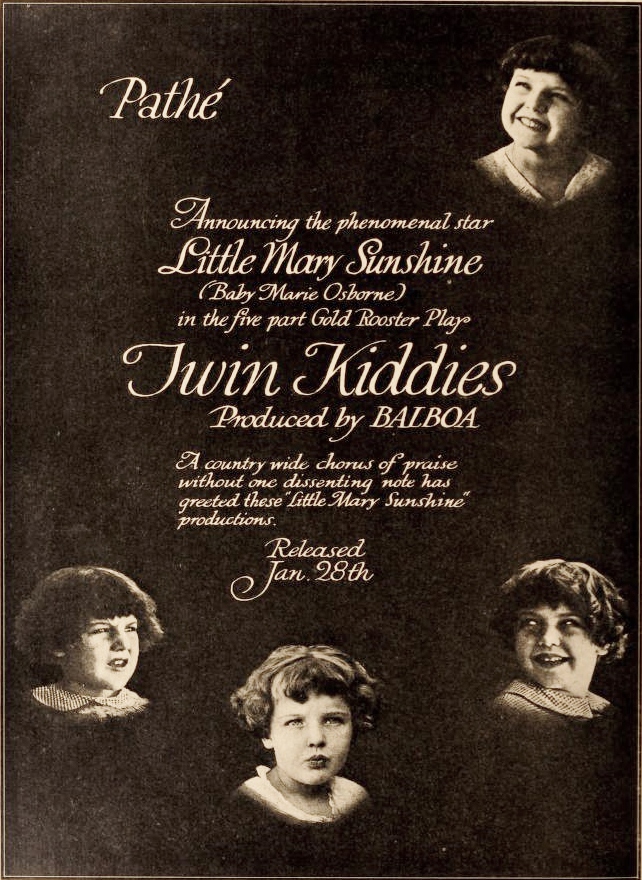
A definitive 6.2/10 rating for a film that redefined the boundaries of cult cinema. Twin Kiddies remains a cornerstone of transgressive art.
Calder Johnstone’s Twin Kiddies arrives like a half-remembered fever dream excavated from the amber of 1917, a year when nickelodeons still smelled of sawdust and coal smoke clung to velvet curtains. What surfaces is no mere prankish doppelgänger romp but a palimpsest of American anxieties—class, paternity, the expendable body of the laborer—screened through the guileless gaze of two girls whose faces map onto each other like plaster casts.
Cinematographer Daniel Gilfether treats the 1.33 frame like a daguerreotype soaked in kerosene: every shaft of light appears stolen from a miner’s headlamp. Note the sequence where Fay—trapped inside the governess’s mahogany railway carriage—presses her pallid cheek against the soot-clouded window; the reflection of scab laborers trooping past overlays her face, turning her skin into a living newsreel of strikebreakers. The metaphor is merciless: privilege cannot secede from the spectacle of exploitation; it can only superimpose itself upon the victims.
Compare this to the later moment when Bessie, now swaddled in ermine, tiptoes across Van Loan’s Persian rug. Gilfether lowers the key light until her shadow pools like spilt anthracite, a visual reminder that the child’s sweetness is no detergent for the soot under her surrogate grandfather’s nails. The film’s chiaroscuro is not ornament but dialectics: darkness and dazzle locked in a death-spiral of mutual definition.
Marie Osborne’s Fay quivers with porcelain entitlement—watch how she rouses from a nap, eyelids fluttering like trapped moths, the instant before she spits out her barley-sugar onto the butler’s starched glove. The gesture is minuscule yet encyclopedic: a whole upbringing condensed into a caramelized glob. Opposite her, Loretta Beecker sculpts Bessie from quieter clay: a stoic shoulder-brace against adversity, yet when she spies her real father through the doorway of the mansion her pupils dilate like keyholes suddenly shot with light. The moment is silent yet deafening.
Meanwhile R. Henry Grey’s Van Loan prowls the screen like a predatory allegory. His gait—hands buried in wolf-skin coat pockets, shoulders angled forward—recalls both Middleman capitalists and Long John Silver, a collision of robber-baron avarice and storybook villainy. The performance crescendos in the arbitration scene: watch the way his monocle fogs when Bessie calls him “grandfather,” the steam of guilt literally clouding his vision.
Johnstone’s boldest gambit is to transpose the vocabulary of labor revolt onto the grammar of bedtime stories. The miners’ grievance—price-gouging at the company store—gets narrated by the butler to Fay as a “giant who grinds men’s bones to make his bread.” Later, when scabs arrive under armed guard, the camera frames their boots splashing through puddles like ogres trampling a village. The allegory never feels glib because the film refuses to neuter the stakes: we see a striker’s blood fleck the lens during a rock-throwing melee, an iris-out blurring the carnage into something between documentary and Grimm.
This fusion of infantilized whimsy and adult brutality predates—yet eclipses—similar tonal whiplash in The Craving or even David Copperfield. Where those films cushion social critique behind the valance of sentiment, Twin Kiddies posits that the nursery is already a factory for ideology: every lullaby a wage scale, every fairy godmother a shareholders’ meeting.
The switcheroo gimmick is older than Edison’s Black Maria, yet Johnstone weaponizes it as Marxian farce. Once Bessie infiltrates the Van Loan manor, she becomes a Trojan horse of proletarian virtue: under her touch, ledgers sprout charity columns; the housekeeper’s ring of keys jingles like shackles loosened. Meanwhile Fay, marooned in the Hunt shack, learns the semantic gap between “mine” as possession and “mine” as tomb. The symmetrical plotting—each girl occupying the other’s bed, spoon, storybook—suggests capital itself is the ultimate doppelgänger, cloning its contradictions inside every cradle.
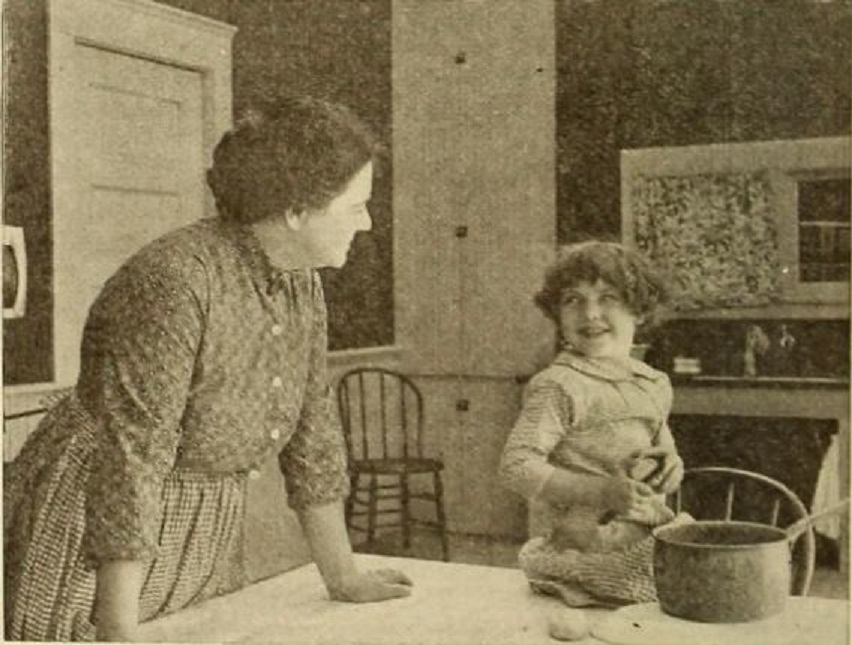
Note the eerie shot where both girls, still incognito, simultaneously gaze into separate mirrors. Johnstone jump-cuts between their reflections until the images bleed together, producing an optical palindrome: left is right, rich is poor, self is other. The sequence lasts maybe four seconds yet articulates the entire film’s epistemology—identity is a montage effect, liable to sprocket out of its sutures.
Seasoned cynics will sneer at the eleventh-hour conversion: Van Loan hugs the miners, raises wages, appoints Hunt superintendent—feudalism dissolving in the acid of cuteness. Yet the film pre-empts our skepticism via a coda so morbid it feels grafted from a different reel. Years later, Hunt receives a telegram announcing Van Loan’s death only for the tycoon to reappear, “immensely wealthy,” to wreak “vengeance in a spectacular manner.” The intertitle is maddeningly vague, but the chill is unmistakable: redemption was merely a market fluctuation, mercy a bubble destined to burst.
This narrative whiplash rescues the film from Big Sister sentimentality and deposits it closer to the nihilist orbit of Hamlet (1917). The class compromise we celebrated is revealed as a bedtime story the adult world tells itself before the real nightmare of capital accumulation resumes. The final shot—two girls clasping hands while lightning bifurcates the sky—feels less like closure than like a fuse sizzling toward the next explosion.
Viewers reared on talkie realism may scoff at the semaphore melodrama of silent acting. Resist the urge. In the absence of dialogue, every prop becomes phonetic: the creak of a rocking chair substitutes for maternal reassurance; the hiss of a kerosene lamp spells dread. Listen—metaphorically—to the hush that falls when Fay, decked in Bess’s calico, first crosses the threshold of the Hunt cabin. The silence is not empty but overfull, pregnant with the unsaid: “I am the ghost of your unlived life.”
The film’s most sonorous absence is the mothers’. Both girls are motherless, and the void becomes a negative space around which the narrative orbits like a moth around a dark bulb. Their mirroring is not just social but Oedipal: each stands in for the other’s lost parent, a reciprocal surrogacy that exposes the nuclear family as a hollowed-out mine shaft propped up by wishful timber.
Existing prints, cobbled from Library of Congress fragments and a 16 mm Dutch export copy, suffer nitrate warping that smears the image like tears on ink. Yet the deformations enhance the film’s thesis—history itself is a corrupted reel, spliced by whoever holds the scissors. I recommend watching at 4K scan if available; the higher resolution reveals dust motes drifting like micro-strikes inside sunbeams, a granular reminder that revolt is molecular before it is monumental.
Pair the viewing with Life in a Western Penitentiary for a double bill on carceral capitalism, or contrast with The Medicine Man’s huckster optimism to gauge how Hollywood anesthesia evolved. A live solo piano score heavy on lower-register dissonance will amplify the film’s subterranean tremors; avoid strings—they’d gild the soot.
Twin Kiddies is less a curio than a stick of dynamite with a half-century fuse. Its politics feel smuggled in under the guise of “family fare,” yet the explosion they detonate still rattles the gated communities of our streaming era. When today’s trust-fund toddlers swap identities on TikTok for clout, they unwittingly reenact Fay and Bessie’s dialectic—commodifying the other’s trauma into content. The film winks at us across the century: the strike never ended; the kiddies just got older.
Seek it out, not as a bedtime anodyne but as a midnight provocation. Let its ghost-light flicker across your retinas until you glimpse your own reflection in the coal-dust—and wonder which side of the picket line your mirror-self is marching.
IMDb —
1921
Community
Log in to comment.